

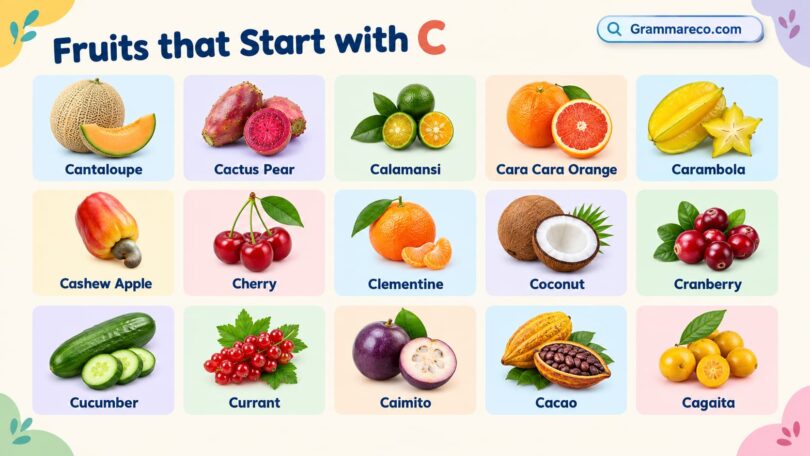
From familiar citrus fruits to tropical and regional varieties, many interesting names begin with the letter C. This list of fruits that start with C covers C fruits, including familiar choices and lesser-known varieties from different parts of the world. Examples include cantaloupe, cherry, coconut, and cranberry. Whether you are building an A-Z fruit list, learning fruit vocabulary, or looking for fruits beginning with C, this collection brings together established names in one place. Each entry is selected to keep the list useful, accurate, and easy to understand.
Fruits That Start With C
Fruits that start with C include cacao, cagaita, caimito, cactus pear, calamansi, cantaloupe, carambola, cashew apple, and cherry. These fruits come in different shapes, colors, flavors, and sizes, from familiar citrus fruits to rare tropical varieties.
Cantaloupe
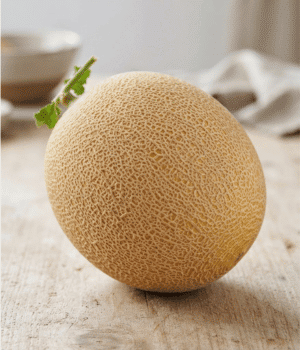
Cantaloupe is a sweet, orange-fleshed melon commonly eaten fresh as a fruit. Its rough, netted rind usually surrounds soft, juicy flesh with a fragrant aroma and mild sweetness. The fruit is rich in water and provides nutrients such as vitamin C and vitamin A. Cantaloupe is often served in fruit salads, smoothies, or chilled slices.
- Scientific name: Cucumis melo
Explore more: 20+ Different Types of Cantaloupe
Cherry
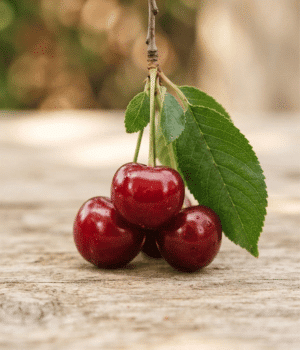
Cherry is a small, round stone fruit known for its bright red, dark red, or yellow skin and juicy flesh. It has a single hard pit at the center and may taste sweet or tart depending on the variety. Cherries are eaten fresh, dried, or preserved. Their vibrant color and compact size make them popular summer fruits.
- Scientific name: Prunus avium (sweet cherry), Prunus cerasus (sour cherry)
Read more: 48+ Names of Types of Cherry
Coconut
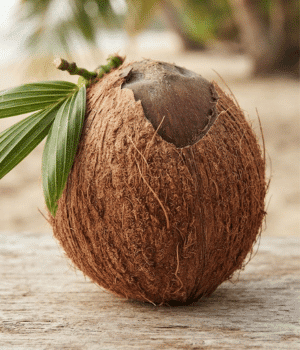
Coconut is a large, fibrous fruit produced by the coconut palm. Its hard shell protects white edible flesh and clear coconut water inside. Young coconuts contain more liquid, while mature ones develop thicker meat. Coconut is widely used in beverages, desserts, cooking, and plant-based foods. The fruit is especially important in tropical regions around the world.
- Scientific name: Cocos nucifera
Cranberry
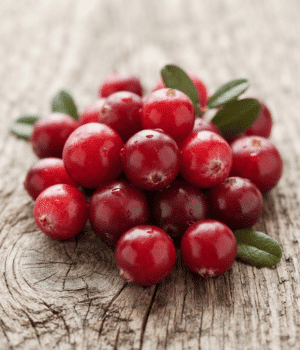
Cranberry is a small, round berry that typically develops a bright red color when mature. It has a firm texture and naturally sharp, tart flavor, so it is often sweetened before being eaten. Cranberries are commonly used in juices, sauces, dried fruit products, and baked foods. They grow mainly on low, trailing plants in cool regions.
- Scientific name: Vaccinium macrocarpon
Clementine
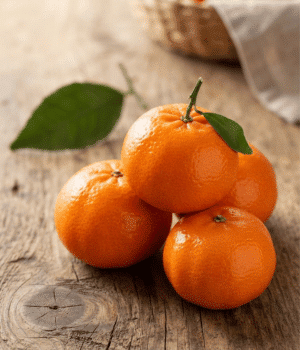
Clementine is a small citrus fruit recognized by its thin, bright orange peel and juicy segments. It is usually seedless or contains very few seeds, depending on the variety. The fruit has a sweet, refreshing flavor with mild acidity. Its loose skin makes it easy to peel, so clementines are commonly eaten fresh as a convenient snack.
- Scientific name: Citrus × clementina
Cactus Pear
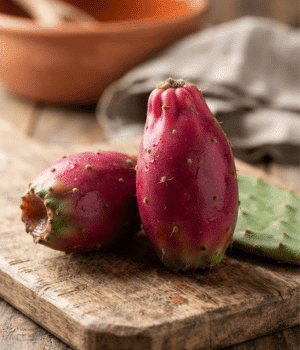
Cactus pear is the edible fruit of certain prickly pear cacti. It usually has a rounded or oval shape with colorful skin that may be green, yellow, orange, red, or purple. The juicy flesh contains numerous small edible seeds and has a mildly sweet flavor. The fruit is eaten fresh and is also used in drinks and desserts.
- Scientific name: Opuntia ficus-indica
Read more: Edible Types of Cactus Fruits
Custard Apple
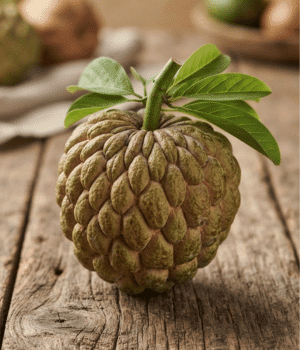
Custard apple is a tropical fruit with soft, creamy flesh and a segmented green skin. Its sweet flavor is often compared with a mixture of banana, vanilla, and tropical fruit. The flesh surrounds numerous dark seeds, which are not eaten. Custard apples are commonly enjoyed fresh, while their creamy texture also makes them suitable for desserts and beverages.
- Scientific name: Annona reticulata
Carambola
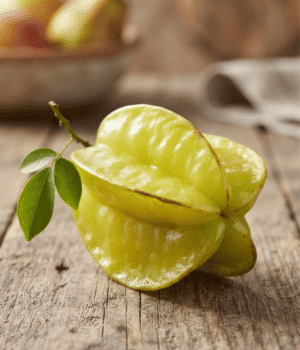
Carambola, also called star fruit, is a tropical fruit with five prominent ridges along its body. When sliced crosswise, the pieces form a distinctive star shape. Its thin skin and juicy flesh can range from mildly sweet to pleasantly tart. Both the skin and flesh are edible, and ripe carambola is commonly eaten fresh or added to salads.
- Scientific name: Averrhoa carambola
Cashew Apple
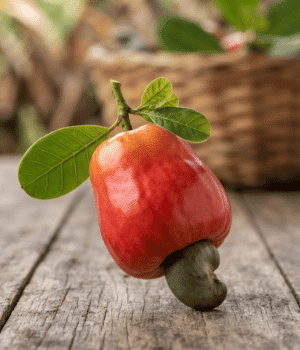
Cashew apple is the swollen, fleshy part attached to the cashew nut. It may appear yellow, orange, or reddish when mature and has a juicy, aromatic texture. The fruit can taste sweet, tangy, and slightly astringent. Cashew apples are eaten fresh or processed into juices, jams, and other products, while the attached nut is separately processed.
- Scientific name: Anacardium occidentale
Cape Gooseberry
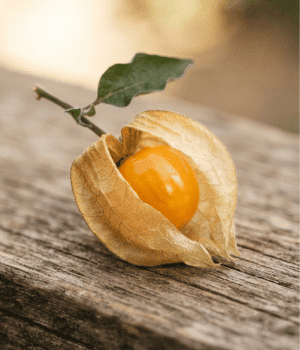
Cape gooseberry is a small orange-yellow berry enclosed inside a papery husk. The fruit has smooth skin and a juicy interior containing many tiny seeds. Its flavor is usually sweet-tart with a noticeable tropical character. Cape gooseberries are eaten fresh and may also be used in desserts, salads, sauces, preserves, and decorative food presentations.
- Scientific name: Physalis peruviana
Cara Cara Orange
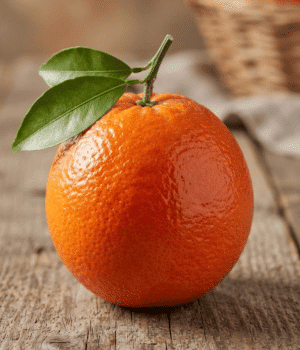
Cara Cara orange is a type of sweet orange recognized by its pinkish-red flesh and orange outer peel. The flesh is juicy and usually has a sweet flavor with mild acidity and berry-like notes. It is commonly eaten fresh or added to salads and juices. This distinctive citrus variety is valued for its unusual natural flesh color.
- Scientific name: Citrus × sinensis
Calamansi
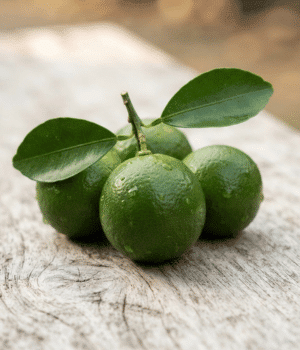
Calamansi is a small citrus fruit widely used in Southeast Asian cuisines and drinks. Its thin green-to-orange peel surrounds juicy, acidic flesh with a strong citrus aroma. The flavor combines sourness with a slight sweetness. Calamansi juice is commonly added to beverages, sauces, marinades, and desserts, while the whole fruit may also be used as a garnish.
- Scientific name: Citrus × microcarpa
Citron
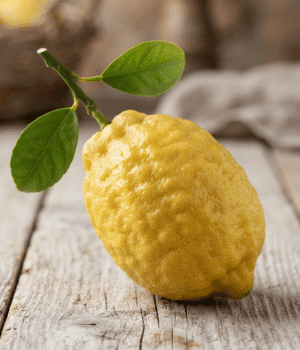
Citron is a large citrus fruit with a thick, aromatic rind and relatively little juicy pulp. Its peel can be yellow or green and contains much of the fruit’s usable material. Citron is commonly candied, preserved, or used for its fragrant zest. Some varieties are also important in traditional foods and cultural practices.
- Scientific name: Citrus medica
Cacao
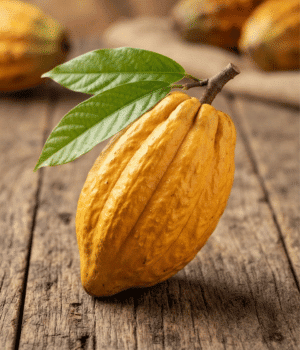
Cacao refers to the fruit and seeds produced by the cacao tree, the plant from which chocolate is made. The large pods develop in colors such as green, yellow, orange, or red as they mature. Inside, seeds are surrounded by sweet, white pulp. The seeds are fermented and processed to produce cocoa products and chocolate.
- Scientific name: Theobroma cacao
Caimito
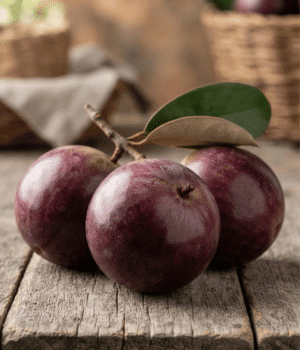
Caimito, commonly known as star apple, is a tropical fruit with smooth green or purple skin and soft, translucent flesh. When cut across, its internal structure can form a star-like pattern. The flesh is sweet, juicy, and creamy, while the seeds are not eaten. Caimito is generally consumed fresh and is especially associated with tropical American regions.
- Scientific name: Chrysophyllum cainito
Canistel
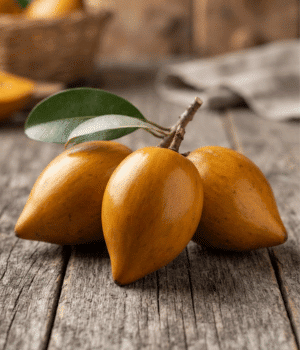
Canistel is a tropical fruit commonly called eggfruit because its ripe flesh has a dense, smooth texture resembling cooked egg yolk. Its skin turns yellow or orange as the fruit matures. The flesh tastes mildly sweet and can become quite creamy when fully ripe. Canistel is eaten fresh and is also blended into shakes, desserts, and other foods.
- Scientific name: Pouteria campechiana
Carob
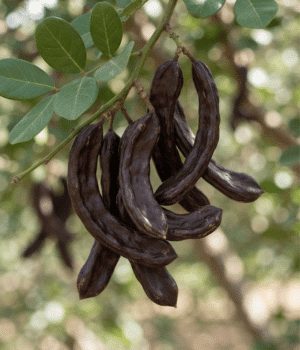
Carob is the edible pod produced by the carob tree, a Mediterranean and Middle Eastern plant. Mature pods are usually dark brown, elongated, and filled with naturally sweet pulp surrounding several hard seeds. Dried carob is ground into a powder that is used in foods and beverages. Its naturally sweet flavor makes it a popular cocoa alternative.
- Scientific name: Ceratonia siliqua
Crab Apple
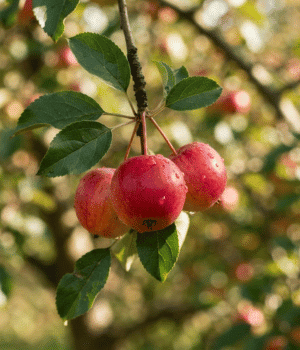
Crab apple refers to the small fruits produced by species and hybrids of the genus Malus. These fruits resemble miniature apples and may develop red, yellow, orange, or green skin. Their flavor is often more acidic or astringent than that of common dessert apples. Crab apples are frequently used for jellies, preserves, sauces, and ornamental planting.
- Scientific name: Malus spp.
Cherry Plum
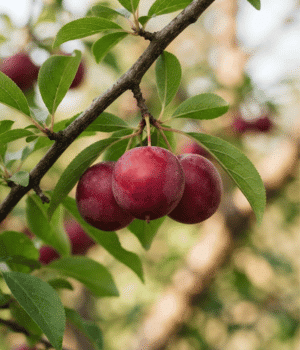
Cherry plum is a small stone fruit produced by the cherry plum tree. Its smooth skin may be red, yellow, purple, or green, while the juicy flesh surrounds a single hard stone. Depending on the variety, the fruit can taste sweet or tart. It is eaten fresh and is also used for jams, sauces, preserves, and desserts.
- Scientific name: Prunus cerasifera
Cloudberry
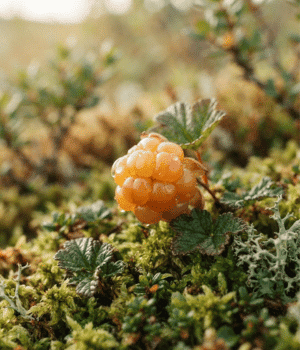
Cloudberry is a small amber-colored berry that grows naturally in cold northern regions. It develops from a low-growing plant and becomes soft and golden when ripe. The fruit has a distinctive sweet-tart flavor and is valued in northern cuisines. Cloudberries are eaten fresh or preserved as jams, sauces, desserts, and other traditional foods.
- Scientific name: Rubus chamaemorus
List of Fruits That Start With C
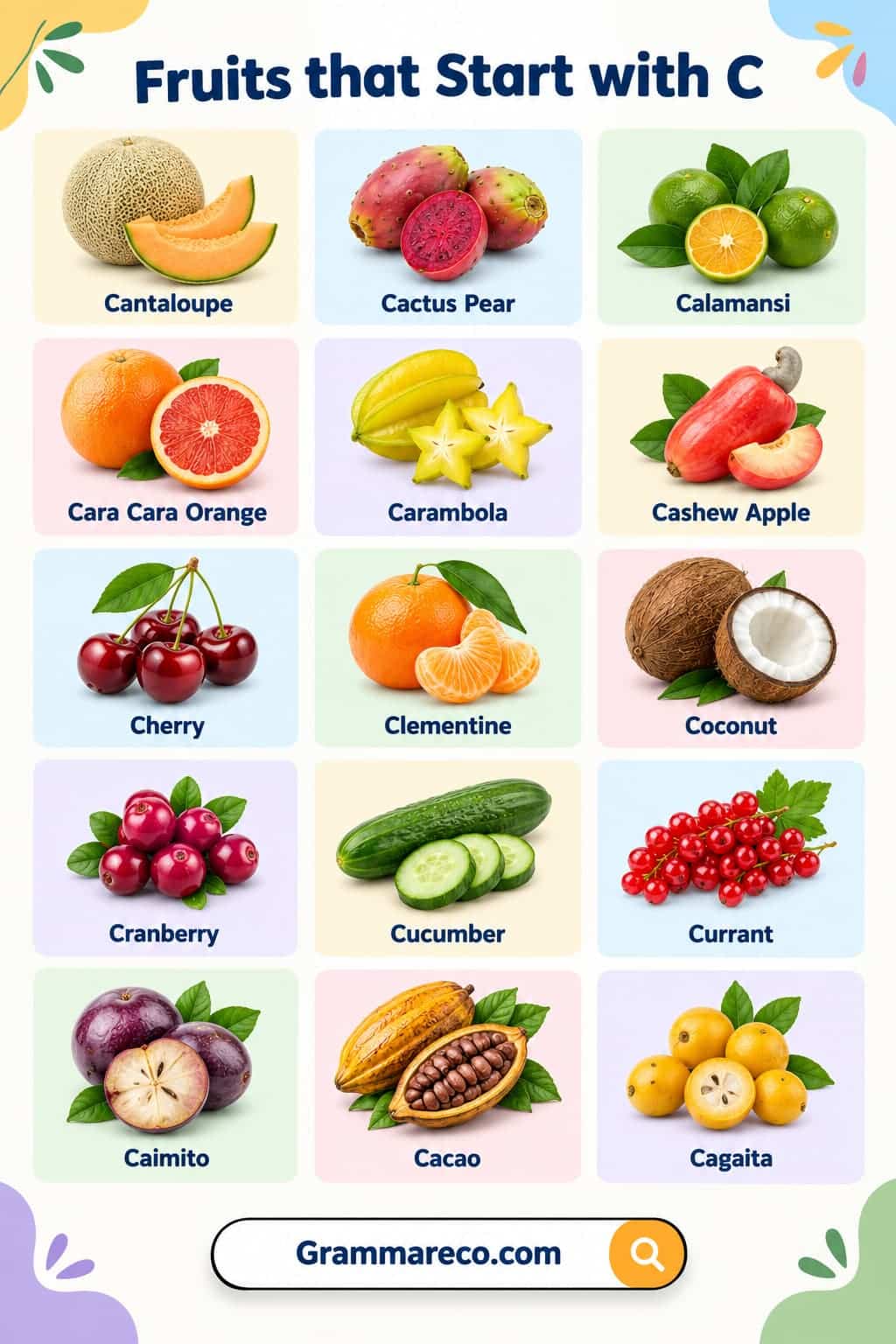
Common fruits beginning with C are familiar to many English learners and are often found in markets, grocery stores, and home gardens.
- Cantaloupe
- Cactus Pear
- Calamansi
- Cara Cara Orange
- Carambola
- Cashew Apple
- Cherry
- Clementine
- Coconut
- Cranberry
- Cucumber
- Currant
Tropical Fruits That Start With C
Tropical fruits that begin with C grow in warm climates and include sweet, juicy, and unusual varieties from Asia, Africa, and the Americas.
- Caimito
- Cacao
- Cagaita
- Calabur Fruit
- Camachile
- Cambuci
- Cambucá
- Camu Camu
- Canistel
- Cape Gooseberry
- Carambola
- Cashew Apple
- Cempedak
- Cherimoya
- Chico Fruit
- Cupuaçu
- Custard Apple
Citrus Fruits That Start With C
Citrus fruits beginning with C include oranges, mandarins, and other fruits known for their refreshing flavors and aromatic peels.
- Calamansi
- Cara Cara Orange
- Citron
- Clementine
- Clementine Orange
- Chinotto
- Citrus limetta
- Citrus medica
- Citrus reticulata
Exotic and Rare Fruits That Start With C
Some C fruits are less familiar because they grow in specific regions or are known mainly by local names.
- Cagaita
- Calabash Fruit
- Calabur Fruit
- Camu Camu
- Cambuci
- Canistel
- Capulin Cherry
- Carissa
- Cassabanana
- Cattley Guava
- Ceylon Gooseberry
- Cloudberry
- Cocoplum
- Cornelian Cherry
- Crowberry
- Cudrania Fruit
- Cudrang
- Cucumber Melon
Green Fruits Starting with C with Pictures
Green fruits that start with C include familiar choices such as cucumber, cantaloupe, and coconut, along with less common fruits such as canistel and caimito. Here are accurate examples of fruits beginning with c are follows:
- Cucumber – A green fruit commonly used as a vegetable, with crisp flesh and a mild, refreshing taste.
- Cantaloupe – A melon that can have green skin and sweet, juicy orange flesh when ripe.
- Coconut – A tropical fruit with a green outer husk when young and refreshing coconut water inside.
- Caimito (Star Apple) – A tropical fruit that may have green skin and soft, sweet flesh with a milky texture.
- Canistel – A tropical fruit that can have green skin before ripening and develops smooth, dense yellow flesh.
- Carambola (Star Fruit) – A crisp tropical fruit that is often green when unripe and has a distinctive star shape when sliced.
- Calamansi – A small citrus fruit that is commonly green when unripe and has a sharp, tangy flavor.
- Cactus Pear – The fruit of certain prickly pear cacti, with some varieties having green skin and juicy flesh.
- Cashew Apple – The fleshy fruit attached to the cashew nut, which can occur in green varieties before reaching full maturity.
- Camu Camu – A small Amazonian fruit that may have green skin when unripe and a strongly acidic flavor.
- Capulin Cherry – A cherry-like fruit that can appear green before ripening and later develops darker skin.
FAQs about Fruits that Start with C
Fruits that start with C include cantaloupe, cherry, coconut, cranberry, clementine, cactus pear, custard apple, carambola, calamansi, canistel, cacao, and Cape gooseberry.
Tropical fruits beginning with C include coconut, cacao, carambola, canistel, calamansi, camu camu, caimito, cashew apple, and cactus pear.
Green fruits that start with C include coconut, cucumber, carambola, custard apple, canistel, and cactus pear.
Yellow fruits starting with C include canary melon, Cara Cara orange, citron, canistel, carambola, and custard apple.
Read more