

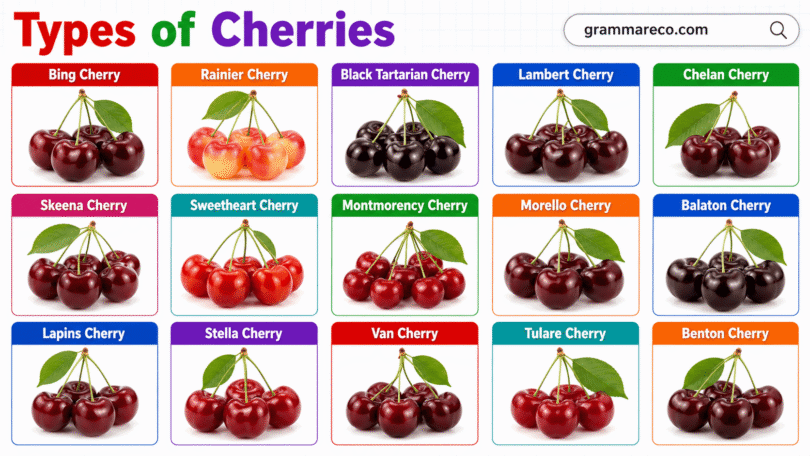
Have you ever tasted one cherry that felt like candy and another that made the perfect pie? Types of Cherries vary in flavor, color, texture, and growing regions across the world. From Bing and Rainier to Morello and Nanking cherries, each variety offers something unique for fresh eating, baking, preserves, and orchards.
Cherry lovers often know only a few common names, yet hundreds of different types of cherry grow in farms, forests, and home gardens. Some stay sweet and juicy while others bring a bold tart kick. This guide explores the most fascinating cherry varieties, their properties, uses, and surprising characteristics you may never have noticed before.
What are Cherries in English?
Cherries are small stone fruits produced by cherry trees, belonging to the genus Prunus. They are known for juicy flesh, a central seed, and a balance of sweet or tart flavor depending on the cherry variety.
Cherries are widely classified as sweet cherries and sour cherries, often used in fresh eating, desserts, jams, and beverages, depending on their flavor profile and ripening season.
Read more: National Fruit of Albania Cherry
Types of Cherries and Properties with Pictures
Types of cherries refer to different cherry cultivars, species, and hybrids that vary in taste, size, color, climate adaptability, and culinary use across global cherry orchards.
Popular Sweet Cherry Varieties Around the World
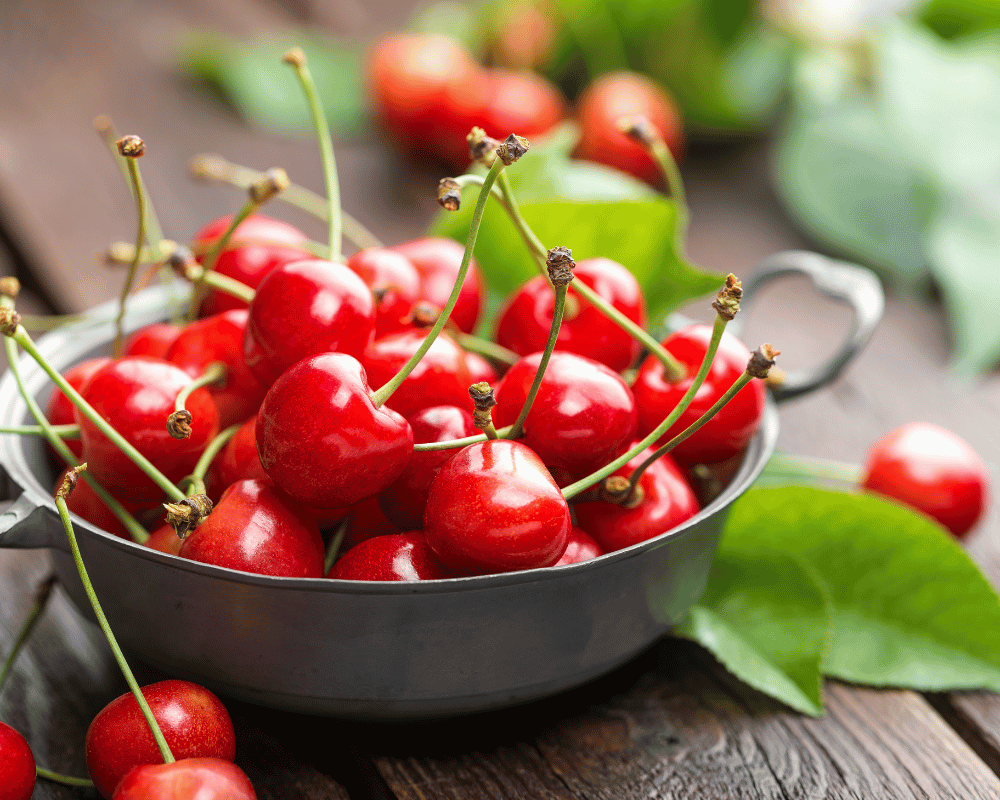
Sweet cherries are known for juicy flesh, low acidity, and dessert-like flavor. These cherry cultivars are commonly eaten fresh and are widely grown in orchards across Europe, North America, Asia, and Mediterranean regions.
Bing Cherry
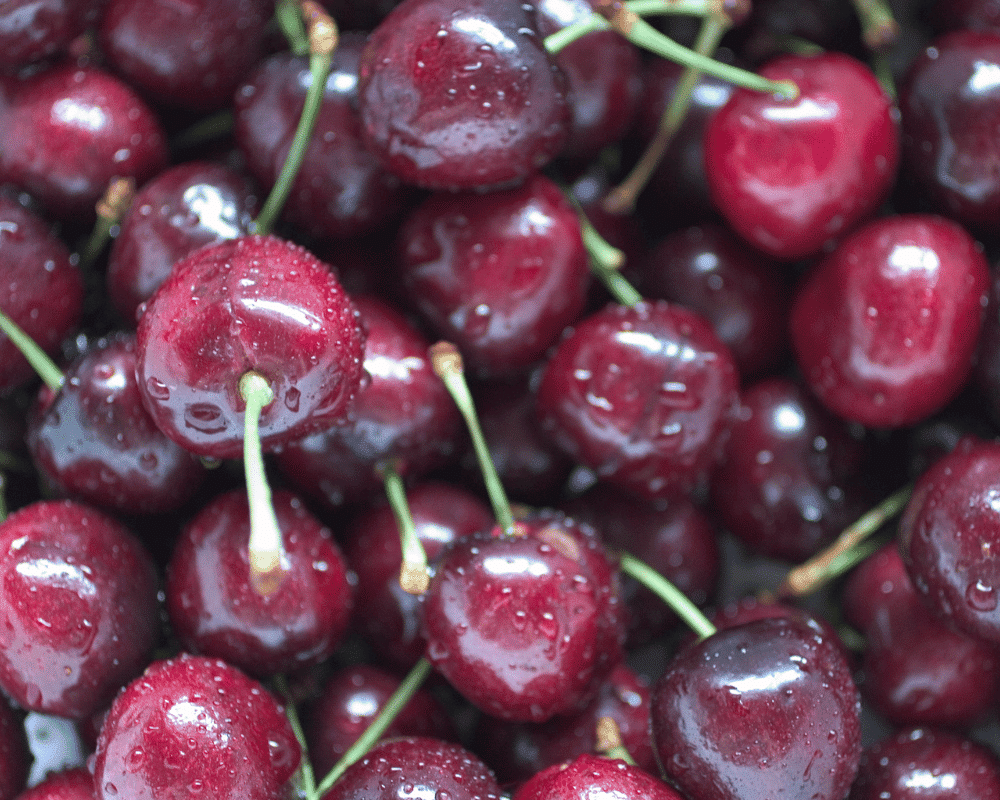
Bing Cherry is among the most famous dark sweet cherries grown commercially in the United States, especially in Washington, Oregon, and California. It produces large glossy fruit with rich coloration and excellent shelf life.
Its deep sweetness makes it ideal for snacking, fruit platters, smoothies, and frozen desserts. The balanced flavor also works well in homemade syrups and chocolate-covered treats.
- Size: Large
- Shape: Round heart-like
- Ripening Season: Late spring to early summer
- Harvest Time: June
- Seed Size: Medium pit
- Texture: Firm and juicy
Rainier Cherry
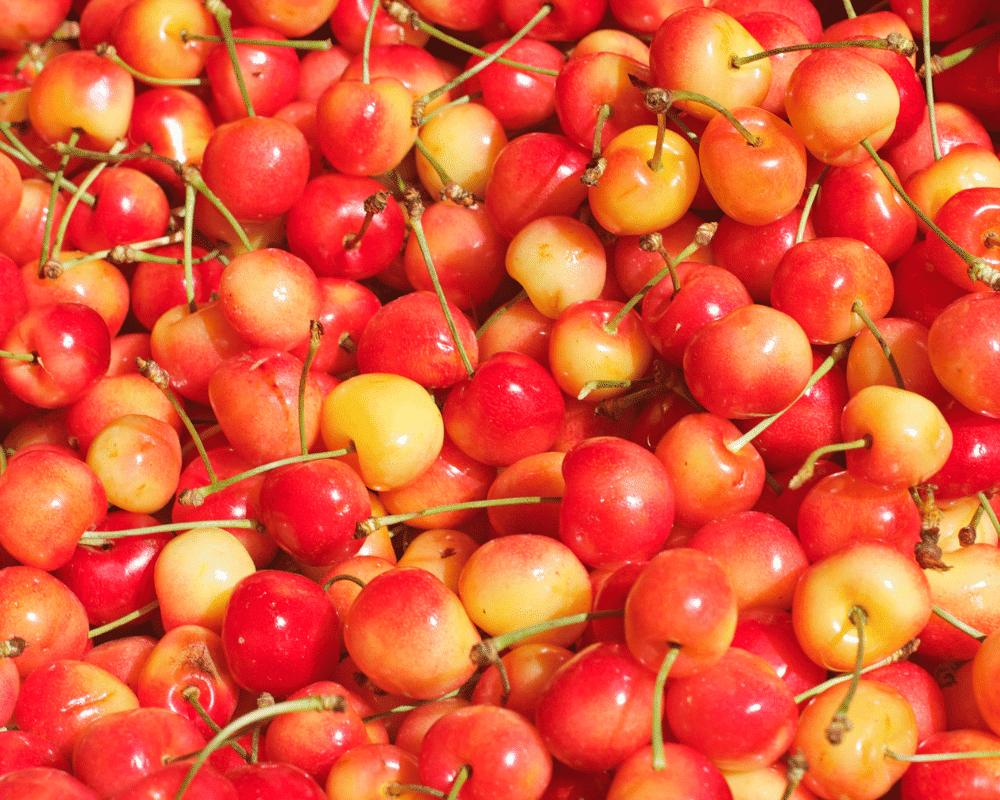
Rainier Cherry originated in Washington State and is easily recognized by its golden-yellow skin blended with red blushes. This premium cherry variety grows best in temperate climates with cool nights.
The flavor tastes exceptionally delicate and sugary with low acidity. People often enjoy Rainier cherries fresh because their tender flesh bruises easily during cooking.
- Size: Medium to large
- Shape: Rounded
- Ripening Season: Early summer
- Harvest Time: June to July
- Seed Size: Small pit
- Texture: Soft and creamy
Lapins Cherry
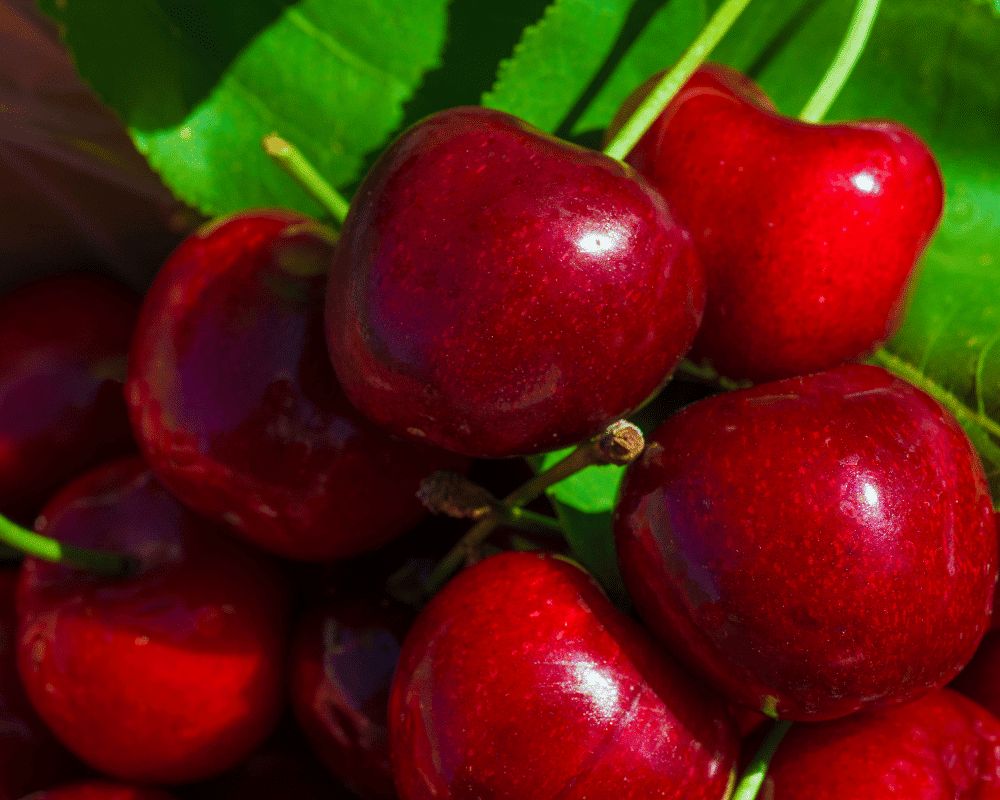
Lapins Cherry is a self-pollinating Canadian variety developed for commercial orchards and home gardens. It grows heavily and tolerates cracking better than several traditional sweet cherry cultivars.
The fruit delivers rich sweetness with mild acidity, making it suitable for fresh eating, tarts, juices, and refrigeration. Its dense flesh maintains quality during transport.
- Size: Large
- Shape: Oval-round
- Ripening Season: Mid-summer
- Harvest Time: July
- Seed Size: Medium
- Texture: Dense and succulent
Sweetheart Cherry
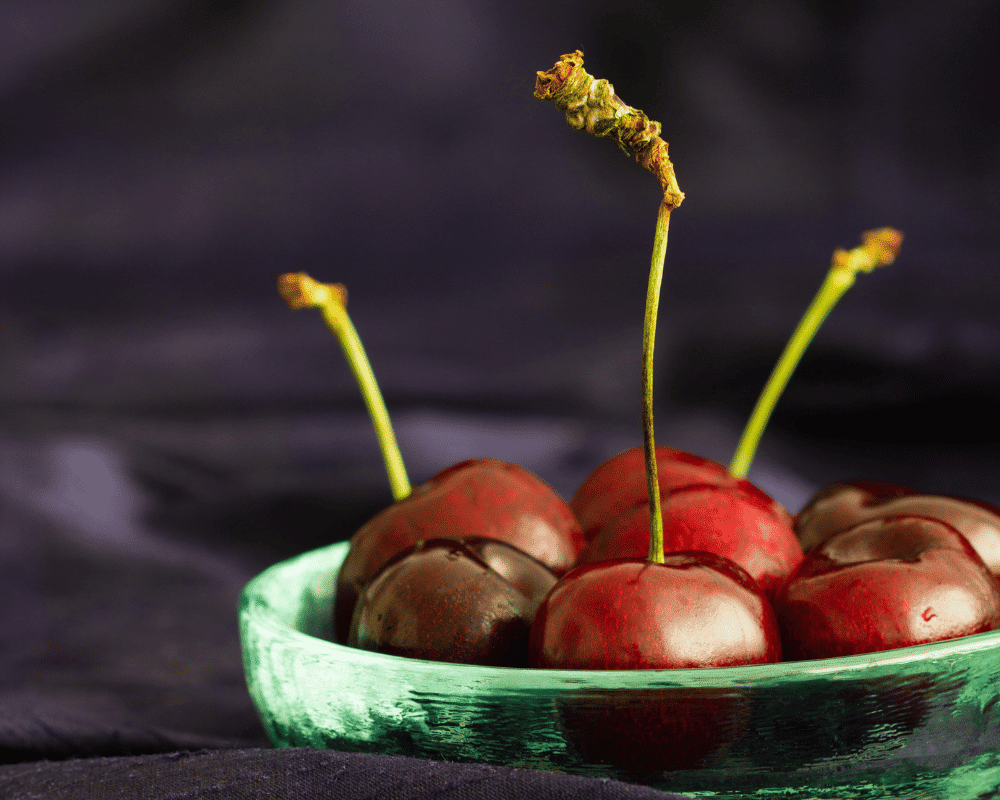
Sweetheart Cherry is a late-season sweet cherry cultivar valued for extended harvesting periods. Growers cultivate it widely in cooler cherry-producing regions of Canada and northern America.
Its flavor remains sweet with a slightly tangy finish that suits fruit salads, pastries, and chilled desserts. The fruit keeps firmness even after harvesting.
- Size: Medium
- Shape: Heart-shaped
- Ripening Season: Late summer
- Harvest Time: July to August
- Seed Size: Medium
- Texture: Crisp and juicy
Stella Cherry
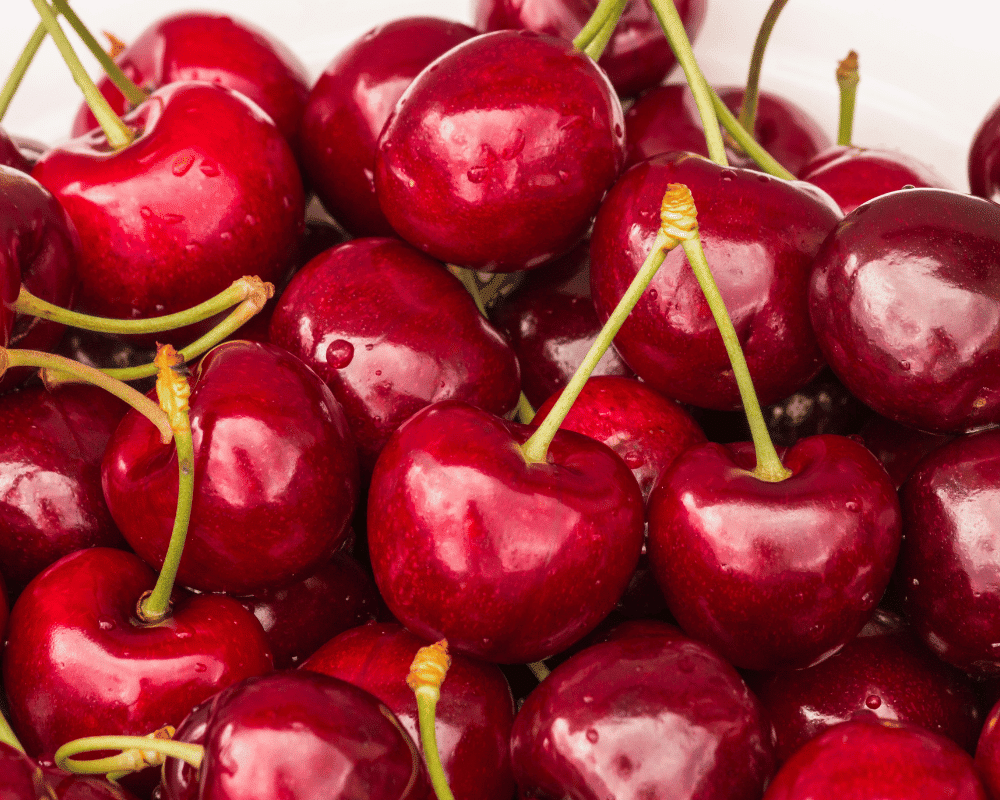
Stella Cherry became popular because it self-pollinates successfully and adapts well to smaller orchards. It grows across Europe, North America, and temperate garden zones.
The cherries taste rich, sweet, and mildly wine-like. Bakers often use Stella cherries in cakes and baked fruit dishes because they maintain flavor after heating.
- Size: Medium-large
- Shape: Broad round
- Ripening Season: Early summer
- Harvest Time: June
- Seed Size: Medium pit
- Texture: Tender and fleshy
Regina Cherry
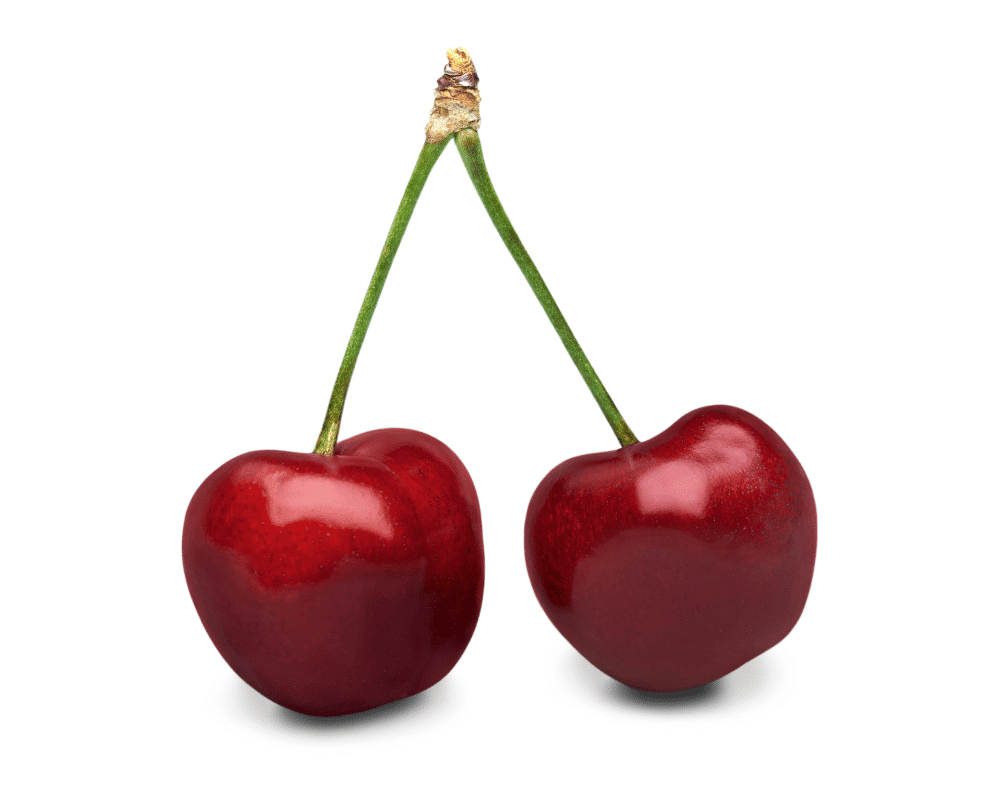
Regina Cherry is a German sweet cherry variety known for resistance to rain cracking and strong commercial value. Orchards favor this cultivar in cooler cherry-growing climates.
The flavor combines sweetness with subtle acidity, creating a fuller taste suitable for premium fresh markets and gourmet desserts.
- Size: Large
- Shape: Rounded
- Ripening Season: Late season
- Harvest Time: July
- Seed Size: Medium
- Texture: Firm and meaty
Black Tartarian Cherry
Black Tartarian Cherry is an old heirloom variety originating from Europe and Russia. It produces dark purple-red fruit on vigorous trees suited to traditional orchards.
The fruit tastes mellow, syrupy, and highly aromatic. Many families enjoy these cherries fresh or preserved into homemade compotes.
- Size: Medium
- Shape: Heart-like
- Ripening Season: Early summer
- Harvest Time: June
- Seed Size: Medium
- Texture: Soft and juicy
Chelan Cherry
Chelan Cherry ripens earlier than many commercial cherries and grows heavily in Pacific Northwest orchards. Farmers value it for early market production.
Its sweet flavor includes subtle spice notes and works nicely for fresh fruit bowls and chilled snacks during warm weather.
- Size: Medium-large
- Shape: Rounded
- Ripening Season: Very early
- Harvest Time: Late May to June
- Seed Size: Small-medium
- Texture: Firm
Skeena Cherry
Skeena Cherry is a crack-resistant Canadian cultivar producing dark fruit with glossy skin. It thrives in cooler climates and commercial plantations.
The cherries taste intensely sweet with concentrated sugars, making them excellent for premium retail packaging and luxury fruit assortments.
- Size: Large
- Shape: Broad round
- Ripening Season: Mid to late summer
- Harvest Time: July
- Seed Size: Medium
- Texture: Firm and dense
Santina Cherry
Santina Cherry is a modern hybrid variety bred for attractive appearance and early harvests. It grows successfully in several international cherry-producing regions.
The fruit provides balanced sweetness with refreshing undertones, ideal for fresh snacking and upscale fruit presentations.
- Size: Medium-large
- Shape: Heart-shaped
- Ripening Season: Early season
- Harvest Time: June
- Seed Size: Medium
- Texture: Crisp and juicy
Tart Cherry Types and Facts with Pictures
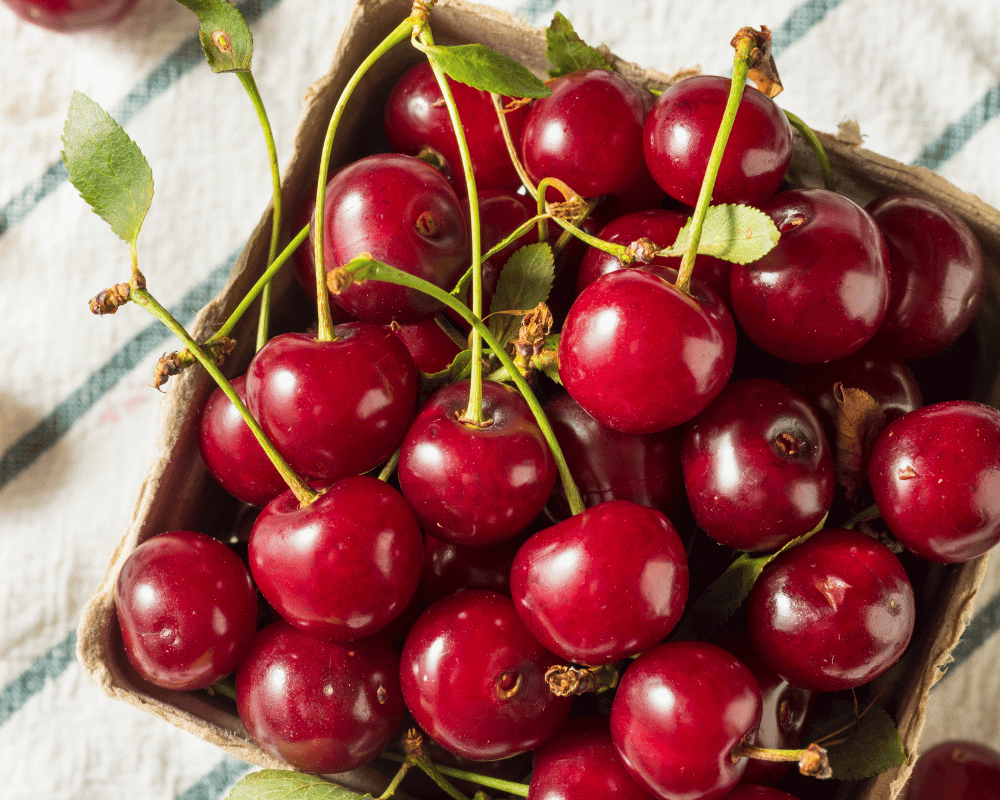
Tart cherries contain higher acidity and stronger flavor intensity than sweet cherries. These varieties are commonly used for pies, juices, preserves, sauces, and medicinal food products.
Montmorency Cherry
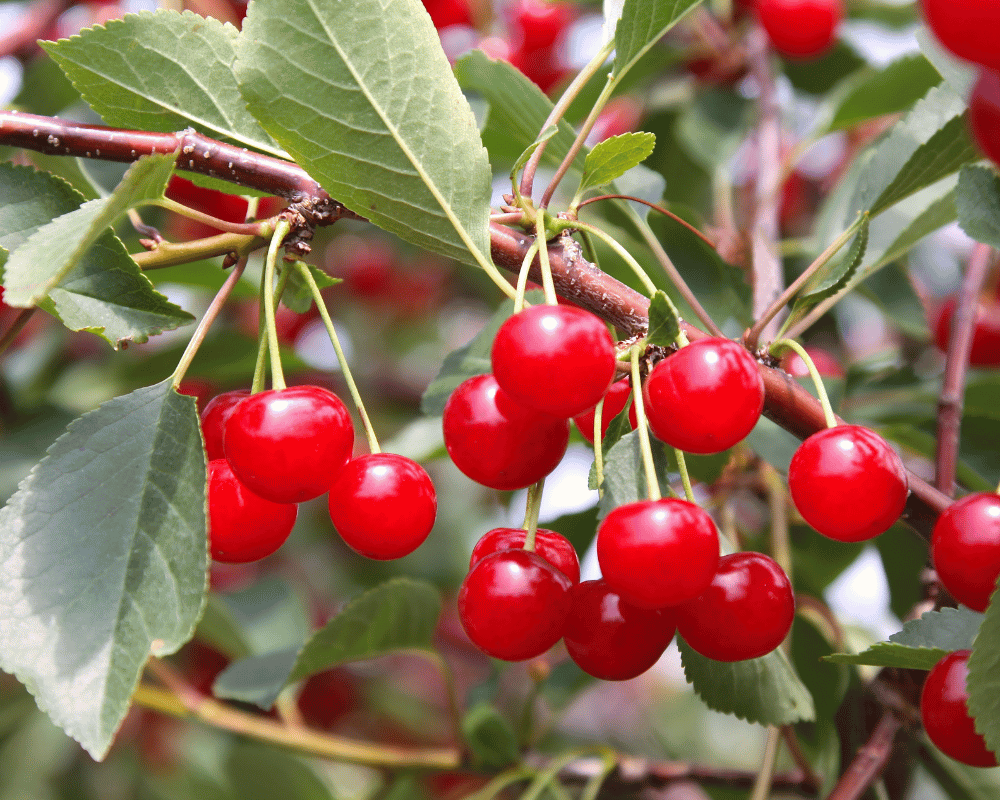
Montmorency Cherry is the most widely grown tart cherry in North America and thrives in Michigan and cooler agricultural zones. The trees produce bright red fruit with excellent processing quality.
Its bold tangy flavor works perfectly in cherry pies, concentrates, dried snacks, and baking recipes where sweetness is added separately.
- Size: Medium
- Shape: Round
- Ripening Season: Summer
- Harvest Time: July
- Seed Size: Small-medium
- Texture: Tender
Morello Cherry
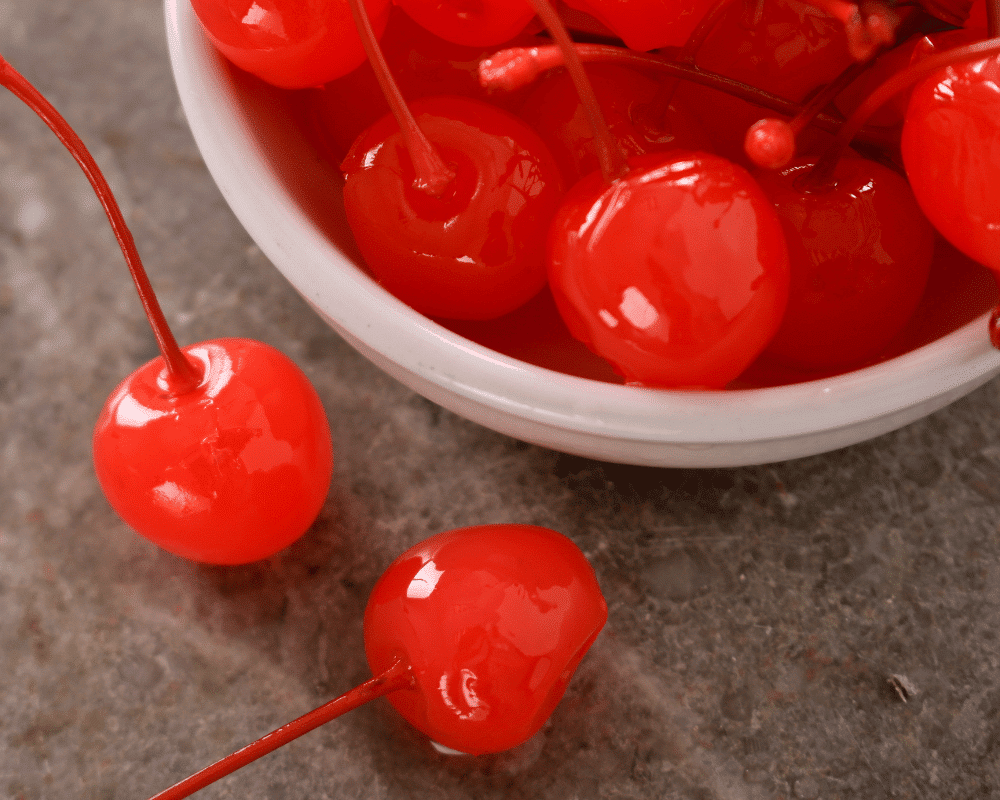
Morello Cherry is an ancient sour cherry type commonly cultivated in Europe, western Asia, and traditional orchards. The fruit develops dark red flesh and juice.
The taste remains sharp and richly acidic, making it suitable for jams, liqueurs, sauces, and preserved cherry products.
- Size: Medium
- Shape: Rounded
- Ripening Season: Mid-summer
- Harvest Time: July
- Seed Size: Medium
- Texture: Soft
Balaton Cherry
Balaton Cherry originated in Hungary and gained popularity for darker color and lower acidity than many tart cherries. Commercial farms value its deep pigmentation.
Its balanced tartness works beautifully in juices, dried fruit mixes, and gourmet pastries without excessive added sugar.
- Size: Medium-large
- Shape: Circular
- Ripening Season: Summer
- Harvest Time: July
- Seed Size: Medium
- Texture: Firm-tender
Amarena Cherry
Amarena Cherry grows traditionally in Italy and is famous for preserved dessert cherries packed in syrup. The trees produce small dark fruit with aromatic flesh.
Its bittersweet flavor creates luxurious toppings for ice cream, pastries, cakes, and Italian desserts.
- Size: Small
- Shape: Round
- Ripening Season: Late spring
- Harvest Time: June
- Seed Size: Small
- Texture: Juicy and soft
English Morello Cherry
English Morello Cherry adapts well to cooler European climates and often grows against garden walls or compact orchards. It remains one of Britain’s classic cooking cherries.
The fruit develops strong acidity that becomes excellent in baked pies, conserves, and homemade cherry sauces.
- Size: Medium
- Shape: Rounded
- Ripening Season: Late summer
- Harvest Time: August
- Seed Size: Medium
- Texture: Tender
North Star Cherry
North Star Cherry is a dwarf sour cherry developed for cold climates and smaller landscapes. It survives harsh winters better than many delicate cultivars.
The cherries taste tart yet pleasant enough for fresh tasting, juice preparation, and freezing for later use.
- Size: Small-medium
- Shape: Round
- Ripening Season: Mid-summer
- Harvest Time: July
- Seed Size: Small
- Texture: Juicy
Evans Bali Cherry
Evans Bali Cherry grows successfully in very cold regions, including parts of Canada. The trees produce reliable harvests despite difficult winter temperatures.
The flavor blends bright acidity with mild sweetness, making the fruit adaptable for pies, syrups, and preserves.
- Size: Medium
- Shape: Circular
- Ripening Season: Summer
- Harvest Time: July
- Seed Size: Medium
- Texture: Soft-firm
Top Dwarf and Home Orchard Cherry Types
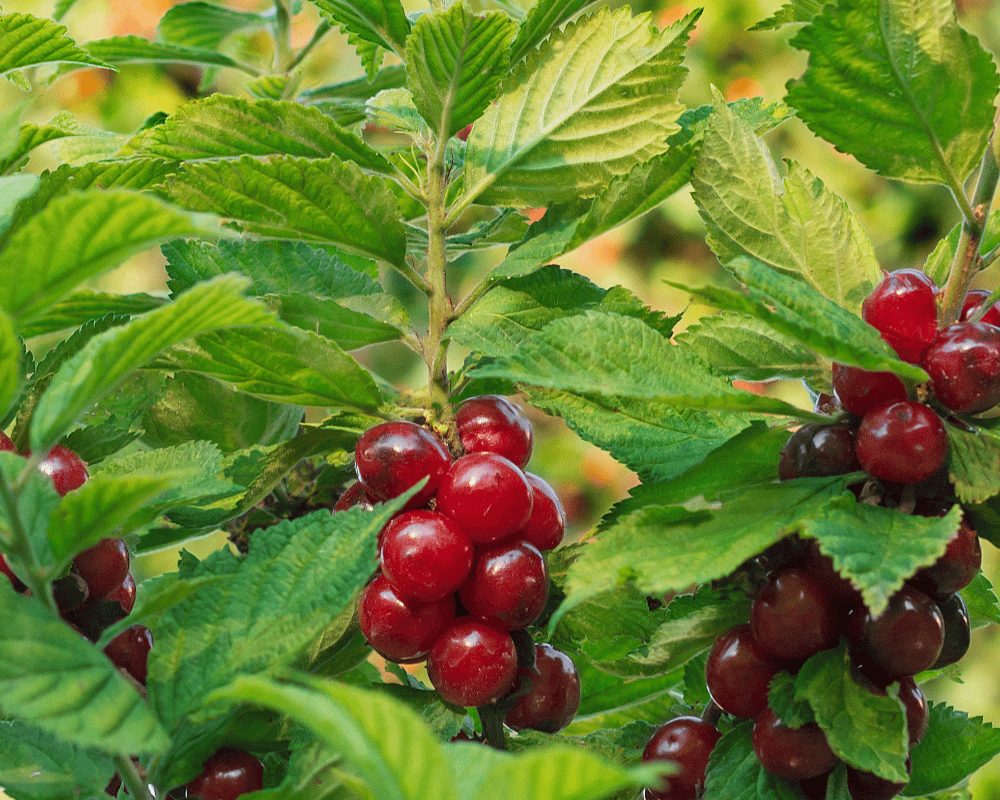
Dwarf cherries are compact fruit trees bred for containers, patios, and small backyard orchards. These varieties require less space while still producing flavorful cherries suitable for home harvests.
Compact Stella Cherry
Compact Stella Cherry grows smaller than standard trees and fits urban gardens, patios, and raised beds. Gardeners appreciate its self-pollinating habit and manageable size.
The cherries maintain classic Stella sweetness and perform well in fresh eating and homemade desserts.
- Size: Medium
- Shape: Rounded
- Ripening Season: Early summer
- Harvest Time: June
- Seed Size: Medium
- Texture: Juicy
Juliet Cherry
Juliet Cherry belongs to the Romance Series developed in Canada for cold resistance and compact growth. It adapts well to home orchards.
The fruit tastes sweet-tart with dark juice, making it useful for preserves, juice, and fresh snacking.
- Size: Medium
- Shape: Oval-round
- Ripening Season: Mid-summer
- Harvest Time: July
- Seed Size: Small
- Texture: Tender
Crimson Passion Cherry
Crimson Passion Cherry produces dark burgundy fruit on dwarf bushes suited to decorative landscapes and edible gardens.
Its flavor leans sweeter than many dwarf sour cherries and works nicely for fresh consumption and syrups.
- Size: Medium
- Shape: Round
- Ripening Season: Summer
- Harvest Time: July
- Seed Size: Small-medium
- Texture: Soft and juicy
Romeo Cherry
Romeo Cherry is another bush cherry cultivar bred for compact orchards and cold climates. It bears heavily after establishment.
The fruit develops rich color and concentrated flavor ideal for wine, juice, baking, and sauces.
- Size: Medium-large
- Shape: Circular
- Ripening Season: Mid-late summer
- Harvest Time: July to August
- Seed Size: Small
- Texture: Dense
Carmine Jewel Cherry
Carmine Jewel Cherry is among the earliest dwarf bush cherries to ripen and thrives in northern climates with freezing winters.
The cherries provide strong tartness balanced with sweetness, making them suitable for processing and home recipes.
- Size: Small-medium
- Shape: Round
- Ripening Season: Early summer
- Harvest Time: July
- Seed Size: Small
- Texture: Juicy
Wild Cherry Species Found in Natural Forests
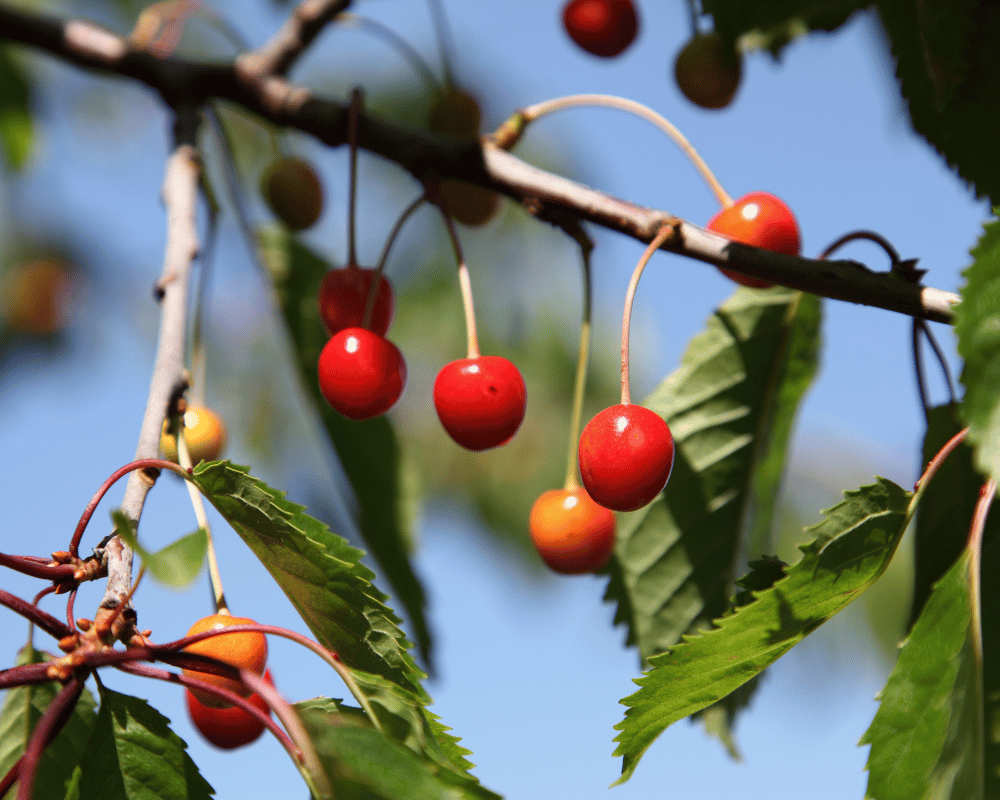
Wild cherries grow naturally in forests, grasslands, mountains, and native ecosystems. These cherry species support wildlife, pollinators, and traditional regional food practices.
Black Cherry
Black Cherry is native to North America and grows tall in forests and woodland edges. The small dark fruit has historical importance in traditional foods and herbal practices.
Its flavor begins bitter but becomes sweeter when fully ripe, especially in syrups and preserves.
- Size: Small
- Shape: Round
- Ripening Season: Late summer
- Harvest Time: August
- Seed Size: Large relative pit
- Texture: Soft
Chokecherry
Chokecherry grows across North American plains and riverbanks. Indigenous communities historically used the fruit in dried foods and sauces.
The cherries taste highly astringent when raw but improve after cooking or sweetening into jellies and beverages.
- Size: Small
- Shape: Rounded
- Ripening Season: Summer
- Harvest Time: August
- Seed Size: Medium
- Texture: Pulp-rich
Pin Cherry
Pin Cherry naturally grows in cooler forests and disturbed woodland areas throughout Canada and northeastern America.
The fruit tastes bright and tart, commonly used in preserves and rustic fruit preparations.
- Size: Small
- Shape: Circular
- Ripening Season: Early summer
- Harvest Time: June to July
- Seed Size: Small
- Texture: Soft
Nanking Cherry
Nanking Cherry originated in Asia and became popular as a hardy ornamental fruiting shrub in cold climates and windbreak landscapes.
The cherries provide mild sweetness with gentle acidity and are frequently turned into jams and juices.
- Size: Small-medium
- Shape: Round
- Ripening Season: Early summer
- Harvest Time: June
- Seed Size: Small
- Texture: Juicy
Bird Cherry
Bird Cherry grows naturally across Europe and northern Asia near rivers and moist woodlands. Wildlife frequently feeds on its clustered fruit.
The flavor stays sharp and bitter fresh, though processed products can develop pleasant fruity depth.
- Size: Small
- Shape: Rounded
- Ripening Season: Late summer
- Harvest Time: August
- Seed Size: Medium
- Texture: Soft
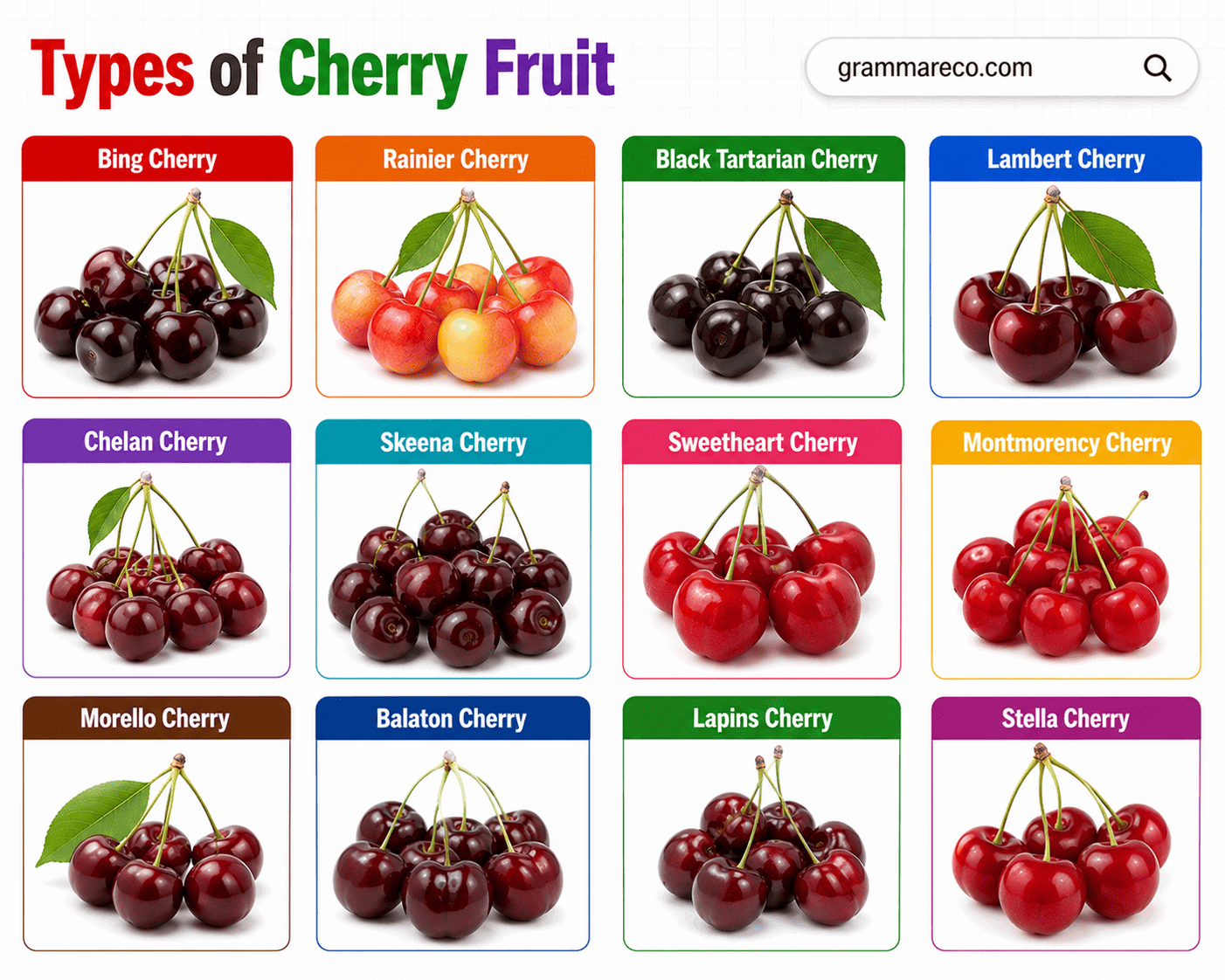
List of All Cherries with their Pictures
Learn about cherry varieties, their category, and common uses. It helps readers compare cherry types more efficiently before choosing varieties for gardens, recipes, or orchards. Here are some known types of cherries list below:
| Cherry Variety | Main Use |
|---|---|
| Bing | Fresh eating |
| Rainier | Premium fresh fruit |
| Lapins | Markets and desserts |
| Stella | Baking |
| Regina | Export orchards |
| Sweetheart | Late harvest |
| Chelan | Early season sales |
| Skeena | Retail packaging |
| Santina | Fruit platters |
| Black Tartarian | Traditional orchards |
| Montmorency | Pie filling |
| Morello | Preserves |
| Balaton | Juice |
| Amarena | Dessert topping |
| English Morello | Cooking |
| North Star | Home gardens |
| Evans Bali | Cold climates |
| Juliet | Backyard orchards |
| Romeo | Wine and syrup |
| Carmine Jewel | Processing |
| Crimson Passion | Fresh use |
| Black Cherry | Syrups |
| Chokecherry | Jelly |
| Pin Cherry | Preserves |
| Nanking Cherry | Juice |
| Bird Cherry | Wildlife support |
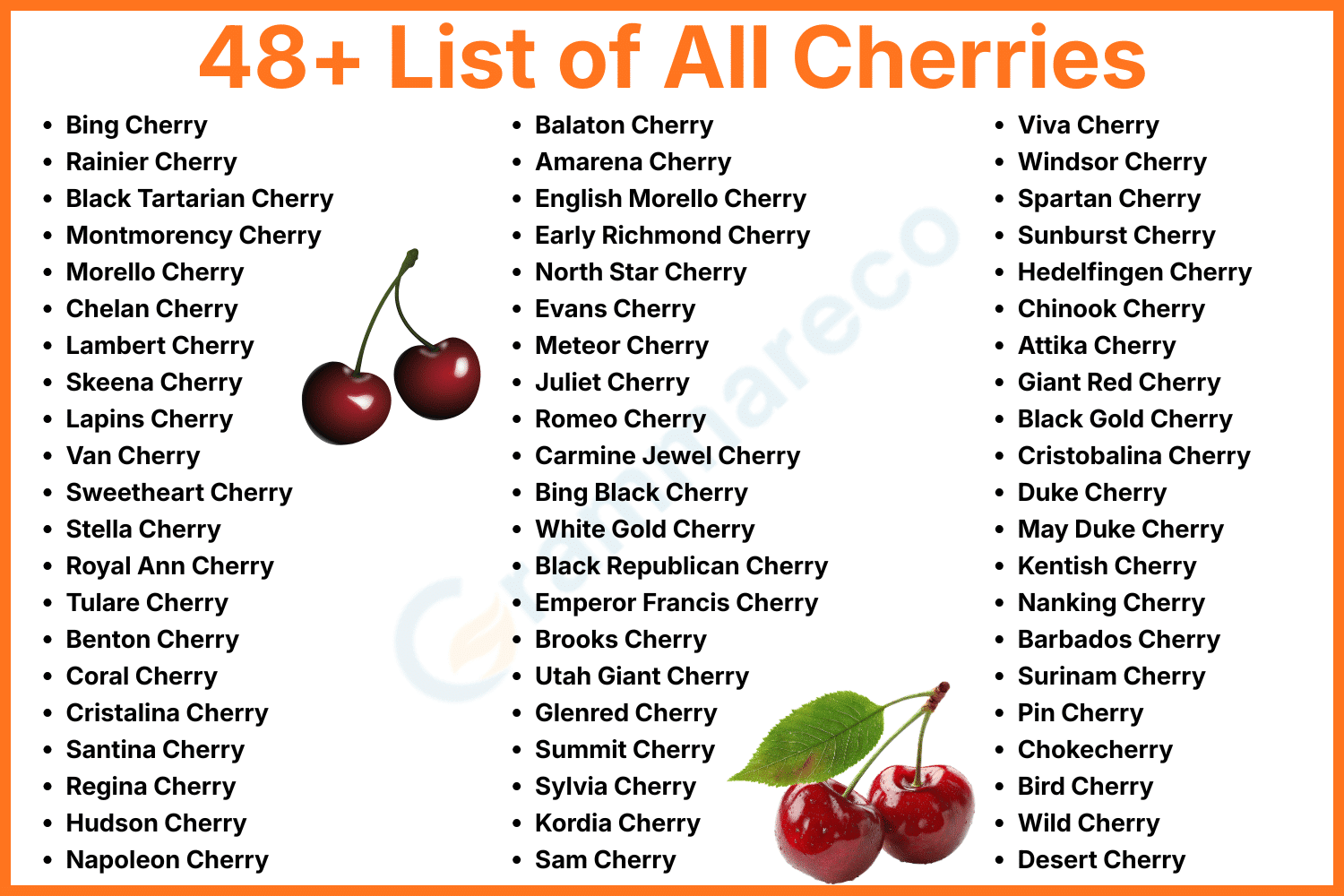
FQAs about Cherries Types
The main types of cherries are sweet cherries, tart cherries, dwarf cherries, and wild cherry species. Each group differs in flavor, texture, and culinary use.
Rainier Cherry is often considered one of the sweetest cherry varieties because of its high sugar content and delicate fruity taste.
Montmorency and Morello cherries are excellent for pies due to their bright tart flavor and juicy texture that balances sugar well.
Most cultivated cherries are edible, but some wild cherry species contain bitter compounds in seeds and leaves that should not be consumed.
Compact Stella, Juliet Cherry, and North Star Cherry grow successfully in home orchards, containers, and limited garden spaces.
The United States, Turkey, Canada, and several European countries produce popular cherry varieties for commercial orchards and exports.
Read more