
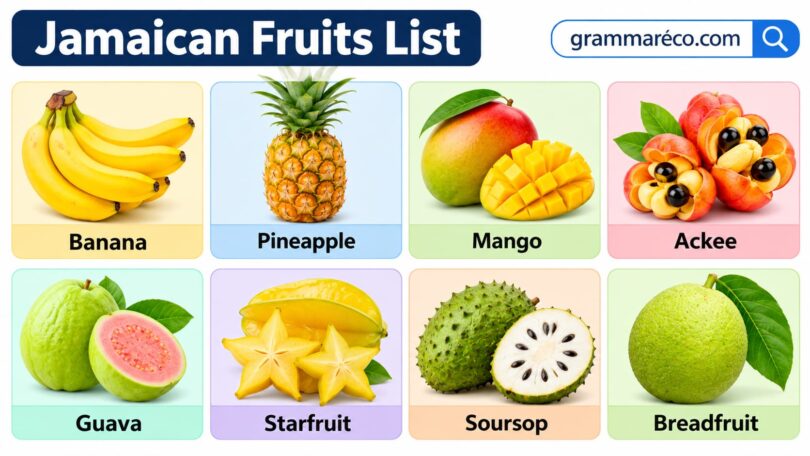
Jamaica is known for its rich fruit variety, colorful markets, and fresh fruit drinks. From ackee, guinep, June plum, and naseberry to mangoes, papayas, pineapples, and soursop, Jamaican fruits come in different flavors, shapes, and textures. Some are native to the Caribbean, while others were introduced and became part of everyday Jamaican food culture. These fruits are eaten fresh, blended into juices, served in desserts, or used in traditional meals. Learning about Jamaican fruits also reveals how climate, local traditions, and growing seasons influence the island’s food.
What Fruits Are Native to Jamaica?
Jamaica has several fruits associated with its local food culture, but not every fruit commonly grown or eaten there is native to the island. Some originated in the Caribbean or nearby tropical regions, while others arrived from Africa, Asia, and other parts of the world.
Ackee is one of Jamaica’s most recognized fruits and is closely connected to the country’s national cuisine. It originated in West Africa and was introduced to Jamaica, where it became an important part of local food traditions. Guinep, also called Spanish lime, is native to tropical parts of the Americas and the Caribbean. June plum, known as ambarella in other regions, originated in the Indo-Pacific but is widely grown and enjoyed in Jamaica.
Other fruits commonly found in Jamaica include naseberry, soursop, star apple, breadfruit, mango, papaya, and coconut. Their presence in Jamaican markets and cooking reflects the island’s diverse agricultural history rather than a shared Jamaican origin.
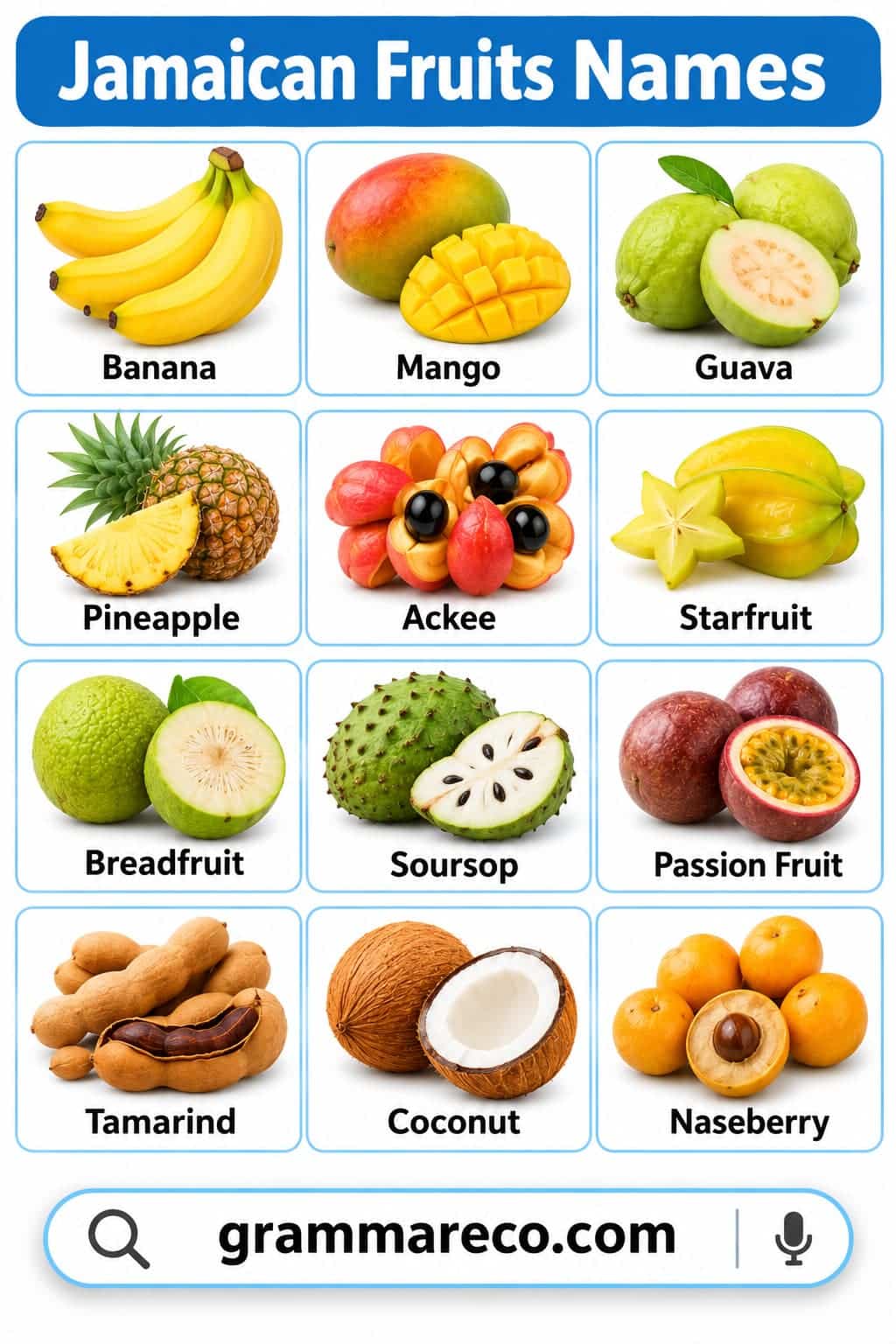
Popular Jamaican Fruits Names with Pictures and Facts
These fruits are especially familiar in Jamaican homes, markets, and food traditions. Some are eaten fresh, while others are used in drinks, snacks, and cooked dishes.
1. Ackee
Ackee is one of Jamaica’s best-known fruits and an important part of its national food culture. It has a bright red outer covering that opens naturally when ripe, revealing soft, creamy yellow flesh surrounding dark seeds. The edible arils have a mild flavor and buttery texture. Ackee is traditionally cooked with saltfish, onions, tomatoes, and seasonings. It must be properly ripened and prepared because unripe ackee and other parts of the fruit can contain dangerous toxins.
2. Guinep
Guinep, also called Spanish lime or mamoncillo, is a small, round fruit that grows in clusters on trees. It has a thin green outer shell and juicy orange or salmon-colored flesh surrounding a large seed. The flavor is usually sweet, tangy, and slightly tart. Jamaicans commonly enjoy guinep by cracking the shell and sucking the pulp from the seed. It is a familiar seasonal snack sold by roadside vendors and in local markets.
3. June Plum
June plum is a firm, oval-shaped fruit with green skin that turns yellow as it ripens. It has crisp, juicy flesh and a large, fibrous stone in the center. Its taste changes with ripeness: green fruit is sour and crunchy, while ripe fruit becomes sweeter and softer. In Jamaica, June plum is eaten fresh with salt or seasonings and used to make juices, chutneys, and pickled preparations. It is also known as ambarella or golden apple in other countries.
4. Naseberry
Naseberry, commonly called sapodilla in many countries, is a round or oval fruit with rough brown skin and sweet, soft flesh. Its flavor is often compared to brown sugar, caramel, or pear, with a slightly grainy texture. The fruit contains several dark, shiny seeds and is usually eaten when fully ripe. In Jamaica, naseberry is enjoyed fresh as a snack and sometimes blended into drinks. Its natural sweetness makes it a popular choice for people who enjoy rich, dessert-like fruit flavors.
5. Soursop
Soursop is a large, green fruit covered with soft-looking, pointed bumps. When ripe, its white flesh becomes tender, juicy, and creamy, with a sweet-and-sour flavor. It contains dark seeds that should be removed before eating the pulp. In Jamaica, soursop is commonly used to prepare fresh drinks, smoothies, ice cream, and desserts. Its distinctive taste combines citrus-like tanginess with a creamy texture, making it one of the island’s recognizable fruits.
6. Star Apple
Star apple is a round fruit with smooth purple or green skin, depending on the variety. When cut across the middle, its pale or purple flesh forms a star-like pattern around the seeds. The pulp is soft, juicy, and sweet, with a milky texture. Jamaicans often eat star apple chilled by scooping out the flesh with a spoon. The skin and rind are not usually eaten. Its attractive appearance and sweet flavor make it a memorable seasonal fruit.
7. Breadfruit
Breadfruit is a large, round or oval fruit with green, textured skin. Unlike most sweet fruits, it is usually treated as a starchy food and cooked before eating. Its pale flesh becomes soft and potato-like when boiled, roasted, baked, or fried. In Jamaica, breadfruit is commonly served alongside fish, meat, and vegetables. Roasted breadfruit is especially popular and is often eaten with ackee and saltfish or other traditional meals.
8. Coconut
Coconut is a familiar fruit of Jamaican coastal areas and communities. Its hard shell contains refreshing coconut water and white flesh, which becomes thicker as the fruit matures. Young green coconuts are especially valued for their sweet, cooling water, while mature coconuts provide firm flesh used in cooking and baking. Jamaicans enjoy coconut water as a fresh drink and use grated coconut in desserts, cakes, sweets, and traditional recipes.
9. Tamarind
Tamarind grows in long, curved pods with a brittle brown shell. Inside, its sticky brown pulp surrounds several hard seeds. The flavor is tangy and sour when less sweet, but ripe pulp can have a pleasant balance of sweetness and acidity. In Jamaica, tamarind is eaten fresh, mixed with sugar to make sweets, or used in drinks and sauces. Tamarind balls are a familiar treat made by shaping the pulp with sugar and sometimes spices.
10. Sweet Sop
Sweet sop, also called sugar apple in many regions, is a rounded fruit with a bumpy, segmented green skin. Its soft white flesh is creamy and sweet, with a flavor often compared to custard. The fruit contains several dark seeds that must be removed before eating. In Jamaica, sweet sop is usually enjoyed fresh when fully ripe. Its soft texture makes it suitable for scooping with a spoon and serving chilled.
Tropical Fruits Commonly Grown in Jamaica
Jamaica’s warm climate and rainfall support the growth of many tropical fruit trees and plants. The following fruits are commonly cultivated or enjoyed on the island, although several originated elsewhere.
1. Mango
Mango is one of the most popular fruits in Jamaica, with many local varieties differing in size, color, sweetness, and texture. Ripe mangoes have juicy yellow or orange flesh, while some varieties are enjoyed green with salt or seasonings. Jamaicans eat mangoes fresh, blend them into juices, and use them in fruit salads and desserts. The main mango season generally falls during the warmer months, when markets offer many varieties.
2. Papaya
Papaya, also called pawpaw, is a large, oval fruit with green skin that turns yellow or orange as it ripens. Its soft orange flesh has a mild sweetness and contains small black seeds in the center. In Jamaica, papaya is eaten fresh, added to fruit salads, and blended into smoothies and juices. It grows well in warm conditions and can produce fruit across much of the year where growing conditions are suitable.
3. Pineapple
Pineapple is a sweet, juicy fruit with a rough, spiky outer skin and a crown of pointed leaves. Its golden flesh has a refreshing balance of sweetness and acidity. In Jamaica, pineapple is enjoyed fresh, served with other fruits, and used in juices, desserts, and sauces. It grows in warm, sunny areas and is valued for its strong aroma and bright flavor. Local availability can vary with harvest conditions.
4. Banana
Bananas are widely grown and eaten in Jamaica. They have a soft, sweet interior when ripe and a yellow peel, although some varieties remain green or develop darker markings. Ripe bananas are eaten as snacks and used in smoothies, cakes, and desserts. Green bananas are often boiled and served as part of traditional meals. Their versatility makes them a familiar food in Jamaican households.
5. Plantain
Plantain resembles a large banana but is usually cooked rather than eaten raw. Green plantains are firm and starchy, while ripe plantains become softer and sweeter as their peel turns yellow or black. In Jamaica, plantains are commonly sliced and fried, boiled, or roasted as a side dish. They pair well with fish, meat, vegetables, and traditional breakfasts. Plantain is valued as a filling staple rather than a typical sweet fruit.
6. Watermelon
Watermelon is a large, refreshing fruit with a thick green rind and juicy red or pink flesh. It has a high water content and a sweet flavor, making it popular during hot weather. In Jamaica, watermelon is eaten chilled, cut into slices, or blended into fresh drinks. It is also added to fruit salads. Its refreshing texture makes it a common choice for family gatherings and warm-weather snacks.
7. Guava
Guava is a round or oval fruit with green or yellow skin and fragrant flesh that may be white, pink, or red. Its flavor is sweet with a slightly tangy edge, and its center contains many small edible seeds. Jamaicans enjoy guava fresh and use it in juices, jams, jellies, and desserts. Guava’s strong aroma and distinctive taste make it useful in both sweet preparations and fruit drinks.
8. Passion Fruit
Passion fruit is a round or oval fruit with a tough outer rind that may be purple or yellow. Inside, it contains aromatic pulp filled with small edible seeds. Its flavor is strongly fragrant, sweet, and tart. In Jamaica, passion fruit pulp is commonly blended with water and sweetener to make refreshing drinks. It is also used in desserts, sauces, and fruit mixtures because a small amount adds a noticeable tropical flavor.
9. Orange
Oranges are round citrus fruits with a bright orange peel and juicy segments. Their flavor ranges from sweet to pleasantly sour, depending on the variety and growing conditions. In Jamaica, oranges are eaten fresh, squeezed for juice, and used in fruit salads and cooking. They are a familiar source of refreshing citrus flavor and are often sold in local markets and roadside stalls.
10. Grapefruit
Grapefruit is a large citrus fruit with yellow or yellow-pink skin and juicy segments. Its flavor is tangy and may range from pleasantly sweet to distinctly bitter. In Jamaica, grapefruit is eaten fresh, squeezed into juice, or served chilled for breakfast. Some people add a little sugar to balance its sharp taste. It is also used in fruit salads and refreshing drinks.
11. Lime
Lime is a small citrus fruit with green skin and strongly flavored, acidic juice. Its sharp taste makes it useful as an ingredient rather than a fruit commonly eaten on its own. In Jamaica, lime juice is added to drinks, marinades, sauces, and seafood dishes. It also helps brighten the flavor of fruit juices and traditional recipes. Both the juice and fragrant zest can be used in cooking.
12. Cantaloupe
Cantaloupe is a round melon with a netted outer skin and sweet orange flesh. Its soft, juicy texture and gentle aroma make it popular as a fresh snack. In Jamaica, cantaloupe is eaten chilled, added to fruit salads, and blended into smoothies or drinks. It is refreshing in warm weather and pairs well with watermelon, pineapple, and other fresh fruits.
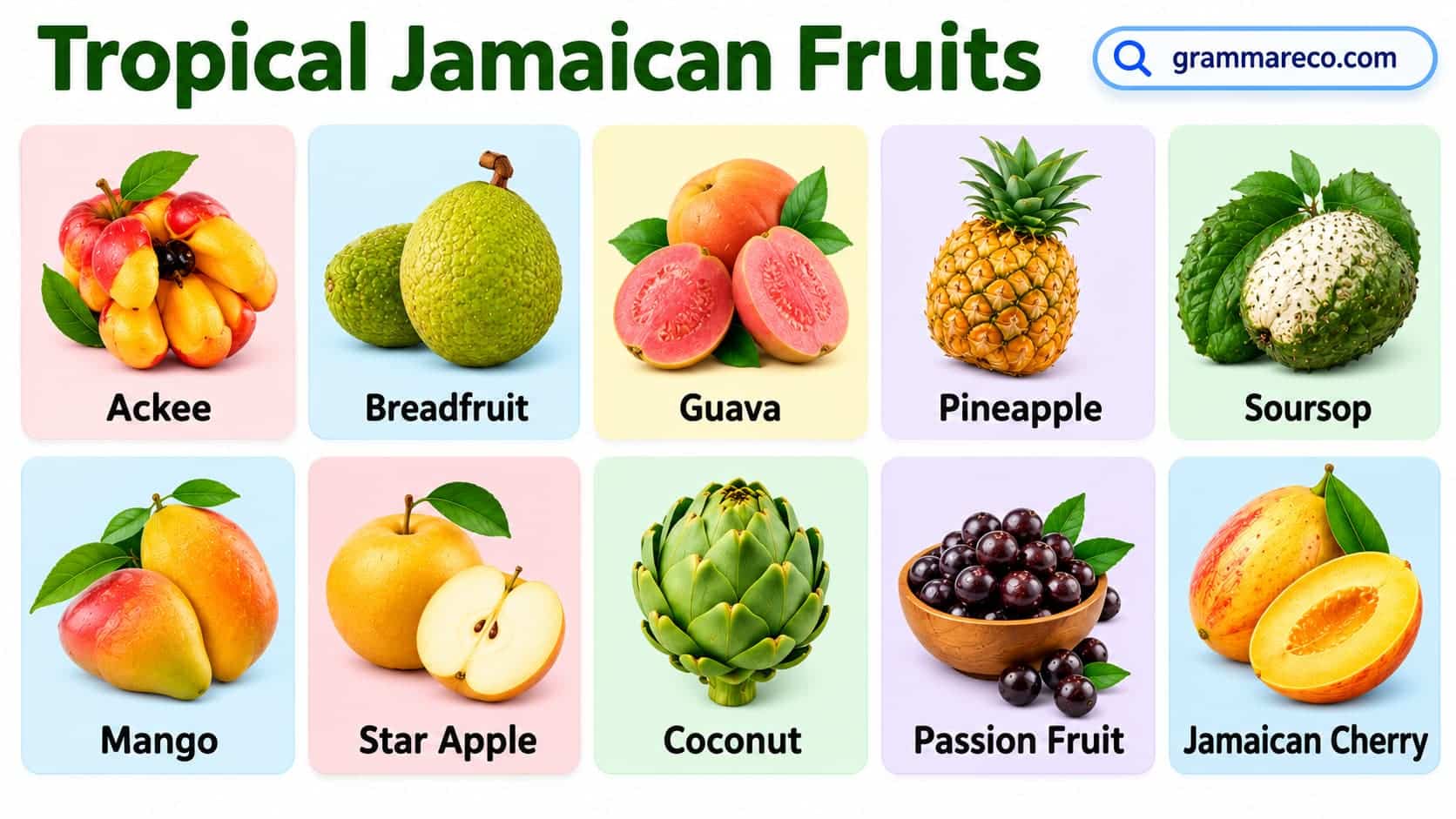
List of All Jamaican Fruits Names and their Pictures
| Ackee | Guinep | June Plum |
| Naseberry | Soursop | Star Apple |
| Breadfruit | Coconut | Tamarind |
| Sweet Sop | Mango | Papaya |
| Pineapple | Banana | Plantain |
| Watermelon | Guava | Passion Fruit |
| Orange | Grapefruit | Lime |
| Cantaloupe | Avocado | Jackfruit |
| Sugar Cane | Otaheite Apple | Malay Apple |
| Cashew Apple | Custard Apple | Pawpaw |
| Golden Apple | East Indian Mango | Hog Plum |
| Genip | Jamaican Cherry | Mammee Apple |
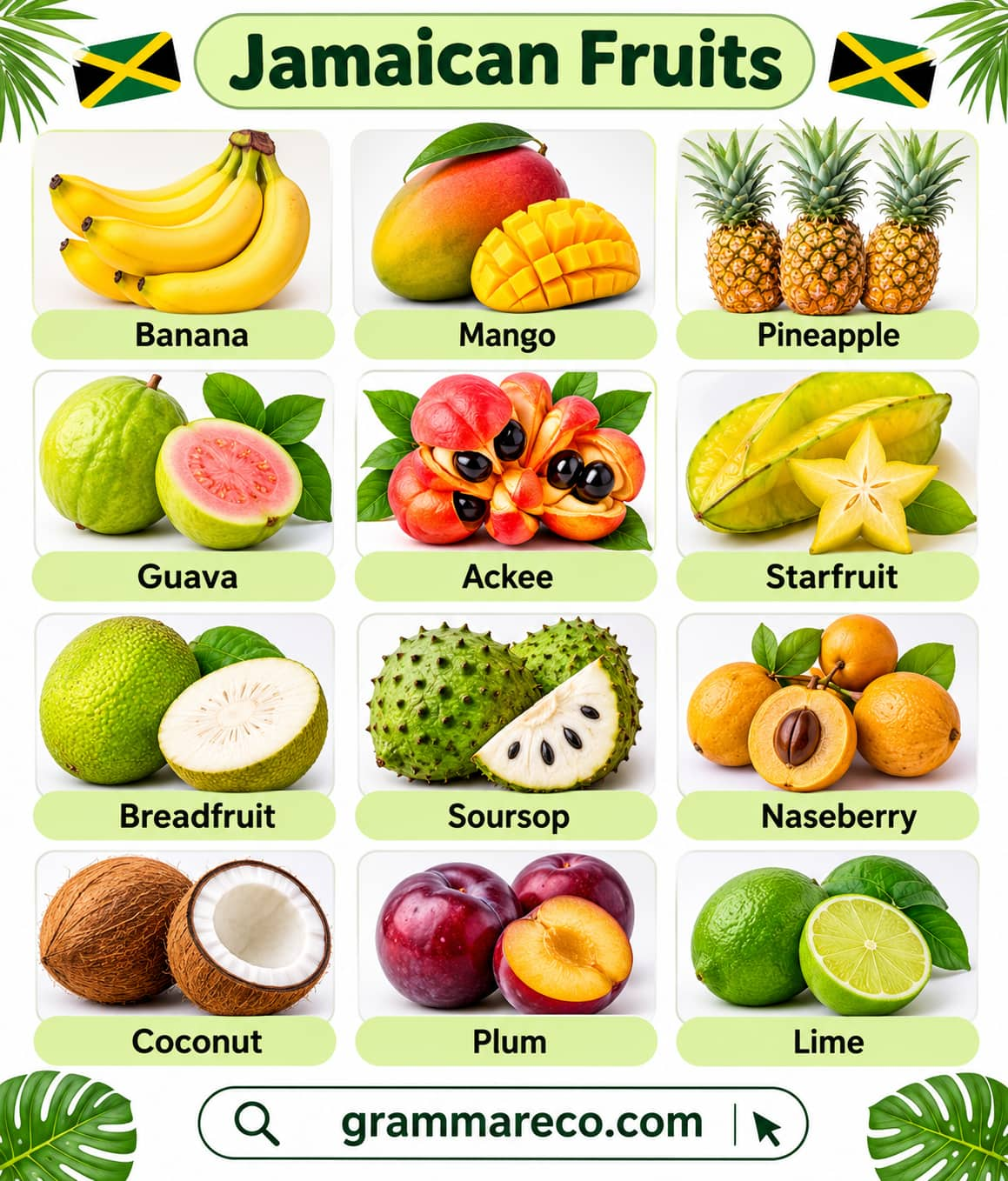
Jamaican Fruits by Season
Jamaica’s tropical climate allows many fruits to grow during different parts of the year. Some are available for several months, while others have shorter harvest periods. The seasons below are general guides because rainfall, location, and growing conditions can affect when fruits ripen and appear in markets.
Fruits Available in Spring
Spring in Jamaica covers approximately March to May. Mangoes and several other fruits begin appearing more regularly as the warmer months approach.
| Fruit Name | Fruit Season in Jamaica |
|---|---|
| Mango | Early mango varieties begin appearing in spring, with availability increasing toward May and the main summer harvest. |
| June Plum | June plum may begin appearing toward late spring, although its main availability often continues into summer. |
| Naseberry | Naseberry can be found during parts of spring, depending on local varieties and growing conditions. |
| Soursop | Soursop may be available in spring, as trees can produce fruit at different times throughout the year. |
| Guava | Guava can be harvested during spring in suitable growing areas, with availability varying by variety. |
| Papaya | Papaya is commonly available in spring because plants can produce fruit across much of the year. |
| Pineapple | Pineapple may be available in spring, although harvest timing varies with cultivation and weather conditions. |
| Otaheite Apple | Otaheite apple may appear during spring in some areas, depending on local flowering and fruiting patterns. |
Fruits Available in Summer
Summer, approximately June to August, is an important fruit season in Jamaica. Mangoes, guinep, June plum, and several other local favorites are commonly found during these months.
| Fruit Name | Fruit Season in Jamaica |
|---|---|
| Mango | Summer is the main mango season, with many varieties available in markets, especially around June and July. |
| Guinep | Guinep is commonly harvested in summer, when clusters of green-skinned fruits appear in local markets. |
| June Plum | June plum is widely enjoyed during summer, especially when its fruit becomes plentiful and ripe. |
| Naseberry | Naseberry may be available during summer, although its harvest can vary between growing areas. |
| Soursop | Soursop continues to appear in summer, with local availability depending on rainfall and tree production. |
| Star Apple | Star apple is often associated with warmer months, although its exact harvest period varies locally. |
| Sweet Sop | Sweet sop may be harvested during summer, when ripe fruits are sold in local markets. |
| Breadfruit | Breadfruit is commonly available during summer, with different trees producing crops at different times. |
| Otaheite Apple | Otaheite apple is often associated with summer and may be found during its local harvest period. |
| Tamarind | Tamarind pods may be available in summer, depending on the maturity and fruiting cycle of local trees. |
Fruits Available in Fall
Fall runs approximately September to November in Jamaica. Several fruits remain available during this period, although some summer favorites become less common.
| Fruit Name | Fruit Season in Jamaica |
|---|---|
| Guava | Guava may continue producing fruit in fall, with availability influenced by variety and local rainfall. |
| Papaya | Papaya is commonly available in fall because its plants can bear fruit over extended periods. |
| Banana | Bananas are available throughout fall, as Jamaican banana plants produce crops in different growing cycles. |
| Plantain | Plantains remain available in fall and are harvested at different stages for cooking. |
| Coconut | Coconuts can be harvested during fall, with young and mature fruits available throughout the year. |
| Breadfruit | Breadfruit may continue appearing in fall, depending on the variety and local harvest cycle. |
| Soursop | Soursop may be available in fall, although production varies between trees and growing regions. |
| Pineapple | Pineapple is available during parts of fall, depending on planting schedules and harvest conditions. |
| Orange | Some orange varieties may be available in fall, with larger supplies often appearing later in the year. |
Fruits Available in Winter
Winter covers approximately December to February in Jamaica. Citrus fruits are particularly useful during this period, while many year-round fruits remain available.
| Fruit Name | Fruit Season in Jamaica |
|---|---|
| Orange | Winter is an important period for many citrus varieties, with oranges commonly available in local markets. |
| Grapefruit | Grapefruit is often available during winter, when citrus fruits are a familiar seasonal choice. |
| Lime | Limes can be found during winter, although local supply may continue throughout much of the year. |
| Banana | Bananas remain available in winter because production takes place across different parts of the island. |
| Papaya | Papaya can be harvested in winter, making it a familiar fruit beyond the main mango season. |
| Coconut | Coconut is available during winter, with young coconuts often sold for their refreshing water. |
| Guava | Guava may still be found in winter, depending on local varieties and growing conditions. |
| Pineapple | Pineapple can be available in winter, although its supply depends on the harvest cycle. |
| Avocado | Jamaican avocados may be available in parts of winter, depending on the variety and local season. |
National Fruit of Jamaica Ackee
Ackee is Jamaica’s national fruit and one of the most recognizable ingredients in its traditional cuisine. Originally from West Africa, it was brought to Jamaica and became closely associated with the country’s food culture. Its soft, creamy yellow flesh is usually cooked with saltfish, onions, tomatoes, and seasonings to make the famous Jamaican dish ackee and saltfish. Only naturally opened, properly ripened ackee arils should be eaten after correct preparation, as unripe fruit can be poisonous.
Traditional Jamaican Fruits Used in Local Dishes
Jamaican fruits are used in more than fresh snacks and fruit bowls. Many have an important place in traditional meals, homemade drinks, chutneys, and desserts.
Ackee in Jamaican Cooking
Ackee is best known as the main ingredient in Jamaica’s famous ackee and saltfish dish. The soft yellow arils are gently cooked with salted cod, onions, tomatoes, peppers, and seasonings. The finished dish has a creamy texture and mild flavor that pairs well with fried dumplings, boiled green bananas, breadfruit, or roasted yam. Although ackee is botanically a fruit, Jamaicans generally prepare and serve it as a savory food rather than a sweet dessert ingredient.
Breadfruit in Traditional Meals
Breadfruit is a starchy fruit that is usually cooked and served as part of a main meal. In Jamaica, it is commonly roasted over an open flame, boiled, baked, or fried. Roasted breadfruit has a firm outside and a soft, filling interior. It is often served with ackee and saltfish, fried fish, or other traditional dishes. Its mild flavor makes it a useful alternative to potatoes and other starchy foods.
June Plum in Drinks and Chutneys
June plum is used in several Jamaican preparations because its flavor changes as it ripens. Green June plums are especially useful for tangy drinks, chutneys, and seasoned fruit snacks. The fruit may be blended with water, sugar, ginger, or other ingredients to make a refreshing drink. It can also be cooked with spices to create a flavorful chutney. Ripe June plum is sweeter and can be eaten fresh or added to fruit mixtures.
Guinep as a Fresh Snack
Guinep is commonly enjoyed fresh during its harvest season. People crack the thin green shell with their teeth or fingers and suck the juicy pulp from the large central seed. Its sweet-and-sour flavor makes it a refreshing snack, particularly on warm days. Guinep is also familiar at roadside stalls and local markets, where it is often sold in bunches. The pulp is eaten, while the large seed is discarded.
Soursop in Juices and Desserts
Soursop is popular in Jamaica for its creamy white flesh and distinctive sweet-and-tart flavor. The pulp is separated from the seeds and blended with water or milk to prepare refreshing soursop drinks. It is also used in smoothies, ice cream, and other desserts. Its naturally rich texture gives drinks a smooth consistency, while its tangy flavor makes it different from milder fruits such as papaya and banana.
What Is the Difference Between Ackee and Breadfruit?
Ackee and breadfruit are both important in Jamaican food culture, but they have very different appearances, textures, and culinary uses. Ackee is a soft fruit commonly cooked as a savory dish, while breadfruit is a starchy fruit often served as a filling side.
| Feature | Ackee | Breadfruit |
|---|---|---|
| Appearance | Red outer pod that opens to reveal yellow arils | Large, round or oval fruit with green, textured skin |
| Origin | West Africa | Indo-Pacific region |
| Edible part | Creamy yellow arils surrounding dark seeds | Pale, starchy flesh |
| Taste | Mild, buttery, and slightly nutty | Mild, starchy, and potato-like |
| Texture | Soft and creamy when cooked | Firm before cooking and soft after cooking |
| Common preparation | Cooked with saltfish, onions, and seasonings | Roasted, boiled, baked, or fried |
| Main role in meals | Often served as the main part of a savory dish | Commonly served as a filling side dish |
| National association | Jamaica’s national fruit | A traditional Jamaican food staple |
| Important safety point | Unripe ackee and its seeds must never be eaten | Usually cooked before serving |
FAQs About Jamaican Fruits
Ackee is one of Jamaica’s most recognized and culturally important fruits because it is the national fruit and the main ingredient in ackee and saltfish. Mango is also extremely popular, especially during its main season, when many varieties are enjoyed fresh or used in drinks and desserts.
Jamaica is best known for ackee, which is closely connected to its national cuisine. The island is also famous for mangoes, guinep, June plum, naseberry, and soursop. These fruits are commonly enjoyed fresh or used in traditional Jamaican foods and drinks.
Ackee is the national fruit of Jamaica. Although it originated in West Africa, it became an important part of Jamaican food culture. It is most famously prepared with saltfish, onions, tomatoes, and seasonings in the traditional dish called ackee and saltfish.
Some fruits found in Jamaica are native to the Caribbean or wider tropical Americas, including guinep, soursop, and naseberry. However, not all are exclusive to Jamaica. Ackee originated in West Africa, breadfruit came from the Indo-Pacific region, and mango originated in South Asia. Jamaica’s fruit culture includes both native regional species and fruits introduced from other parts of the world.
Many Jamaican fruits are enjoyed fresh, including guinep, mango, naseberry, June plum, star apple, sweet sop, papaya, pineapple, and watermelon. They are usually eaten when ripe, although green June plum and some mango varieties are also enjoyed with salt or seasonings. Ackee is different because it must be properly ripened and cooked before eating.
Read more