

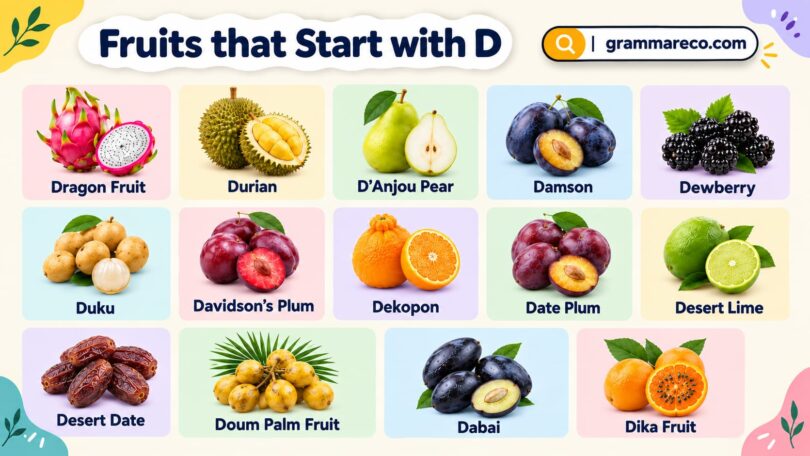
From sweet tropical treats to unusual fruits you may have never heard of, the world of fruits that start with D is surprisingly diverse. Whether you’re looking for fruit names beginning with d for a school project, expanding your vocabulary, or simply curious about different varieties, there’s plenty to explore. Popular examples include Date, Dragon Fruit, Durian, and Damson. Some are juicy and refreshing, while others have bold flavors and fascinating origins worth discovering.
Any fruit that starts with D?
Some fruits that start with D include Date, Dragon Fruit, Durian, Damson, Dewberry, Duku, Desert Date, and Doum Palm Fruit. These include both common and less familiar fruits from different regions.
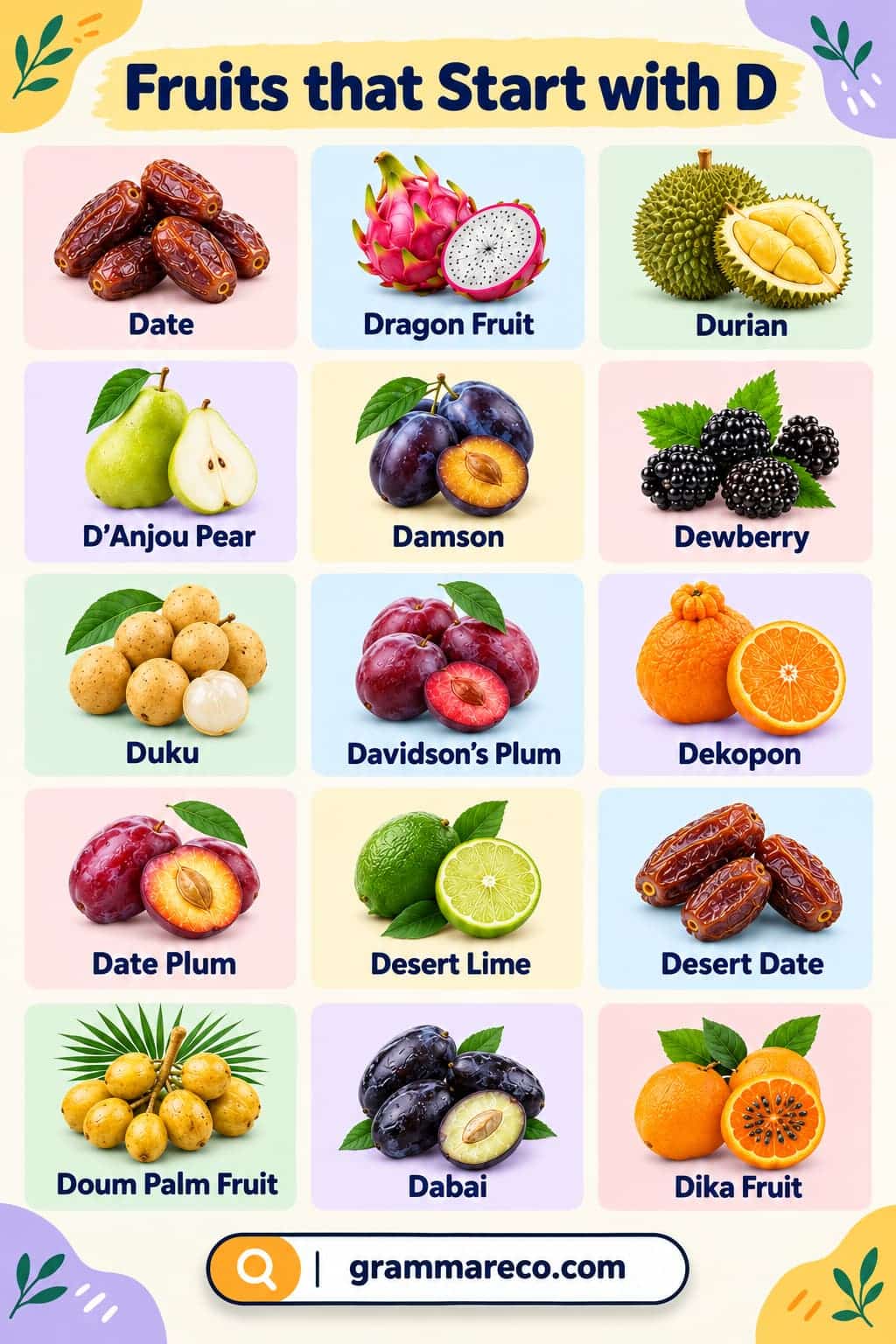
A List of Fruits that Start with a D
Below is a list of fruits beginning with d including their names from around the world:
- Date
- Dragon Fruit
- Durian
- D’Anjou Pear
- Damson
- Dewberry
- Duku
- Davidson’s Plum
- Dekopon
- Date Plum
- Desert Lime
- Desert Date
- Doum Palm Fruit
- Dabai
- Dika Fruit
- Dika Plum
- Desert King Fig
- Desert Fig
- Darling Plum
- Drakensberg Plum
- Dangleberry
- Daidai
- Dabinett Apple
- Discovery Apple
- Dead Man’s Fingers
- Desert Quandong
- Darwin’s Barberry
- Dodder Laurel
Fruits Beginning with D with Pictures and Properties
1. Date
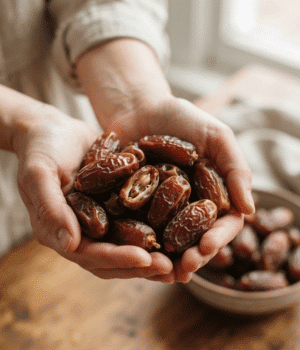
Scientific name: Phoenix dactylifera
Date is the sweet fruit of the date palm, widely cultivated in hot, dry regions. The fruit develops from green to yellow, amber, brown, or nearly black as it ripens. Dates have soft or semi-dry flesh surrounding a single hard seed. Their caramel-like sweetness makes them popular as fresh, dried, or processed fruit.
2. Dragon Fruit
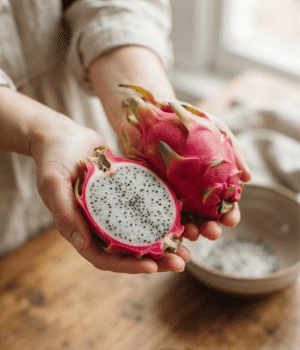
Scientific name: Selenicereus undatus
Dragon fruit is a tropical cactus fruit recognized by its bright pink or red skin and green, leaf-like scales. Its white flesh contains many tiny black seeds and has a mild, refreshing sweetness. The fruit is commonly eaten fresh, while juice, smoothies, desserts, and fruit bowls are also prepared from it.
3. Durian
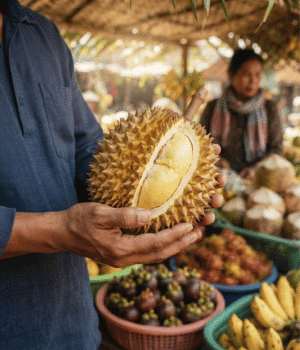
Scientific name: Durio zibethinus
Durian is a large tropical fruit famous for its strong aroma and thorn-covered shell. Its creamy yellow flesh has a rich, custard-like texture, although its flavor varies among cultivars. The fruit is widely consumed fresh in Southeast Asia. Its edible sections are protected by a thick husk that splits open when mature.
4. D’Anjou Pear
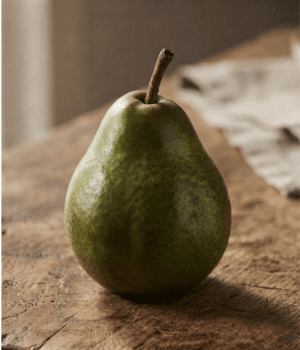
Scientific name: Pyrus communis
D’Anjou pear is a European pear cultivar known for its compact, rounded shape and dense, juicy flesh. Green D’Anjou pears may remain green even when ripe, while Red D’Anjou develops a reddish skin. Its mild sweetness and firm texture make it suitable for fresh eating, salads, cooking, and baking.
5. Damson
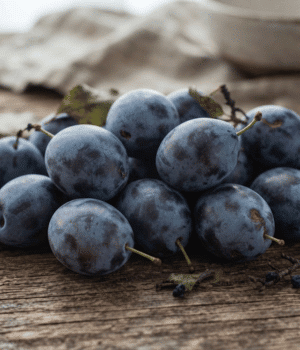
Scientific name: Prunus domestica subsp. insititia
Damson is a small plum traditionally associated with Europe. The fruit usually has dark blue or purple skin and firm, tart flesh surrounding a stone. Its sharp flavor is particularly valued in cooking. Damsons are commonly made into jams, preserves, pies, sauces, and other products where their acidity adds depth.
6. Dewberry
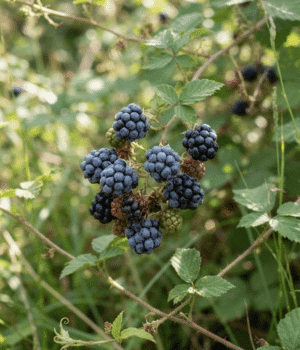
Scientific name: Rubus spp.
Dewberry is a common name for several trailing blackberry relatives in the genus Rubus. The fruits develop in clusters and usually turn dark purple or black when ripe. They have juicy flesh with a sweet-tart flavor. Dewberries are eaten fresh and may also be used in pies, jams, jellies, and other desserts.
7. Duku
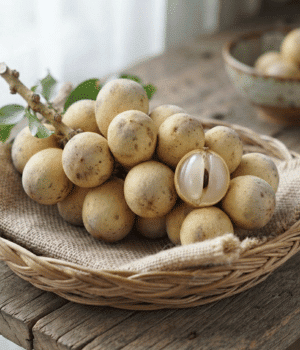
Scientific name: Lansium domesticum
Duku is a small tropical fruit from Southeast Asia that grows in clusters on trees. It has a thin, yellowish-brown peel and translucent white segments inside. The flesh is juicy and usually sweet, although some varieties can be slightly sour. Duku is commonly eaten fresh after its peel is removed.
8. Davidson’s Plum
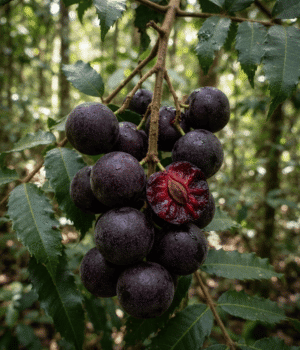
Scientific name: Davidsonia jerseyana
Davidson’s plum is an Australian native fruit with dark blue to purple skin and strongly acidic flesh. It is considerably more tart than many common plums and is rarely eaten like a sweet dessert fruit. Instead, the fruit is valued for jams, sauces, beverages, desserts, and other specialty food products.
9. Dekopon
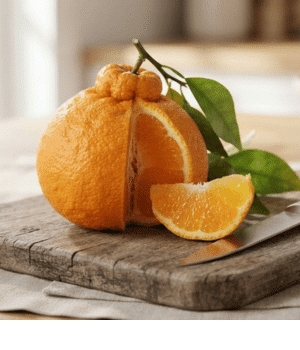
Scientific name: Citrus reticulata
Dekopon is a Japanese citrus cultivar recognized by its large size and distinctive neck-like bump. It has an easy-to-peel orange rind and juicy, sweet segments with relatively low acidity. The fruit is often marketed under the name Shiranui or Sumocitrus, depending on the market. Dekopon is primarily eaten fresh.
10. Date Plum
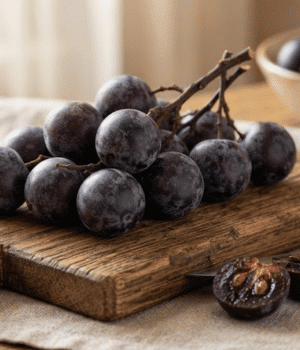
Scientific name: Diospyros lotus
Date plum is a small fruit produced by a species of persimmon native to parts of Eurasia. The round fruits turn dark purple or nearly black as they mature and develop sweet, soft flesh. Their flavor can resemble a combination of dates and plums, which explains the common name.
11. Desert Lime
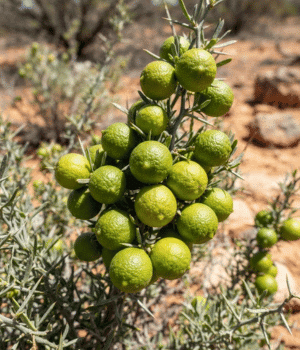
Scientific name: Citrus glauca
Desert lime is a small Australian citrus fruit that grows naturally in arid and semi-arid areas. The round fruits are green to yellow when mature and contain juicy, highly acidic flesh. Their intense citrus flavor makes them useful in preserves, sauces, drinks, desserts, and specialty food products.
12. Desert Date
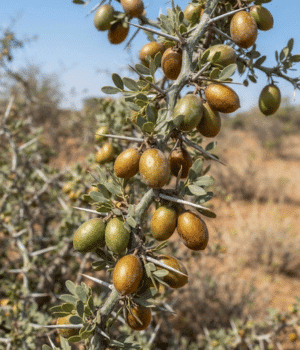
Scientific name: Balanites aegyptiaca
Desert date is a fruit produced by a drought-tolerant tree found across parts of Africa and the Middle East. The oval fruit develops a yellow-brown exterior and contains a hard stone surrounded by edible pulp. Its fruits have traditionally been eaten or processed, while other parts of the tree have also been used locally.
13. Doum Palm Fruit
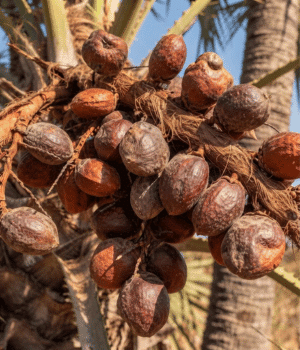
Scientific name: Hyphaene thebaica
Doum palm fruit comes from the doum palm, a distinctive palm native to parts of Africa and the Middle East. The fruit has a hard outer shell and fibrous, reddish-brown pulp with a sweet, ginger-like flavor. It is commonly eaten dried or soaked, and beverages can also be prepared from its pulp.
14. Dabai
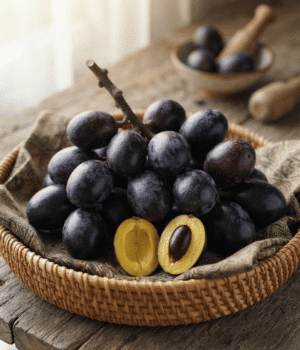
Scientific name: Canarium odontophyllum
Dabai is a tropical fruit native to parts of Southeast Asia, particularly Borneo. Its oval fruits have dark purple to black skin when ripe and soft, creamy flesh around a large seed. The texture is often compared with avocado. Dabai is eaten after preparation and may be served with salt, sugar, or other foods.
15. Dika Fruit
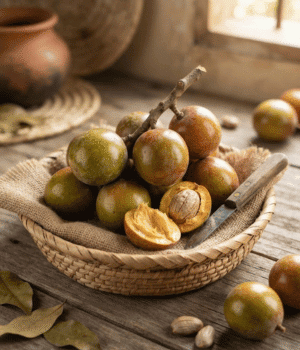
Scientific name: Irvingia gabonensis
Dika fruit is produced by the African bush mango tree, which occurs in tropical regions of Africa. The fruit resembles a mango but has firmer, fibrous flesh surrounding a large stone. Its seeds are especially valued as a food ingredient and are processed into a thickener commonly used in regional soups and stews.
16. Dika Plum
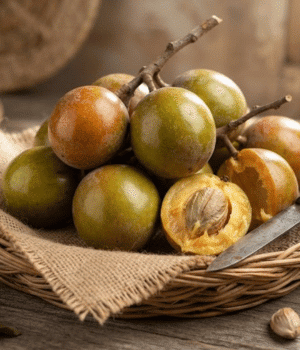
Scientific name: Irvingia gabonensis
Dika plum is another common name for the fruit of Irvingia gabonensis, also called African mango. Its oval fruit develops yellowish flesh around a large seed and has a mango-like appearance. The fresh fruit can be eaten, but the seeds are particularly important because they are processed into food products and traditional dishes.
17. Desert King Fig
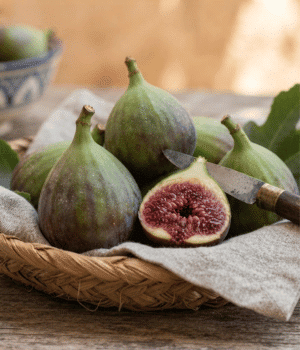
Scientific name: Ficus carica
Desert King is a named cultivar of the common fig. It produces large, green-skinned figs with sweet, reddish flesh when mature. The cultivar is especially associated with regions where its main crop develops reliably. Its figs can be eaten fresh or dried and are also suitable for preserves and desserts.
18. Desert Fig
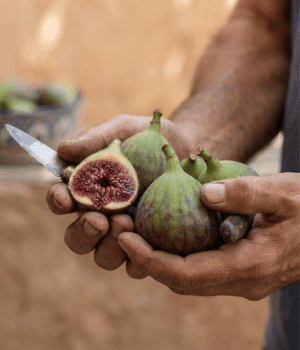
Scientific name: Ficus brachypoda
Desert fig is an Australian native fig associated with dry inland environments. It produces small figs that develop from the plant’s distinctive reproductive structures. The fruit is generally less familiar as a commercial crop than common figs. It is part of Australia’s native flora and supports ecological relationships with specialized fig-pollinating wasps.
19. Darling Plum
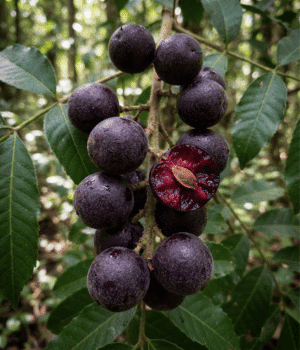
Scientific name: Harpephyllum caffrum
Darling plum is the fruit of a southern African evergreen tree commonly known as the wild plum. Its small fruits develop in clusters and become red to purplish as they mature. The juicy fruit has an acidic, plum-like flavor and may be eaten fresh or used for preserves and other preparations.
20. Drakensberg Plum
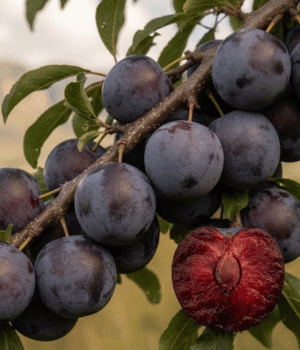
Scientific name: Prunus africana
Drakensberg plum is a name associated with the African cherry, a tree native to mountainous regions of sub-Saharan Africa. Its small fruits become dark purple to black when ripe and contain a single stone. The fruit is not a major commercial plum crop, while the tree is better known for its ecological and medicinal importance.
21. Dangleberry
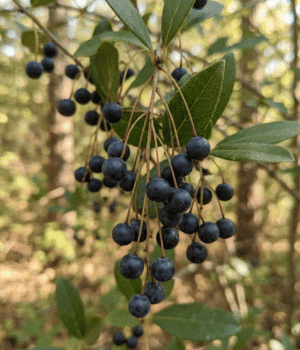
Scientific name: Gaylussacia frondosa
Dangleberry is a North American shrub related to blueberries and produces small dark berries. The fruits usually develop a blue-black to purplish color when ripe and contain several seeds. Their flavor is generally sweet to mildly tart. Dangleberries occur in natural habitats and can be eaten by wildlife and people.
22. Daidai
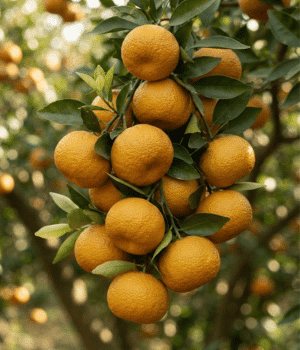
Scientific name: Citrus × aurantium
Daidai is a Japanese bitter orange traditionally used as a citrus fruit and cultural symbol. The round orange fruits can remain on the tree for several seasons and may turn green again under certain conditions. Their juice is distinctly acidic and bitter, so the fruit is commonly used in sauces, seasonings, and traditional preparations.
23. Dabinett Apple
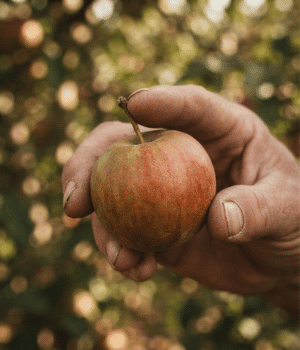
Scientific name: Malus domestica
Dabinett is a traditional English cider-apple cultivar originating in Somerset. Its small to medium-sized apples have greenish to yellow skin that may develop red or orange coloring. The fruit is valued mainly for cider production because it provides useful tannins and acidity. It is less commonly grown as a fresh-eating apple.
24. Discovery Apple
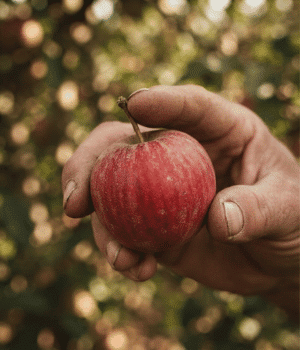
Scientific name: Malus domestica
Discovery is an early-season English dessert apple cultivar. Its small to medium fruits have green skin that becomes brightly flushed with red as they mature. The crisp, juicy flesh has a pleasant sweet-tart flavor. Discovery apples are mainly eaten fresh and are valued for their attractive appearance and early harvest period.
25. Dead Man’s Fingers
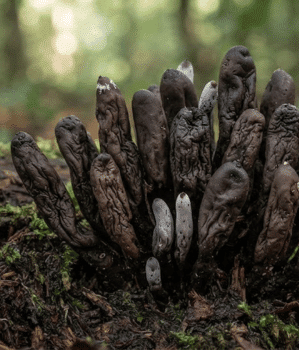
Scientific name: Xylaria polymorpha
Dead Man’s Fingers is not a true fruit. It is a species of wood-decaying fungus named for its dark, finger-like fruiting bodies, which resemble fingers emerging from soil or decaying wood. The scientific name is Xylaria polymorpha. It should not be included in a botanical list of edible fruits.
26. Desert Quandong
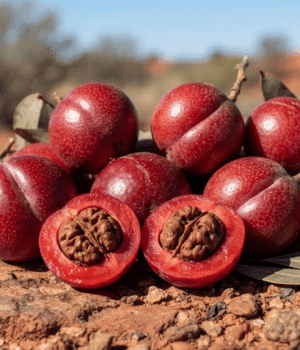
Scientific name: Santalum acuminatum
Desert quandong is an Australian native fruit produced by a small tree or shrub. Its round fruits usually have bright red skin and firm, yellowish flesh surrounding a distinctive, hard, textured stone. The fruit has a tart, slightly sweet flavor and is used in jams, sauces, desserts, and other Australian specialty foods.
27. Darwin’s Barberry
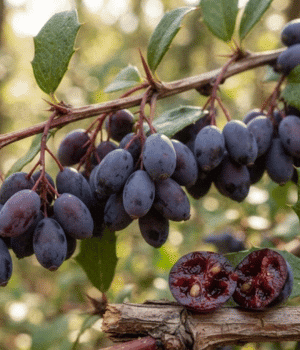
Scientific name: Berberis darwinii
Darwin’s barberry is an evergreen shrub native to southern Chile and Argentina. It produces small edible berries that turn dark blue or purple when mature. The berries have an acidic flavor and can be used in preserves and other preparations. The plant is also valued as an ornamental species because of its flowers and foliage.
28. Dodder Laurel
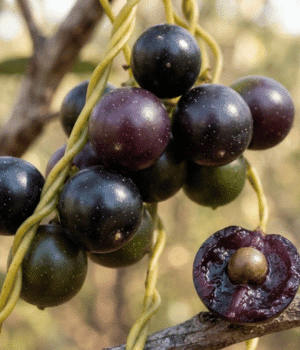
Scientific name: Cassytha filiformis
Dodder laurel is a parasitic vine found in tropical and subtropical regions. It produces small, berry-like fruits that develop along its slender stems. The plant belongs to the laurel family, Lauraceae, despite its unusual vine-like appearance. Its fruits are not commonly treated as commercial food, so it is better classified as a botanical fruit rather than a popular edible fruit.
List of Yellow Fruits that Start with D
Yellow fruits beginning with D include varieties and fruits that naturally have yellow or golden skin when ripe. Some may have yellow flesh rather than a fully yellow exterior.
- Date — Ripe dates can have golden-yellow skin, especially fresh yellow date varieties before fully ripening.
- Dragon Fruit — Yellow dragon fruit has bright yellow skin and sweet, juicy white flesh with tiny seeds.
- D’Anjou Pear — D’Anjou pears develop a warm yellow-green color as they ripen, with smooth, juicy flesh.
- Dekopon — Dekopon is a sweet citrus fruit with yellow-orange skin and juicy, seedless segments.
- Desert Lime — Desert lime is a small Australian citrus with pale green to yellow skin when mature.
- Desert Date — Desert date produces small yellowish fruits containing edible pulp around the hard seed.
FAQs about Fruits Beginning with D
Fruits that start with D include Date, Dragon Fruit, Durian, Damson, Dewberry, Duku, Dabai, Dekopon, Desert Lime, Davidson’s Plum, Date Plum, and D’Anjou Pear.
Exotic fruits starting with D include Durian, Duku, Dabai, Davidson’s Plum, Desert Lime, Desert Quandong, Dika Fruit, and Doum Palm Fruit. These fruits are known for their unusual flavors, appearances, or regional origins.
Yes, sweet fruits beginning with D include Date, Dragon Fruit, Duku, Dekopon, and D’Anjou Pear. Their sweetness varies, with ripe dates and Duku known for their naturally sweet flavor.
Yellow fruits that start with D include D’Anjou Pear, Dekopon, Desert Lime, and Doum Palm Fruit. Their yellow color can vary depending on the fruit’s variety and ripeness.
Several fruits starting with D can be green, including Duku, Davidson’s Plum, Desert Lime, and Dangleberry. Their color may vary depending on the variety and stage of ripeness.
Read more