
Stem vegetables are plant parts where the stem, stalk, shoot, or enlarged stem base is eaten as food. They can grow above or below the soil and may be tender, crisp, fibrous, or juicy. Some are harvested as young shoots, while others develop thick edible stalks. Understanding these plant parts makes it easier to tell stem vegetables apart from roots, bulbs, tubers, leaves, and flowers.
This article helps you learn stem vegetables with their names, characteristics, growing methods, cooking ideas, and nutritional factors. The names are also useful when talking about vegetables at grocery stores, farmers markets, gardens, restaurants, and cooking classes.
What Are Examples of Stem Vegetables?
Stem vegetables are edible plant stems, stalks, shoots, or swollen stem structures. The part people eat carries or once carried leaves, buds, or flowers. Some are harvested while young and tender, while others develop thicker stalks.
Popular Stem Vegetable Examples
- Asparagus: Young green, purple, or white shoots harvested before they become woody.
- Celery: Crisp green stalks that grow from a short, thick stem base.
- Rhubarb: Long, firm leaf stalks used mainly in cooked dishes and desserts.
Stem Vegetables List With Names
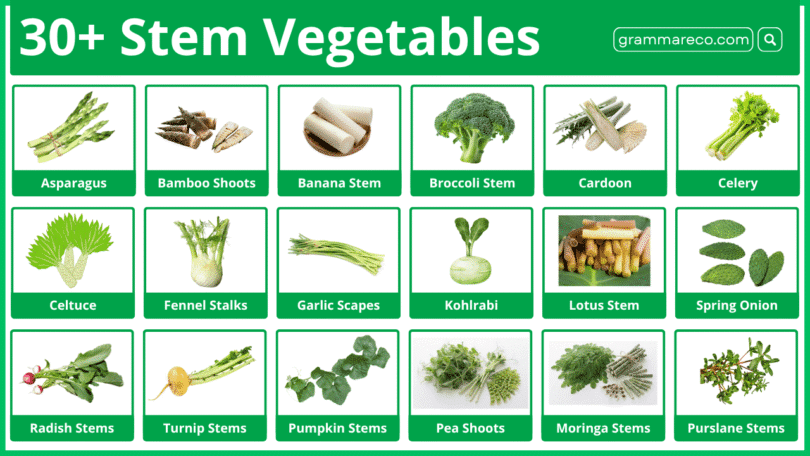
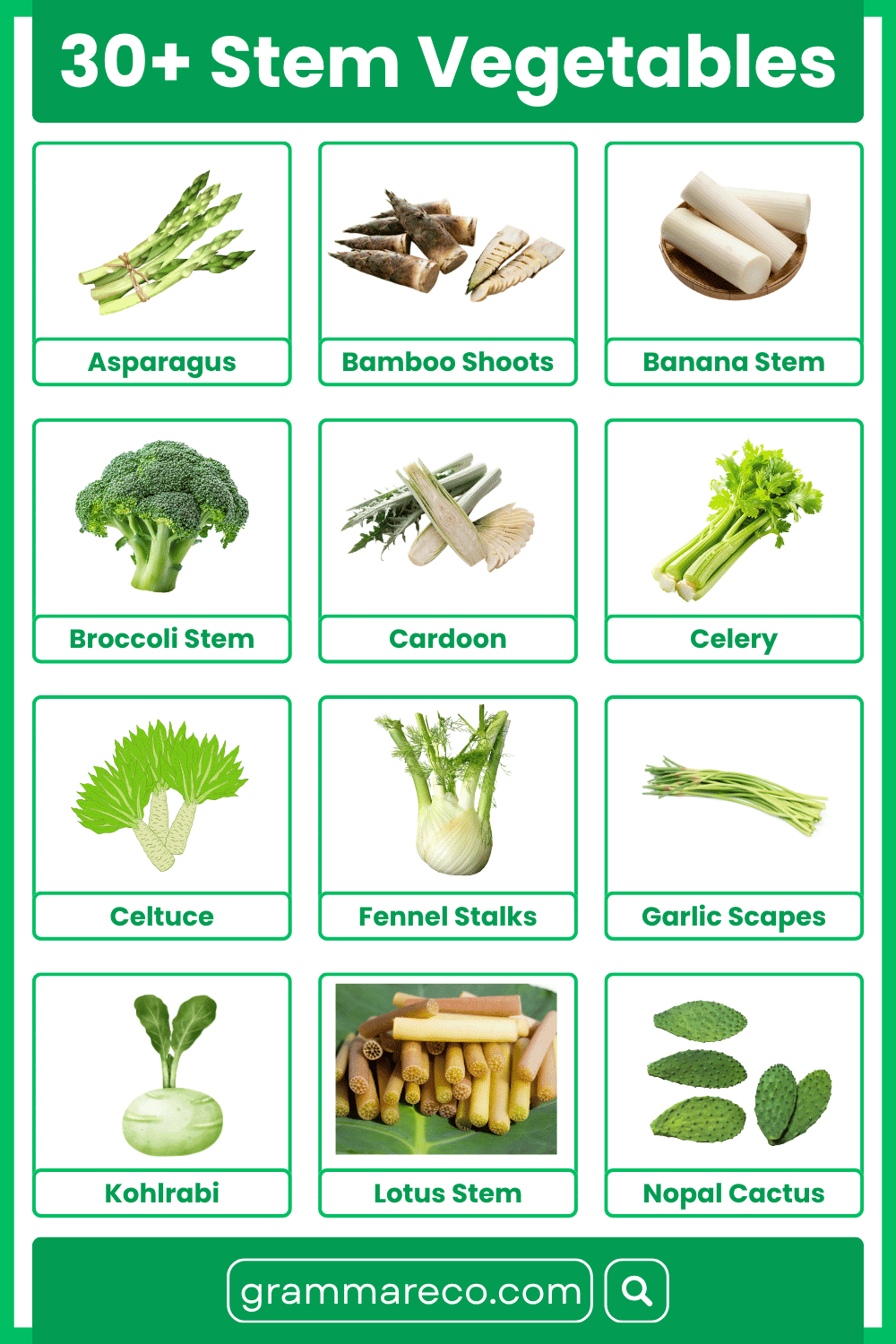
Stem vegetables come in several forms, including young shoots, thick stalks, swollen stems, underground stems, and flowering stems. The plant part may look very different from one vegetable to another. Below is a comprehensive list of commonly recognized edible stem vegetables and stem-like vegetable parts.
- Asparagus
- Bamboo Shoots
- Banana Stem
- Broccoli Stem
- Cardoon
- Celery
- Celtuce
- Fennel Stalks
- Garlic Scapes
- Kohlrabi
- Lotus Stem
- Nopal Cactus
- Rhubarb
- Taro Stems
- Water Spinach
- Watercress
- Amaranth Stems
- Mustard Stems
- Radish Stems
- Turnip Stems
- Sweet Potato Stems
- Pumpkin Stems
- Squash Stems
- Purslane Stems
- Moringa Stems
- Jute Stems
- Pea Shoots
- Daylily Shoots
- Hop Shoots
- Sea Kale Stems
Stem Vegetables With Pictures and Characteristics
Stem vegetables can look very different because plants store food and water in several types of stems. Pictures make these differences easier to understand, especially when comparing stalks, shoots, swollen stems, and underground stems.
Asparagus
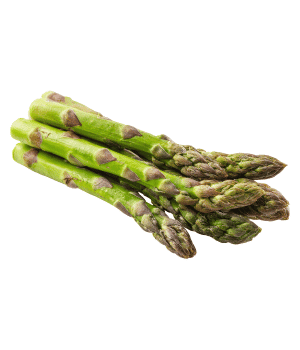
Asparagus is a stem vegetable harvested for its young, tender shoots. It is widely grown in Europe, North America, and parts of Asia, where the shoots are valued as a seasonal vegetable. Fresh asparagus is commonly steamed, grilled, roasted, or added to soups and salads.
Characteristics: Long, slender green, purple, or white shoots with a firm texture and mild, slightly earthy flavor.
Celery
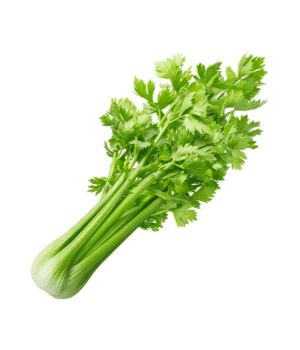
Celery is a stem vegetable grown mainly for its crisp, elongated stalks. It is cultivated widely in North America, Europe, and Asia and is commonly used in everyday cooking. The stalks are eaten raw, chopped into salads, or added to soups, stews, and sauces.
Characteristics: Pale to dark green stalks with a juicy, crunchy texture and mild, fresh flavor.
Rhubarb
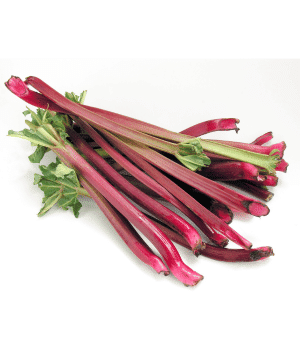
Rhubarb is a stem vegetable valued for its thick, edible leaf stalks. It is especially popular in Europe and North America, where it is commonly used in sweet and savory preparations. The stalks are usually cooked with sugar in pies, sauces, and desserts.
Characteristics: Long red, pink, or green stalks with a firm texture and distinctly tart flavor. The leaves are not eaten.
Kohlrabi
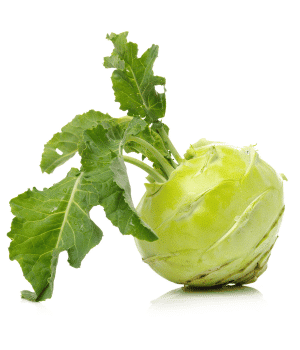
Kohlrabi is a stem vegetable that develops as a swollen stem above the soil. It is particularly common in European cuisine and is also grown in parts of Asia and North America. The crisp stem can be eaten raw, roasted, steamed, or added to soups and salads.
Characteristics: Round green or purple stem with pale, crunchy flesh and a mild, slightly sweet taste.
Bamboo Shoots
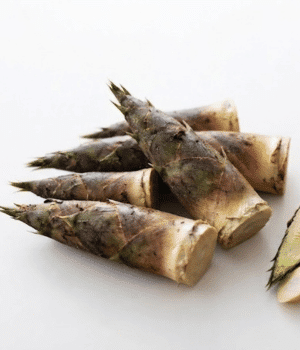
Bamboo shoots are young stems that emerge from underground bamboo rhizomes. They are important vegetables in many Asian cuisines, particularly in China, Japan, Thailand, Vietnam, and other parts of Southeast Asia. Tender shoots are commonly boiled and added to stir-fries, curries, soups, and salads.
Characteristics: Firm, layered shoots with a pale interior, crisp texture, and mild flavor after cooking.
Cardoon
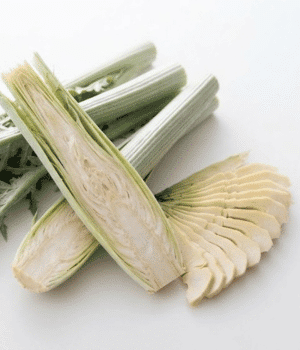
Cardoon is a stem vegetable related to the artichoke and is traditionally grown for its thick leaf stalks. It has strong culinary value in Mediterranean regions, especially Italy, Spain, and France. The stalks are trimmed, cleaned, and usually cooked before serving.
Characteristics: Broad, ribbed green or pale stalks with a firm texture and mild, slightly earthy flavor.
Hearts of Palm
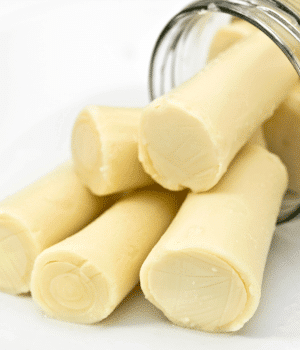
Hearts of palm are tender inner stems harvested from certain palm species. They are used as a vegetable in tropical and subtropical regions, including parts of Central and South America. The tender sections are commonly added to salads, sandwiches, soups, and cooked dishes.
Characteristics: Pale cylindrical pieces with a delicate, slightly crisp texture and mild, fresh flavor.
Nopal Cactus Pads
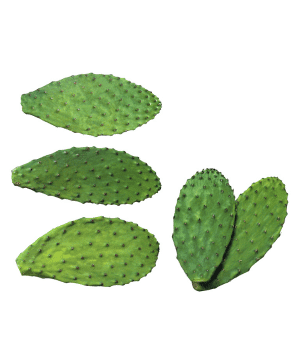
Nopal cactus pads are young, flattened stems of prickly pear cactus used as vegetables. They have strong culinary importance in Mexico and are also eaten in parts of Central America and the southwestern United States. The pads are cleaned and cooked in salads, tacos, soups, and side dishes.
Characteristics: Flat oval green pads with a crisp texture and slightly sticky consistency when cooked.
Celtuce
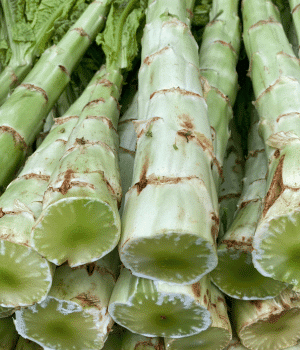
Celtuce is a stem vegetable and a variety of lettuce cultivated mainly for its thick central stalk. It has been widely used in Chinese cuisine and is also grown in other parts of East Asia. The peeled stalk can be eaten raw or cooked in stir-fries, soups, and salads.
Characteristics: Long, swollen green stem with crisp flesh, mild flavor, and juicy texture.
Fiddlehead Ferns
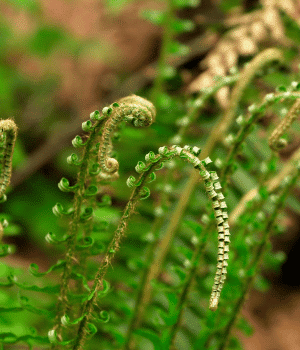
Fiddlehead ferns are young, tightly curled shoots collected from certain edible fern species before their fronds unfold. They are traditionally eaten in parts of North America, Europe, and Asia, depending on the fern species. Proper cleaning and cooking are required before consumption.
Characteristics: Small spiral-shaped green shoots with a firm texture and distinctive earthy, grassy flavor.
Lotus Rhizomes
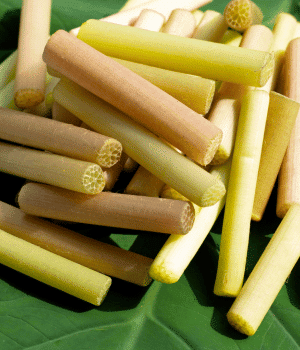
Lotus rhizomes are horizontal underground stems that grow beneath water or in wet soil. They are widely valued as a vegetable in China, Japan, Korea, India, and other parts of Asia. The crisp rhizomes are commonly sliced and stir-fried, pickled, added to soups, or cooked in other dishes.
Characteristics: Long, pale stems with a crunchy texture and characteristic round holes across each slice.
Garlic Scapes
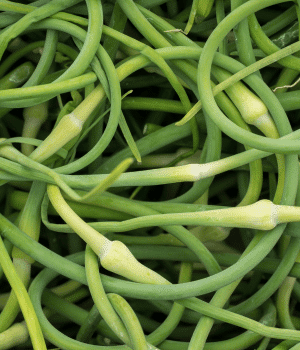
Garlic scapes are young flowering stems produced by hardneck garlic plants. They are particularly valued in East Asian cuisine and are also used by cooks in Europe and North America. The tender stems can be grilled, sautéed, pickled, blended into sauces, or added to stir-fries.
Characteristics: Green, curved stems with a firm, crisp texture and a mild garlic flavor.
Onion Scapes
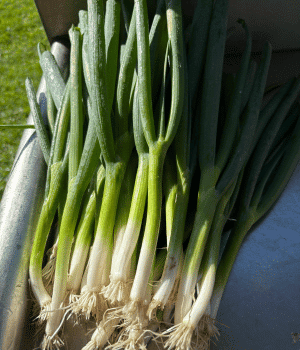
Onion scapes are tender flowering stems produced by certain onion plants. They are used regionally as a seasonal vegetable, particularly where specialty onion varieties are cultivated. The young stems can be chopped into salads, sautéed, grilled, or added to cooked dishes.
Characteristics: Green, hollow stems with a crisp texture and a mild onion-like flavor.
Broccoli Stems
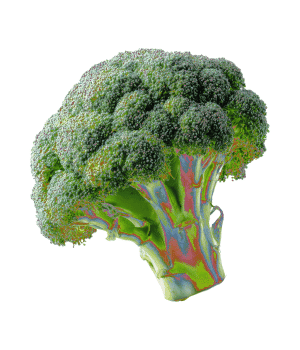
Broccoli stems are the thick edible stalks that support the broccoli head. They are commonly eaten in many regions where broccoli is grown, including North America, Europe, and Asia. The stems can be peeled and sliced for stir-fries, soups, roasting, steaming, or salads.
Characteristics: Firm green stalks with crunchy flesh and a mild broccoli flavor; tough outer skin can be removed.
Cauliflower Stems
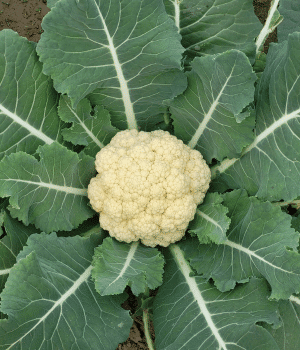
Cauliflower stems are the edible stalks supporting the cauliflower head. They are commonly used in South Asian, European, and other cuisines where cauliflower is prepared as a vegetable. The stalks can be sliced, steamed, roasted, stir-fried, or added to soups.
Characteristics: Pale green, firm stalks with crisp flesh and a mild flavor. Tough outer portions may be peeled.
Brussels Sprout Stems
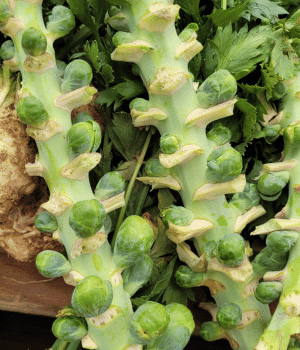
Brussels sprout stems are the central stalks on which individual Brussels sprouts develop. They are mainly associated with commercial and home cultivation in Europe and North America, although Brussels sprouts are grown elsewhere as well. Tender portions can be cooked alongside the sprouts.
Characteristics: Long, thick green stalks carrying multiple sprouts, with a firm texture and mild cabbage-like flavor.
Swiss Chard Stems
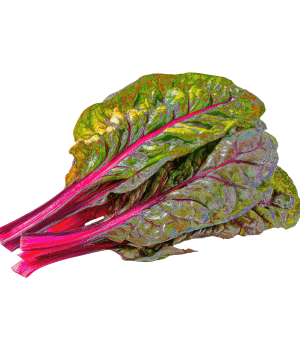
Swiss chard stems are thick, edible leaf stalks that are harvested together with the leafy portion. The vegetable is widely cultivated in Europe, North America, and other temperate regions. Stems are commonly sautéed, steamed, roasted, or cooked with the leaves.
Characteristics: Crisp stalks that may be white, red, yellow, pink, or orange, with a mild vegetal flavor.
Taro Stems
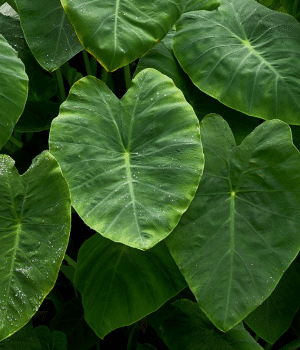
Taro stems are edible stalks produced by certain taro varieties and are used as vegetables in several tropical regions. They are particularly important in parts of South and Southeast Asia, the Pacific Islands, and Africa. The stems are properly peeled and cooked before eating.
Characteristics: Long, fleshy stalks with a fibrous structure and tender texture after cooking, often used in curries, soups, and stews.
Banana Pseudostem
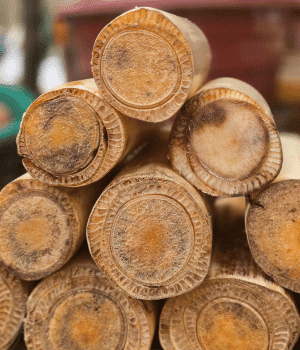
Banana pseudostem is the tightly packed structure formed by overlapping banana leaf bases rather than a true stem. Its tender inner portion is eaten as a vegetable in parts of South and Southeast Asia. It is commonly sliced for curries, salads, soups, and other regional dishes.
Characteristics: Pale, fibrous inner layers with a crisp texture and mild flavor; tough outer layers are removed before cooking.
How to Grow Stem Vegetables
Growing stem vegetables depends on the plant because asparagus, celery, rhubarb, and kohlrabi have different needs. Still, several basic steps apply to many edible stems and shoots.
- Choose the Right Vegetable: Select a stem vegetable suited to your climate, season, and available garden space.
- Prepare the Soil: Use loose, fertile, well-draining soil. Mix mature compost into the planting area before planting.
- Plant at the Right Time: Follow the recommended planting season for each crop. Avoid planting cool-season vegetables during extreme summer heat.
- Give Plants Enough Water: Keep the soil evenly moist but avoid waterlogging. Young plants need regular watering as their roots develop.
- Provide Enough Sunlight: Many stem vegetables grow well with several hours of sunlight each day. Check the specific needs of each plant.
- Control Weeds: Remove weeds regularly because they compete with plants for water, nutrients, and space. Mulching can also help reduce weed growth.
- Harvest at the Right Stage: Harvest stems and shoots when they reach the recommended size. Young stems are often more tender and easier to eat.
- Handle Special Crops Carefully: Follow the safety requirements of each crop. For example, do not eat rhubarb leaves, and cook certain edible shoots properly before eating.
Simple Guide of How to Cook Stem Vegetables
Stem vegetables can be prepared using several basic cooking methods. The best method depends on whether the stem is crisp, fibrous, tender, or naturally watery.
- Wash and Trim: Wash the stems under cool running water. Remove tough ends, damaged parts, or thick outer layers when needed.
- Peel Tough Stems: Some mature stems have a fibrous outer layer. Peel vegetables such as broccoli stems, celery, or kohlrabi to make them more tender.
- Cut Into Suitable Pieces: Cut thick stems into smaller pieces so they cook evenly. Thin stems and shoots may need little preparation.
- Steam the Vegetables: Steaming keeps many stem vegetables tender without making them too soft. Asparagus, broccoli stems, and celery work well with this method.
- Roast Them: Roasting gives stem vegetables a deeper flavor and softer texture. Toss suitable pieces with a small amount of oil before roasting.
- Stir-Fry Them: Thinly sliced stems cook quickly in a hot pan. Bamboo shoots, celery, kohlrabi, and garlic scapes are suitable for stir-frying.
- Boil or Simmer Them: Firm stems can be boiled or simmered until tender. This method is useful for vegetables that need longer cooking.
- Grill Tender Stems: Thicker asparagus and other tender stems can be grilled until lightly browned. Turn them during cooking for even heat.
- Season Before Serving: Add simple seasonings such as salt, pepper, garlic, lemon juice, herbs, or a small amount of butter to enhance the natural flavor.
Parts of Stem Vegetable Chart
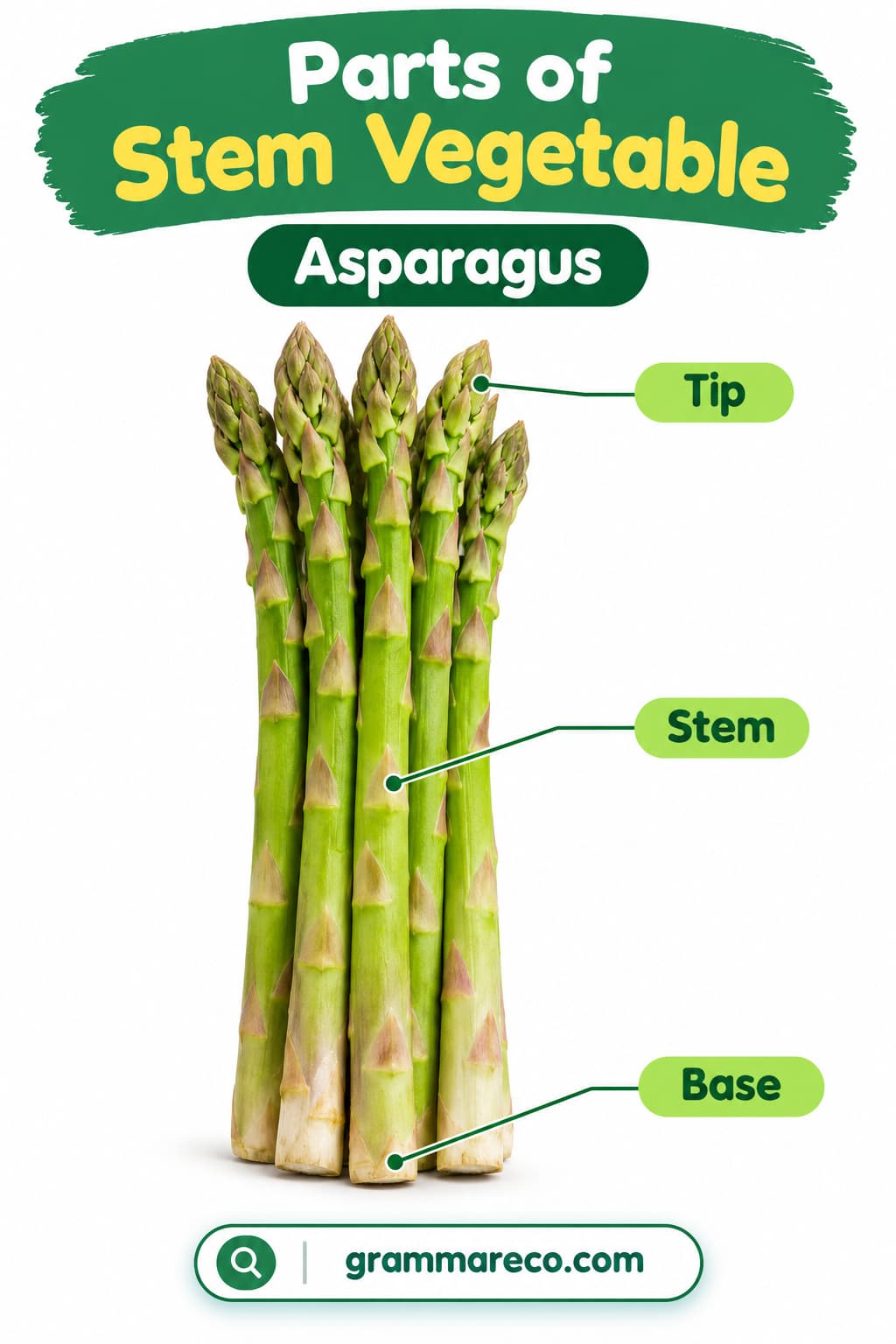
Tip
The tip is the pointed, tightly closed top of the asparagus spear. It contains small overlapping scales and is the most tender part. The tip is usually harvested while still firm and compact.
Stem
The stem is the long, green central portion of the asparagus spear. It is smooth, firm, and edible, providing most of the vegetable’s length and texture. It becomes slightly thicker toward the base.
Base
The base is the thicker, tougher bottom end of the asparagus stem. It is usually pale green or whitish and has a firmer texture than the upper portion, so cooks often trim it before preparation.
12 Mind Blowing Facts on Stem Vegetables
Stem vegetables have some surprising plant structures. Their edible parts may grow above the soil, underground, or as young shoots from mature plants.
- Asparagus is harvested as a young shoot before its stem becomes tall and leafy.
- Kohlrabi is an enlarged stem that grows above the ground rather than underground.
- Bamboo shoots are young stems that grow from underground rhizomes.
- Celery stalks are actually enlarged leaf stalks attached to the plant base.
- Rhubarb stalks are edible, but its leaves should not be eaten.
- Lotus rhizomes are underground stems that grow horizontally through wet soil.
- Nopal pads are flattened cactus stems rather than leaves.
- Garlic scapes are flowering stems produced by certain hardneck garlic plants.
- Celtuce is grown mainly for its thick stem instead of its lettuce leaves.
- Hearts of palm come from the tender inner part of certain palm stems.
- Broccoli stems remain edible even after the florets have been removed.
- Some plants have modified stems that store food, water, or nutrients for future growth.
Nutritional Factors About Stem Vegetables
Stem vegetables can provide water, fiber, vitamins, minerals, and plant compounds. Their nutritional value varies greatly by plant, edible portion, preparation method, and serving size.
| Stem vegetable | Notable nutritional factors | Common nutritional role |
|---|---|---|
| Asparagus | Fiber, folate, vitamin K | Provides fiber and several micronutrients |
| Celery | Water, fiber, vitamin K | Adds fluid and crunch with relatively few calories |
| Rhubarb | Fiber, vitamin K, plant compounds | Provides fiber and a tart vegetable option |
| Kohlrabi | Fiber, vitamin C, potassium | Provides vitamin C and dietary fiber |
| Bamboo shoots | Fiber, potassium, plant compounds | Adds fiber and minerals to meals |
| Broccoli stems | Fiber, vitamin C, vitamin K | Provides nutrients similar to other broccoli parts |
| Cauliflower stems | Fiber, vitamin C, vitamin K | Adds fiber and vegetable nutrients |
| Swiss chard stems | Vitamin K, minerals, fiber | Provides micronutrients alongside the leaves |
| Nopal pads | Fiber, vitamin C, minerals | Provides fiber and plant nutrients |
| Garlic scapes | Fiber, vitamin C, plant compounds | Adds nutrients and a mild garlic flavor |
| Celtuce | Water, fiber, vitamin C | Provides a crisp vegetable source of fiber |
| Lotus rhizomes | Carbohydrates, fiber, vitamin C | Provides energy, fiber, and several micronutrients |
Cooking can change nutrient levels, especially for water-soluble vitamins. Steaming for a short time often preserves texture and reduces nutrient loss compared with prolonged boiling.
FAQs About Stems
Stem vegetable examples include asparagus, celery, rhubarb, kohlrabi, bamboo shoots, fennel, cardoon, water spinach, lotus stem, fiddlehead shoots, celtuce, and hearts of palm.
No, onion is a bulb vegetable. Its edible part is a modified underground stem surrounded by fleshy leaf bases, forming a bulb.
Stem vegetables are plants where the edible part is a stem or modified stem. Common examples include asparagus, celery, rhubarb, kohlrabi, bamboo shoots, and lotus stem.
Stem vegetables can include stalks, shoots, and modified stems. Common types include asparagus, celery, rhubarb, kohlrabi, bamboo shoots, lotus stems, celtuce, cardoon, and hearts of palm.
Takeaway
Stem vegetables include edible stalks, shoots, swollen stems, flowering stems, and underground stems. Asparagus, celery, rhubarb, kohlrabi, bamboo shoots, and lotus rhizomes demonstrate how different these plant parts can be. Learning their structures also helps distinguish stem vegetables from root vegetables, bulbs, tubers, leaves, and flowers.
Read more