
Mexico is home to a rich variety of fruits, from creamy avocados and sweet guavas to juicy prickly pears and flavorful mamey sapote. Its diverse climates and growing regions support many fruit varieties, including native Mexican fruits, traditional favorites, and tropical fruits cultivated across the country. Some are eaten fresh, while others are used in aguas frescas, desserts, candies, sauces, and traditional dishes. Exploring names and pictures of Mexican fruits offers a taste of the country’s agricultural diversity and food culture.
What Fruits Are Native to Mexico?
Mexico is an important center of origin and diversity for many fruit species. Some fruits developed naturally in Mexico, while others originated across the wider Mesoamerican region, which includes parts of Central America. These fruits have been grown, gathered, and enjoyed in the region for centuries.
Examples include avocado, guava, prickly pear, tejocote, mamey sapote, sapodilla, white sapote, black sapote, and Mexican plum. Mexico is also known for native cactus fruits, including xoconostle and several types of pitaya. Not every fruit commonly sold in Mexico originated there, however. Mangoes, bananas, pineapples, and coconuts, for example, were introduced from other parts of the world and are now widely cultivated.
List of Mexican Fruits and Their Names
Mexican fruits include native varieties, traditional regional fruits, and popular fruits grown throughout the country. Here are some fruit names associated with Mexico:
- Avocado
- Guava
- Prickly Pear
- Tejocote
- Mamey Sapote
- Sapodilla
- White Sapote
- Black Sapote
- Mexican Plum
- Capulin Cherry
- Nanche
- Xoconostle
- Pitaya
- Pitahaya
- Mango
- Papaya
- Pineapple
- Banana
- Coconut
- Watermelon
- Lime
- Orange
- Grapefruit
- Tangerine
- Soursop
- Passion Fruit
- Starfruit
- Dragon Fruit
- Tamarind
- Jocote
- Guamuchil
- Huaya
- Ilama
- Bonete
- Chayote Fruit
Popular Mexican Fruits with Their Pictures
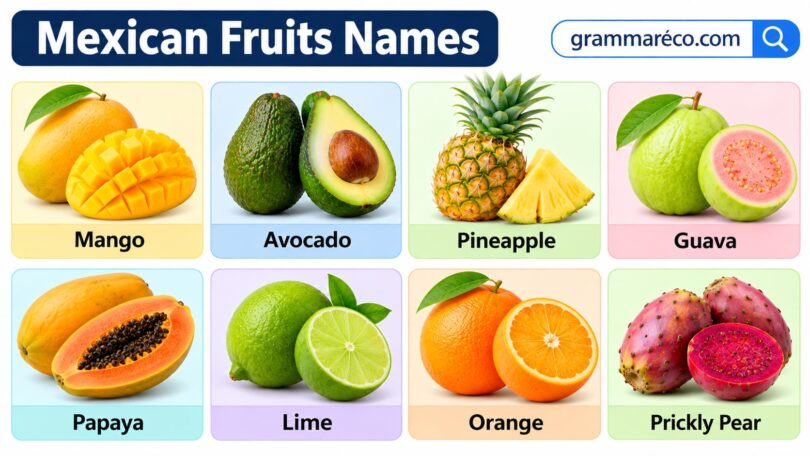
Mexico has many popular fruits that are enjoyed fresh, sold in local markets, and used in everyday cooking. These familiar varieties are known for their flavor, texture, and importance in Mexican food traditions.
1. Avocado
Avocado is one of Mexico’s best-known fruits and an important ingredient in its cuisine. It has a green or dark, pebbly skin, creamy flesh, and a large central seed. Its mild, buttery flavor makes it popular in guacamole, salads, sandwiches, salsas, and other savory dishes. Mexico is also one of the world’s leading avocado-producing countries.
2. Guava
Guava is a fragrant fruit with green or yellow skin and soft flesh that may be white, pink, or deep red. Its flavor is sweet with a refreshing tang, and it contains many small edible seeds. In Mexico, guava is eaten fresh and used in aguas frescas, jams, candies, pastries, and traditional fruit desserts.
3. Prickly Pear
Prickly pear, known in Mexico as tuna, grows on the pads of prickly pear cactus plants. Its oval fruit has a thick skin and juicy flesh that can be red, purple, yellow, or green. The flavor is mildly sweet and refreshing. Mexicans eat it fresh, add it to salads, and use it in drinks and sweets.
4. Tejocote
Tejocote is a small, round, yellow-orange fruit traditionally enjoyed in Mexico, especially during the cooler months. It has firm flesh, a tart-sweet flavor, and several seeds. The fruit is commonly cooked with sugar and spices to make ponche navideño, a traditional Mexican Christmas punch. It is also used in preserves, syrups, and sweets.
5. Mamey Sapote
Mamey sapote is a large oval fruit with rough brown skin and soft orange-red flesh. Its texture is smooth and creamy, while its flavor is often compared to sweet potato, pumpkin, and almond. In Mexico, it is eaten fresh and blended into milkshakes, smoothies, and desserts. The fruit contains a large, shiny brown seed.
6. Sapodilla
Sapodilla, also called chicozapote in Mexico, is a round or oval fruit with rough brown skin and sweet, grainy flesh. Its flavor resembles brown sugar, caramel, and pear. The ripe fruit is usually eaten fresh by scooping out the soft interior and removing the dark seeds. It is also used in smoothies and desserts.
7. Mexican Plum
Mexican plum is a small fruit that grows on trees native to parts of Mexico and Central America. Depending on the variety, its skin may be yellow, red, or purple, with juicy flesh surrounding a hard pit. The taste can range from sweet to tart. It is eaten fresh and sometimes used in preserves and homemade preparations.
8. Capulin Cherry
Capulin cherry is a small, dark red to nearly black fruit that grows on a tree found in Mexico and other parts of the Americas. Its juicy flesh has a sweet flavor with a slight tartness, and it surrounds a hard pit. Capulin cherries are eaten fresh and may also be used in jams, drinks, and desserts.
9. Nanche
Nanche, also known as nance, is a small, round fruit with yellow or orange skin. It has a distinctive aroma and a flavor that can be sweet, sour, and slightly fermented when very ripe. In Mexico, nanche is eaten fresh and used in drinks, sweets, preserves, and traditional preparations. Its strong taste makes it easy to recognize.
10. Lime
Lime is a widely used citrus fruit in Mexican cooking. It has thin green skin, juicy flesh, and a sharp, acidic flavor. Fresh lime juice is squeezed over tacos, seafood, soups, fruit, and snacks to add brightness. It is also an essential ingredient in aguas frescas, marinades, dressings, and many traditional Mexican recipes.
11. Orange
Oranges are round citrus fruits with orange-colored skin and juicy segments. Their flavor ranges from sweet to slightly tangy, depending on the variety. In Mexico, oranges are eaten fresh, squeezed for juice, and added to fruit salads and drinks. They are also used in marinades and traditional dishes where their citrus flavor balances savory ingredients.
12. Papaya
Papaya is a large fruit with green skin that turns yellow or orange as it ripens. Its soft orange flesh has a mild sweetness and contains small black seeds in the center. In Mexico, papaya is commonly eaten at breakfast, served with lime, or blended into refreshing drinks. It is also added to fruit salads and smoothies.
13. Tamarind
Tamarind grows in curved brown pods containing sticky, tangy pulp and hard seeds. Its flavor combines sweetness with a strong sour note, making it popular in Mexican snacks and beverages. Tamarind is used to prepare aguas frescas, candies, sauces, and sweet-and-sour treats. It is often mixed with sugar, chili, or salt for a bold flavor.
Tropical Fruits Found in Mexico
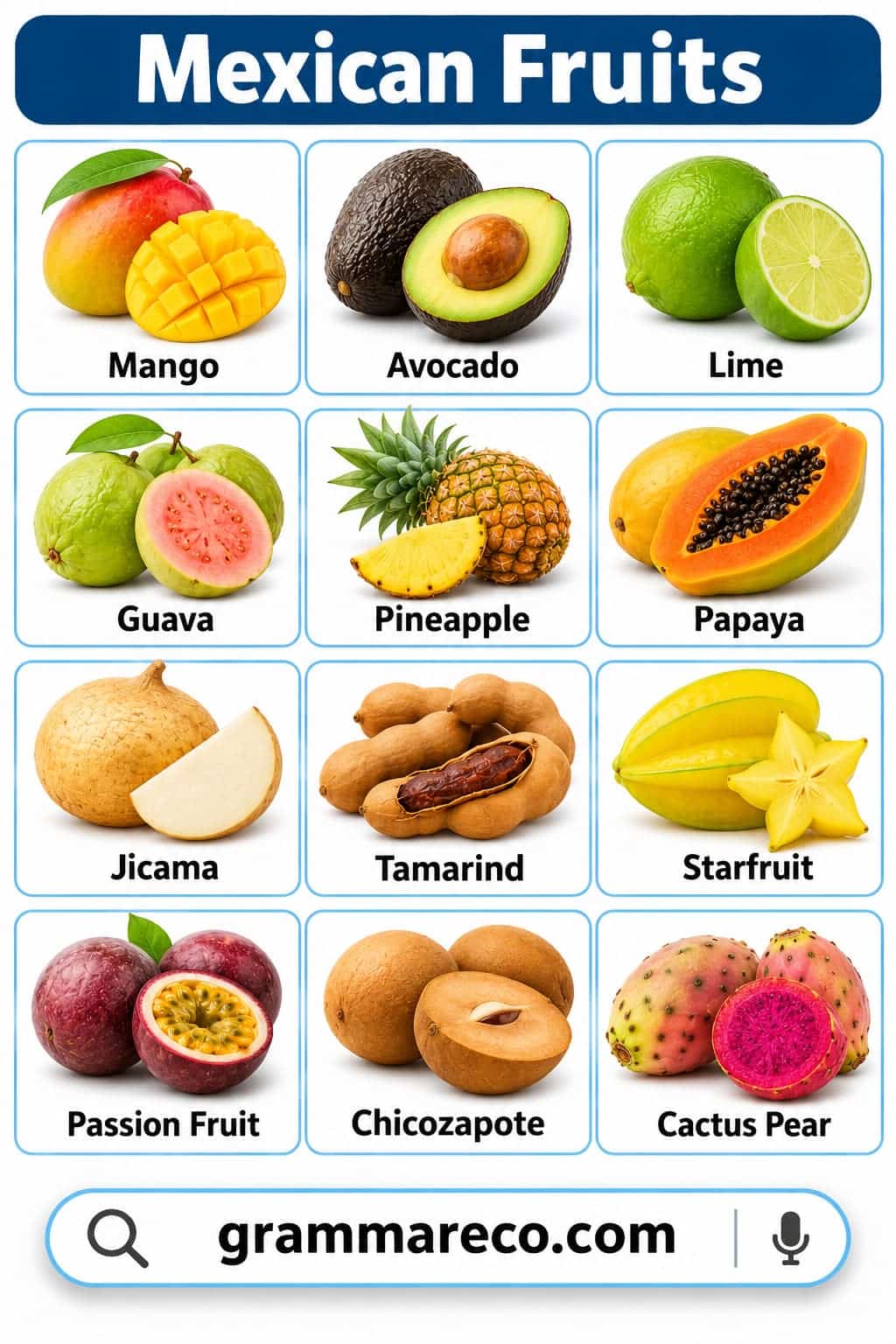
Mexico’s warm coastal areas and tropical growing regions support a wide range of fruits that originated in other parts of the world. These tropical fruits are now cultivated locally and commonly enjoyed in Mexican markets, drinks, and meals.
1. Mango
Mango is a popular tropical fruit grown in several Mexican states. It has smooth skin that may turn yellow, orange, red, or green as it ripens, depending on the variety. The juicy flesh is sweet and aromatic, with a large flat pit. Mexicans eat mango fresh, add it to fruit cups, and use it in juices, desserts, and spicy snacks.
2. Pineapple
Pineapple is a tropical fruit with a rough, spiky outer skin and a crown of long leaves. Its golden flesh is juicy, sweet, and slightly acidic. In Mexico, pineapple is eaten fresh, blended into aguas frescas, and used in desserts and fruit salads. It is also a familiar ingredient in savory dishes, including tacos al pastor.
3. Banana
Bananas are widely cultivated and consumed in Mexico. They have a soft, sweet interior when ripe and a peel that changes from green to yellow. Different varieties are eaten fresh or used in cooking and baking. Mexican households use bananas in smoothies, desserts, breakfast dishes, and snacks. Their mild flavor makes them easy to pair with other foods.
4. Coconut
Coconut grows in Mexico’s tropical coastal regions, particularly along warm Pacific and Gulf areas. Young green coconuts contain refreshing water, while mature coconuts develop firm white flesh. Coconut water is commonly enjoyed as a drink, especially in coastal areas. The flesh is used in sweets, desserts, baked goods, and other preparations.
5. Watermelon
Watermelon is a large tropical and warm-weather fruit with a thick green rind and juicy red or pink flesh. Its sweet flavor and high water content make it refreshing in hot weather. In Mexico, watermelon is eaten in slices, added to fruit cups, and blended into aguas frescas. It is sometimes served with lime, chili powder, and salt.
6. Soursop
Soursop is a large green fruit with a soft, spiny-looking outer surface and creamy white flesh. Its flavor is sweet and tart, with a texture that works well in blended drinks. In Mexico, soursop is known as guanábana and is used in aguas frescas, ice cream, smoothies, and desserts. Its dark seeds are removed before the pulp is eaten.
7. Passion Fruit
Passion fruit is a round or oval fruit with a tough outer rind that may be purple or yellow. Inside, it contains aromatic pulp filled with small edible seeds. Its flavor is sweet and sharply tangy. In Mexico, passion fruit is used in juices, aguas frescas, desserts, sauces, and fruit mixtures because of its strong fragrance.
8. Starfruit
Starfruit, also called carambola, is a tropical fruit with a distinctive shape. When sliced across its length, each piece looks like a five-pointed star. Its skin is usually yellow or yellow-green, and its crisp flesh tastes mildly sweet and tart. In Mexico, it is eaten fresh, added to fruit salads, and used as a decorative garnish.
9. Dragon Fruit
Dragon fruit, also known as pitahaya, grows on climbing cactus plants. It has bright pink or yellow skin with leafy scales and white or red flesh dotted with tiny black seeds. Its flavor is mild and lightly sweet, with a texture similar to kiwi. In Mexico, it is eaten fresh and used in fruit bowls, juices, and desserts.
10. Jackfruit
Jackfruit is a very large tropical fruit with thick, bumpy green or yellow skin. Inside are sweet yellow pods with a soft, chewy texture and a flavor often compared to banana and pineapple. In Mexico, jackfruit is grown in some warm regions and eaten fresh or used in smoothies and desserts. Its size makes it one of the most distinctive tropical fruits.
Unusual Mexican Fruits Names
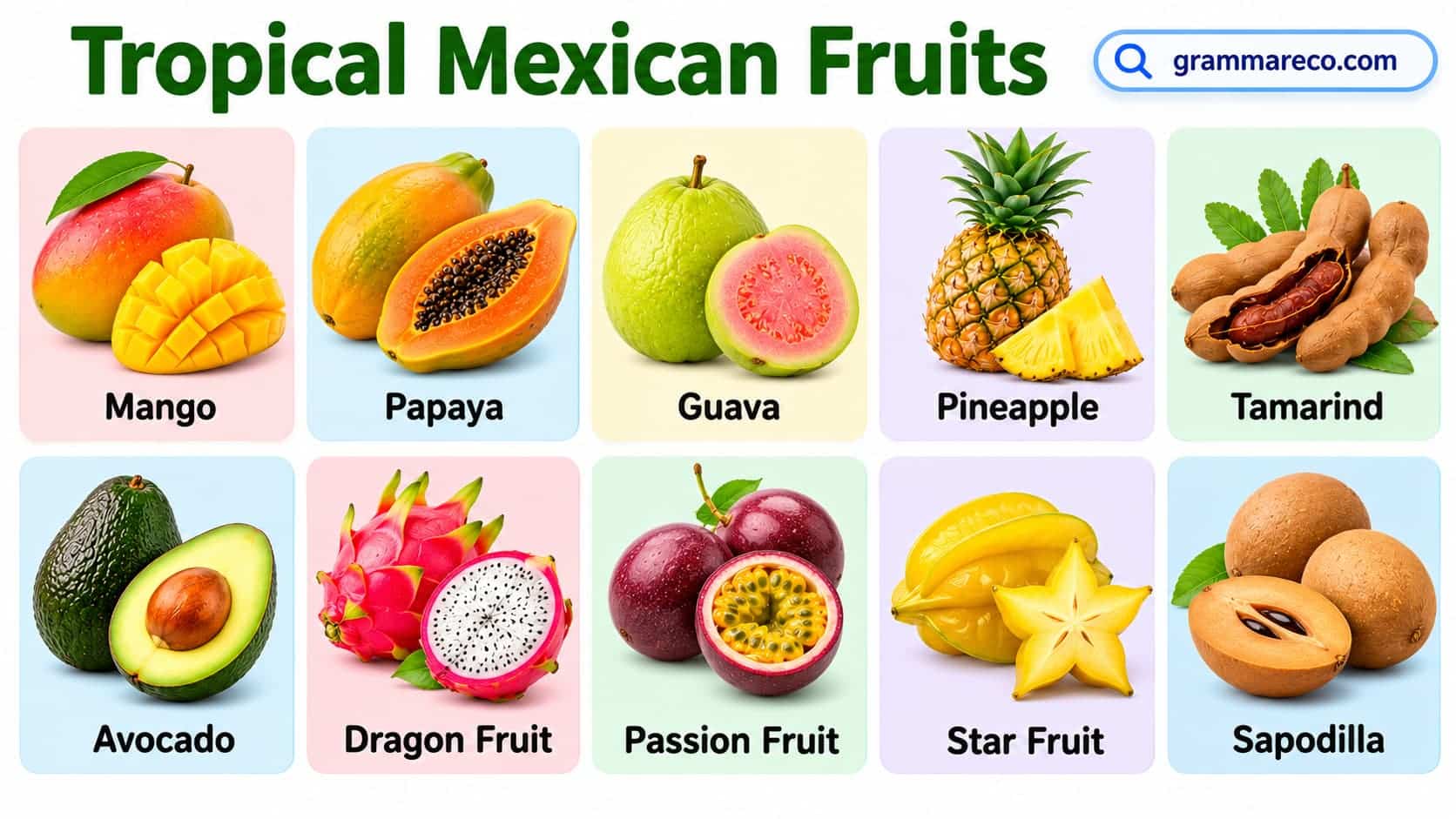
Mexico has many lesser-known and regional fruits with distinctive shapes, flavors, and textures. Here are some unusual fruit names associated with Mexico:
- Xoconostle
- Guamuchil
- Huaya
- Ilama
- Bonete
- Jocote
- Pitaya
- Pitahaya
- Cuajilote
- Chirimoya
- Pochote Fruit
- Ciruela Huesito
- Cacahuaxochitl Fruit
- Coyol
- Tejocote
FAQs About Mexican Fruits
Mexico does not have an officially designated national fruit. However, avocado is strongly associated with Mexican food and agriculture. It is one of the country’s most recognized fruits and is used in guacamole, salsas, salads, and many traditional dishes.
Some fruits native to Mexico or the wider Mesoamerican region include avocado, prickly pear, tejocote, mamey sapote, sapodilla, white sapote, black sapote, and xoconostle. Guava and several other fruits are native to broader parts of the tropical Americas and have long been grown and enjoyed in Mexico.
Avocado is among the most popular and recognizable fruits in Mexico because of its importance in everyday cooking. Mango, lime, orange, guava, papaya, and watermelon are also widely enjoyed. Their popularity varies by region and season.
Tejocote is a traditional Mexican fruit, especially associated with Christmas celebrations. It is commonly cooked with other ingredients to make ponche navideño, a warm seasonal fruit punch. Prickly pear, guava, and mamey sapote are also familiar fruits in Mexican food culture.
The fruit of prickly pear cactus is called tuna in Mexico. It has a thick outer skin and juicy flesh that may be red, purple, yellow, or green. Another cactus fruit is pitaya, which comes from different cactus species and is known for its colorful appearance.
Read more