
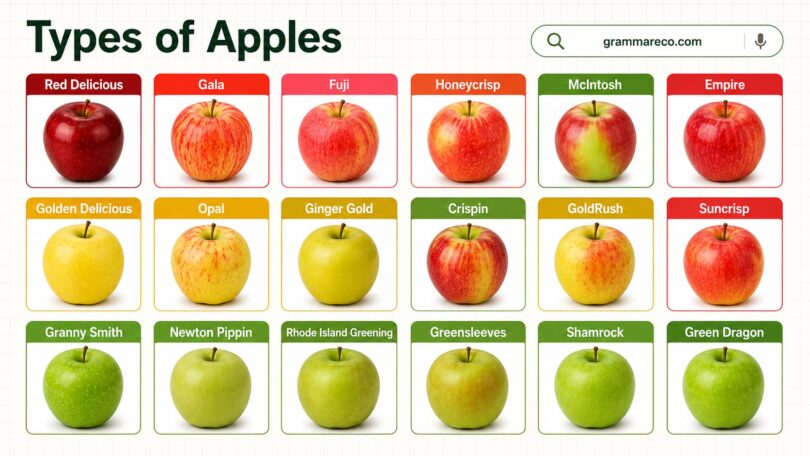
Types of apples range from crisp dessert apples to tart cooking varieties grown across orchards in the United States, Europe, New Zealand, and Asia. Apple cultivars differ in flavor, texture, skin color, aroma, and harvest season. Some apples taste honey sweet, while others feel sharp and tangy with firm flesh. You’ll also notice that many apple varieties were first grown for baking, cider making, or long winter storage.
Readers will learn about popular and rare types of apples, including red, green, sweet, tart, and baking apples with their pictures and properties. These apple names are commonly used in grocery stores, orchards, school projects, farming discussions, and recipe planning.
What are Apples Varieties?
Apple varieties are different cultivated forms of the fruit species Malus domestica. Each variety has its own taste, color, texture, harvest period, and growing region. Some apples remain crisp after baking, while others soften quickly for sauces or cider.
Below are major apple categories and cultivar groups commonly grown worldwide.
How many Different Kinds of Apples are there?
More than 7,500 known apple varieties exist worldwide. Commercial orchards usually grow fewer than 200 common cultivars. In the United States alone, farmers grow over 2,500 apple types for fresh eating, juice production, pies, and storage.
Read more: What is the National Fruit of USA Apple
Types of Apples List in English
Apple names often reflect their color, region, texture, or original grower. Some heirloom apples have existed for hundreds of years, and many newer cultivars were developed for sweeter flavor and disease resistance.
Below is a comprehensive list of red, yellow and green apple varieties from around the world.
- Red Delicious
- Fuji (red blush)
- Gala (red blush)
- McIntosh
- Empire
- Cortland
- Jonathan
- Winesap
- Arkansas Black
- Spartan
- Sweetango (blushed red)
- Kanzi (striped red)
- Golden Delicious
- Ginger Gold
- Opal
- Mutsu
- GoldRush
- Yellow Transparent
- Newton Pippin (yellow form)
- Granny Smith
- Rhode Island Greening
- Shizuka (not in your list but valid)
- Crisp Green cultivars (limited true greens exist)
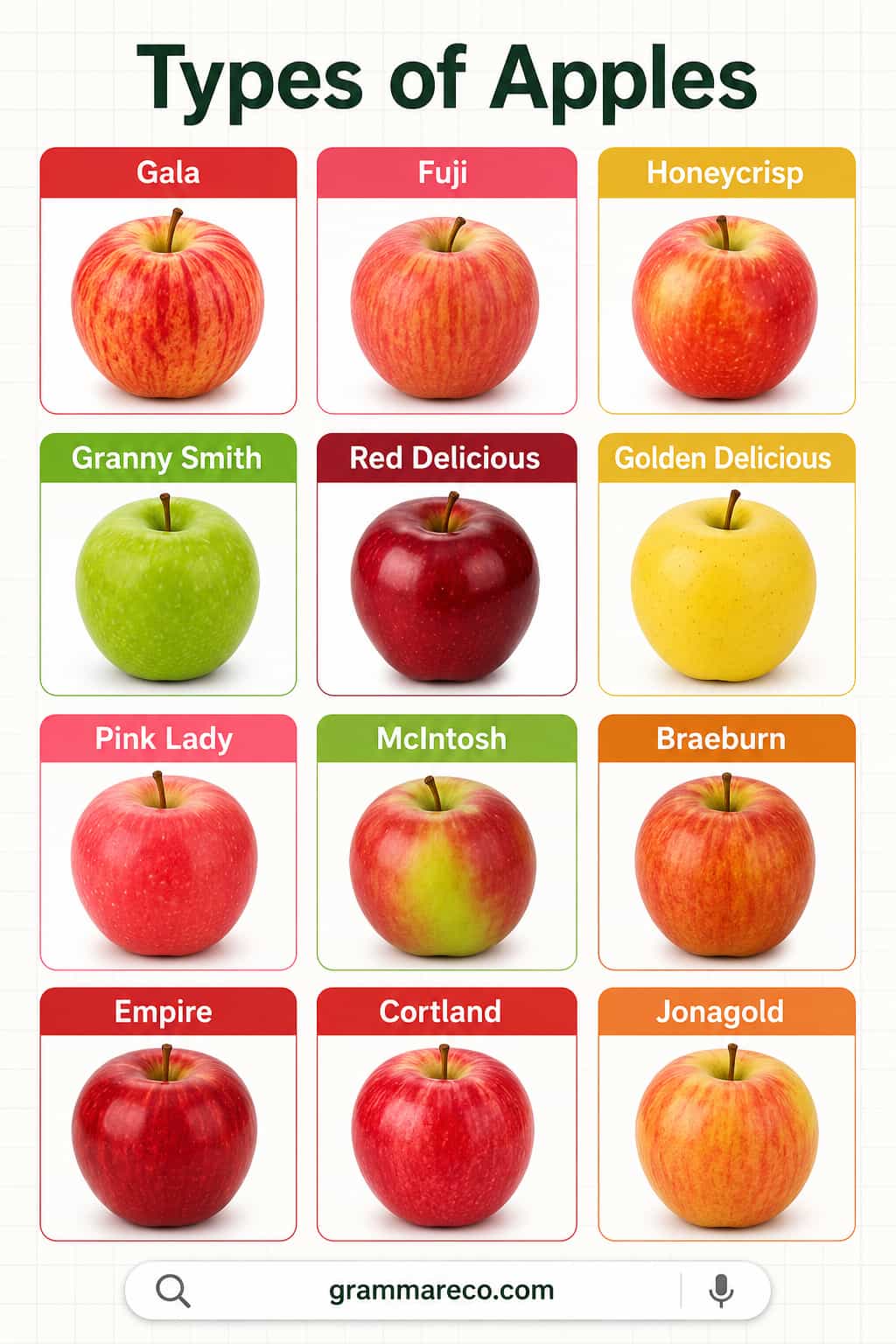
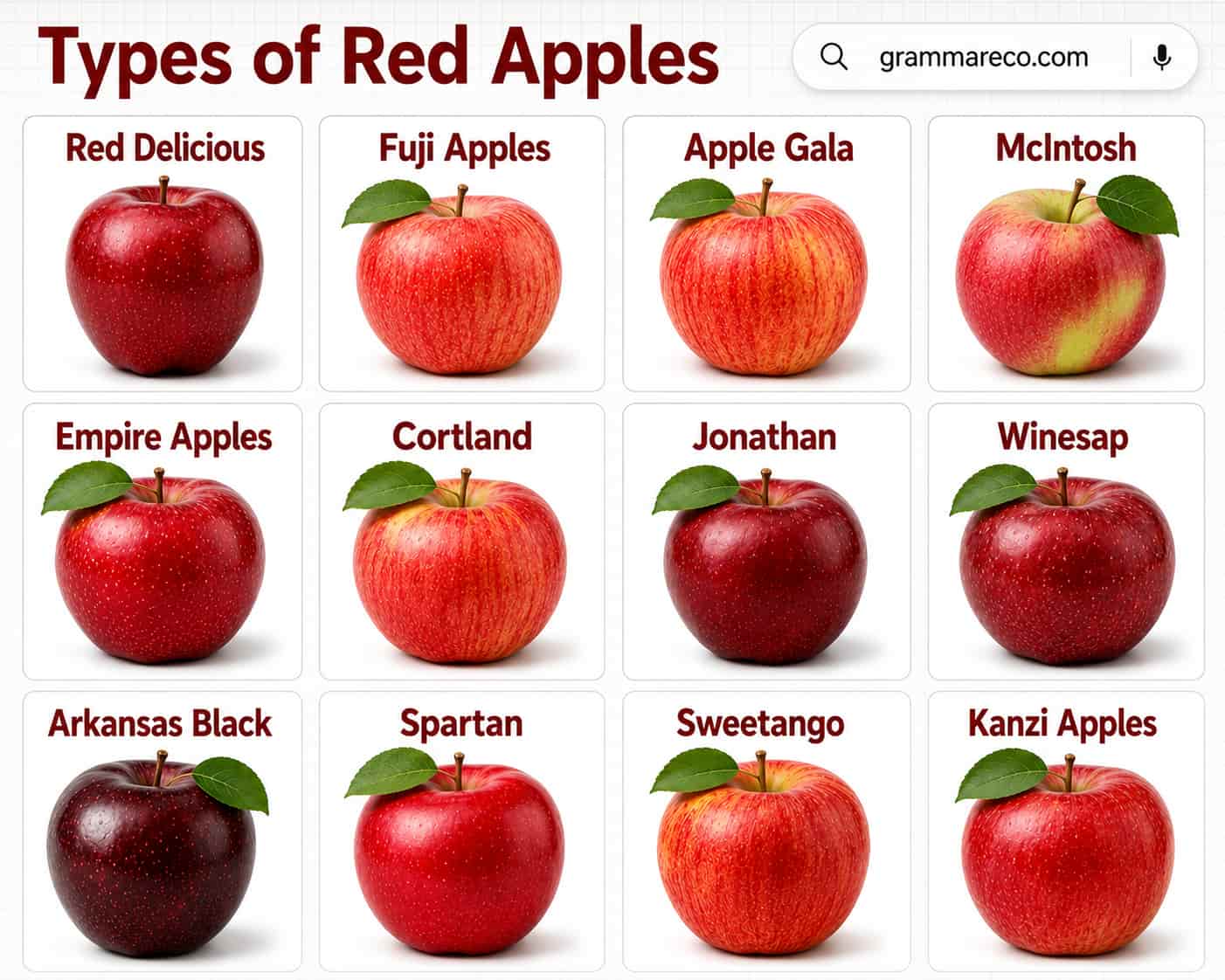
Types of Red Apples (True Red-Skinned Cultivars Around the World)
Red apples varieties are among the most recognized apple varieties in grocery stores and orchards. Their shades range from bright cherry red to deep maroon, and many popular snack apples belong to this group.
Red Delicious
A classic American apple variety first discovered in Iowa in the late 1800s, later widely cultivated in Washington State. It became one of the most commercially recognized apples globally due to its deep red skin and elongated shape. Known more for appearance than complexity of flavor, it dominates export markets.
- Taste: Mildly sweet, low acidity, soft texture when fully ripe
- Scientific name: Malus domestica
- Colors: Deep dark red to crimson with occasional striping
- Growing areas: USA (Washington, Iowa), Chile, China, New Zealand
- Uses: Fresh eating, fruit salads, juice blends, school lunches
Fuji Apples
Originally developed in Japan in the 1930s from a cross between Red Delicious and Ralls Janet, Fuji apples are now among the most widely grown apples in the world. They are known for their long shelf life and exceptional sweetness.
- Taste: Very sweet, crisp, dense and juicy
- Scientific name: Malus domestica
- Colors: Pinkish-red blush over yellow-green base
- Growing areas: Japan, USA, China, New Zealand
- Uses: Fresh eating, juices, desserts, baking
Apple Gala
A New Zealand-origin apple developed in the 1930s, Gala has become a global favorite due to its balanced sweetness and aromatic profile. It is often a staple in supermarkets worldwide.
- Taste: Sweet, mildly aromatic, low acidity
- Scientific name: Malus domestica
- Colors: Yellow base with red-orange stripes
- Growing areas: New Zealand, USA, Europe, South America
- Uses: Fresh eating, salads, baby food, juices
McIntosh
A heritage Canadian variety discovered in the early 1800s, McIntosh apples are deeply tied to North American apple culture. They are known for their soft texture and tart-sweet balance.
- Taste: Tart-sweet, juicy, soft flesh
- Scientific name: Malus domestica
- Colors: Deep red with green patches
- Growing areas: Canada, Northern USA
- Uses: Applesauce, cider, baking, fresh eating
Empire Apples
Developed in New York in the 1940s as a cross between McIntosh and Red Delicious, Empire apples combine crispness with balanced sweetness. They are popular for snacking and storage.
- Taste: Sweet-tart, crisp and firm
- Scientific name: Malus domestica
- Colors: Dark red with light green undertones
- Growing areas: USA (New York), Canada
- Uses: Fresh eating, salads, baking, slicing
Cortland
A Cornell University development from 1898, Cortland apples are widely used in culinary applications due to their slow browning properties. They remain visually appealing after cutting.
- Taste: Mildly sweet with gentle tartness
- Scientific name: Malus domestica
- Colors: Bright red with light green/yellow base
- Growing areas: USA, Canada, colder European regions
- Uses: Salads, baking, fruit platters, cooking
1800s Jonathan Apples
An old American variety dating back to the 1800s, Jonathan apples are known for their strong aroma and tangy flavor. They are widely used in breeding new apple cultivars.
- Taste: Tart, slightly sweet, aromatic
- Scientific name: Malus domestica
- Colors: Bright red with faint yellow-green highlights
- Growing areas: USA, Europe
- Uses: Baking, cider production, fresh eating, sauces
19th Century Popular Apple (Winesap)
A traditional American heirloom apple popular in the 19th century, Winesap is prized for its spicy, wine-like flavor profile. It has strong historical value in cider-making regions.
- Taste: Spicy-sweet, slightly tart, rich flavor
- Scientific name: Malus domestica
- Colors: Dark red to maroon
- Growing areas: USA (Appalachian regions), South America
- Uses: Cider, baking, preserves, fresh eating
Arkansas Black Apple Variety
A striking heirloom variety developed in the southern United States, Arkansas Black is known for its extremely dark red skin that almost appears black when fully matured.
- Taste: Tart when fresh, sweeter after storage
- Scientific name: Malus domestica
- Colors: Very deep dark red to almost black
- Growing areas: USA (Arkansas, Missouri)
- Uses: Storage apple, cider, baking, fresh eating
Spartan
A Canadian variety developed in British Columbia, Spartan apples are valued for their crisp texture and strong sweetness. They are often compared to McIntosh but firmer.
- Taste: Sweet, crisp, mildly aromatic
- Scientific name: Malus domestica
- Colors: Solid deep red
- Growing areas: Canada, USA, Europe
- Uses: Fresh eating, juices, salads
Sweetango Apple
A modern University of Minnesota hybrid, Sweetango is a descendant of Honeycrisp and Zestar apples. It offers explosive crunch and vibrant flavor, making it a premium modern cultivar.
- Taste: Sweet-tart, very crisp, juicy burst
- Scientific name: Malus domestica
- Colors: Bright red with yellow background
- Growing areas: USA (Minnesota), Canada
- Uses: Fresh eating, premium snacking apple
Kanzi Apples
A European commercial apple developed from Gala and Braeburn lineage, Kanzi is widely grown for export markets due to its balanced flavor and consistent quality.
- Taste: Sweet-tart, crisp, refreshing
- Scientific name: Malus domestica
- Colors: Red striped over yellow base
- Growing areas: Belgium, Europe, South Africa
- Uses: Fresh eating, salads, export trade
Pink Lady Apple Variety (Cripps Pink)
Developed in Australia in the 1970s, Pink Lady is a late-season apple known for its firm texture and balanced sweet-tart flavor. It is one of the most commercially branded apples worldwide.
- Taste: Sweet-tart, crisp, refreshing bite
- Scientific name: Malus domestica
- Colors: Pinkish-red over green-yellow base
- Growing areas: Australia, USA, Europe, South America
- Uses: Fresh eating, salads, desserts, storage
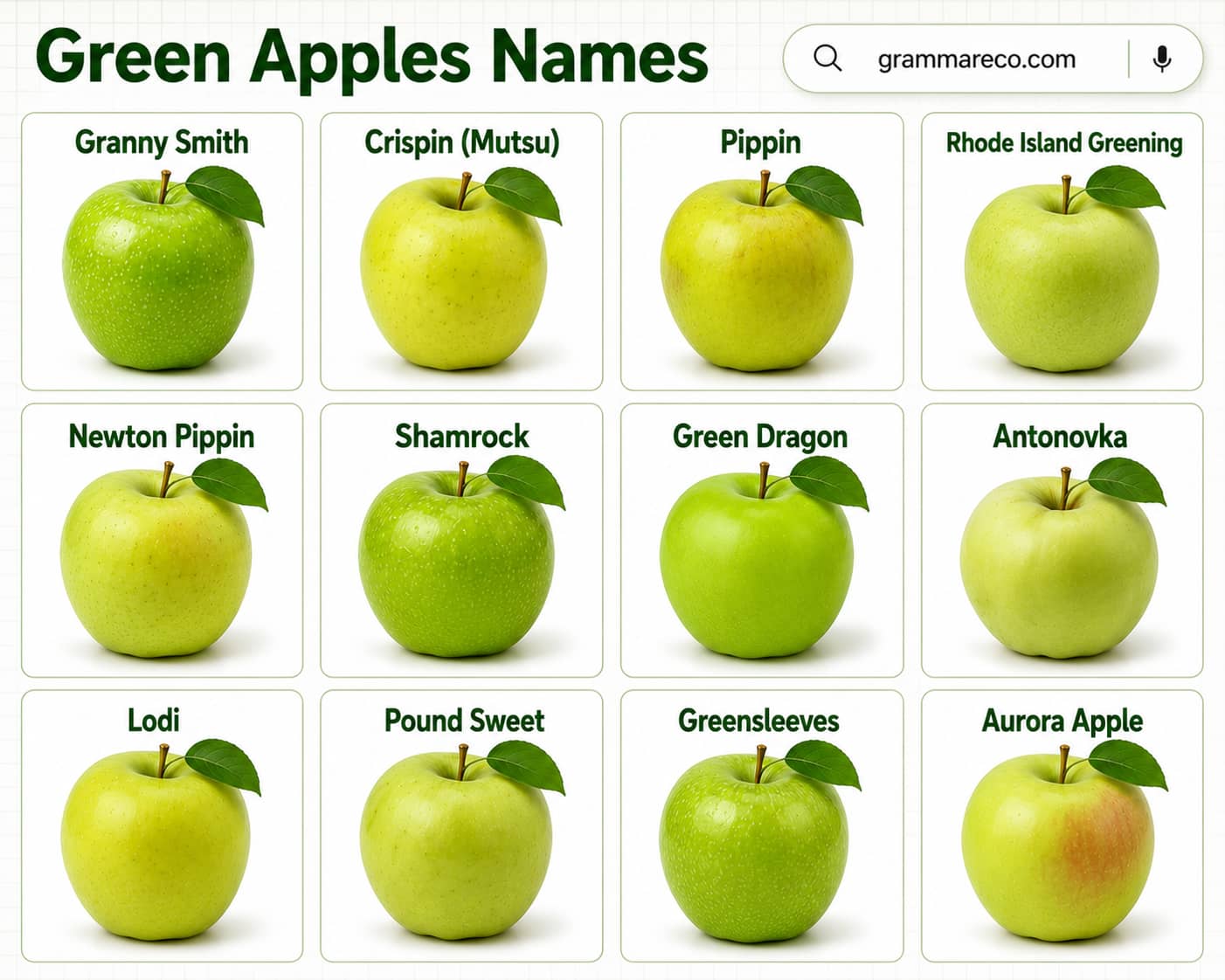
List of Green Apples in English With Pictures
Granny Smith
The most iconic green apple in the world, Granny Smith originated in Australia in the 1860s. It is known for its extreme tartness and firm texture, making it a global baking favorite.
- Taste: Very tart, crisp, highly refreshing
- Scientific name: Malus domestica
- Colors: Bright green, sometimes with light red blush
- Growing areas: Australia, USA, New Zealand, Europe
- Uses: Baking, pies, salads, fresh eating, juice
Rhode Island Greening
One of the oldest American apple varieties, dating back to the 1600s, Rhode Island Greening played a major role in early American orchards and cider production.
- Taste: Tart-sweet, firm, slightly acidic
- Scientific name: Malus domestica
- Colors: Deep green, sometimes yellowing with age
- Growing areas: USA (New England), Canada
- Uses: Baking, cider, sauces, traditional recipes
Shizuka Apples Type
A Japanese variety developed in the 20th century, Shizuka is a cross involving Golden Delicious genetics. It is less tart than Granny Smith but still crisp and refreshing.
- Taste: Mildly sweet, low acidity, crisp bite
- Scientific name: Malus domestica
- Colors: Light green to yellow-green
- Growing areas: Japan, USA, East Asia orchards
- Uses: Fresh eating, salads, light desserts
Crispin (Mutsu – Green Stage)
When harvested early, Mutsu (also known as Crispin) appears more green than golden. This stage is widely used for cooking and fresh crunch applications.
- Taste: Balanced sweet-tart, juicy, crisp
- Scientific name: Malus domestica
- Colors: Greenish-yellow
- Growing areas: Japan, USA, China
- Uses: Baking, fresh eating, cider, cooking
Antonovka (Green Heirloom Apple)
A legendary Russian heirloom apple, Antonovka is widely cultivated in cold climates due to its extreme hardiness. It is often used in traditional European cooking.
- Taste: Sharp tartness, aromatic, firm flesh
- Scientific name: Malus domestica
- Colors: Pale green turning yellow when ripe
- Growing areas: Russia, Eastern Europe, Northern Asia
- Uses: Baking, preserves, cider, cooking
Bramley (Green Cooking Apple)
Originating in England in the 1800s, Bramley is one of the most famous cooking apples in the UK. It is rarely eaten raw due to its strong tartness.
- Taste: Very tart, juicy, soft when cooked
- Scientific name: Malus domestica
- Colors: Green turning yellowish when ripe
- Growing areas: UK, Ireland, Europe
- Uses: Pies, crumbles, sauces, baking
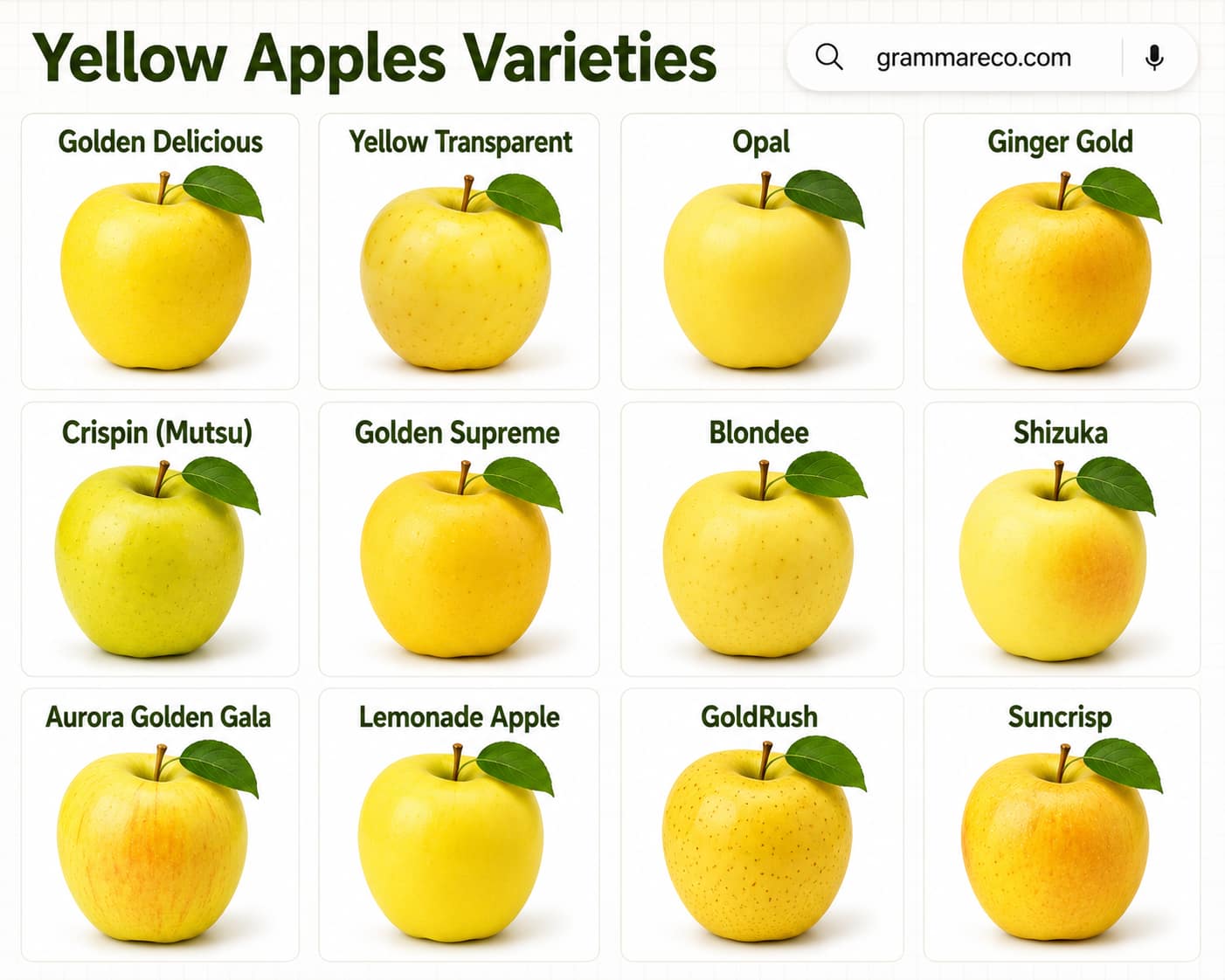
Yellow Apple Varieties with Pictures and Properties
Golden Delicious (Yellow Apple)
One of the most famous yellow apples in the world, Golden Delicious originated in West Virginia, USA in the early 1900s. It quickly became a global staple due to its natural sweetness and versatility in both raw and cooked forms. It is also widely used in breeding modern apple varieties.
- Taste: Sweet, mild, slightly honey-like, soft crunch
- Scientific name: Malus domestica
- Colors: Golden yellow, sometimes light green when underripe
- Growing areas: USA, Europe, China, South Africa
- Uses: Fresh eating, baking, sauces, apple butter, juice
Ginger Gold
Ginger Gold is an American apple discovered in Virginia in the 1960s. It is one of the earliest harvested commercial apples and is valued for its refreshing balance of sweetness and slight tartness.
- Taste: Mildly sweet with light tart notes
- Scientific name: Malus domestica
- Colors: Pale yellow to golden with slight green tint
- Growing areas: USA (Virginia), Europe
- Uses: Fresh eating, salads, early-season baking
Opal Apple Fruit
A modern European variety developed in the Czech Republic, Opal apples are naturally non-browning, making them highly popular for fresh-cut uses. They are derived from Golden Delicious genetics.
- Taste: Sweet, crisp, floral notes, low acidity
- Scientific name: Malus domestica
- Colors: Bright golden yellow skin
- Growing areas: Czech Republic, Europe, USA
- Uses: Fresh eating, salads, sliced fruit packs
Mutsu (Crispin Apples)
Originating in Japan in the 1930s, Mutsu apples were created from Golden Delicious and Indo crossbreeding. They are large-sized apples known for their juicy crunch and balanced flavor.
- Taste: Sweet with slight tart undertone, juicy
- Scientific name: Malus domestica
- Colors: Greenish-yellow to golden
- Growing areas: Japan, USA, China
- Uses: Baking, fresh eating, cider, cooking
GoldRush Apples (modern American variety)
GoldRush is a modern American variety developed in Illinois. It is known for its high acidity when fresh but becomes sweeter after storage, making it popular for cider production.
- Taste: Tart initially, develops sweet complexity
- Scientific name: Malus domestica
- Colors: Deep golden yellow with slight russeting
- Growing areas: USA, Europe
- Uses: Cider, baking, long storage, fresh eating
Yellow Transparent Apple Varieties
One of the oldest apple varieties from Eastern Europe and Russia, Yellow Transparent is an early-season apple widely used for cooking due to its soft flesh and quick ripening.
- Taste: Tart, light, mildly sweet when ripe
- Scientific name: Malus domestica
- Colors: Pale yellow, almost translucent skin
- Growing areas: Russia, Eastern Europe, Central Asia
- Uses: Applesauce, jams, baking, cooking
Newton Pippin (Yellow Form Apples)
Also known as Albemarle Pippin in the USA, this heirloom apple dates back to the 1700s. It was historically exported to England and favored by early American growers.
- Taste: Complex sweet-tart, rich aromatic flavor
- Scientific name: Malus domestica
- Colors: Yellow-green to golden
- Growing areas: USA (Virginia, New York), UK heritage markets
- Uses: Baking, cider, fresh eating, gourmet desserts
Types of Apple with Pictures and Properties
Apple properties depend on sugar levels, acidity, flesh density, and skin thickness. Some apples feel juicy and floral, while others taste spicy or slightly nutty. Apples names and pictures help readers compare shape, color, and surface texture more easily.
Apples Used for Baking and Cooking
Cooking apples behave differently under heat depending on their moisture and firmness. Some apples soften into creamy sauce, while others remain structured inside pies and baked desserts.
Best Apples for Pies
Pie apples should balance sweetness and tartness while keeping shape during baking. Bakers often combine several varieties together for richer flavor.
- Granny Smith: Firm texture and tartness balance sugary pie fillings very well.
- Honeycrisp: Holds shape while adding juicy sweetness and crisp texture.
- Braeburn: Spicy flavor becomes richer after baking in pastries or pies.
- Rome Beauty: Stays firm during long baking times and absorbs spices nicely.
- Jonathan: Balanced tart sweetness creates flavorful traditional pie fillings.
- Northern Spy: Dense flesh prevents mushy texture inside baked desserts.
- Jonagold: Sweet tart flavor pairs nicely with cinnamon and nutmeg.
- Pink Lady: Holds firmness and adds bright tangy flavor to pies.
- Cortland: White flesh resists browning and softens evenly during baking.
- Mutsu: Large slices stay thick and juicy in baked recipes.
Apples for Sauces
Some apples soften quickly into smooth puree, making them excellent for applesauce and cider recipes.
- McIntosh: Soft flesh cooks down rapidly into creamy applesauce.
- Cortland: Sweet tart flavor creates balanced homemade sauce.
- Golden Delicious: Naturally sweet flesh reduces the need for extra sugar.
- Jonathan: Bright flavor works well in chunky applesauce recipes.
- Gravenstein: Aromatic juice creates flavorful fresh sauce.
- Fuji: Adds sweetness and smooth texture to blended sauces.
- Empire: Slight tartness keeps sauces from tasting overly sugary.
- Paula Red: Early season apple that softens quickly during cooking.
- Lodi: Tart flesh cooks into smooth light colored applesauce.
- Gala: Mild sweetness blends easily with cinnamon and spices.
Apples That Stay Firm While Baking
Certain apples resist collapsing during baking because their flesh structure remains dense under heat. Ever noticed neat apple slices inside bakery pies? These apples usually make that happen.
- Honeycrisp: Holds crisp texture even after longer oven baking.
- Rome Beauty: Reliable structure works well in pies and baked casseroles.
- Braeburn: Firm flesh keeps shape while developing deeper sweetness.
- Granny Smith: Dense texture remains intact inside pastries.
- Pink Lady: Crisp bite stays noticeable after roasting or baking.
- Northern Spy: Thick slices maintain structure during high heat.
- Mutsu: Large firm apples resist turning mushy in desserts.
- Jonagold: Keeps balanced firmness while releasing sweet juice.
- Arkansas Black: Dense flesh softens slowly during cooking.
- Jazz: Crisp texture survives baking surprisingly well.
Apples Variety Chart with Pictures
Apple variety charts help readers compare color, flavor, and common uses quickly. Pictures also make it easier to recognize grocery store apples and orchard cultivars.
| Apple Variety | Flavor | Skin Color | Best Use |
|---|---|---|---|
| Fuji | Sweet | Red yellow | Snacking |
| Granny Smith | Tart | Green | Baking |
| Honeycrisp | Sweet tart | Red yellow | Fresh eating |
| Gala | Mild sweet | Orange red | Lunchboxes |
| McIntosh | Tangy sweet | Red green | Sauce |
| Rome Beauty | Mild sweet | Red | Pies |
| Pink Lady | Sweet tart | Pink red | Salads |
| Braeburn | Spicy sweet | Red orange | Baking |
| Golden Delicious | Mild sweet | Yellow green | Cooking |
| Jonagold | Sweet tart | Red yellow | Pies |
| Cortland | Tart sweet | Red striped | Sauces |
| Empire | Balanced | Dark red | Snacking |
| Arkansas Black | Mild spicy | Deep burgundy | Storage |
| Jazz | Sweet tart | Red yellow | Fresh eating |
| Mutsu | Sweet tart | Green yellow | Baking |
FAQs about Types of Apples
Fuji, Kiku, and Ambrosia apples are among the sweetest apple varieties because they contain high natural sugar and lower acidity.
Granny Smith, Honeycrisp, and Rome Beauty apples work best for pies because they stay firm during baking and balance sweet fillings.
Green and red apples both contain fiber and nutrients. Green apples usually taste tarter, while red apples often contain more natural sweetness.
Fuji, Arkansas Black, and Cosmic Crisp apples store well for long periods because of their dense flesh and thicker skin.
Common types of red apples include Red Delicious, Fuji, Gala, McIntosh, Empire, Cortland, Jonathan, Winesap, Arkansas Black, and Spartan apples. These apples vary in sweetness, texture, color, and taste.
Summary
Apple varieties differ in flavor, texture, color, storage life, and cooking performance. Some apples taste crisp and sugary for snacking, while others feel tart and firm for baking recipes. Learning different types of apples helps readers identify grocery store apples, choose better baking fruit, and understand orchard varieties more confidently.
Read more