

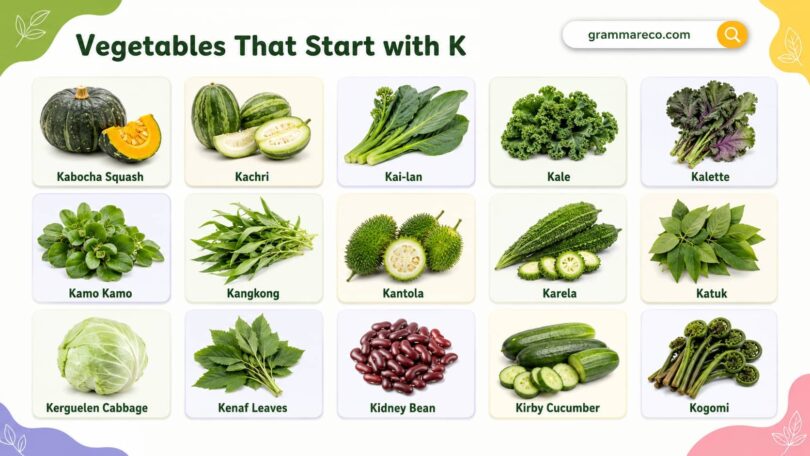
Vegetables that start with K include leafy greens, gourds, squash, roots, legumes, stems, and edible sea plants. Their names come from many food traditions, with several appearing often in Asian cooking. Some K vegetables have crisp textures, while others become tender after cooking. Learning these names gives readers a broader understanding of produce and common vegetable terms. Kale, kohlrabi, and kabocha squash are among the better-known choices in this group.
Knowing vegetables beginning with K also introduces less familiar produce names used in recipes, markets, gardens, and food lessons. This article helps readers learn their names, plant types, edible parts, and common culinary uses.
What Vegetables that Start with K?
Vegetables Starting with K cover several edible plant parts, including leaves, roots, bulbs, fruits, beans, and underground stems. Some names describe specific varieties, while others refer to traditional vegetables from different regions.
List of Vegetables that Start with K
Below is a comprehensive list of vegetable names beginning with K, including common varieties and less familiar produce.
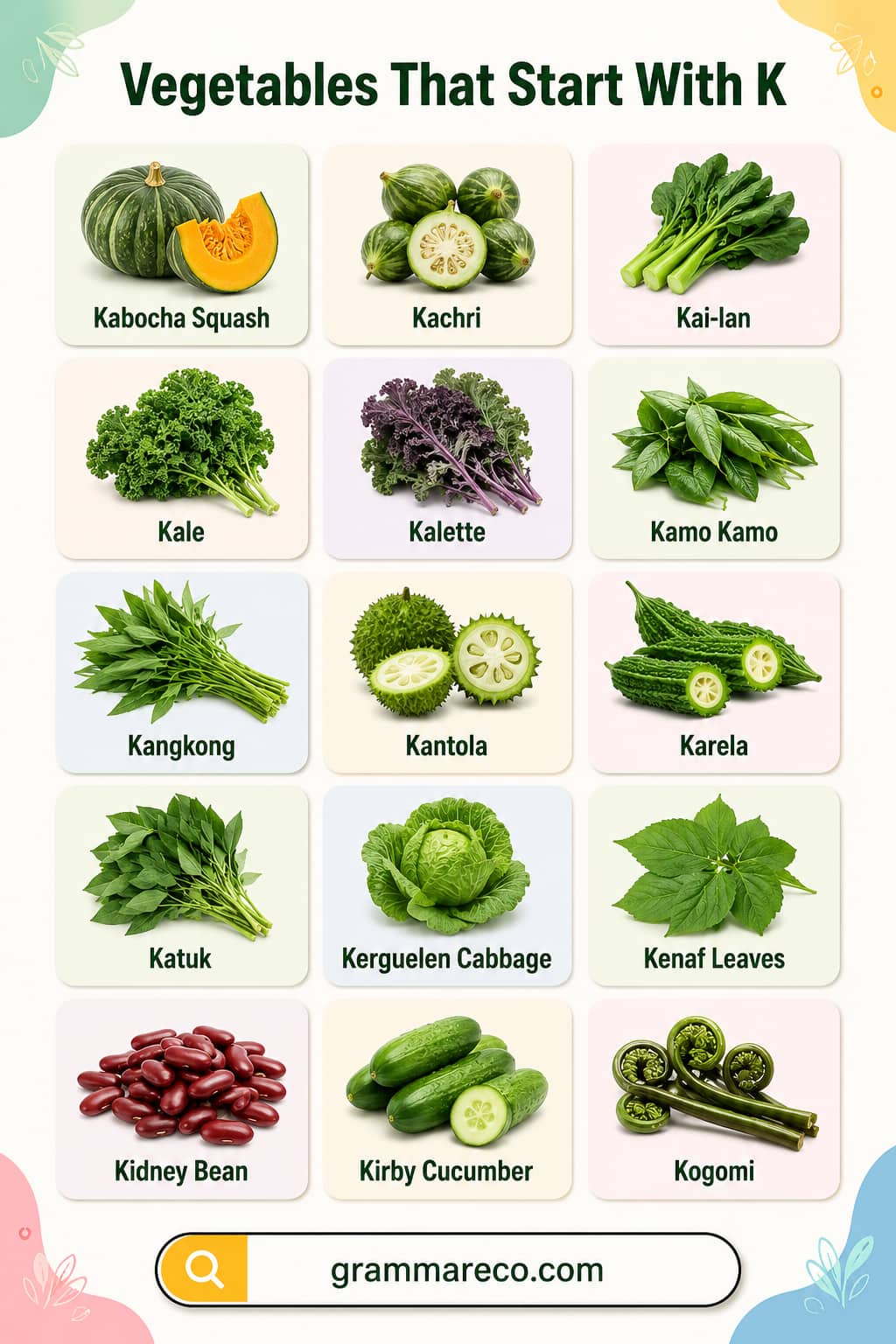
- Kabocha Squash
- Kachri
- Kai-lan
- Kale
- Kalette
- Kamo Kamo
- Kangkong
- Kantola
- Karela
- Katuk
- Kerguelen Cabbage
- Kenaf Leaves
- Kidney Bean
- Kirby Cucumber
- Kogomi
- Kohlrabi
- Komatsuna
- Kombu
- Konjac
- Korean Radish
- Kovakkai
- Kuka Leaves
- Kudzu Shoots
- Kurrat
- Kumara
- Kinjiso
- Kikuna
Vegetables that Start with K with Pictures
Pictures can make unfamiliar produce easier to recognize by shape, color, size, and edible part. Learning vegetables with their pictures also helps readers connect each name with the plant or produce commonly used in cooking.
Kachri
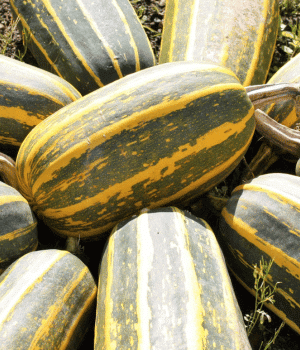
Kachri is a small, wild melon-like vegetable traditionally used in Indian cooking, especially in Rajasthan. The immature fruit has a firm texture and a tangy, slightly bitter flavor. Fresh kachri can be cooked with spices, while dried pieces are often ground into a sour seasoning powder. Its distinctive taste works well in curries, chutneys, vegetable dishes, and meat marinades. The vegetable is valued for its strong regional culinary character.
Kai-lan
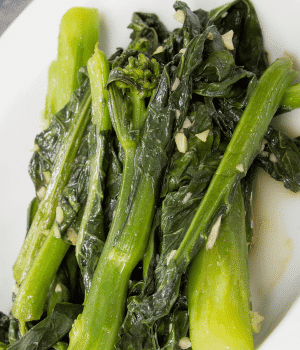
Kai-lan, also called Chinese broccoli, is a leafy green vegetable from the cabbage family. It has thick stems, broad green leaves, and small edible flower buds. The entire plant can be eaten, including its tender stalks and young shoots. Kai-lan has a mild, slightly bitter flavor that becomes sweeter when cooked. It is commonly stir-fried, steamed, blanched, or added to noodle and rice dishes.
Kale
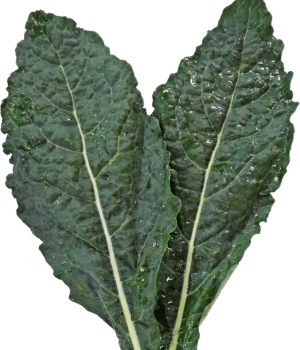
Kale is a leafy green vegetable belonging to the cabbage family, with varieties ranging from curly to broad-leaved types. Its sturdy leaves have a mildly bitter, earthy flavor that softens during cooking. Kale can be eaten raw in salads or cooked in soups, sautés, casseroles, and side dishes. Young leaves are tender, while mature leaves are often cooked to improve their texture and flavor.
Kalette
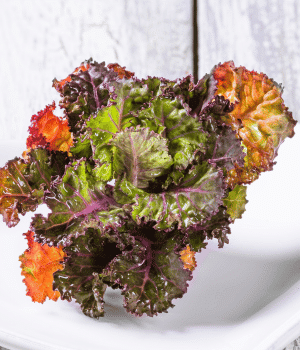
Kalette is a hybrid vegetable created by crossing kale with Brussels sprouts. It produces small, open rosettes that resemble miniature flowering cabbages, with frilly green and purple leaves. The vegetable combines the earthy flavor of kale with the slightly nutty taste associated with Brussels sprouts. Kalettes can be roasted, sautéed, steamed, or grilled. Their compact rosettes become tender and lightly crisp when cooked.
Kamo Kamo
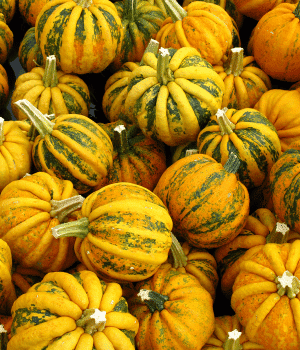
Kamo Kamo is a type of pumpkin or squash traditionally grown and eaten in New Zealand. It has a rounded shape, firm skin, and dense orange-yellow flesh when mature. The flavor is mildly sweet with a rich squash-like taste. Kamo Kamo can be roasted, mashed, baked, or added to soups and stews. Both young and mature fruits are used, although preparation methods can differ.
Kangkong
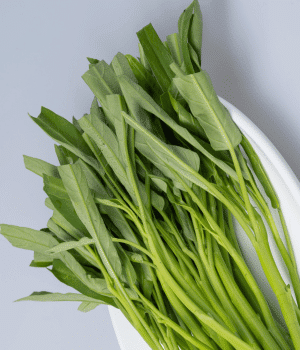
Kangkong is a leafy vegetable also known as water spinach or morning glory. It has hollow stems and tender green leaves that grow especially well in warm, moist environments. The vegetable has a mild flavor and crisp texture when cooked quickly. Kangkong is commonly stir-fried with garlic, sauces, or chili. Young stems and leaves are both edible and are widely used in Southeast Asian dishes.
Kantola
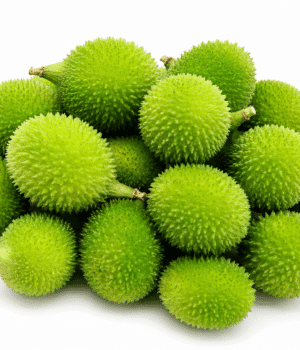
Kantola is a small, prickly gourd commonly known as spiny gourd or spine gourd. It belongs to the cucumber family and develops a green, textured surface covered with soft spines. Young fruits have firm flesh and a mild, slightly bitter taste. Kantola is usually cooked rather than eaten raw. It can be sliced, fried, sautéed, or prepared with spices in traditional Indian vegetable dishes.
Karela
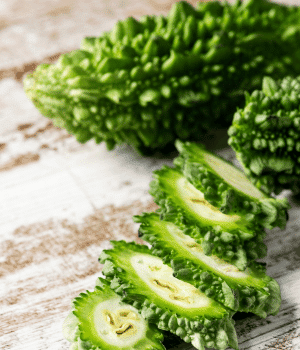
Karela is the Hindi name commonly used for bitter melon or bitter gourd. Its elongated green fruit has a deeply ridged, uneven surface and a distinctly bitter flavor. Young karela is commonly cooked with onions, spices, and other vegetables. The fruit may also be stuffed, fried, or added to curries. Its strong bitterness becomes milder after salting, soaking, or cooking, depending on the preparation.
Katuk
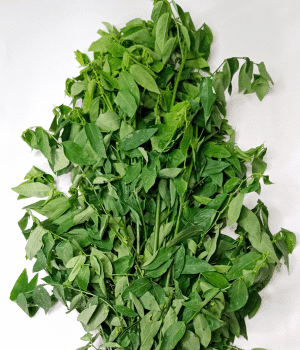
Katuk is a leafy green vegetable native to parts of Southeast Asia and widely grown in tropical regions. Its small oval leaves grow along slender stems, creating a compact leafy plant. Katuk has a mild, slightly sweet flavor and can be eaten fresh or cooked. Young leaves and shoots are commonly added to soups, stir-fries, salads, and vegetable dishes. The tender stems are edible as well.
Kerguelen Cabbage
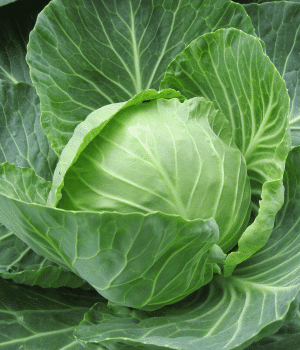
Kerguelen cabbage is a perennial leafy plant native to the subantarctic Kerguelen Islands. It is known for its large, fleshy leaves and ability to grow in cold, windy conditions. Historically, its leaves were used as a food plant by people visiting the islands. The vegetable has a cabbage-like character, although it belongs to a different plant group. Its unusual habitat makes it a distinctive edible plant.
Kenaf Leaves

Kenaf leaves come from kenaf, a fast-growing plant related to hibiscus and other members of the mallow family. The young leaves are edible and are used as a leafy vegetable in several African and Asian cuisines. They have a slightly tart, green flavor and can be cooked in soups, stews, or sauces. Tender kenaf leaves are often chopped before cooking, which helps soften their texture.
Kidney Bean

Kidney beans are edible legumes named for their characteristic kidney-like shape. They have a firm texture, creamy interior, and mild flavor that absorbs seasonings well. Red kidney beans are especially common in chili, bean salads, rice dishes, and stews. They must be properly cooked before eating because raw or undercooked kidney beans contain naturally occurring compounds that can cause illness. Canned beans are already cooked.
Kogomi

Kogomi is the Japanese name for the young curled shoots of the ostrich fern, commonly called fiddlehead fern. These tender shoots are harvested before the fronds fully unfold and have a crisp texture with a mild, grassy flavor. Kogomi is traditionally blanched, boiled, or sautéed before serving. The young shoots are valued in Japanese cuisine and often appear in seasonal vegetable dishes and salads.
Kohlrabi

Kohlrabi is a bulbous vegetable that belongs to the cabbage family. Its enlarged stem forms a round, turnip-like shape above the soil, while long leaves grow from its surface. The crisp flesh has a mild, slightly sweet flavor similar to cabbage and broccoli stems. Kohlrabi can be eaten raw, roasted, steamed, sautéed, or added to soups. Both the bulbous stem and young leaves are edible.
Komatsuna
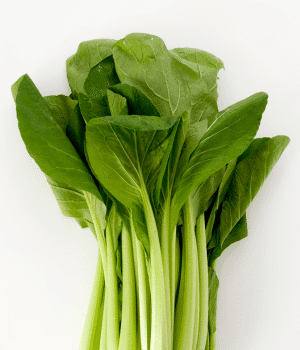
Komatsuna is a Japanese leafy green related to turnips and other brassica vegetables. Its smooth, dark green leaves grow from slender stems and have a mild mustard-like flavor. Young komatsuna can be eaten raw, while mature leaves are often cooked. It works well in stir-fries, soups, pickles, noodle dishes, and rice recipes. The vegetable grows quickly and is valued for its versatility in Japanese cooking.
Kombu
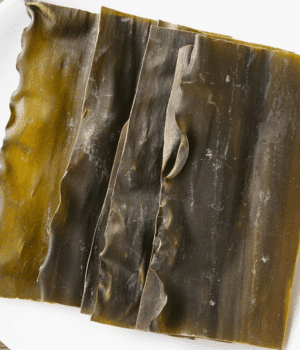
Kombu is an edible brown seaweed commonly used as a vegetable-like ingredient in Japanese and other East Asian cuisine. It has broad, thick fronds and a naturally savory, umami-rich flavor. Dried kombu is frequently used to make dashi, a traditional Japanese broth. It can also be simmered with vegetables, beans, and other ingredients. Although often grouped with vegetables in food lists, kombu is botanically seaweed.
Konjac
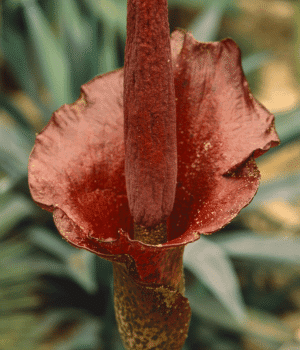
Konjac is a perennial plant cultivated for its large underground corm, which is processed into a traditional food ingredient and glucomannan are used to make noodles, cakes, and other foods with a firm, springy texture. The fresh plant itself is not normally eaten raw and requires proper processing. Konjac foods are especially common in Japanese cuisine, where they appear in soups, hot pots, and noodle dishes.
Korean Radish
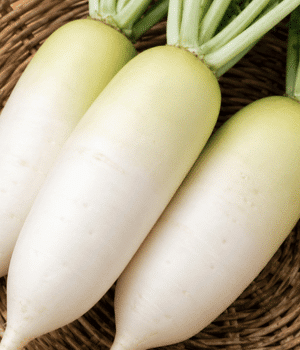
Korean radish is a large, firm radish commonly used in Korean cuisine. It typically has a rounded or elongated shape, pale green upper skin, and white flesh with a crisp texture. Its flavor is mildly sweet, peppery, and refreshing. Korean radish is widely used for kimchi, soups, stews, salads, and fermented dishes. The dense flesh holds its texture well during cooking and fermentation.
Kovakkai
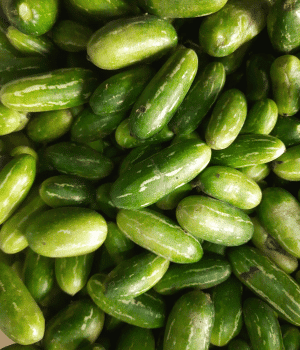
Kovakkai is the Tamil name commonly used for ivy gourd, a small tropical vegetable with slender, oval fruits. Young kovakkai has green skin marked by pale stripes and crisp, mildly bitter flesh. It is usually cooked rather than eaten raw. The vegetable can be sliced and stir-fried, sautéed with spices, added to curries, or prepared as a simple South Indian side dish.
Kudzu Shoots
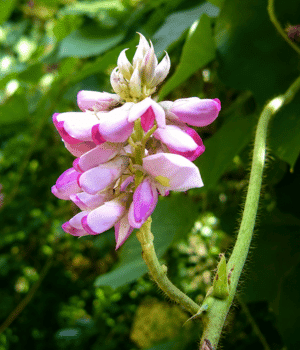
Kudzu shoots are the young, tender growing tips of the kudzu vine. Unlike the mature, tough vine, young shoots can be harvested as a seasonal edible green when properly identified and prepared. They have a mild, grassy flavor and can be cooked like other tender shoots. Kudzu shoots may be steamed, boiled, sautéed, or added to vegetable dishes. Only suitable young plant parts should be used as food.
Kurrat
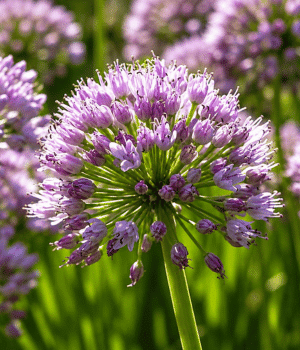
Kurrat is a type of perennial leek traditionally grown and eaten in parts of the Middle East and North Africa. It produces narrow green leaves with a mild onion-like flavor and belongs to the same genus as leeks and onions. Kurrat can be harvested for its leaves and tender stems. It is used in cooked vegetable dishes, salads, soups, and traditional regional recipes.
Kumara
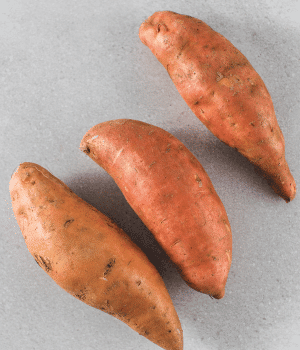
Kumara is the Māori name commonly used in New Zealand for sweet potato. It develops underground storage roots with skin colors ranging from cream and golden brown to red-purple, depending on the variety. The flesh may be white, yellow, orange, or purple. Kumara has a naturally sweet, starchy flavor and can be roasted, boiled, mashed, baked, or used in soups and savory dishes.
Kinjiso
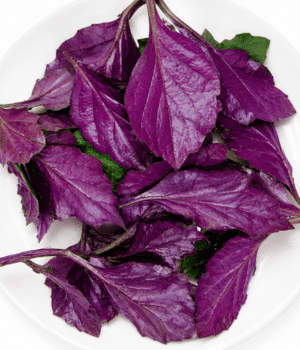
Kinjiso is an edible leafy green associated with Okinawan cuisine in Japan and is commonly known as Okinawan spinach. Its leaves are often green on top with a distinctive purplish underside. Kinjiso has a tender texture and a mild, slightly earthy flavor. Young leaves can be eaten fresh, while mature leaves are often lightly cooked. It is used in salads, stir-fries, soups, and local vegetable dishes.
Kikuna
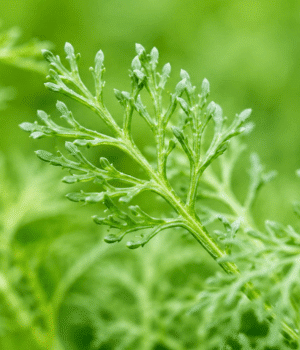
Kikuna is the Japanese name commonly used for edible chrysanthemum greens, also called shungiku. The plant produces deeply divided leaves with a distinctive herbal, slightly bitter flavor. Young kikuna leaves can be eaten raw, while mature leaves are commonly blanched or cooked. They are especially popular in Japanese hot pots, soups, salads, and stir-fries. Their aromatic flavor adds a fresh herbal note to savory dishes.
Classification of Vegetables Starting with K
Vegetable that Starts with K fit into several useful food categories, although some technically belong to botanical fruit or seaweed groups. The classification below focuses on how each food is commonly treated and eaten as a vegetable.
Leafy Vegetables that Begin with K
Vegetables that Begin with K are mainly eaten for their tender leaves and young shoots. Many work well in stir-fries, soups, salads, steamed dishes, or cooked greens. Below is a list of leafy vegetables beginning with K.
- Kale: Kale is a leafy green with sturdy leaves and a slightly earthy flavor. It can be eaten raw, sautéed, steamed, roasted, or added to soups and salads.
- Kai-lan: Kai-lan, also called Chinese broccoli, has thick green stems, broad leaves, and small edible flower buds. It is commonly stir-fried, steamed, or served with savory sauces.
- Kangkong: Kangkong is a leafy green with hollow stems and narrow leaves. Also called water spinach, it is commonly cooked in stir-fries, soups, and savory vegetable dishes.
- Komatsuna: Komatsuna is a Japanese leafy green related to turnips and mustard greens. Its mild flavor works well in soups, stir-fries, salads, and lightly cooked vegetable dishes.
- Katuk: Katuk is a leafy plant widely used in Southeast Asian cooking. Its small leaves and tender shoots are commonly cooked with soups, vegetables, eggs, or coconut-based dishes.
- Kenaf Leaves: Kenaf leaves come from the kenaf plant and are eaten as leafy vegetables in several food traditions. They can be cooked into soups, sauces, and vegetable dishes.
- Kerguelen Cabbage: Kerguelen cabbage is an edible leafy plant associated with the remote Kerguelen Islands. Its leaves have historically been used as a vegetable, particularly in local food traditions.
- Kuka Leaves: Kuka leaves are edible leafy greens used in some African food traditions. The leaves can be cooked into soups and sauces, where their tender texture blends with other ingredients.
Root Vegetables Beginning with K
Not every vegetable in this group is technically a root. Some are underground plant parts, while others are commonly treated as vegetable ingredients. Below is a useful selection of K vegetables associated with roots, tubers, and underground parts.
- Konjac: Konjac is an underground corm used to make konjac flour, noodles, and other foods. The cooked product has a firm, springy texture and appears in many Asian dishes.
- Kurrat: Kurrat is a type of Egyptian leek related to onions and garlic. Its edible leaves and stems are used in cooked dishes and traditional vegetable preparations.
- Kogomi: Kogomi refers to young fiddleheads of the ostrich fern. These curled shoots are harvested when young and commonly cooked before serving as a seasonal vegetable.
Legumes Vegetables that Start With K
Legumes provide edible seeds or pods and can appear fresh, dried, or cooked. K has several useful legume names, including familiar beans and less common pod vegetables.
- Kidney Bean: Kidney beans are large beans with a distinctive kidney-like shape and firm texture. They are commonly cooked in chili, soups, bean salads, rice dishes, and stews.
- Kecipir: Kecipir is the winged bean, a tropical legume with four ridged edges along its pods. Young pods, seeds, leaves, and other parts can be eaten after cooking.
Gourds Vegetables that Start with K
Several vegetables are actually botanical fruits but are treated as vegetables in cooking. Squash, melons, cucumbers, and gourds often appear in savory dishes despite their botanical classification.
- Kabocha Squash: Kabocha squash is a Japanese winter squash with dark green skin and dense orange flesh. Its sweet, nutty flavor works well in soups, roasting, curries, and stews.
- Kamo Kamo: Kamo Kamo is a type of squash associated with New Zealand food traditions. It has firm flesh and can be cooked by roasting, steaming, baking, or boiling.
- Karela: Karela, commonly called bitter melon, is a ridged green fruit with a strong bitter flavor. It is often sliced, stuffed, stir-fried, or cooked with spices.
- Kakri: Kakri is a long, slender cucumber or melon used in South Asian cuisine. It has a crisp texture and is commonly eaten fresh, sliced, or added to salads.
- Kirby Cucumber: Kirby cucumber is a small cucumber variety with firm flesh and bumpy skin. Its crisp texture makes it especially popular for pickling and fresh vegetable dishes.
- Kovakkai: Kovakkai is a small green fruit also known as ivy gourd. It is commonly sliced and cooked in stir-fries, curries, and seasoned vegetable dishes.
- Kantola: Kantola is a small, spiny gourd related to bitter melon. The young fruits are commonly cooked by frying, sautéing, stuffing, or adding them to savory dishes.
Asian Vegetables that Start with K
Asian cuisine contributes many vegetable names, including leafy greens, gourds, squash, legumes, and underground foods. Several are common in Chinese, Japanese, Korean, Southeast Asian, and South Asian cooking.
- Kai-lan: Kai-lan is a Chinese leafy vegetable with edible stems, leaves, and small flower buds. It has a mild broccoli-like flavor and cooks quickly in stir-fries.
- Kangkong: Kangkong, or water spinach, has tender leaves and hollow stems. It is widely used in Southeast Asian cooking, especially in stir-fries, soups, and seasoned vegetable dishes.
- Kabocha Squash: Kabocha squash is strongly associated with Japanese cooking and has dense, sweet orange flesh. It works well in tempura, soups, stews, roasting, and simmered dishes.
- Komatsuna: Komatsuna is a Japanese green with tender leaves and a mild mustard-like taste. Young leaves can be eaten raw, while mature leaves are often cooked.
- Korean Radish: Korean radish is a large radish variety with firm flesh and a crisp texture. It is widely used in Korean dishes, including soups, stews, and fermented preparations.
- Karela: Karela is a widely used bitter gourd in South Asian and other Asian cuisines. Its strong taste becomes milder when prepared with salt, spices, or other ingredients.
- Kovakkai: Kovakkai is a slender green vegetable commonly used in Indian cooking. It is usually sliced and cooked with spices, onions, lentils, or other vegetables.
- Kecipir: Kecipir, or winged bean, is a tropical legume widely associated with Southeast Asian cuisine. Its young pods have crisp ridges and are commonly cooked before eating.
- Kachri: Kachri refers to a small wild melon used as a vegetable and spice in parts of South Asian cuisine. It may be eaten fresh or dried for cooking.
Vegetables that Start with K by Flavor
| Vegetable | Flavor | Common Uses |
|---|---|---|
| Kachri | Tart and slightly sour | Curries, chutneys, dried dishes |
| Kai-lan | Mild and broccoli-like | Stir-fries, steaming, boiling |
| Kabocha Squash | Sweet and nutty | Roasting, soups, tempura |
| Kakri | Mild, fresh, and crisp | Salads, fresh dishes |
| Kalette | Mild and slightly sweet | Roasting, sautéing, steaming |
| Kamo Kamo | Mild and slightly sweet | Roasting, baking, steaming |
| Kangkong | Mild and fresh | Stir-fries, soups, steaming |
| Kantola | Mild and slightly bitter | Frying, curries, sautéing |
| Karela | Strongly bitter | Curries, frying, stuffing |
| Katuk | Mild and slightly sweet | Soups, stir-fries, cooked greens |
| Kerguelen Cabbage | Mild and leafy | Cooked vegetable dishes |
| Kenaf Leaves | Tart and slightly sour | Soups, sauces, cooked greens |
| Kecipir | Mild and crisp | Stir-fries, salads, soups |
| Kidney Bean | Mild and earthy | Chili, soups, stews, salads |
| Kirby Cucumber | Crisp and mild | Pickling, salads, fresh dishes |
| Kogomi | Mild and grassy | Boiling, sautéing, side dishes |
| Kohlrabi | Mild and slightly sweet | Salads, roasting, soups |
| Komatsuna | Mild and slightly mustardy | Soups, stir-fries, salads |
| Kombu | Savory and umami-rich | Broths, soups, stocks |
| Konjac | Very mild | Noodles, soups, hot pots |
| Korean Radish | Crisp and mildly sweet | Soups, stews, kimchi |
| Kovakkai | Mild and slightly sweet | Stir-fries, curries |
| Kuka Leaves | Mild and leafy | Soups, sauces, cooked dishes |
| Kurrat | Mild and onion-like | Soups, stews, cooked dishes |
FAQs About Vegetables That Start With K
Vegetables that start with K include kale, kohlrabi, kabocha squash, kangkong, karela, komatsuna, Korean radish, and kidney beans.
Kale, kai-lan, kangkong, komatsuna, katuk, kenaf leaves, Kerguelen cabbage, and Kuka leaves are leafy vegetables beginning with K.
Kangkong, kai-lan, komatsuna, karela, kabocha squash, Korean radish, and kecipir are commonly used in Asian cuisines.
Konjac is used to make konjac noodles. The noodles are made from the underground corm of the konjac plant and have a firm texture.
Read more
- 50+ Vegetables that Start with I
- 57 Vegetables that Start with J
- Vegetables that Start with L
- Vegetables that Start with M
- Vegetables that Start with N