
Ever wondered why we say “Sara’s book” but “teachers’ lounge”? Possessive nouns examples can feel tricky at first. They show ownership, relationships, and belonging in everyday English grammar. Think of phrases like dog’s leash or parents’ house. Small marks change meaning fast.
Ready to master these patterns and avoid confusion? Let’s break it down step by step.
What are Possessive Nouns Examples in English
Possessive nouns show ownership or relationships using apostrophes and noun forms. They help clarify who owns something in grammar rules, sentence structure, and writing clarity. Understanding them improves accuracy and fluency. Ready to see quick examples?
- Dog’s: belonging to one dog
- Girls’: belonging to multiple girls
- Teacher’s: something owned by a teacher
- Car’s: object related to a car
- Baby’s: belonging to a baby
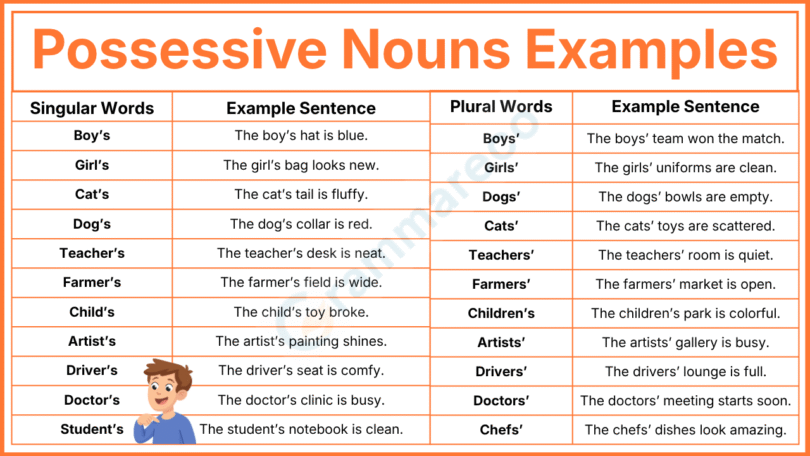
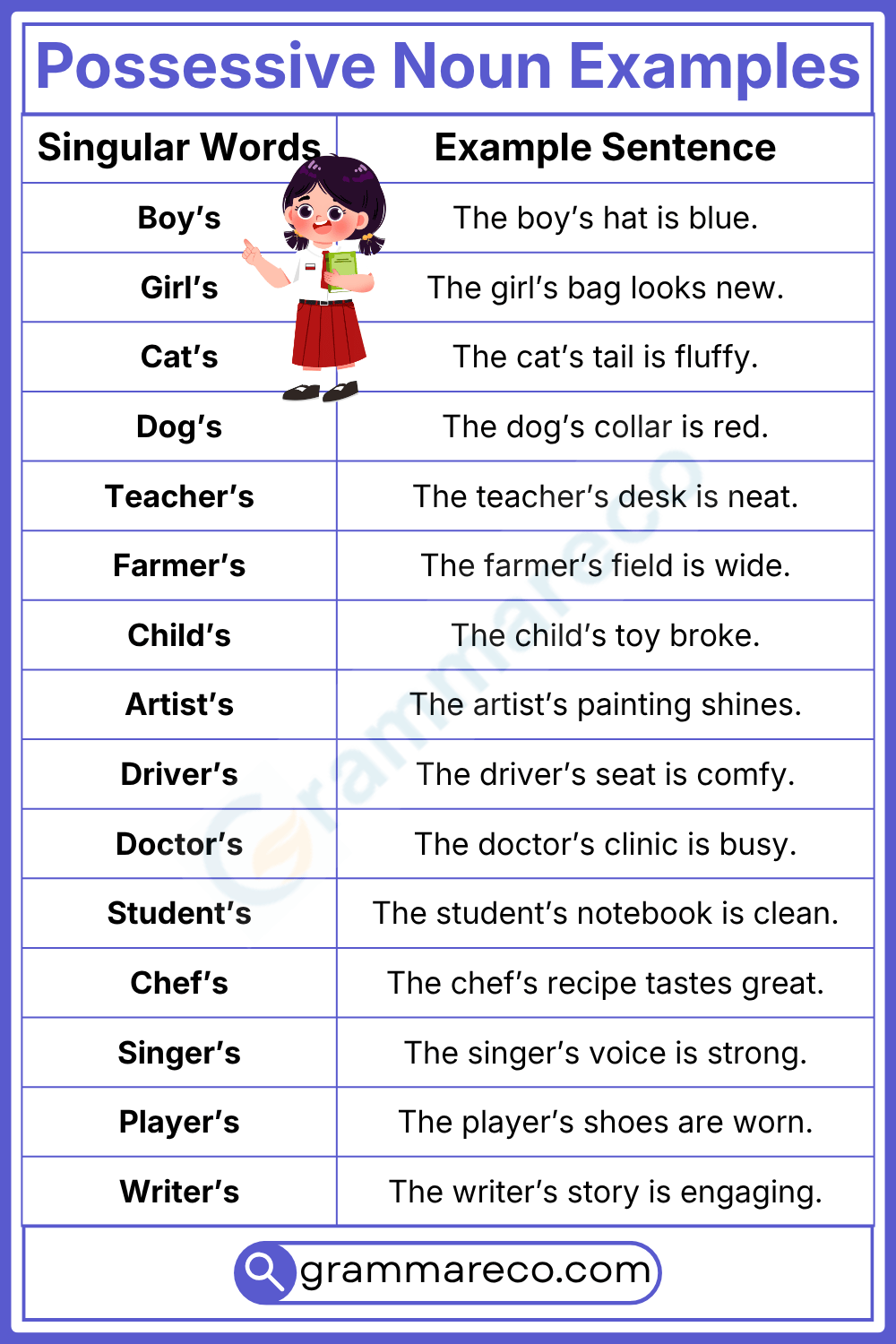
Singular Possessive Nouns Examples
Singular possessive nouns indicate ownership by one person, place, or thing using apostrophe + s. These examples improve grammar clarity and writing precision. Let’s review structured samples.
| Word | Example Sentence |
|---|---|
| Boy’s | The boy’s hat is blue. |
| Girl’s | The girl’s bag looks new. |
| Cat’s | The cat’s tail is fluffy. |
| Dog’s | The dog’s collar is red. |
| Teacher’s | The teacher’s desk is neat. |
| Farmer’s | The farmer’s field is wide. |
| Child’s | The child’s toy broke. |
| Artist’s | The artist’s painting shines. |
| Driver’s | The driver’s seat is comfy. |
| Doctor’s | The doctor’s clinic is busy. |
| Student’s | The student’s notebook is clean. |
| Chef’s | The chef’s recipe tastes great. |
| Singer’s | The singer’s voice is strong. |
| Player’s | The player’s shoes are worn. |
| Writer’s | The writer’s story is engaging. |
| Bird’s | The bird’s nest is high. |
| Lion’s | The lion’s roar is loud. |
| Baby’s | The baby’s smile is sweet. |
| King’s | The king’s crown shines. |
| Actor’s | The actor’s role was powerful. |
Plural Possessive Nouns with Examples and Sentences
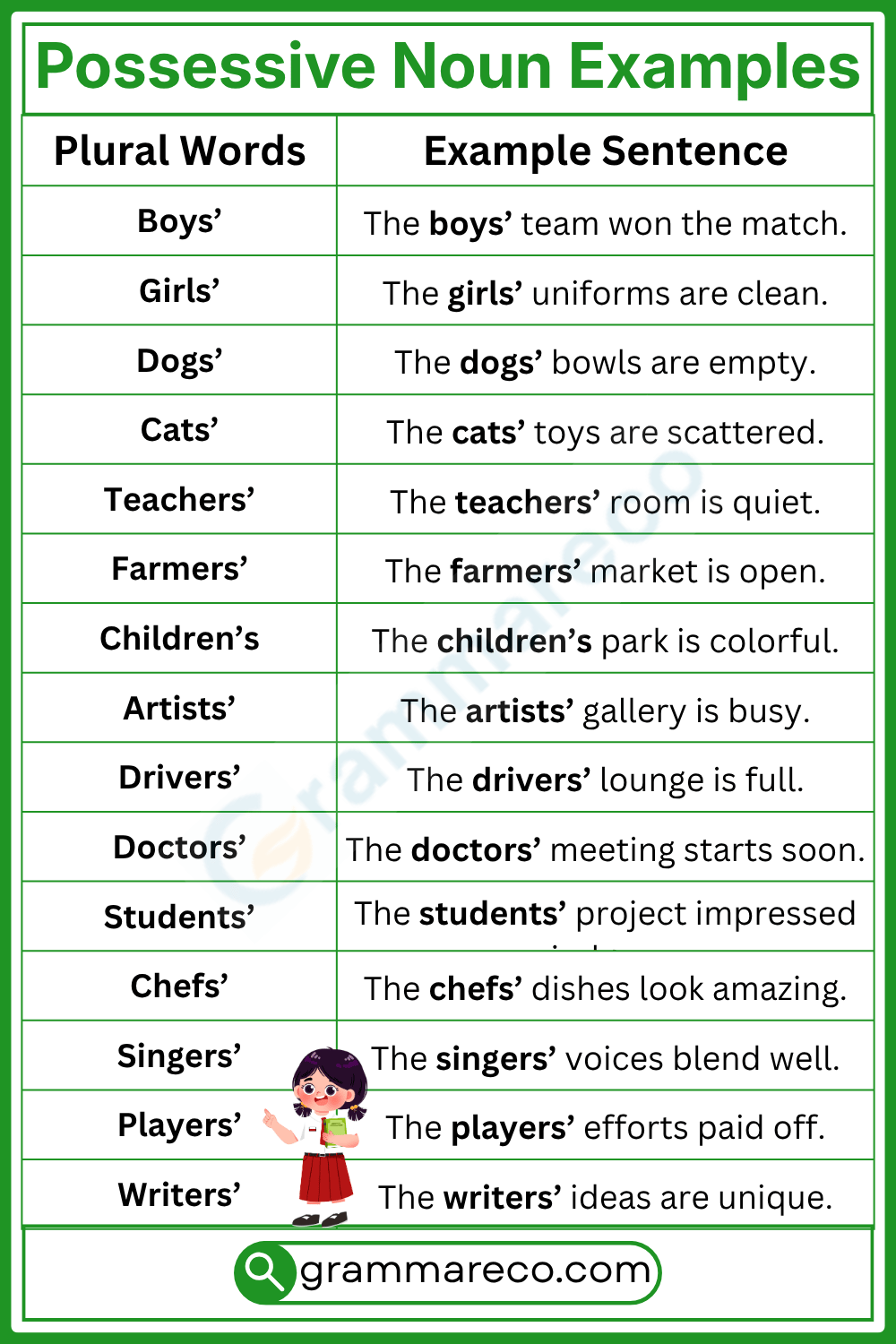
Plural possessive noun show ownership by more than one subject, usually adding apostrophe after “s.” These forms enhance clarity in plural noun usage. Let’s examine examples.
| Word | Example Sentence |
|---|---|
| Boys’ | The boys’ team won the match. |
| Girls’ | The girls’ uniforms are clean. |
| Dogs’ | The dogs’ bowls are empty. |
| Cats’ | The cats’ toys are scattered. |
| Teachers’ | The teachers’ room is quiet. |
| Farmers’ | The farmers’ market is open. |
| Children’s | The children’s park is colorful. |
| Artists’ | The artists’ gallery is busy. |
| Drivers’ | The drivers’ lounge is full. |
| Doctors’ | The doctors’ meeting starts soon. |
| Students’ | The students’ project impressed judges. |
| Chefs’ | The chefs’ dishes look amazing. |
| Singers’ | The singers’ voices blend well. |
| Players’ | The players’ efforts paid off. |
| Writers’ | The writers’ ideas are unique. |
| Birds’ | The birds’ wings flutter softly. |
| Lions’ | The lions’ habitat is protected. |
| Babies’ | The babies’ cries echo loudly. |
| Kings’ | The kings’ decisions shaped history. |
| Actors’ | The actors’ performance impressed all. |
Possessive Nouns Examples Ending with S
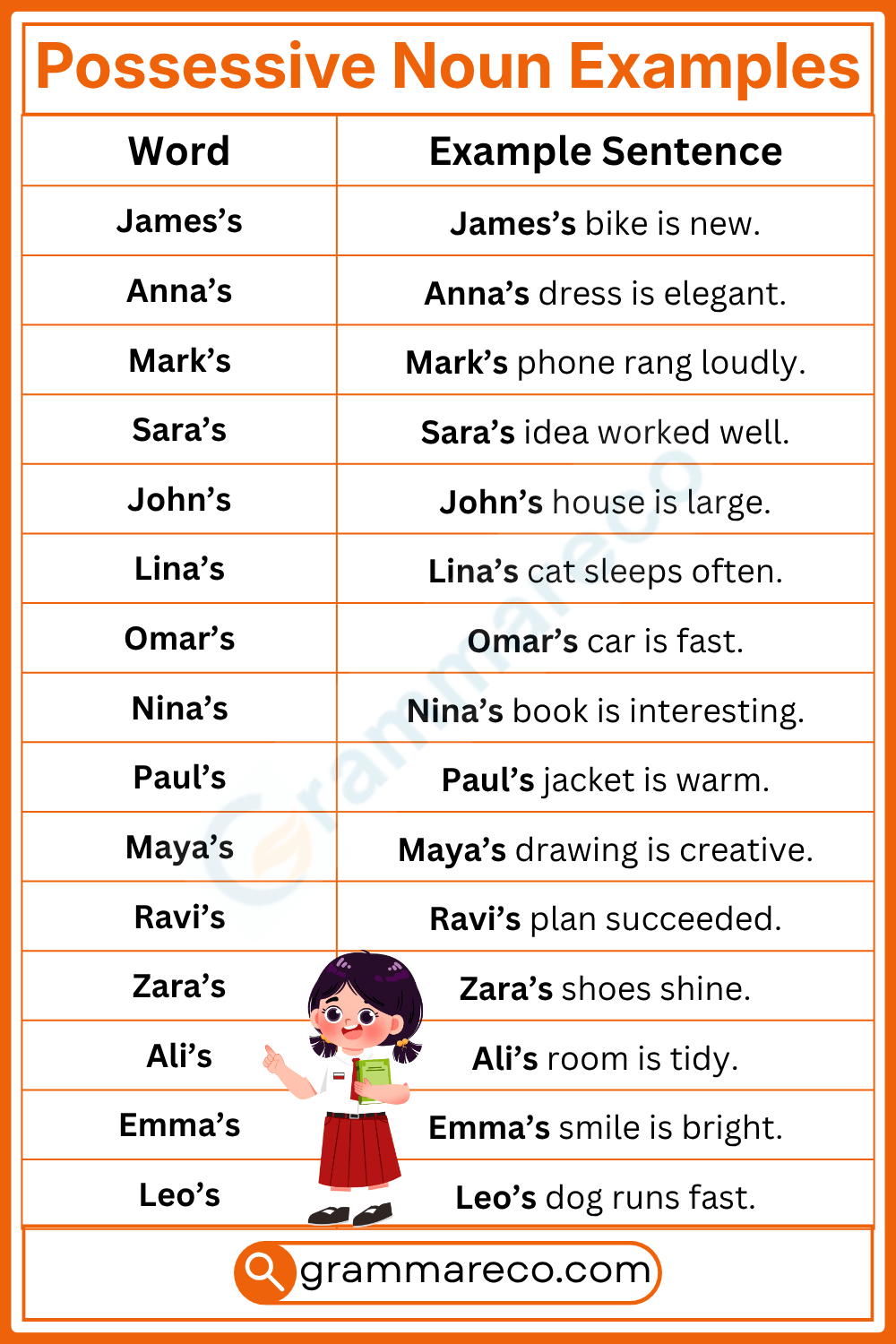
S is the most common way to form possessive nouns, especially for singular forms. It signals ownership clearly in sentence construction and grammar usage. Let’s explore practical examples.
| Word | Example Sentence |
|---|---|
| James’s | James’s bike is new. |
| Anna’s | Anna’s dress is elegant. |
| Mark’s | Mark’s phone rang loudly. |
| Sara’s | Sara’s idea worked well. |
| John’s | John’s house is large. |
| Lina’s | Lina’s cat sleeps often. |
| Omar’s | Omar’s car is fast. |
| Nina’s | Nina’s book is interesting. |
| Paul’s | Paul’s jacket is warm. |
| Maya’s | Maya’s drawing is creative. |
| Ravi’s | Ravi’s plan succeeded. |
| Zara’s | Zara’s shoes shine. |
| Ali’s | Ali’s room is tidy. |
| Emma’s | Emma’s smile is bright. |
| Leo’s | Leo’s dog runs fast. |
| Noah’s | Noah’s boat floats smoothly. |
| Ivy’s | Ivy’s plant grows well. |
| Ethan’s | Ethan’s watch stopped. |
| Ava’s | Ava’s bag is heavy. |
| Ryan’s | Ryan’s game improved. |
Examples of Possessive Nouns in Sentences with Pictures
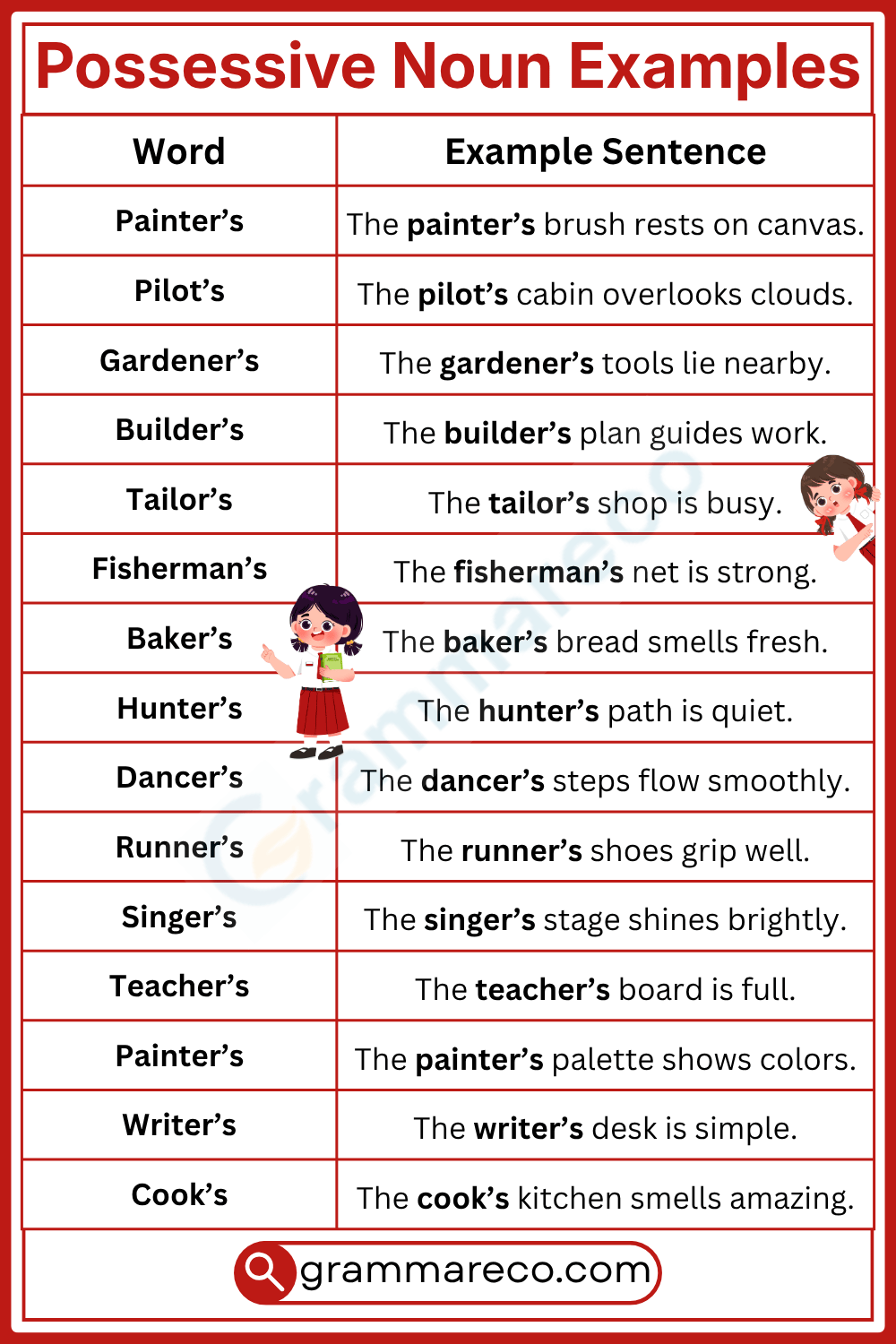
Possessive nouns visually connect ownership with objects, making learning easier. These sentence-based examples help strengthen understanding of relationships and noun usage. Imagine each scene as you read.
| Word | Example Sentence |
|---|---|
| Painter’s | The painter’s brush rests on canvas. |
| Pilot’s | The pilot’s cabin overlooks clouds. |
| Gardener’s | The gardener’s tools lie nearby. |
| Builder’s | The builder’s plan guides work. |
| Tailor’s | The tailor’s shop is busy. |
| Fisherman’s | The fisherman’s net is strong. |
| Baker’s | The baker’s bread smells fresh. |
| Hunter’s | The hunter’s path is quiet. |
| Dancer’s | The dancer’s steps flow smoothly. |
| Runner’s | The runner’s shoes grip well. |
| Singer’s | The singer’s stage shines brightly. |
| Teacher’s | The teacher’s board is full. |
| Painter’s | The painter’s palette shows colors. |
| Writer’s | The writer’s desk is simple. |
| Cook’s | The cook’s kitchen smells amazing. |
| Driver’s | The driver’s mirror reflects road. |
| Artist’s | The artist’s studio inspires creativity. |
| Farmer’s | The farmer’s tractor moves slowly. |
| Doctor’s | The doctor’s tools are clean. |
| Singer’s | The singer’s mic captures voice. |
Possessive Nouns and Pronouns Example Sentences Difference
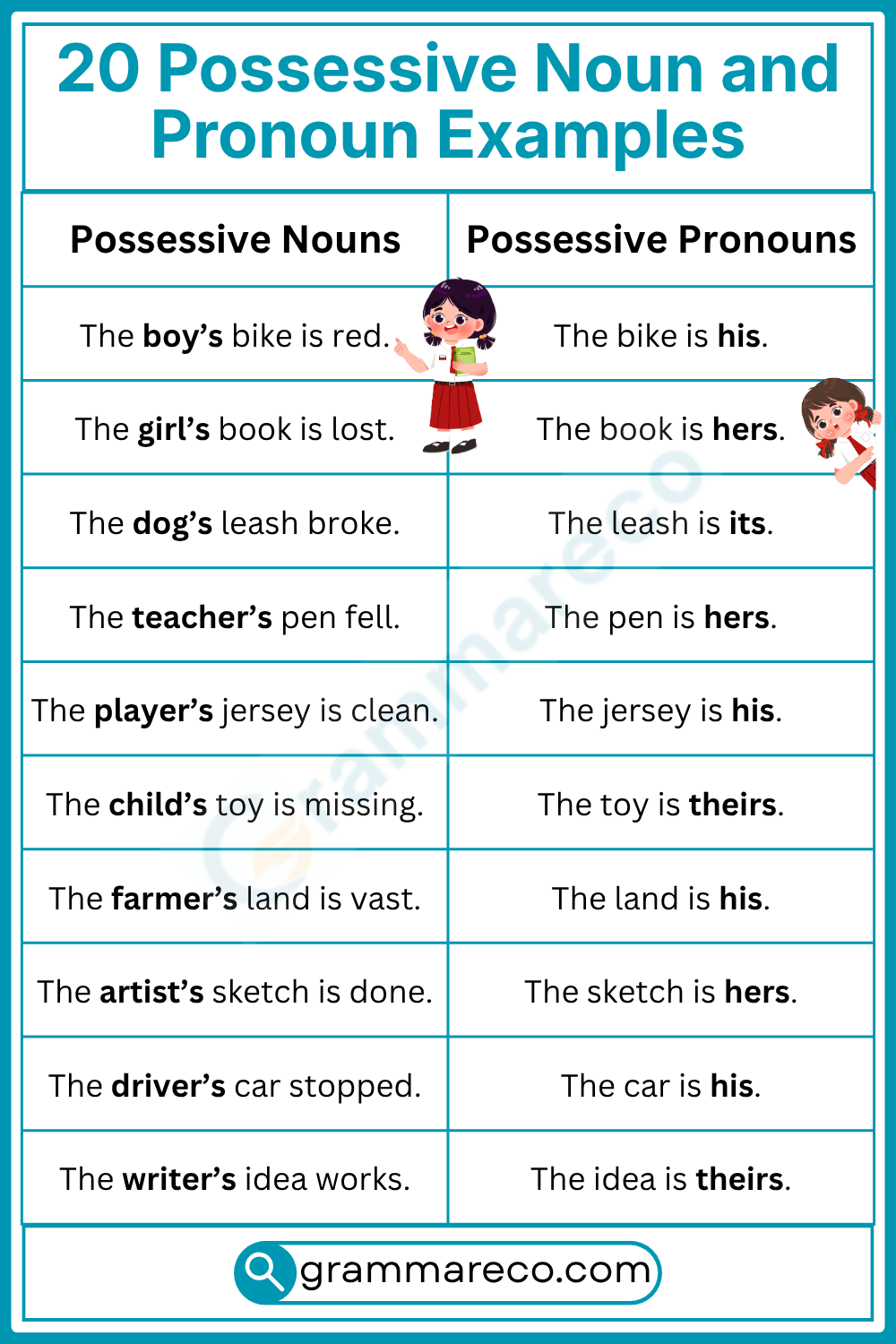
Possessive nouns use apostrophes to show ownership, while possessive pronouns replace nouns and never need apostrophes. Both improve sentence clarity and reduce repetition. Let’s compare clearly.
Key Difference:
Possessive nouns = noun + ownership mark
Possessive pronouns = replace noun entirely
| Possessive Nouns | Possessive Pronouns |
|---|---|
| The boy’s bike is red. | The bike is his. |
| The girl’s book is lost. | The book is hers. |
| The dog’s leash broke. | The leash is its. |
| The teacher’s pen fell. | The pen is hers. |
| The player’s jersey is clean. | The jersey is his. |
| The child’s toy is missing. | The toy is theirs. |
| The farmer’s land is vast. | The land is his. |
| The artist’s sketch is done. | The sketch is hers. |
| The driver’s car stopped. | The car is his. |
| The writer’s idea works. | The idea is theirs. |
Possessive Proper Nouns Ending in S with Sentences
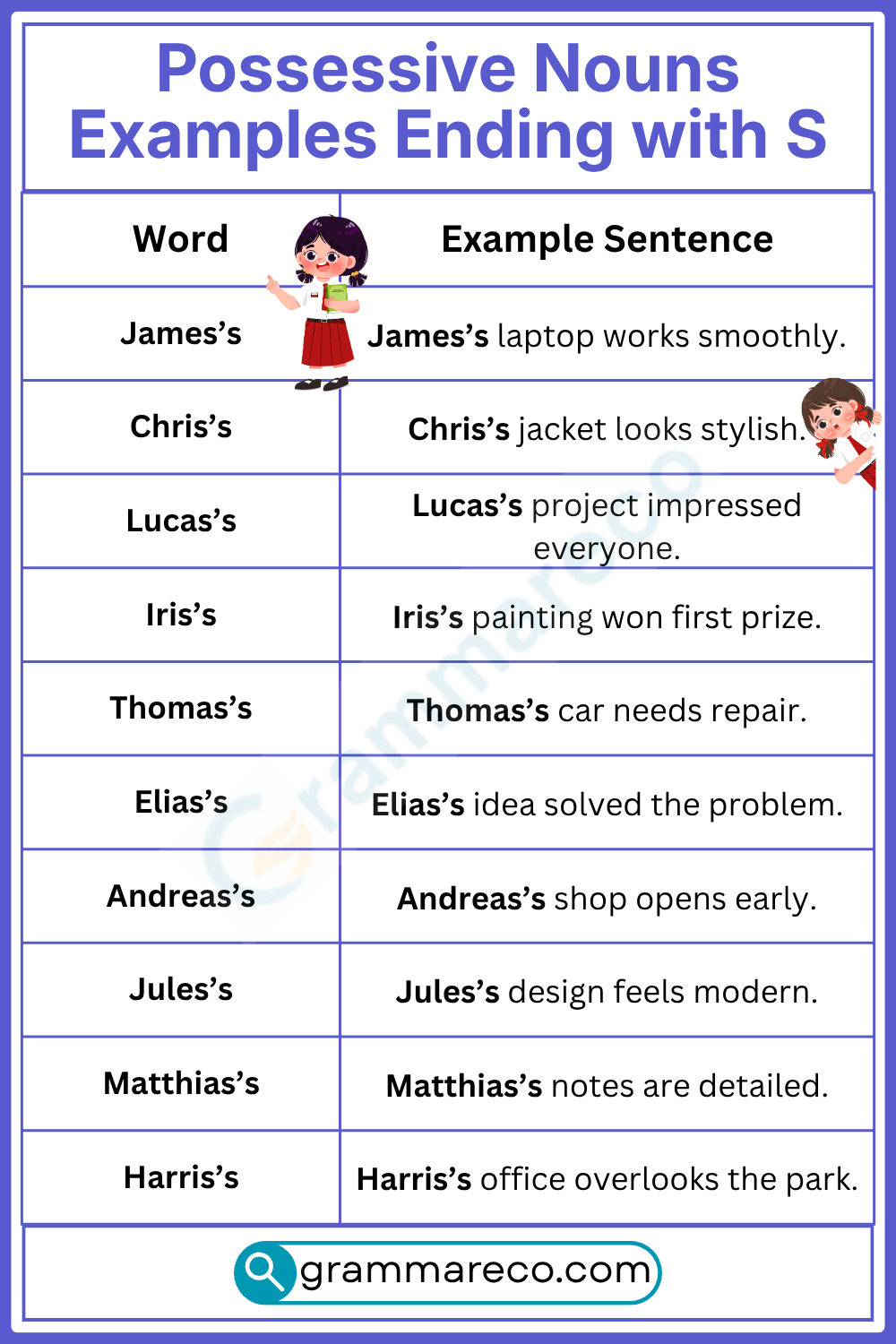
Proper nouns ending in “s” form possession by adding apostrophe + s or only an apostrophe, depending on style. These structures improve clarity in grammar rules and writing precision.
| Word | Example Sentence |
|---|---|
| James’s | James’s laptop works smoothly. |
| Chris’s | Chris’s jacket looks stylish. |
| Lucas’s | Lucas’s project impressed everyone. |
| Iris’s | Iris’s painting won first prize. |
| Charles’s | Charles’s speech inspired the crowd. |
| Thomas’s | Thomas’s car needs repair. |
| Miles’s | Miles’s performance amazed judges. |
| Elias’s | Elias’s idea solved the problem. |
| Andreas’s | Andreas’s shop opens early. |
| Jules’s | Jules’s design feels modern. |
| Matthias’s | Matthias’s notes are detailed. |
| Harris’s | Harris’s office overlooks the park. |
| Ross’s | Ross’s bike is parked outside. |
| Davis’s | Davis’s report was accurate. |
| Lewis’s | Lewis’s team played well. |
| Adams’s | Adams’s theory gained attention. |
| Brooks’s | Brooks’s farm grows fresh crops. |
| Reyes’s | Reyes’s house stands near the river. |
| Morris’s | Morris’s plan worked perfectly. |
| Curtis’s | Curtis’s voice echoed loudly. |
30 Examples of Possessive Nouns in Sentences with Answer
Possessive noun practice strengthens grammar skills through repetition and context. These examples help build confidence in ownership expressions.
| Word | Example Sentence |
|---|---|
| Captain’s | The captain’s ship sailed early. |
| Engineer’s | The engineer’s design worked perfectly. |
| Manager’s | The manager’s office is upstairs. |
| Clerk’s | The clerk’s desk is organized. |
| Judge’s | The judge’s decision was fair. |
| Nurse’s | The nurse’s care helped recovery. |
| Guard’s | The guard’s duty starts now. |
| Coach’s | The coach’s plan succeeded. |
| Captain’s | The captain’s voice echoed loudly. |
| Designer’s | The designer’s dress impressed everyone. |
| Plumber’s | The plumber’s tools fixed pipes. |
| Electrician’s | The electrician’s work restored power. |
| Mechanic’s | The mechanic’s repair saved money. |
| Dentist’s | The dentist’s clinic looks modern. |
| Lawyer’s | The lawyer’s argument was strong. |
| Barber’s | The barber’s shop is crowded. |
| Cleaner’s | The cleaner’s effort made it shine. |
| Watchman’s | The watchman’s whistle rang loudly. |
| Photographer’s | The photographer’s camera captured moments. |
| Reporter’s | The reporter’s story spread quickly. |
FAQs about Possessive Nouns Examples
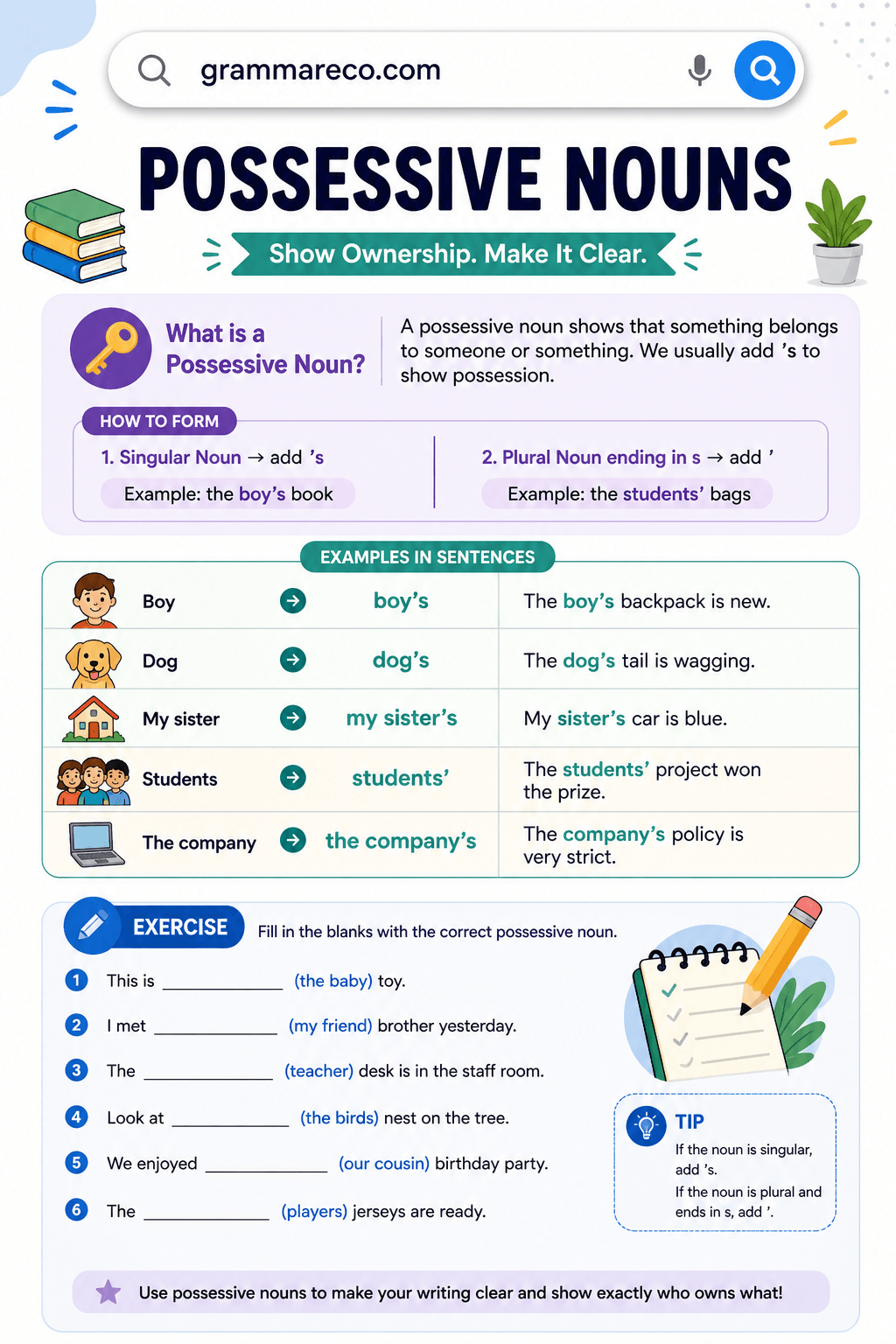
A possessive noun shows ownership. It tells who owns something using an apostrophe, like “Ali’s book” or “students’ classroom.”
Add apostrophe + s to a singular noun. Example: “cat” becomes “cat’s” to show ownership.
“Its” shows possession, while “it’s” means “it is.” Example: “The dog wagged its tail.”
I, me, mine, and my are first person pronouns used to refer to the speaker. For example, I write, she called me, this book is mine, and my bag is here.
No. Pronouns replace nouns, while possessive nouns show ownership using apostrophes.
Read more