
Can you name things you can see, touch, or hear around you right now? Examples of concrete noun help you understand real, physical objects in everyday English. These include people, places, animals, and things.
Learning them makes your writing clear and descriptive. Ready to explore real-world words? Let’s get started.
What Are Concrete Nouns? (Definition with Examples)
Concrete nouns are words that name physical objects you can experience with your five senses like sight, touch, sound, taste, or smell. They make language vivid and easy to understand. Let’s explore simple examples to build clarity.
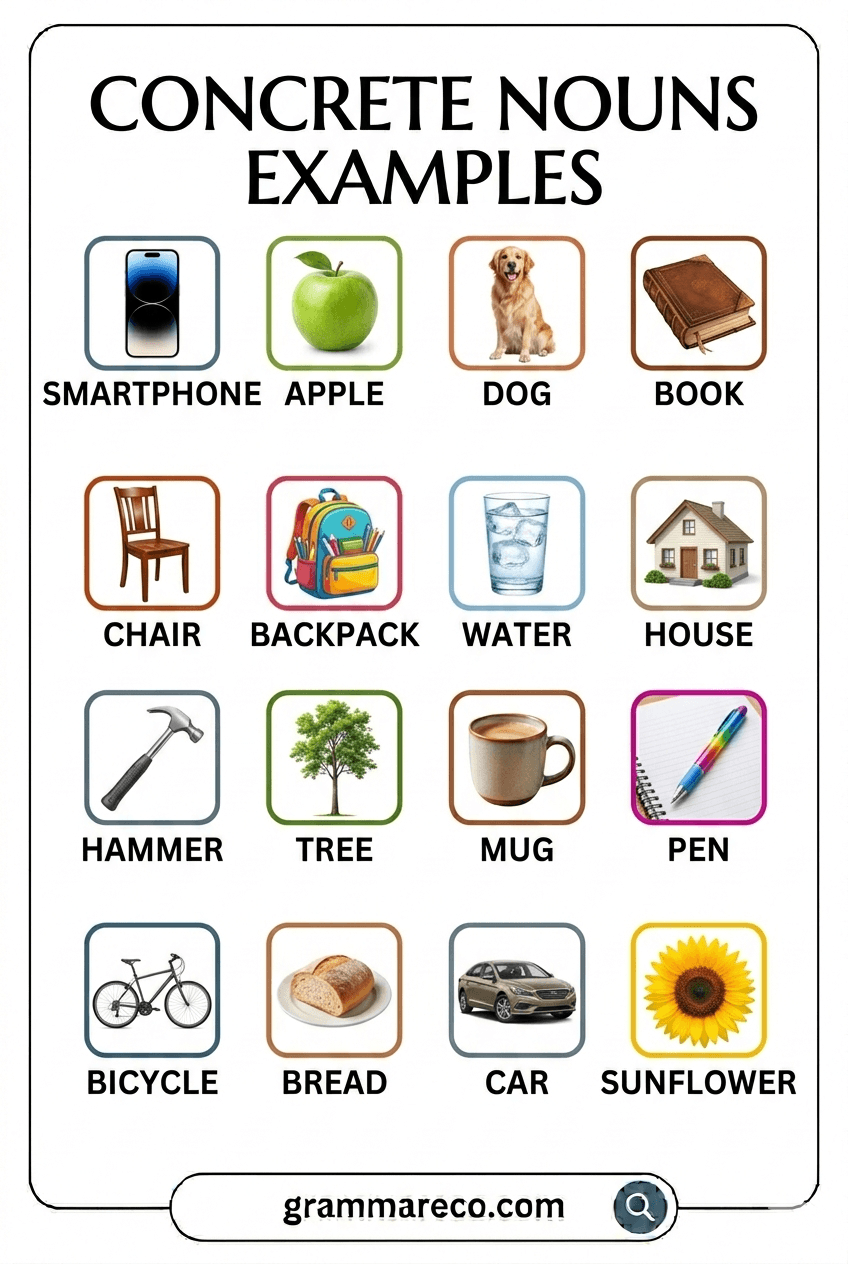
- Apple: A fruit you can see and eat
- Dog: An animal you can touch and hear
- Car: A vehicle used for transport
- House: A place where people live
- Book: An object used for reading
Concrete Nouns Example List with Sentences
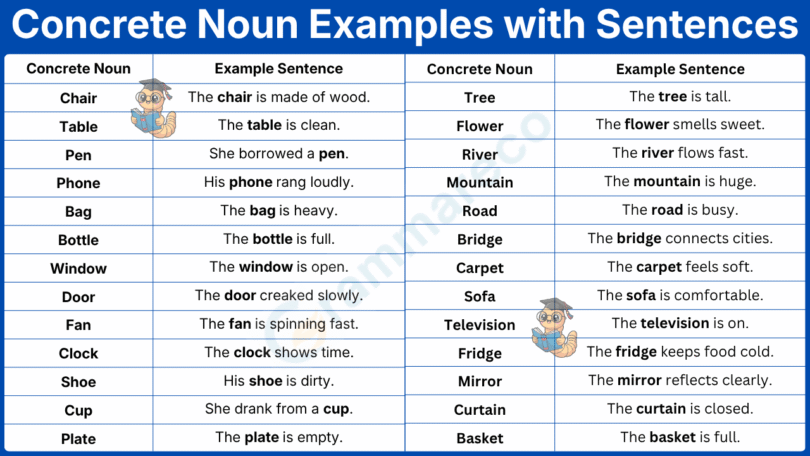
Examples of concrete noun include real objects that exist physically and can be directly experienced. These examples help improve vocabulary and sentence clarity.
| Concrete Noun | Example Sentence |
|---|---|
| Chair | The chair is made of wood. |
| Table | The table is clean. |
| Pen | She borrowed a pen. |
| Phone | His phone rang loudly. |
| Bag | The bag is heavy. |
| Bottle | The bottle is full. |
| Window | The window is open. |
| Door | The door creaked slowly. |
| Fan | The fan is spinning fast. |
| Clock | The clock shows time. |
| Shoe | His shoe is dirty. |
| Cup | She drank from a cup. |
| Plate | The plate is empty. |
| Bed | The bed looks comfortable. |
| Lamp | The lamp is bright. |
| Keyboard | The keyboard is new. |
| Mouse | The mouse moved quickly. |
| Screen | The screen is clear. |
| Notebook | He opened his notebook. |
| Bottlecap | The bottlecap fell down. |
Concrete Nouns and Examples with Pictures
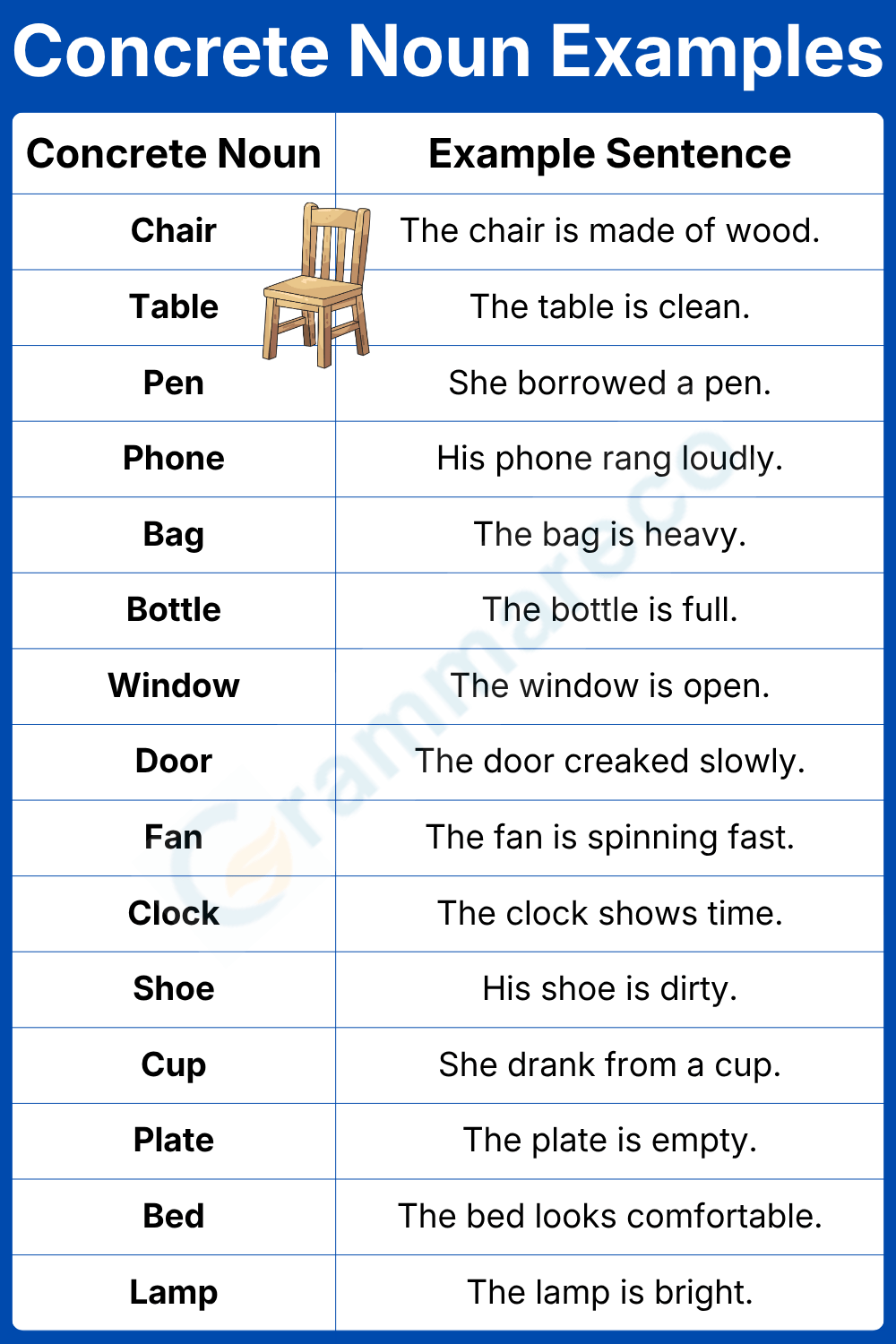
Concrete noun examples represent objects you can visualize easily. While images help learning, these examples describe clear real-life items to build understanding.
| Concrete Noun | Example Sentence |
|---|---|
| Tree | The tree is tall. |
| Flower | The flower smells sweet. |
| River | The river flows fast. |
| Mountain | The mountain is huge. |
| Road | The road is busy. |
| Bridge | The bridge connects cities. |
| Carpet | The carpet feels soft. |
| Sofa | The sofa is comfortable. |
| Television | The television is on. |
| Fridge | The fridge keeps food cold. |
| Mirror | The mirror reflects clearly. |
| Curtain | The curtain is closed. |
| Basket | The basket is full. |
| Helmet | The helmet protects the head. |
| Glasses | His glasses are clean. |
| Watch | The watch shows time. |
| Camera | The camera captured moments. |
| Bike | The bike is fast. |
| Truck | The truck carries goods. |
| Bus | The bus stopped here. |
Types of Concrete Nouns in Sentences
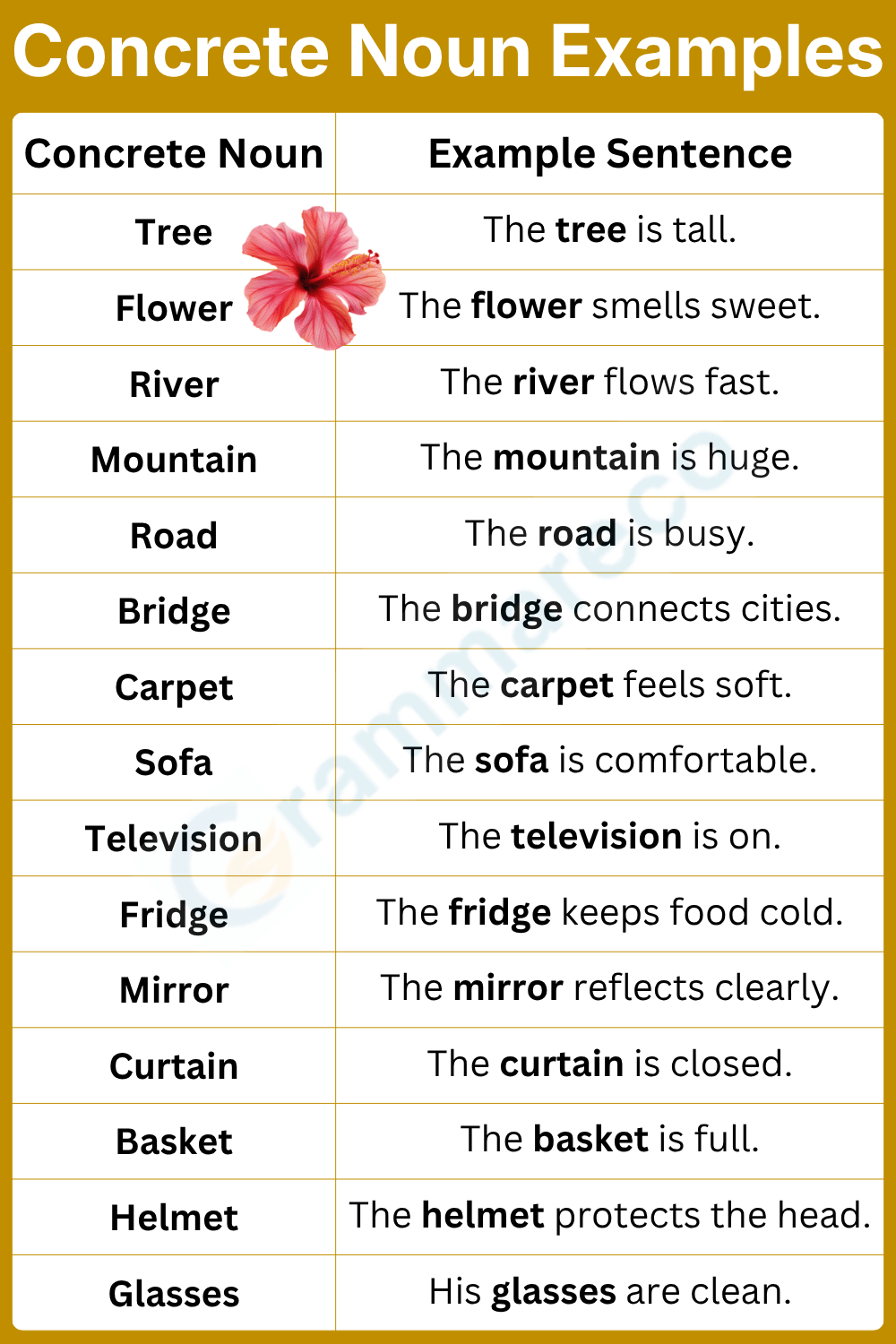
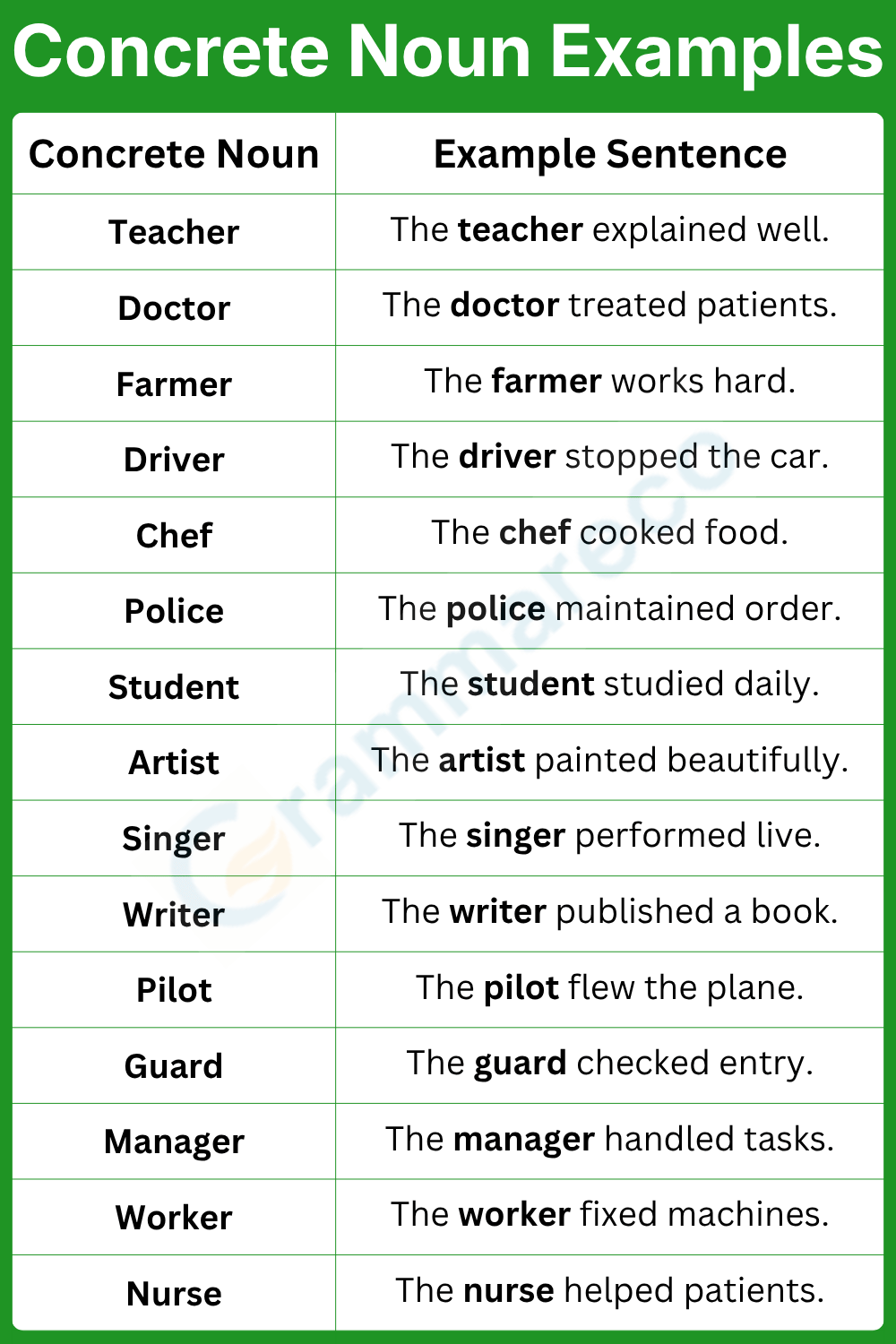
Concrete nouns example can be grouped into categories like people, places, animals, and things. This helps learners understand usage more clearly and effectively.
Concrete Nouns Example for People
These examples of concrete noun refer to real people you can see and interact with in daily life.
| Concrete Noun | Example Sentence |
|---|---|
| Teacher | The teacher explained well. |
| Doctor | The doctor treated patients. |
| Farmer | The farmer works hard. |
| Driver | The driver stopped the car. |
| Chef | The chef cooked food. |
| Police | The police maintained order. |
| Student | The student studied daily. |
| Artist | The artist painted beautifully. |
| Singer | The singer performed live. |
| Writer | The writer published a book. |
| Pilot | The pilot flew the plane. |
| Guard | The guard checked entry. |
| Manager | The manager handled tasks. |
| Worker | The worker fixed machines. |
| Nurse | The nurse helped patients. |
| Engineer | The engineer built systems. |
| Actor | The actor acted well. |
| Judge | The judge gave a decision. |
| Clerk | The clerk filed documents. |
| Tailor | The tailor stitched clothes. |
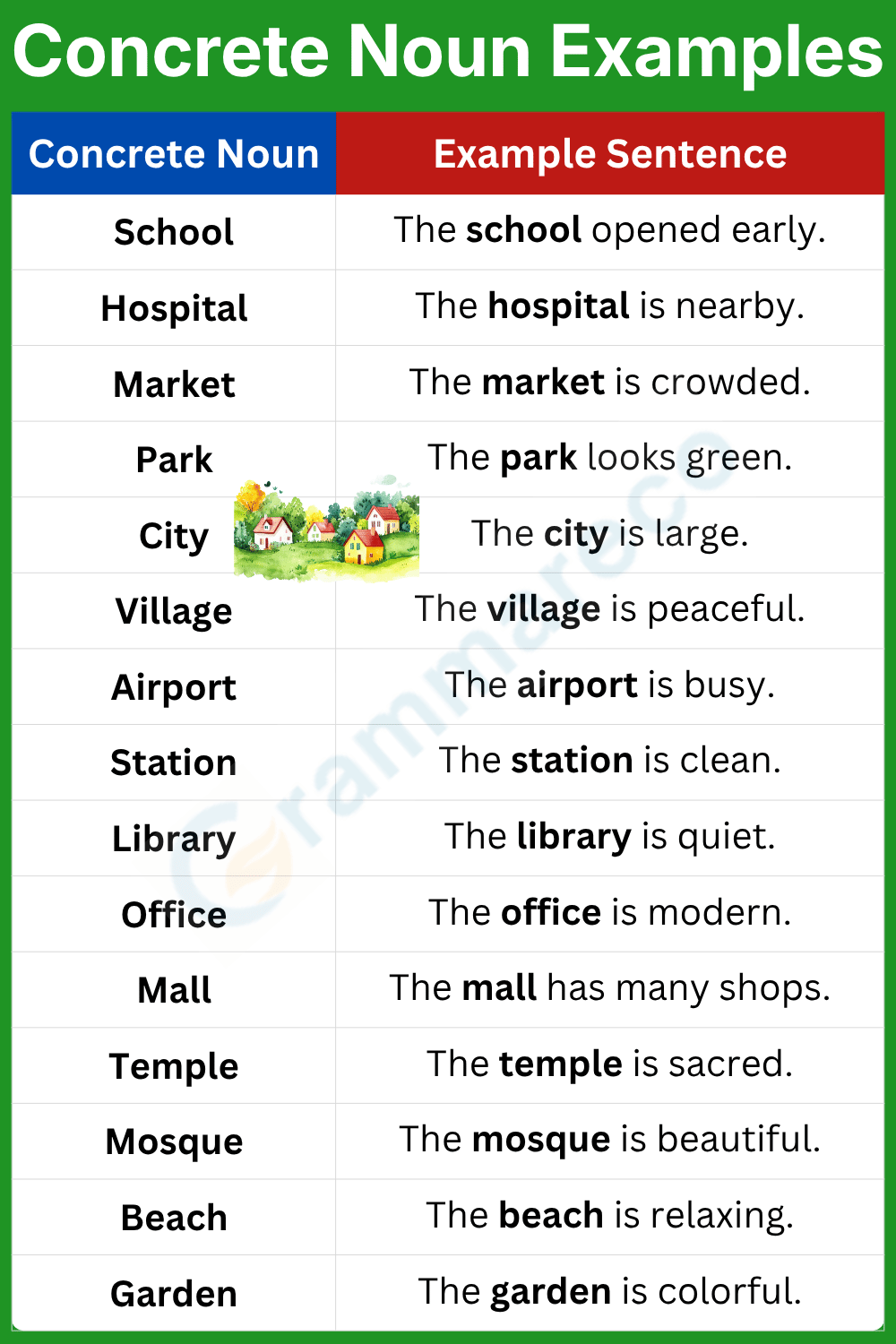
Examples of Concrete Noun for Places
These examples of concrete noun represent physical locations that you can visit or see.
| Concrete Noun | Example Sentence |
|---|---|
| School | The school opened early. |
| Hospital | The hospital is nearby. |
| Market | The market is crowded. |
| Park | The park looks green. |
| City | The city is large. |
| Village | The village is peaceful. |
| Airport | The airport is busy. |
| Station | The station is clean. |
| Library | The library is quiet. |
| Office | The office is modern. |
| Mall | The mall has many shops. |
| Temple | The temple is sacred. |
| Mosque | The mosque is beautiful. |
| Beach | The beach is relaxing. |
| Garden | The garden is colorful. |
| Restaurant | The restaurant serves food. |
| Hotel | The hotel is luxurious. |
| Bridge | The bridge connects roads. |
| Road | The road is wide. |
| Street | The street is busy. |
Examples for Animals with Concrete Nouns
These examples of concrete noun include animals that can be seen, heard, and touched.
| Concrete Noun | Example Sentence |
|---|---|
| Cat | The cat slept quietly. |
| Dog | The dog barked loudly. |
| Horse | The horse ran fast. |
| Cow | The cow grazed grass. |
| Goat | The goat climbed rocks. |
| Lion | The lion roared loudly. |
| Tiger | The tiger hunted prey. |
| Elephant | The elephant is huge. |
| Monkey | The monkey jumped trees. |
| Rabbit | The rabbit hopped away. |
| Bird | The bird flew high. |
| Fish | The fish swam fast. |
| Snake | The snake moved silently. |
| Frog | The frog jumped far. |
| Duck | The duck swam calmly. |
| Parrot | The parrot spoke words. |
| Peacock | The peacock danced beautifully. |
| Wolf | The wolf howled loudly. |
| Bear | The bear searched food. |
| Deer | The deer ran quickly. |
Things As a Concrete Nouns
These examples of concrete noun refer to physical objects or items used in daily life.
| Concrete Noun | Example Sentence |
|---|---|
| Laptop | The laptop is fast. |
| Tablet | The tablet is new. |
| Printer | The printer printed pages. |
| Fanblade | The fanblade spins fast. |
| Backpack | The backpack is heavy. |
| Suitcase | The suitcase is packed. |
| Helmet | The helmet protects riders. |
| Charger | The charger powers devices. |
| Cable | The cable is long. |
| Router | The router connects internet. |
| Speaker | The speaker is loud. |
| Microphone | The microphone recorded voice. |
| Desk | The desk is wooden. |
| Shelf | The shelf holds books. |
| Cupboard | The cupboard stores clothes. |
| Pillow | The pillow is soft. |
| Blanket | The blanket is warm. |
| Mat | The mat is clean. |
| Fanstand | The fanstand supports the fan. |
| Switch | The switch turned on light. |
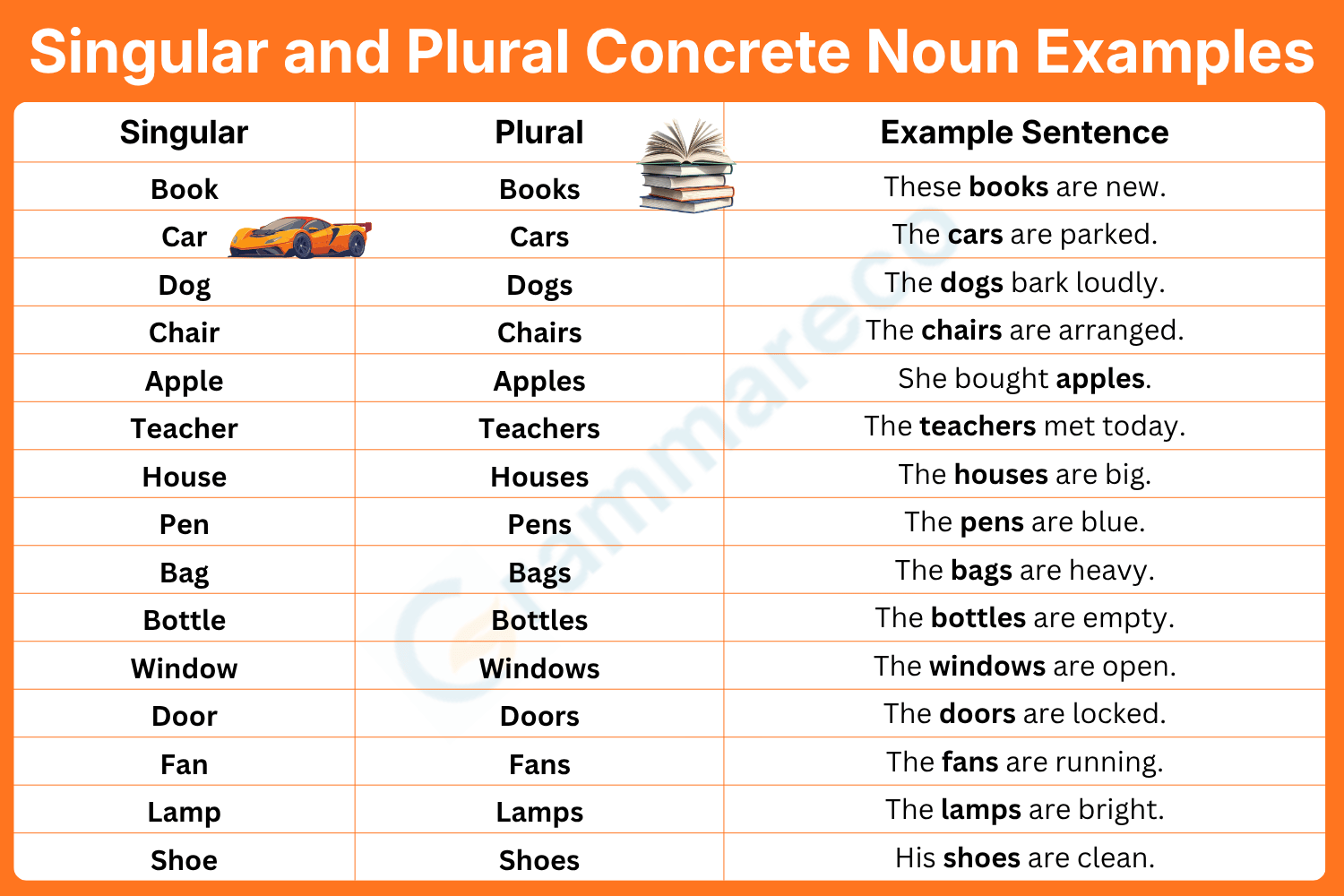
Singular and Plural Concrete Noun Examples
Concrete nouns examples can be singular (one item) or plural (more than one). Understanding both forms improves grammar accuracy and sentence construction.
| Singular | Plural | Example Sentence |
|---|---|---|
| Book | Books | These books are new. |
| Car | Cars | The cars are parked. |
| Dog | Dogs | The dogs bark loudly. |
| Chair | Chairs | The chairs are arranged. |
| Apple | Apples | She bought apples. |
| Teacher | Teachers | The teachers met today. |
| House | Houses | The houses are big. |
| Pen | Pens | The pens are blue. |
| Bag | Bags | The bags are heavy. |
| Bottle | Bottles | The bottles are empty. |
| Window | Windows | The windows are open. |
| Door | Doors | The doors are locked. |
| Fan | Fans | The fans are running. |
| Lamp | Lamps | The lamps are bright. |
| Shoe | Shoes | His shoes are clean. |
| Cup | Cups | The cups are broken. |
| Plate | Plates | The plates are washed. |
| Bed | Beds | The beds are soft. |
| Tree | Trees | The trees are tall. |
| Flower | Flowers | The flowers smell nice. |
FAQs about Abstract Nouns Examples
Concrete nouns are things you can see, touch, or feel, like apple, car, dog, chair, and book. Examples include apple: a fruit, car: a vehicle, dog: an animal, chair: a seat, book: something you read.
Concrete nouns are words that name physical things you can see, touch, hear, smell, or taste, like apple, dog, or car.
Examples include book, chair, dog, city, and teacher.
Concrete nouns are physical, while abstract nouns represent ideas or feelings.
Yes, most concrete nouns have plural forms, like book → books or car → cars.
Love is not a concrete noun because you cannot see or touch it. It is an abstract noun that shows a feeling or emotion, like happiness or kindness.
Emotions cannot be seen directly because they are feelings. However, we can notice them through expressions like smiling, crying, or body language, which show how a person feels.
Read more