

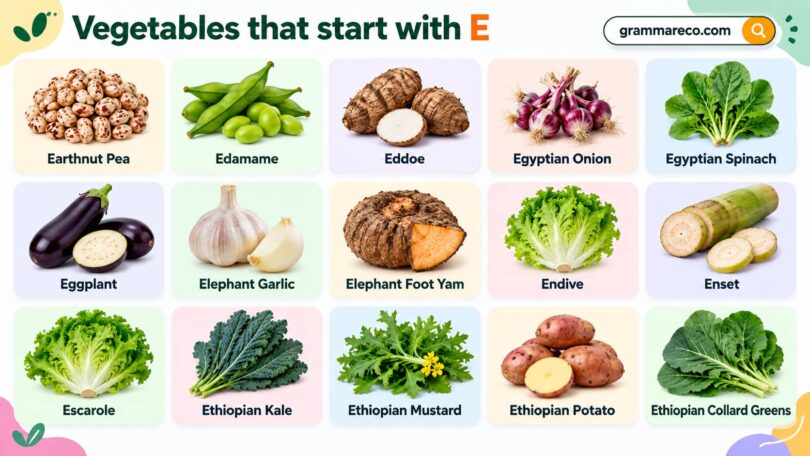
Vegetables that start with e include leafy greens, legumes, bulbs, roots, and fruit vegetables used in different cuisines. Their names can describe a plant part, variety, or regional food tradition. Some are familiar at American grocery stores, while others are less common outside their growing regions. Learning these vegetable names beginning with e helps readers understand food labels, recipes, classroom materials, and produce terms more easily. Vegetables, greens, and roots all appear among the E names covered here.
What Vegetables that Start with E?
Vegetable names beginning with E cover several plant types, from tender greens to edible bulbs and underground crops. Some are common foods, while others have strong regional connections. The group includes eggplant, leafy vegetables, peas, beans, and starchy tubers. Knowing their basic plant parts and culinary uses makes each name easier to understand.
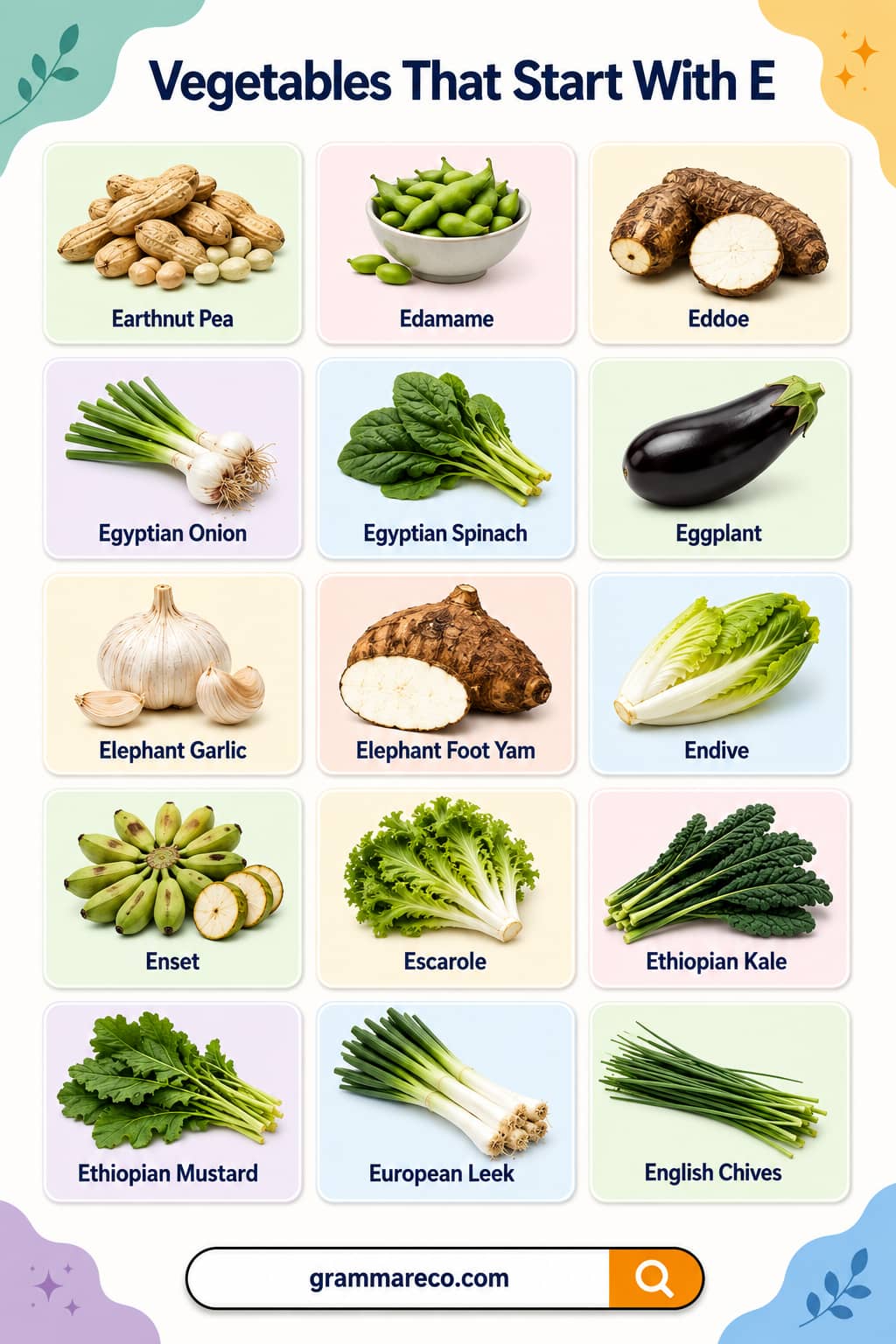
List of Vegetables that Start with E
Vegetables starting with e includes several familiar foods alongside regional and less common crops. Below are the main vegetable names that fit the letter E, including different plant parts and types.
- Earthnut Pea
- Edamame
- Eddoe
- Egyptian Onion
- Egyptian Spinach
- Eggplant
- Elephant Garlic
- Elephant Foot Yam
- Endive
- Enset
- Escarole
- Ethiopian Kale
- Ethiopian Mustard
Vegetables that Starting with E with Pictures
Earthnut Pea
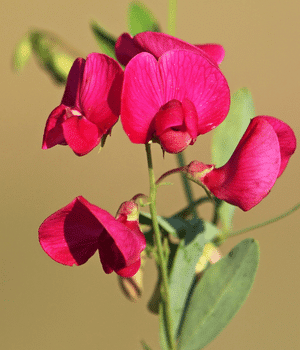
Earthnut pea is an edible legume that produces both underground tubers and pea-like seeds. The plant grows as a slender vine and develops attractive flowers during the growing season. Its small tubers have a firm texture and nutty flavor when cooked. Traditionally, people have eaten earthnut pea in parts of Europe. Both the roots and seeds can add variety to traditional dishes.
Edamame
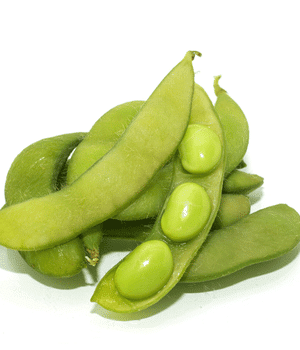
Edamame refers to immature green soybeans that people harvest before the pods fully mature. The tender beans have a mild, slightly sweet flavor and firm texture. Typically, cooks boil or steam the pods before serving them with salt or seasonings. In Japan, edamame often appears as a side dish or snack. Today, people enjoy it in salads, bowls, stir-fries, and other meals.
Eddoe
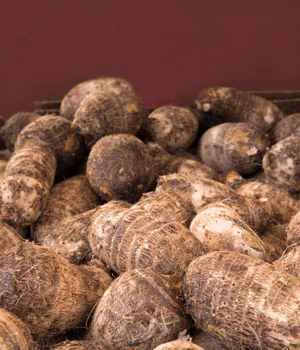
Eddoe is a small tropical root vegetable that belongs to the taro family. It develops rounded underground corms with rough brown skin and starchy flesh. When cooks boil or simmer eddoe, the flesh becomes soft and creamy. As a result, it works well in soups, stews, curries, and other savory dishes. Farmers grow this crop widely across tropical and subtropical regions.
Egyptian Onion
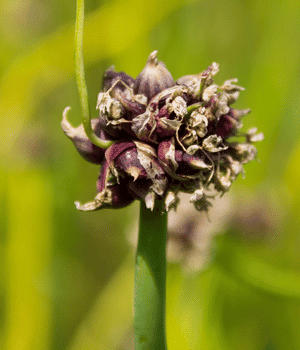
Egyptian onion is a perennial onion variety that produces small bulbils along the tops of its tall stems. These unusual bulbils can form new plants when they reach the ground, which gives the plant its “walking onion” nickname. The underground bulbs and young shoots are also edible. Furthermore, gardeners value Egyptian onion because it grows reliably and returns year after year.
Egyptian Spinach
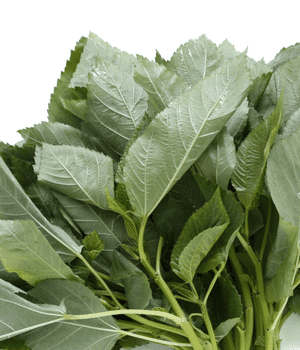
Egyptian spinach is a leafy green also known as molokhia or jute mallow. Its tender leaves have a mild flavor and develop a slightly thick texture when cooked. People commonly add them to soups, stews, and savory sauces. The plant grows especially well in warm climates. For centuries, cooks across Egypt, Africa, and parts of Asia have used Egyptian spinach in traditional dishes.
Eggplant
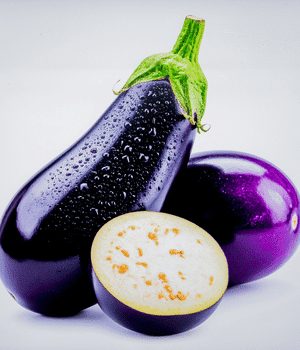
Eggplant is a warm-season vegetable that produces fleshy fruits in many shapes, sizes, and colors. Purple varieties remain popular, but gardeners also grow white, green, striped, and nearly black types. Its soft, spongy flesh absorbs sauces and seasonings easily. Therefore, cooks roast, grill, bake, fry, or simmer eggplant in many cuisines. It works particularly well in curries, casseroles, and vegetable stews.
Elephant Garlic
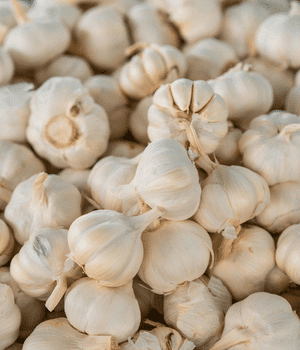
Elephant garlic is a large allium that produces oversized bulbs with a mild, slightly sweet garlic flavor. Despite its name, it has a closer botanical relationship to leeks than common garlic. Each bulb usually contains several large cloves covered by papery layers. Cooks can roast, sauté, bake, or chop elephant garlic into savory dishes. Its gentle flavor suits recipes that need less pungency.
Elephant Foot Yam
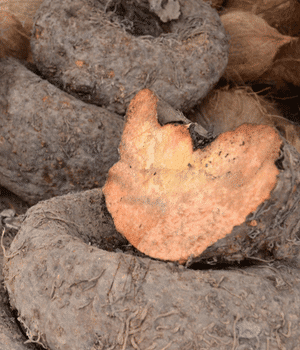
Elephant foot yam is a tropical root vegetable grown for its large underground corm. Its rough, brown skin resembles an elephant’s foot, which explains its common name. Once cooked properly, the starchy flesh becomes tender and works well in curries, stews, fries, and mashed dishes. Farmers grow elephant foot yam extensively in South and Southeast Asia. It also plays an important role in regional cooking.
Endive
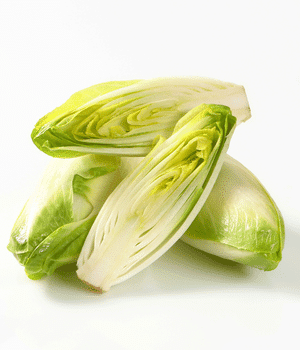
Endive is a leafy vegetable from the chicory family, known for its crisp texture and mildly bitter taste. Curly endive has narrow, frilly leaves, while Belgian endive forms compact, pale heads. Cooks use both types in different ways. For instance, raw leaves add crunch to salads, while grilling, roasting, braising, or sautéing softens their bitterness. The tender inner leaves taste especially delicate.
Enset
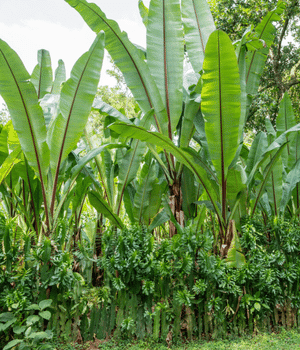
Enset is a large perennial plant related to bananas and often called false banana. Unlike a typical banana plant, it does not primarily provide edible fruit. Instead, communities process its leaf sheaths, pseudostem, and underground parts into starchy foods. Enset plays a major role in traditional Ethiopian agriculture. Because the plant can tolerate periods of difficult growing conditions, farmers value it as a dependable food crop.
Escarole
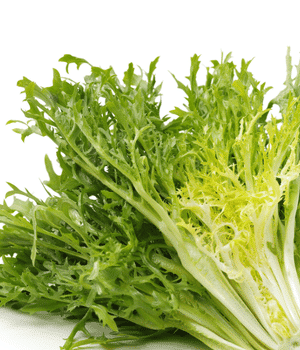
Escarole is a broad-leafed chicory with a crisp texture and mildly bitter flavor. Its outer leaves usually taste stronger, while the pale inner leaves remain more tender. Cooks often add raw escarole to salads for extra texture and flavor. Meanwhile, sautéing, braising, or simmering reduces its bitterness. Escarole also pairs well with beans, garlic, broth, and hearty soups.
Ethiopian Kale
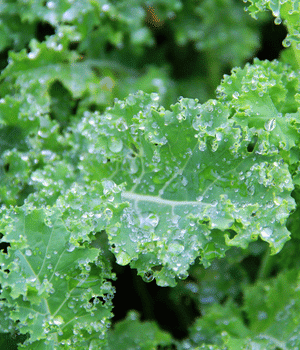
Ethiopian kale is a leafy Brassica vegetable grown mainly for its edible green leaves. It develops tender foliage with an earthy flavor that works well in cooked dishes. People commonly boil, steam, sauté, or add the greens to stews. Young leaves usually taste milder and cook faster. In Ethiopia, farmers grow several traditional leafy Brassica crops that contribute to local vegetable dishes.
Leafy Greens Vegetable that Starts with E
Leafy vegetables beginning with E include salad greens and cooked greens with varied textures. Below are the main leafy names worth knowing.
- Endive: A leafy vegetable with crisp leaves and a pleasantly bitter flavor.
- Escarole: A broad-leaved endive commonly used in salads, soups, and cooked dishes.
- Ethiopian Kale: A leafy green vegetable commonly cooked and served across Ethiopia.
- Egyptian Spinach: A tender leafy green commonly used in various cooked dishes.
- Ethiopian Mustard: A leafy crop with peppery greens commonly cooked alongside other vegetables.
Beans and Peas Vegetable Starting with E
Beans and peas beginning with E include fresh legumes and young edible seeds. Below are the main names associated with this vegetable category.
- Edamame: Young green soybean pods harvested before the beans fully mature.
- English Peas: Round green peas removed from their tough, inedible pods.
- Earthnut Pea: A legume producing edible underground tubers and nutritious seeds.
Root and Bulb Vegetable that Starts with E
Vegetables that starting with E grow underground, while others develop edible bulbs above or near the soil. Below are key root and bulb crops beginning with E.
- Elephant Garlic: Produces oversized cloves with a milder flavor than traditional garlic.
- Eddoe: A small taro variety with starchy underground corms eaten cooked.
- Egyptian Onion: A perennial onion producing edible bulbs and small aerial bulbils.
- Elephant Foot Yam: A large underground tuber that requires thorough cooking before eating.
- Enset: A banana relative cultivated mainly for its starchy pseudostem and corm.
Bulb and Tuber Vegetable Beginning with E
Bulb and tuber crops can overlap with other plant-part categories because some vegetables produce more than one edible structure. These E vegetables are grouped here by their underground or bulb-forming parts.
- Elephant Garlic: Forms large underground bulbs containing several cloves with a mild garlic flavor.
- Eddoe: Develops a compact underground corm with firm, starchy flesh when cooked.
- Egyptian Onion: Produces edible bulbs and aerial bulbils used for propagation and cooking.
- Elephant Foot Yam: Develops a large starchy corm requiring thorough cooking before eating.
Fruit Vegetable Starting With E
Some vegetables beginning with E develop from flowers and contain seeds, making them fruit vegetables in botanical terms. Eggplant is the best-known member of this group and appears widely in American cooking.
Eggplant: A tender fruit vegetable with smooth skin and soft flesh when cooked.
FAQs About Vegetables That Start With E
Vegetables starting with E include eggplant, edamame, endive, escarole, eddoe, elephant garlic, English peas, and Egyptian spinach.
Enset is among the less familiar E crops, mainly grown for food in parts of Ethiopia and nearby regions.
Endive, escarole, Ethiopian kale, Egyptian spinach, and Ethiopian mustard are leafy vegetables that begin with E.
Edamame, English peas, and earthnut pea are E vegetables associated with the legume family.
Takeaway
The main Vegetables Starting With E names include leafy greens, legumes, bulbs, tubers, and fruit vegetables. Edamame, eggplant, and endive are among the more familiar names, while crops such as enset and Ethiopian mustard have stronger regional associations. Looking at their edible parts also makes the differences between greens, legumes, bulbs, and tubers easier to understand.
Read more