
Proper Noun Examples help you name specific people, places, and things clearly. Ever wondered why Ali, London, or Monday are capitalized? These are proper nouns that make language precise and meaningful.
In this guide, you will explore real examples of proper noun, simple meanings, and practical sentences that sharpen your grammar skills. Ready to master proper nouns easily?
What are Examples of Proper Noun with Answer?
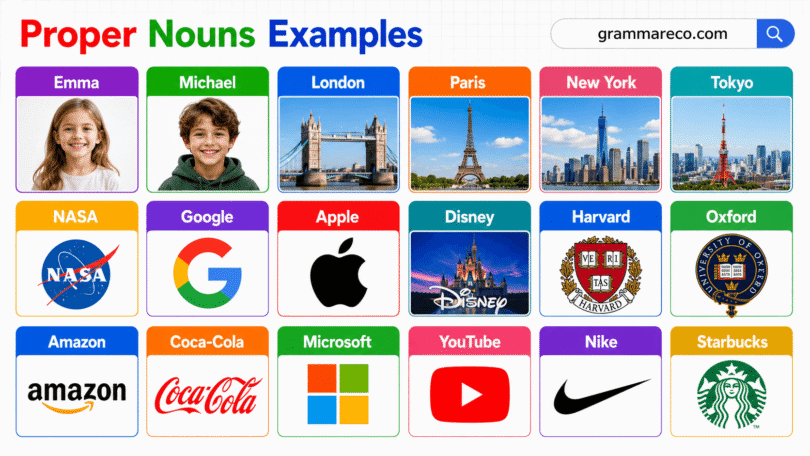
Proper noun examples are specific names of people, places, or things, always capitalized. They improve clarity in sentences and support grammar accuracy. Curious how meanings differ? Explore below.
- Ali: A specific person’s name
- Paris: A famous capital city in France
- Amazon: A global online shopping company
- Friday: A day of the week
- Eiffel Tower: A well-known landmark in Paris
Proper Noun Examples with Sentences
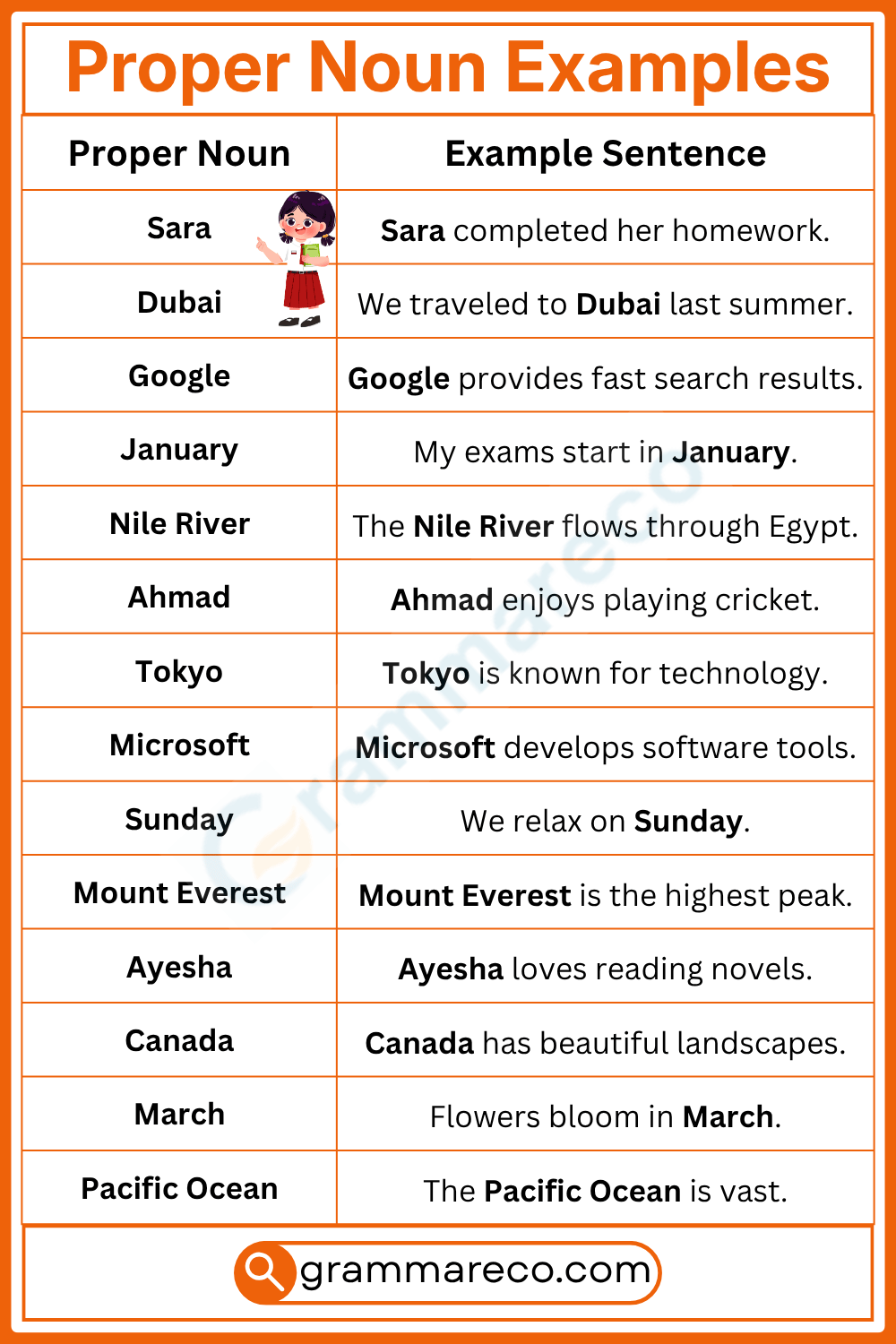
Proper nouns example with sentences show how naming words function in real communication. They make writing precise and meaningful. Want to see practical usage? Check the table.
| Proper Noun | Example Sentence |
|---|---|
| Sara | Sara completed her homework early. |
| Dubai | We traveled to Dubai last summer. |
| Google provides fast search results. | |
| January | My exams start in January. |
| Nile River | The Nile River flows through Egypt. |
| Ahmad | Ahmad enjoys playing cricket. |
| Tokyo | Tokyo is known for technology. |
| Microsoft | Microsoft develops software tools. |
| Sunday | We relax on Sunday. |
| Mount Everest | Mount Everest is the highest peak. |
| Ayesha | Ayesha loves reading novels. |
| Canada | Canada has beautiful landscapes. |
| Facebook connects people worldwide. | |
| March | Flowers bloom in March. |
| Pacific Ocean | The Pacific Ocean is vast. |
| Bilal | Bilal plays football daily. |
| Italy | Italy is famous for pizza. |
| Tesla | Tesla produces electric cars. |
| Friday | Friday is my favorite day. |
| Sahara Desert | The Sahara Desert is very hot. |
Categories of Proper Nouns with Clear Examples
Proper noun examples can be grouped by categories like people, places, and brands. This helps learners understand usage better. Let’s explore each type with clarity.
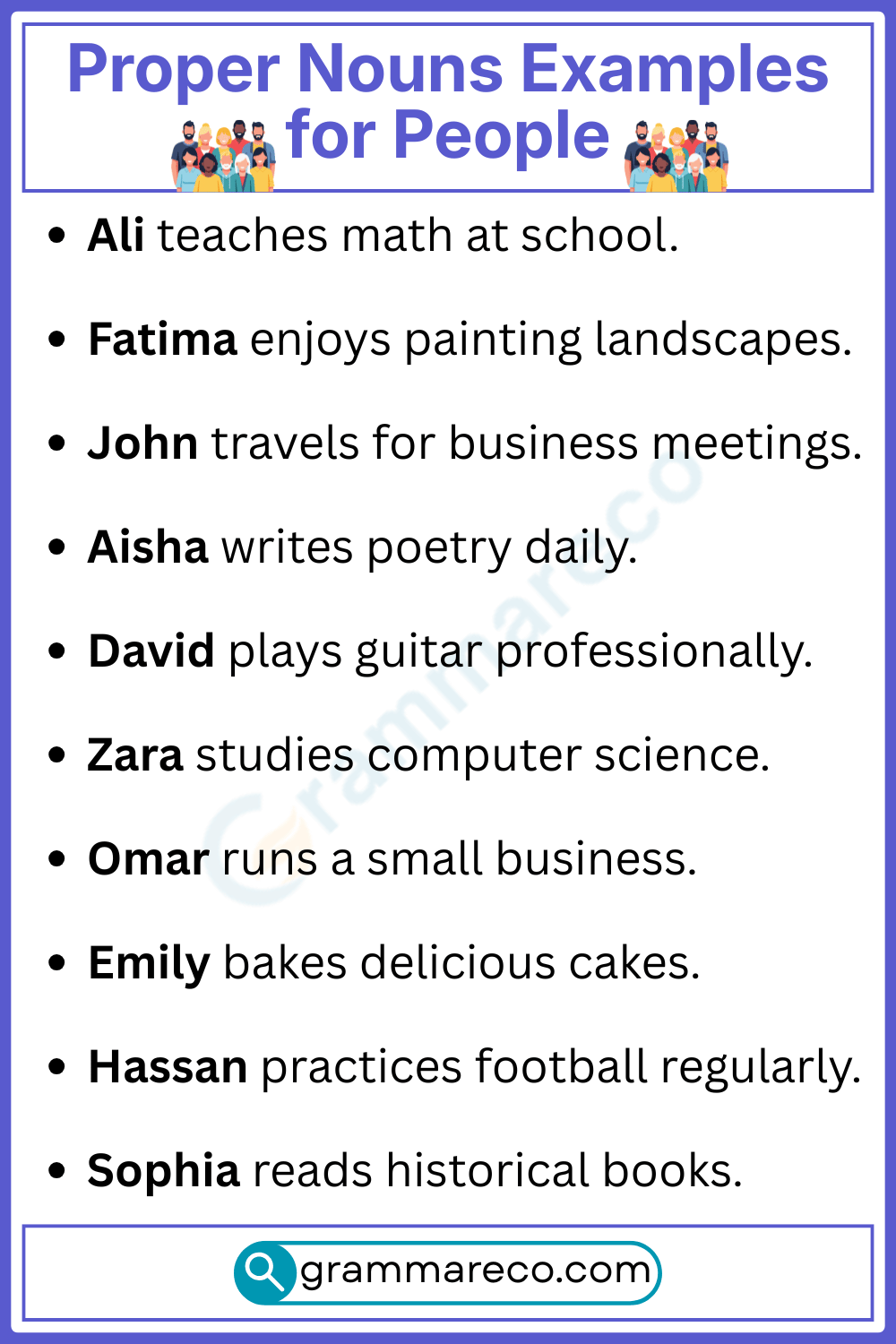
Proper Nouns Examples for People
Proper nouns for people represent unique identities. They always begin with capital letters and add personal meaning to communication.
- Ali teaches math at school.
- Fatima enjoys painting landscapes.
- John travels for business meetings.
- Aisha writes poetry daily.
- David plays guitar professionally.
- Zara studies computer science.
- Omar runs a small business.
- Emily bakes delicious cakes.
- Hassan practices football regularly.
- Sophia reads historical books.
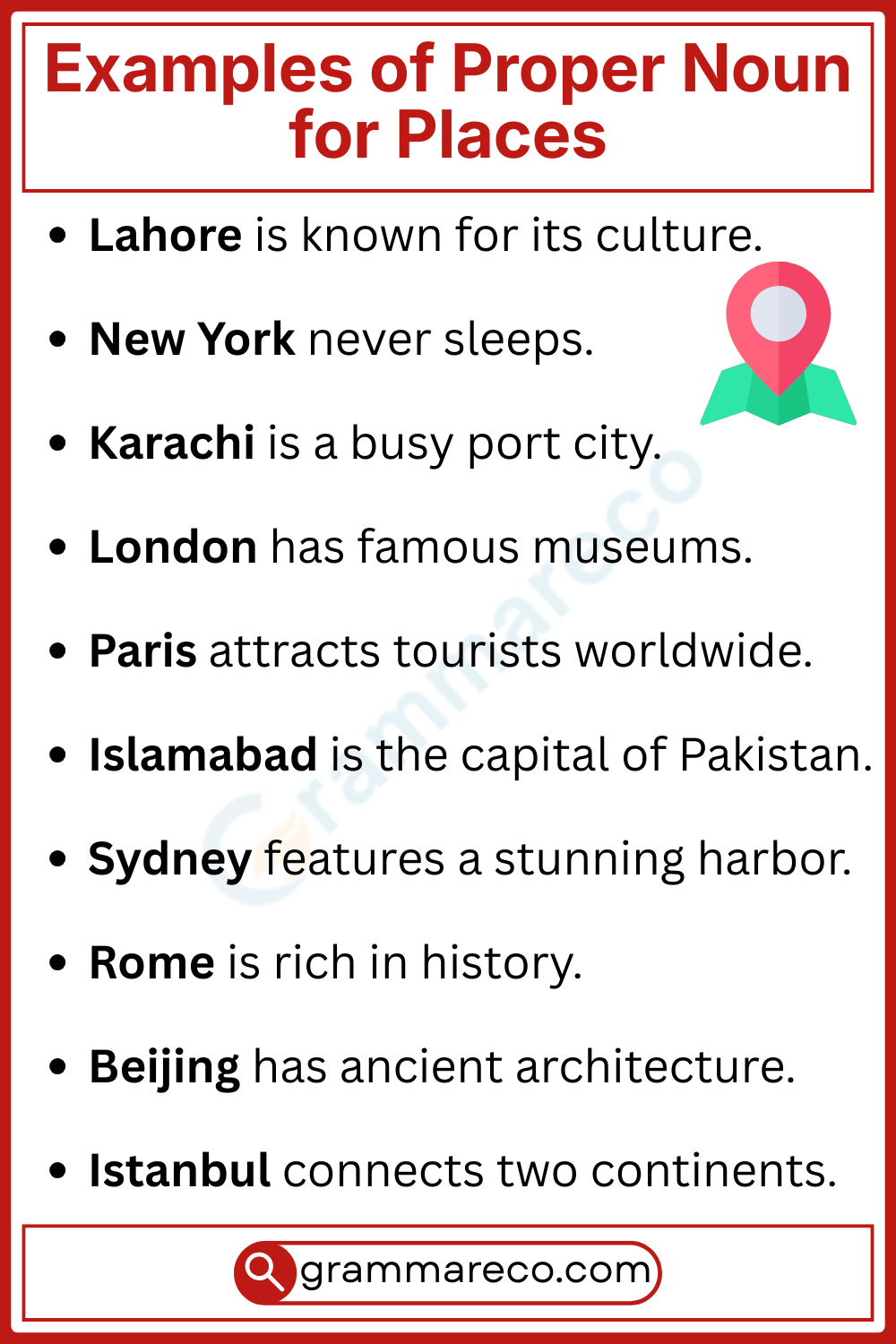
Examples of Proper Noun for Places
Place names identify exact locations, making communication specific and clear. They include cities, countries, and landmarks.
- Lahore is known for its culture.
- New York never sleeps.
- Karachi is a busy port city.
- London has famous museums.
- Paris attracts tourists worldwide.
- Islamabad is the capital of Pakistan.
- Sydney features a stunning harbor.
- Rome is rich in history.
- Beijing has ancient architecture.
- Istanbul connects two continents.
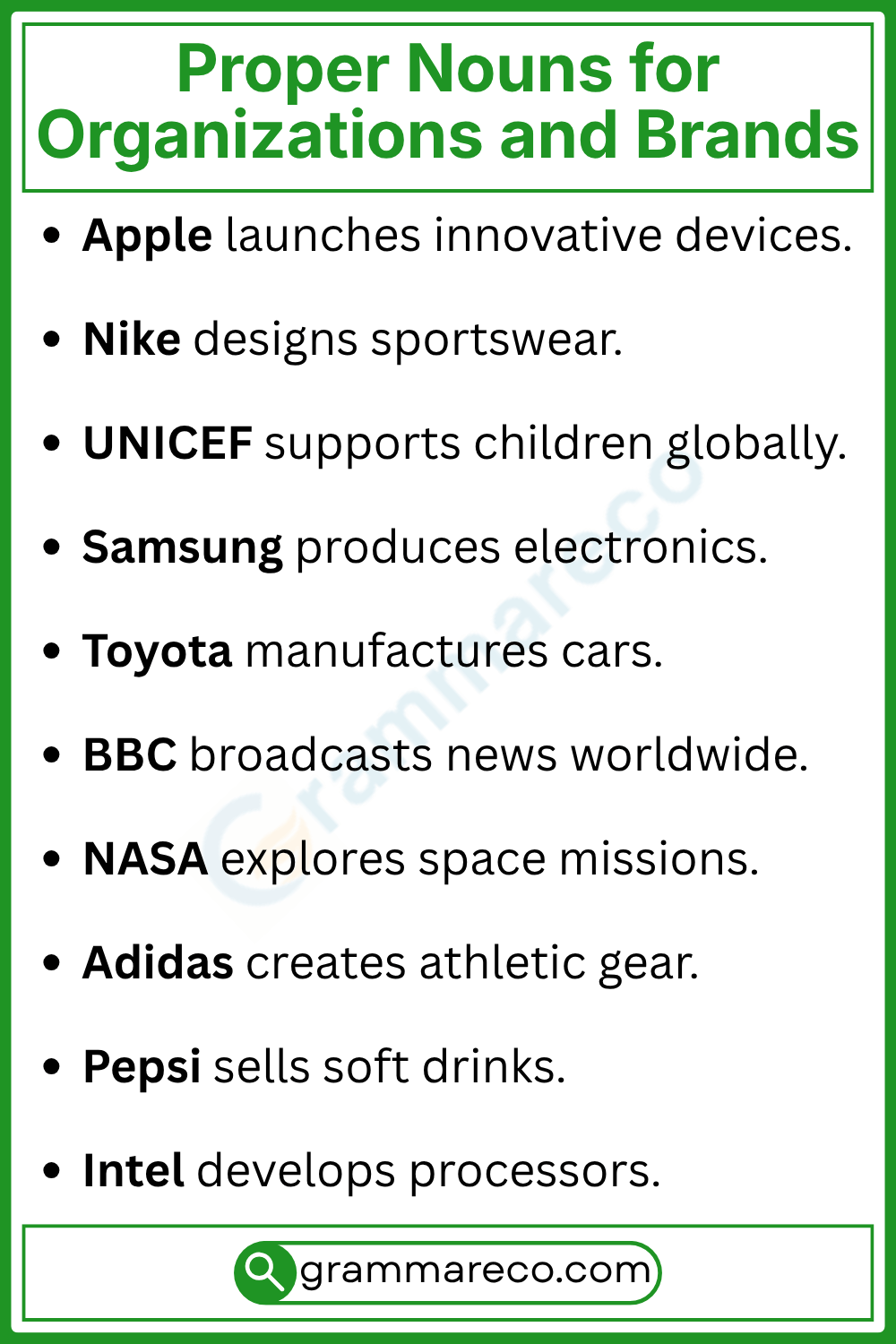
Proper Nouns for Organizations and Brands
Organizations and brands are proper nouns that represent companies or institutions. They are key in business and daily life.
- Apple launches innovative devices.
- Nike designs sportswear.
- UNICEF supports children globally.
- Samsung produces electronics.
- Toyota manufactures cars.
- BBC broadcasts news worldwide.
- NASA explores space missions.
- Adidas creates athletic gear.
- Pepsi sells soft drinks.
- Intel develops processors.
Proper Nouns Example for Days, Months and Holidays
Days, months, and holidays are capitalized proper nouns that mark time and events. They help structure schedules clearly.
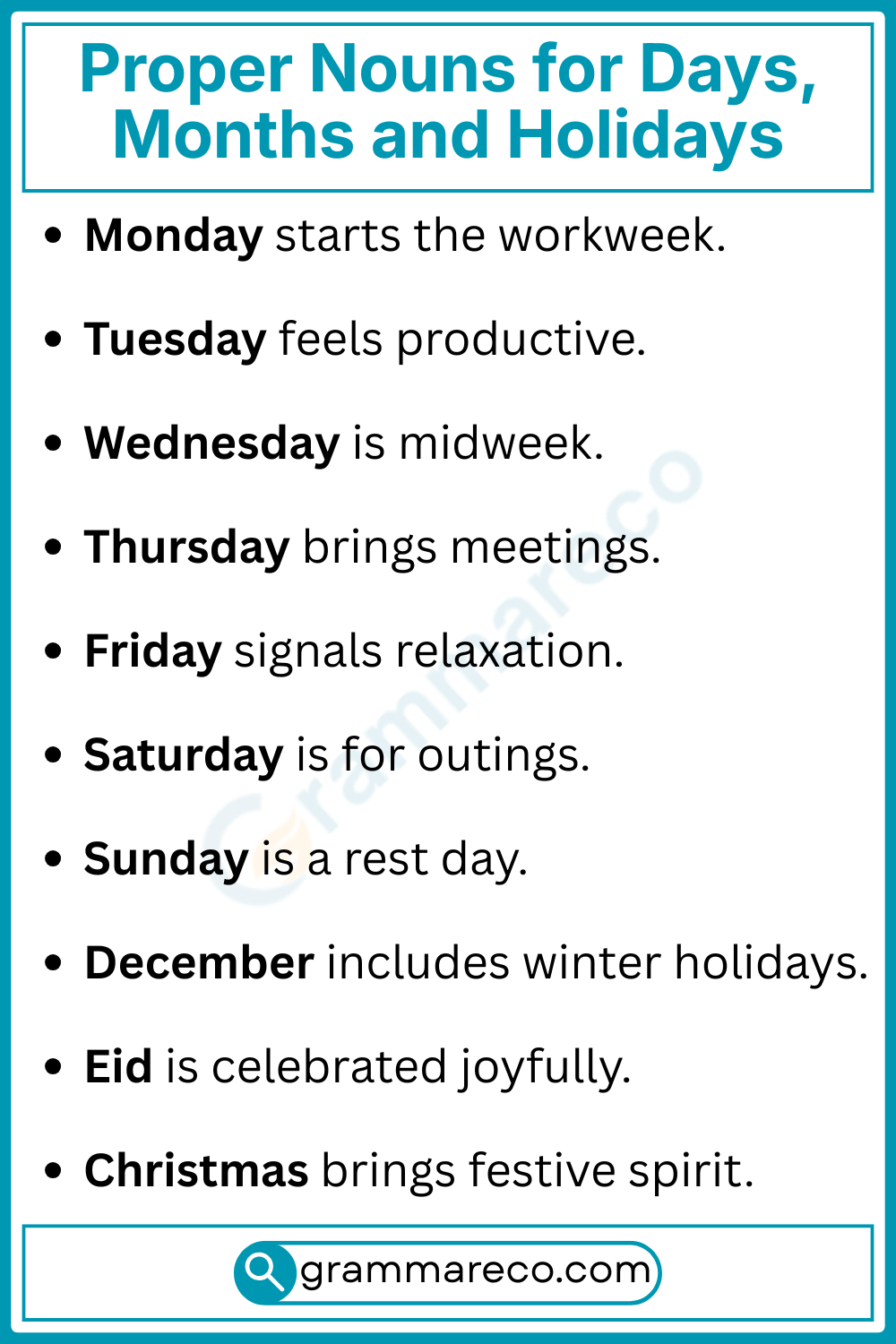
- Monday starts the workweek.
- Tuesday feels productive.
- Wednesday is midweek.
- Thursday brings meetings.
- Friday signals relaxation.
- Saturday is for outings.
- Sunday is a rest day.
- December includes winter holidays.
- Eid is celebrated joyfully.
- Christmas brings festive spirit.
Proper Nouns and Ex in English with Pictures
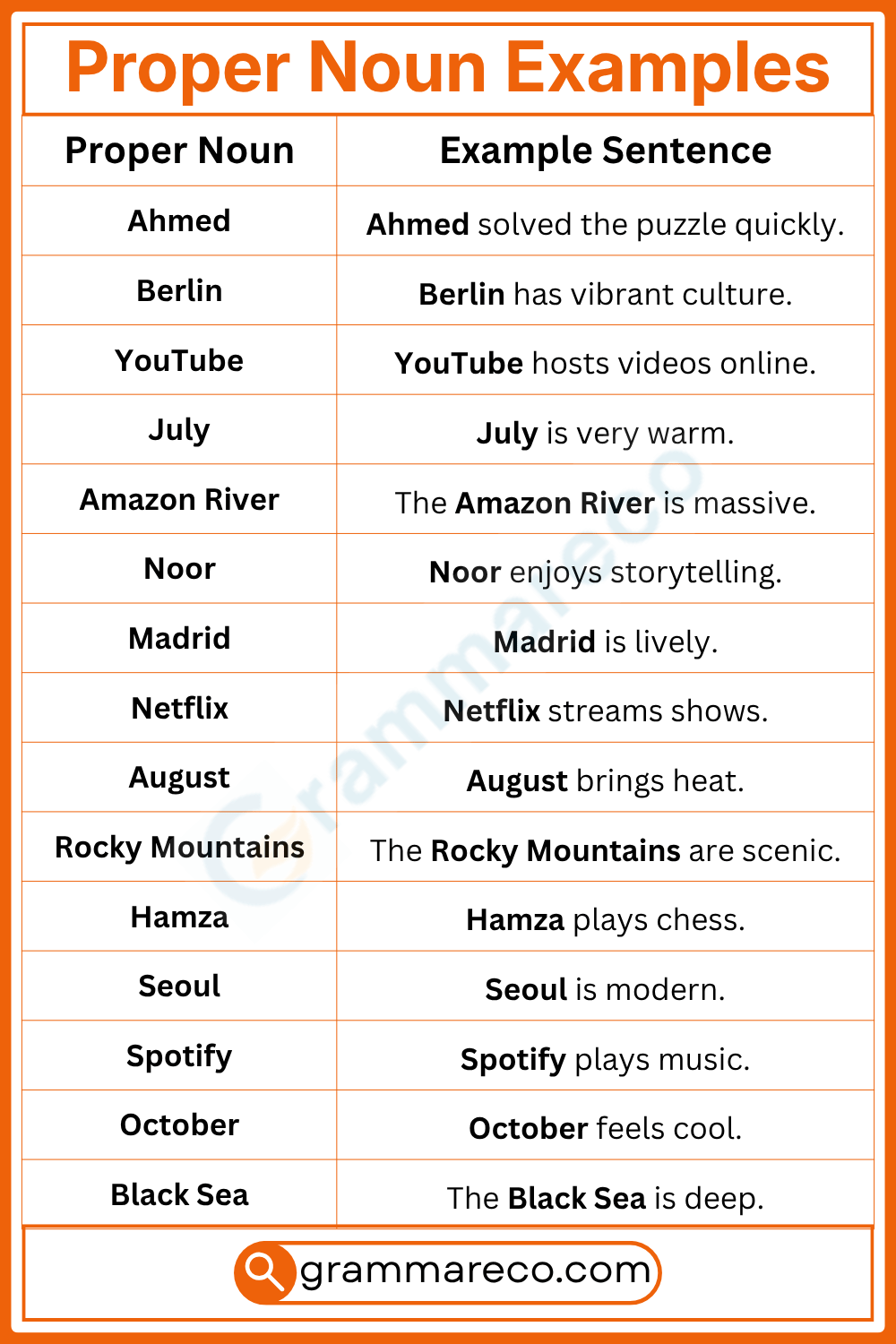
| Proper Noun | Example Sentence |
|---|---|
| Ahmed | Ahmed solved the puzzle quickly. |
| Berlin | Berlin has vibrant culture. |
| YouTube | YouTube hosts videos online. |
| July | July is very warm. |
| Amazon River | The Amazon River is massive. |
| Noor | Noor enjoys storytelling. |
| Madrid | Madrid is lively. |
| Netflix | Netflix streams shows. |
| August | August brings heat. |
| Rocky Mountains | The Rocky Mountains are scenic. |
| Hamza | Hamza plays chess. |
| Seoul | Seoul is modern. |
| Spotify | Spotify plays music. |
| October | October feels cool. |
| Black Sea | The Black Sea is deep. |
| Imran | Imran studies science. |
| Bangkok | Bangkok is vibrant. |
| Twitter shares updates. | |
| November | November is calm. |
| Red Sea | The Red Sea is warm. |
Examples of Common and Proper Nouns Difference
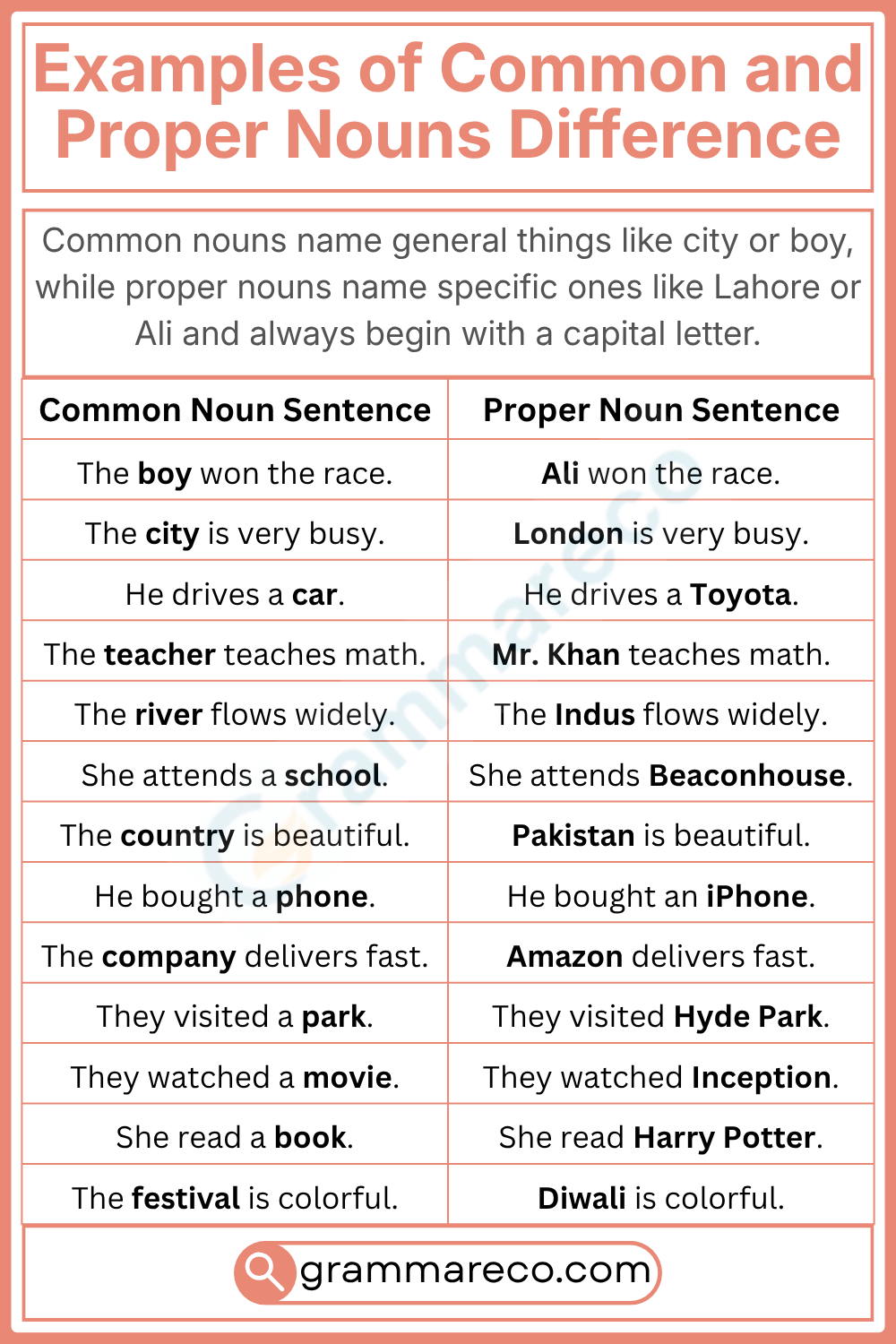
Common nouns name general things like city or boy, while proper nouns name specific ones like Lahore or Ali and always begin with a capital letter.
| Common Noun Sentence | Proper Noun Sentence |
|---|---|
| The boy won the race. | Ali won the race. |
| The city is very busy. | London is very busy. |
| He drives a car. | He drives a Toyota. |
| The teacher teaches math. | Mr. Khan teaches math. |
| The river flows widely. | The Indus flows widely. |
| She attends a school. | She attends Beaconhouse. |
| The country is beautiful. | Pakistan is beautiful. |
| He bought a phone. | He bought an iPhone. |
| The company delivers fast. | Amazon delivers fast. |
| They visited a park. | They visited Hyde Park. |
| They watched a movie. | They watched Inception. |
| She read a book. | She read Harry Potter. |
| The festival is colorful. | Diwali is colorful. |
FAQs about Examples of Proper Nouns
A proper noun is a specific name of a person, place, or thing that always starts with a capital letter.
Examples include Ali, London, Google, Monday, and Nile River.
Capitalization helps identify unique names and distinguish them from common nouns.
Yes, days and months are proper nouns and always capitalized.
No, boy is a common noun because it refers to any male child. Proper nouns name specific people, like Ali or Ahmed, and always begin with a capital letter.
No, I is not a proper noun. It is a pronoun used for the speaker. It is always capitalized but does not name a specific person.
Mom and dad are common nouns when used generally. They become proper nouns when used as names, like Mom said or Dad is coming home today.
Earth can be a proper noun when referring to the planet Earth. Sky is usually a common noun because it refers to the general space above us, not a specific name.
No, a season is not a proper noun. Words like summer, winter, spring, and autumn are common nouns because they name general times of year.
Yes, names of days like Monday, Tuesday, Wednesday, and Sunday are proper nouns because they name specific days and always start with a capital letter.
Read more