


Lettuce comes in many shapes, colors, and textures, from crisp, tightly packed heads to soft, delicate leaves. Each variety has its own flavor and best uses in the kitchen. Romaine, iceberg, butterhead, green leaf, red leaf, and oak leaf lettuce are popular choices for salads, sandwiches, burgers, wraps, and other dishes. Some types of lettuce are known for their crunchy ribs, while others are valued for their tender leaves and mild taste. Understanding the different types of lettuce and their names with pictures makes it easier to choose the right variety for every meal.
What Are the Main Types of Lettuce?
The main types of lettuce include romaine, iceberg, butterhead, loose-leaf, and crisphead varieties. These groups differ in how their leaves grow, how tightly they form heads, and their taste and texture.
- Romaine lettuce: A long, upright variety with firm ribs and crisp, slightly sweet leaves.
- Iceberg lettuce: A round, tightly packed head with pale green leaves and a mild, watery crunch.
- Butterhead lettuce: A soft, loosely formed head with tender leaves and a buttery texture.
- Loose-leaf lettuce: A group of varieties that grow in open clusters rather than tight heads.
- Green leaf lettuce: A loose-leaf variety with bright green, tender leaves and a mild flavor.
Other varieties, such as Little Gem, summer crisp, stem lettuce, and Celtuce, offer additional flavors, textures, and culinary uses.
How to Pronounce “Lettuce”?
The word lettuce is pronounced LET-is. It has two syllables, with the stress on the first syllable. The word begins with the same sound as the letter L and ends with a soft “is” sound.
20 Different Types of Lettuce and Their Uses with Pictures
There are several types of lettuce, and each has different characteristics. Some are best for crunchy salads, while others work well in sandwiches, wraps, and cooked dishes.
1. Romaine Lettuce
Romaine lettuce, also called cos lettuce, is a tall variety with long, upright leaves and thick central ribs. Its outer leaves are usually dark green, while the inner leaves are lighter and more tender.
- Native to: The Mediterranean region and nearby parts of western Asia.
- Appearance: Long, narrow leaves with a firm, pale central rib and green outer edges.
- Taste and texture: Mildly sweet, slightly earthy, and crisp.
- Uses: Caesar salads, green salads, sandwiches, wraps, lettuce cups, and grilled dishes.
Romaine is especially popular because its sturdy leaves hold dressings well and remain crunchy in salads.
2. Iceberg Lettuce
Iceberg lettuce is a round, compact variety known for its pale green leaves and refreshing crunch. Its tightly layered leaves form a firm head that can be sliced, shredded, or separated into cups.
- Native to: Developed from European crisphead lettuce varieties, with modern commercial iceberg types developed in the United States.
- Appearance: Round, tightly packed heads with light green outer leaves and pale inner leaves.
- Taste and texture: Very mild, watery, and exceptionally crisp.
- Uses: Burgers, sandwiches, tacos, salads, wraps, and shredded lettuce toppings.
Iceberg lettuce is a good choice when a dish needs a clean, refreshing crunch without a strong leafy flavor.
3. Butterhead Lettuce
Butterhead lettuce is a group of soft-headed varieties with delicate leaves that form loose, rounded heads. Its smooth leaves are tender and often have a slightly sweet, buttery taste.
- Native to: Europe, where butterhead varieties became widely cultivated.
- Appearance: Rounded heads with soft, overlapping leaves that are often light green.
- Taste and texture: Mild, sweet, delicate, and buttery.
- Uses: Fresh salads, sandwiches, lettuce wraps, and serving as a bed for vegetables or other foods.
Butterhead lettuce is popular in fresh dishes because its soft leaves are easy to separate and eat.
4. Boston Lettuce
Boston lettuce is a type of butterhead lettuce with broad, soft leaves arranged in a loose, rounded head. It has a delicate structure and a mild flavor that pairs well with light dressings.
- Native to: European butterhead lettuce traditions; the name is associated with its cultivation and popularity in the United States.
- Appearance: Large, rounded heads with wide, smooth, pale green leaves.
- Taste and texture: Mild, slightly sweet, tender, and silky.
- Uses: Salads, sandwiches, wraps, and delicate food presentations.
Its flexible leaves can also be used as natural cups for fillings such as chicken, vegetables, and rice.
5. Bibb Lettuce
Bibb lettuce is another butterhead variety, generally smaller and more compact than Boston lettuce. It is known for its tender leaves, delicate flavor, and attractive rounded shape.
- Native to: The United States, particularly Kentucky, where it was developed and popularized.
- Appearance: Small, loosely packed heads with smooth, cup-shaped leaves.
- Taste and texture: Sweet, mild, tender, and buttery.
- Uses: Gourmet salads, lettuce cups, sandwiches, and light appetizers.
Bibb lettuce is often chosen when a recipe needs small, attractive leaves that can hold individual portions of filling.
6. Loose-Leaf Lettuce
Loose-leaf lettuce does not form a tight, compact head. Instead, its leaves grow outward from the stem in an open cluster. It comes in several colors and shapes, making it a versatile choice for everyday meals.
- Native to: Cultivated from lettuce varieties originating in the Mediterranean region and western Asia.
- Appearance: Open clusters of separate, often ruffled leaves.
- Taste and texture: Varies by variety but is generally mild and tender.
- Uses: Mixed salads, sandwiches, wraps, garnishes, and fresh vegetable bowls.
Loose-leaf lettuce is convenient because individual leaves can be harvested as needed, allowing the plant to continue producing new growth.
7. Green Leaf Lettuce
Green leaf lettuce is a popular loose-leaf variety with broad, ruffled leaves. Its color ranges from light to deep green, and its soft texture makes it suitable for many fresh dishes.
- Native to: Developed from cultivated lettuce populations associated with the Mediterranean region.
- Appearance: Open heads with wide, wavy green leaves.
- Taste and texture: Mild, fresh, slightly sweet, and tender.
- Uses: Garden salads, sandwiches, burgers, wraps, and garnishes.
Its attractive leaves add volume and color to salads without overpowering other ingredients.
8. Red Leaf Lettuce
Red leaf lettuce is a loose-leaf variety with green leaves that develop red, bronze, or reddish-purple coloring, especially around their edges. It is valued for its appearance as well as its mild flavor.
- Native to: Developed from cultivated lettuce varieties with origins in the Mediterranean region.
- Appearance: Loose clusters of soft leaves with reddish or purple-tinted edges.
- Taste and texture: Mild, slightly sweet, and tender.
- Uses: Mixed salads, sandwiches, wraps, vegetable bowls, and decorative garnishes.
Red leaf lettuce adds color and variety to salads, especially when combined with green lettuce and fresh vegetables.
9. Oak Leaf Lettuce
Oak leaf lettuce gets its name from its distinctive leaves, which resemble the shape of oak tree leaves. It grows in loose clusters and is available in green and red varieties.
- Native to: European cultivated lettuce traditions.
- Appearance: Soft, deeply lobed leaves with rounded points resembling oak leaves.
- Taste and texture: Mild, slightly nutty, delicate, and tender.
- Uses: Fresh salads, sandwiches, garnishes, and mixed-leaf dishes.
Its unusual leaf shape makes it a popular choice for colorful salads and attractive food presentations.
10. Batavia Lettuce
Batavia lettuce, also called French crisp lettuce, is a type of crisphead lettuce with a loose or semi-compact head. Its leaves are thicker and crunchier than those of many loose-leaf varieties.
- Native to: France and other parts of Europe, where Batavia types became established.
- Appearance: Rounded heads with wavy, sometimes ruffled leaves. Green and red forms are available.
- Taste and texture: Mild, slightly sweet, juicy, and crisp.
- Uses: Salads, sandwiches, burgers, wraps, and fresh vegetable dishes.
Batavia lettuce offers a useful balance between the softness of leaf lettuce and the crunch of iceberg.
11. Little Gem Lettuce
Little Gem lettuce is a small, compact variety that looks like a miniature romaine. It has a firm heart, crisp leaves, and a naturally sweet flavor.
- Native to: Europe, particularly associated with traditional European lettuce cultivation.
- Appearance: Small, upright heads with tightly layered green leaves.
- Taste and texture: Sweet, mildly nutty, and crunchy.
- Uses: Caesar-style salads, grilled lettuce, sandwiches, and individual salad portions.
Its small size makes it convenient for serving whole or cutting lengthwise for grilled dishes.
12. Summer Crisp Lettuce
Summer crisp lettuce, sometimes called Batavia or French crisp in certain contexts, is a group of lettuce varieties that combine features of loose-leaf and crisphead types. Its leaves are firmer than ordinary leaf lettuce.
- Native to: Developed through European and American lettuce breeding.
- Appearance: Upright or semi-compact heads with thick, wavy leaves.
- Taste and texture: Mild, sweet, juicy, and crunchy.
- Uses: Fresh salads, sandwiches, burgers, and lettuce wraps.
Summer crisp varieties are valued for their firm leaves and ability to maintain a satisfying crunch.
13. Stem Lettuce
Stem lettuce is grown mainly for its thick, edible stem rather than its leaves. It is also known as asparagus lettuce because its peeled stem is sometimes compared to asparagus in texture and use.
- Native to: China, where it has a long history of cultivation.
- Appearance: Long, thick stems with narrow leaves growing from the upper part of the plant.
- Taste and texture: Mild, fresh, and slightly nutty, with a crisp stem.
- Uses: Stir-fries, soups, salads, pickles, and cooked vegetable dishes.
The stem is usually peeled before cooking or eating to remove its tougher outer layer.
14. Celtuce
Celtuce is a cultivated form of stem lettuce, especially popular in Chinese cooking. Its name combines “celery” and “lettuce,” reflecting its thick stem and mild, fresh flavor.
- Native to: China.
- Appearance: Thick, upright stems with a small cluster of leaves at the top.
- Taste and texture: Mild, slightly sweet, and crisp, with a texture often compared to celery.
- Uses: Stir-fries, salads, soups, pickles, and vegetable side dishes.
Celtuce is commonly peeled and sliced before cooking. Both its stem and leaves are edible, although the stem is the part most often used.
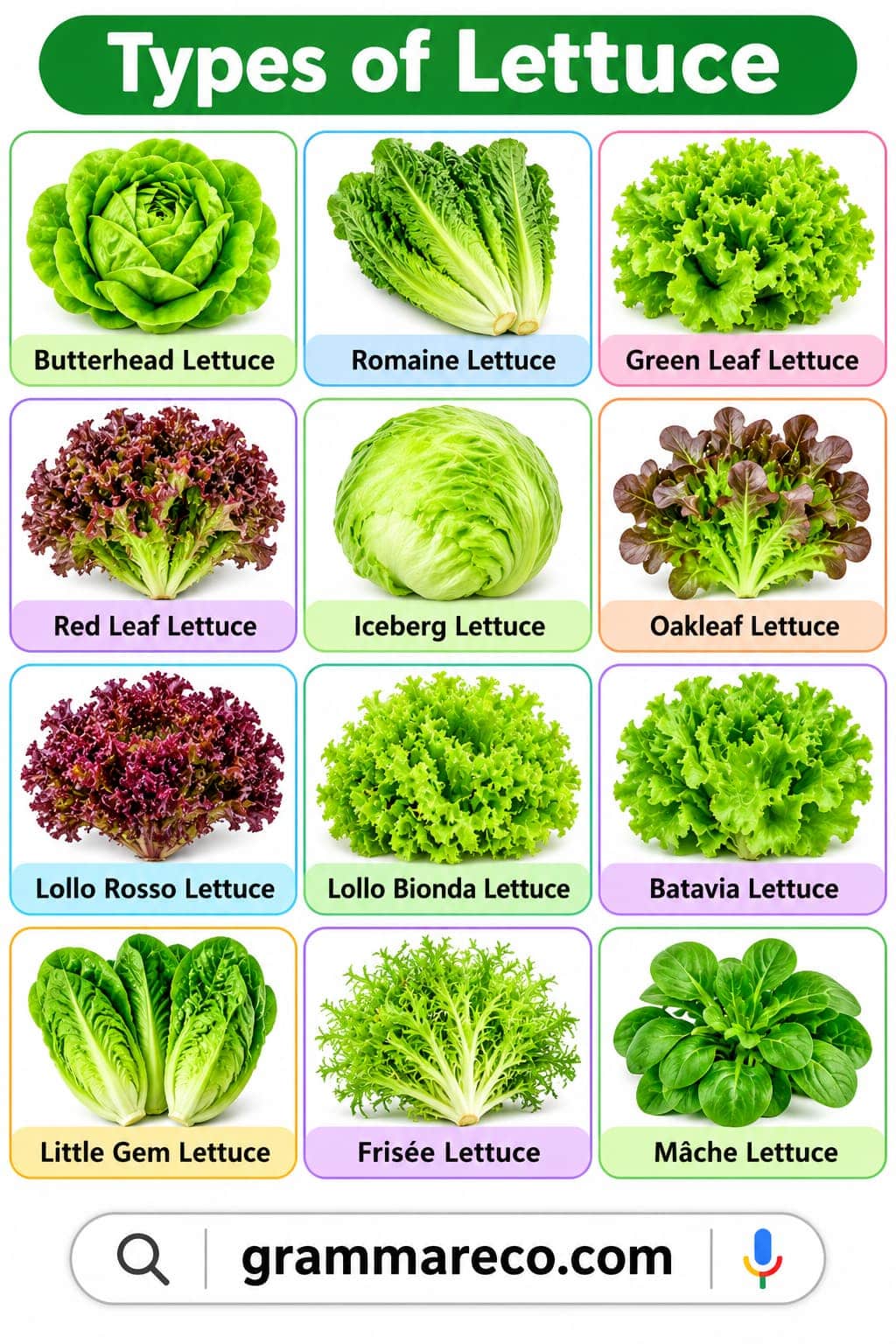
Types of Lettuce and Their Names
Lettuce varieties are often grouped by their leaf shape, head formation, and texture. The following names include common types and familiar varieties within each group.
Romaine Lettuce
- Parris Island Cos: A classic romaine variety with upright heads and crisp, flavorful leaves.
- Green Towers: A tall romaine type with narrow heads and firm green leaves.
- Valmaine: A dark green romaine variety with upright growth and crisp ribs.
- Jericho: A heat-tolerant romaine variety known for its tall heads.
- Little Gem: A compact romaine-like lettuce with sweet, crunchy leaves.
Iceberg Lettuce
- Great Lakes: A traditional iceberg variety that forms large, firm heads.
- Crispino: A compact iceberg type with tightly packed, crisp leaves.
- Salinas: A widely grown iceberg variety with dense heads and pale centers.
- Summertime: An iceberg type selected for warm-season growing conditions.
- Ithaca: A classic crisphead variety with firm, rounded heads.
Butterhead Lettuce and their Names
- Buttercrunch: A popular butterhead with tender leaves and a crisp central rib.
- Four Seasons: A butterhead type with soft leaves and attractive coloring.
- Merveille des Quatre Saisons: A French variety with green leaves and reddish tones.
- Tom Thumb: A miniature butterhead that forms small, compact heads.
- Adriana: A butterhead variety with smooth, rounded leaves.
Boston Lettuce
- Bibb: A small, tender butterhead variety often used in salads.
- Butterhead Boston: A traditional type with large, soft, rounded leaves.
- Marvel of Four Seasons: A colorful butterhead with red-bronze outer leaves.
- Boston White: A pale green butterhead type with delicate leaves.
Names of Bibb Lettuce
- Kentucky Bibb: A traditional Bibb type known for its tender leaves.
- Buttercrunch: A butterhead variety with a crisp heart and soft outer leaves.
- Tom Thumb: A small, compact lettuce suitable for individual servings.
- Rex: A butterhead type with soft leaves and a compact head.
Loose-Leaf Lettuce
- Black Seeded Simpson: A light green loose-leaf variety with soft, crinkled leaves.
- Red Sails: A red loose-leaf variety with ruffled, colorful leaves.
- Salad Bowl: A loose-leaf type with deeply lobed, tender leaves.
- Grand Rapids: A classic variety with frilly, light green leaves.
- Lollo Rossa: A red Italian loose-leaf lettuce with curly edges.
Green Leaf Lettuce
- Black Seeded Simpson: A popular green type with crinkled, tender leaves.
- Grand Rapids: A loose-leaf variety with frilled green foliage.
- Simpson Elite: A green leaf type with broad, soft leaves.
- Green Ice: A crisp, frilly green lettuce with attractive leaves.
- Salad Bowl Green: A green version of the deeply lobed Salad Bowl type.
Red Leaf Type of Lettuce
- Red Sails: A popular red leaf variety with ruffled, bronze-red leaves.
- New Red Fire: A colorful variety with deep red outer leaves.
- Lollo Rossa: An Italian type with curly, reddish-purple leaves.
- Red Salad Bowl: A loose-leaf variety with lobed, red-tinged foliage.
- Redina: A red lettuce type with attractive leaves and a mild taste.
Types of Oak Leaf Lettuce
- Green Oak Leaf: A green variety with soft, oak-shaped leaves.
- Red Oak Leaf: A red-tinged type with deeply lobed leaves.
- Royal Oak Leaf: A cultivated oak leaf variety with tender foliage.
- Oakly: A named oak leaf type grown for its distinctive leaves.
Batavia Lettuce
- Nevada: A green Batavia type with broad, crisp leaves.
- Concept: A crisp lettuce variety with a firm, attractive head.
- Muir: A green Batavia-type lettuce with thick, wavy leaves.
- Cardinale: A red Batavia type with colorful, crisp foliage.
- Sierra: A Batavia-type variety with firm leaves and a rounded head.
Little Gem Lettuce
- Sucrine: A small, sweet lettuce often associated with the Little Gem type.
- Little Gem: A compact variety with crisp, upright leaves.
- Blonde de Paris: A traditional small lettuce with tender leaves.
- Romaine Mini: A general name used for miniature romaine-like lettuce types.
Summer Crisp Lettuce
- Muir: A green, crisp summer lettuce with broad leaves.
- Nevada: A Batavia-type lettuce with a firm texture.
- Magenta: A colorful summer crisp type with red-tinged leaves.
- Anuenue: A Hawaiian summer crisp variety known for its heat tolerance.
- Cherokee: A red lettuce variety with firm leaves.
Stem Lettuce
- Celtuce: A stem lettuce grown mainly for its thick, edible stalk.
- Asparagus Lettuce: A common name for stem lettuce with a crisp, edible stem.
- Chinese Stem Lettuce: A traditional stem lettuce used in Chinese dishes.
- Wosun: A Chinese name commonly used for stem lettuce.
Celtuce Names
- Wosun: A common Chinese name for cultivated stem lettuce.
- Chinese Lettuce: A general name for lettuce grown for its thick stem.
- Asparagus Lettuce: Another name for Celtuce because of its stem-like appearance.
- Stem Lettuce: The broader lettuce group to which Celtuce belongs.
Types of Lettuce for Salad
The best lettuce for salad depends on whether you prefer crisp, crunchy leaves or soft, delicate greens. These varieties work especially well in fresh salads:
- Romaine lettuce: Its crisp ribs and sturdy leaves hold creamy dressings well, making it ideal for Caesar salads and chopped vegetable salads.
- Iceberg lettuce: Its refreshing crunch and mild flavor make it a popular choice for simple garden salads and classic restaurant-style salads.
- Butterhead lettuce: Its soft, buttery leaves pair well with light vinaigrettes, fresh herbs, tomatoes, cucumbers, and delicate salad ingredients.
- Green leaf lettuce: Its tender, wavy leaves add volume and freshness to everyday green salads and mixed vegetable bowls.
- Red leaf lettuce: Its colorful leaves add visual appeal and a mild flavor to mixed salads with fruits, nuts, and cheese.
- Oak leaf lettuce: Its delicate texture and attractive shape make it suitable for gourmet salads and mixed baby-leaf combinations.
- Little Gem lettuce: Its sweet, crunchy leaves work well in individual salads, grilled lettuce dishes, and Caesar-style recipes.
- Batavia lettuce: Its crisp, juicy leaves provide a satisfying texture in chopped salads and fresh vegetable combinations.
Which Lettuce Is Best for Sandwiches and Burgers?
Iceberg lettuce is one of the best choices for sandwiches and burgers because it provides a crisp, refreshing crunch without adding a strong flavor. Its firm leaves hold their shape and create a pleasant contrast with juicy meat, cheese, sauces, and soft bread. Romaine is another excellent option because its sturdy leaves are less likely to become soggy quickly. Green leaf and butterhead lettuce also work well when you prefer softer leaves and a milder texture. For a classic burger, iceberg is a reliable choice, while romaine and green leaf are great for sandwiches and wraps.
Which Lettuce Is Best for Salads?
Romaine, butterhead, green leaf, red leaf, and oak leaf lettuce are excellent choices for salads. Romaine is ideal for Caesar salads because its firm ribs hold thick dressings, while butterhead provides soft, delicate leaves for lighter salads. Green leaf lettuce works well in everyday vegetable salads, and red leaf adds attractive color. Oak leaf is another good option because its tender, shaped leaves pair nicely with fruits, nuts, cheese, and vinaigrettes. For a mixed salad, combining two or three varieties creates a better balance of flavor, color, and texture.
Difference Between Romaine and Iceberg Lettuce
Romaine and iceberg lettuce are both popular salad varieties, but they differ in appearance, flavor, texture, and nutritional composition.
| Feature | Romaine Lettuce | Iceberg Lettuce |
|---|---|---|
| Shape | Tall, upright leaves | Round, compact head |
| Leaf color | Dark green outer leaves with pale centers | Pale green outer leaves with lighter inner leaves |
| Texture | Crisp leaves with firm ribs | Very crunchy and watery |
| Taste | Mild, slightly sweet, and earthy | Very mild and refreshing |
| Water content | High | Very high |
| Nutritional profile | Generally provides more vitamin A, vitamin K, and folate | Generally contains fewer vitamins and minerals per serving |
| Best uses | Caesar salads, wraps, sandwiches, and grilled dishes | Burgers, sandwiches, tacos, and crunchy salads |
| Dressing suitability | Holds thick dressings well | Works best with light dressings |
| Leaf structure | Long and narrow | Tightly layered and rounded |
Main difference: Romaine has longer leaves, a stronger leafy flavor, and a richer nutrient profile, while iceberg is known for its pale color, mild taste, and extra-crunchy texture.
Difference Between Butterhead and Loose-Leaf Lettuce
Butterhead and loose-leaf lettuce are both valued for their tender leaves, but they grow differently and have slightly different textures.
| Feature | Butterhead Lettuce | Loose-Leaf Lettuce |
|---|---|---|
| Head formation | Forms a soft, rounded head | Grows in an open cluster |
| Leaf arrangement | Leaves overlap loosely around the center | Leaves spread outward from the stem |
| Texture | Soft, smooth, and buttery | Tender, sometimes crisp or ruffled |
| Taste | Mild, sweet, and delicate | Mild, with flavor varying by variety |
| Appearance | Rounded head with smooth leaves | Open shape with wavy or lobed leaves |
| Common varieties | Boston and Bibb | Green leaf, red leaf, and oak leaf |
| Best uses | Salads, lettuce cups, and sandwiches | Mixed salads, wraps, and garnishes |
| Harvesting | Usually harvested as a whole head | Individual leaves can often be picked |
| Storage | Delicate leaves need gentle handling | Leaves also bruise easily and need careful storage |
Main difference: Butterhead lettuce forms a soft, rounded head with smooth leaves, while loose-leaf lettuce grows in an open cluster with leaves that spread outward.
FAQs About Lettuce Varieties
There are many lettuce varieties, but they are commonly grouped into five main categories: romaine, crisphead, butterhead, loose-leaf, and stem lettuce. Each group contains several varieties with different colors, shapes, and textures.
The most common types include romaine, iceberg, butterhead, Boston, Bibb, green leaf, red leaf, and oak leaf lettuce. These varieties are widely used in salads, sandwiches, burgers, and wraps.
Iceberg lettuce is one of the crispiest varieties because of its tightly packed, watery leaves. Romaine, Little Gem, and Batavia lettuce also provide a satisfying crunch.
Iceberg lettuce has one of the mildest flavors. Its light, refreshing taste makes it suitable for people who prefer a crunchy lettuce without a strong leafy or bitter flavor.
Butterhead and Little Gem lettuce are often appreciated for their naturally sweet, mild flavors. Some green and red leaf varieties also have a slightly sweet taste.
Green leaf lettuce has bright or deep green leaves, while red leaf lettuce has reddish, bronze, or purple coloring around its edges. Both have tender leaves and mild flavors and are commonly used in fresh salads.
Yes. Romaine and cos lettuce are two names for the same general type of lettuce. The name cos is commonly used in some regions, while romaine is more familiar in the United States.
Read more