
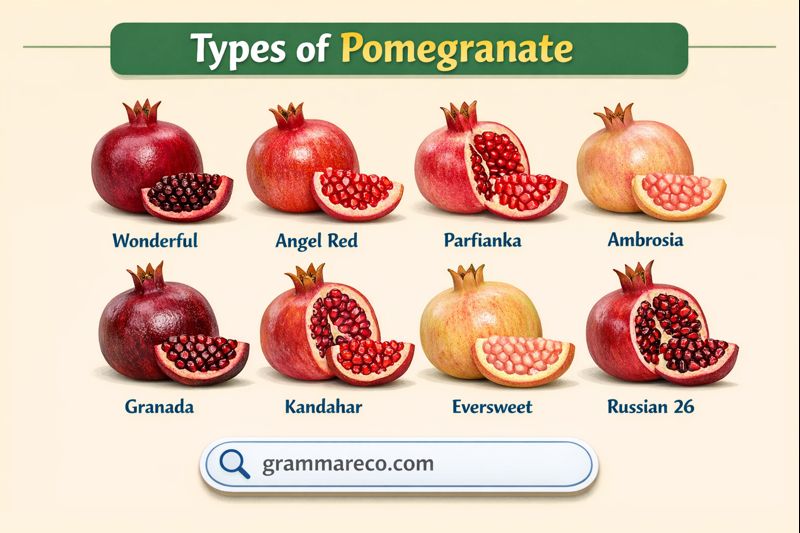

Learning about Types of Pomegranate Fruit helps readers understand how this fruit differs by seed texture, taste, color, and regional growth. Pomegranates vary widely across climates, especially between American markets and Asian growing regions. Some varieties feel firm and seeded, while others are softer and sweeter, which often affects how they are used in kitchens and markets.
In this post, readers will learn the Types of Pomegranate Fruit through pictures and names, making it easier to talk about varieties in food shopping, agriculture, nutrition classes, and home cooking.
How to cut a pomegranate step by step?
Cutting a pomegranate is easy if done carefully to avoid juice spills. Follow these steps:
- Wash the pomegranate – Rinse it under running water to remove dirt.
- Remove the crown – Cut off the top part to expose the seeds slightly.
- Score the skin – Make shallow vertical cuts along the ridges from top to bottom without cutting seeds.
- Open the pomegranate – Gently pull apart the sections along the scored lines.
- Remove the seeds – Hold each section over a bowl and tap or push out the seeds with your fingers.
- Collect the juice – Optional: squeeze gently to get extra juice, avoiding the bitter white pith.
How to Eat Pomegranate Fruit?
Eating a pomegranate may seem tricky at first, but it is simple once you know the steps. First, slice off the crown and score the skin into sections. Then gently break it apart to reveal the arils inside. These juicy seeds can be eaten directly, added to salads, desserts, or used for fresh juice. Always remove the white pith, as it tastes bitter. Pomegranates are rich in vitamins, antioxidants, and make a refreshing, healthy snack.
Types of Pomegranate and Their Pictures
Pomegranate varieties are commonly grouped by seed hardness and eating texture. These natural differences come from climate, soil, and long cultivation history. Understanding these types helps readers recognize pomegranates through pictures and physical traits used in markets and farms.
Seeded Pomegranate Varieties
Seeded pomegranates developed earlier in history and are known for firm arils and bold flavor. They are widely grown in dry climates and are often used for juice and traditional cooking.
- Kandhari: Known for deep red arils, firm seeds, and sharp flavor shaped by dry Afghan and Central Asian climates.
- Dholka: Pale pink fruit with hard seeds, traditionally grown in western regions with low rainfall.
- Albanian Red: Thick rind and seeded interior, historically valued for storage and transport durability.
- Bedana: Older seeded strain used mostly for juice due to its dense seed structure.
Soft Seed Pomegranate Varieties
Soft-seed pomegranates were selectively cultivated for fresh eating. Their seeds are easier to chew, making them popular in modern markets.
- Wonderful: Large fruit with deep ruby arils and softer seeds developed in early American orchards.
- Bhagwa: Smooth skin and soft seeds adapted to warm regions with long harvest seasons.
- Ruby Red: Bright arils and tender seed texture favored in fresh fruit displays.
- Angel Red: Thin rind and very soft seeds, often grown for table consumption.
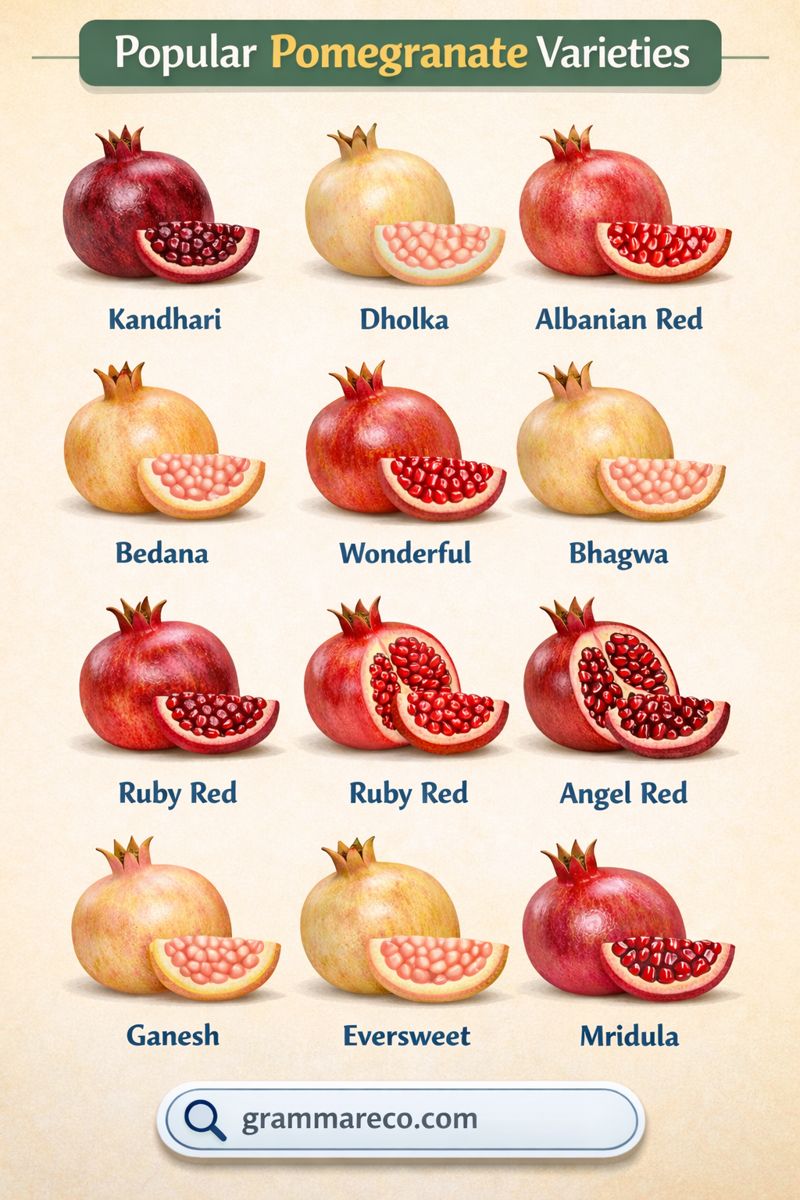
Popular Pomegranate Varieties with Images
Some pomegranate types became popular due to commercial farming, export success, and consumer preference. These varieties appear frequently in grocery stores and agricultural studies.
Wonderful Pomegranate
The Wonderful pomegranate originated in the United States and became commercially dominant in California during the late nineteenth century. Farmers selected it for deep color, strong rind, and reliable harvests. Over time, it became the reference variety in grocery stores and juice brands. Its bold appearance and firm structure helped it spread across global markets.
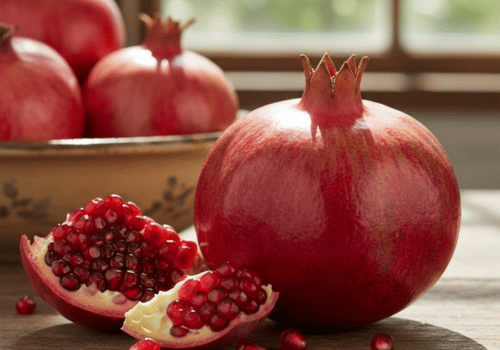
- Seed texture: Firm seeds that feel crunchy when chewed.
- Taste profile: Sweet-tart flavor with noticeable sharpness.
- Aril color: Deep crimson arils that photograph very well.
- Rind thickness: Thick skin that supports long transport and storage.
- Common use: Commercial juice production and packaged arils.
Bhagwa Pomegranate
Bhagwa pomegranate rose to popularity through selective farming focused on export quality and eating comfort. Growers valued its uniform size, soft seeds, and bright red arils. Over time, it became widely associated with premium fresh-fruit markets. Its balanced sweetness made it popular among regular consumers.
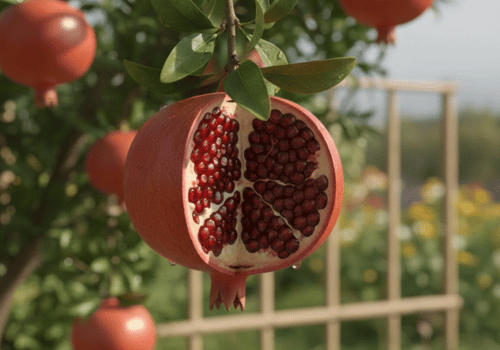
- Seed texture: Soft seeds that break easily while chewing.
- Taste profile: Pleasant sweetness with very low acidity.
- Aril color: Bright ruby red with glossy finish.
- Fruit shape: Round and even, helpful for grading and packing.
- Market role: Fresh eating and international fruit trade.
Ganesh Pomegranate
Ganesh pomegranate was developed to suit home gardens and small farms. It gained attention for dependable yields and gentle flavor. Unlike sharper varieties, Ganesh offers a mild eating experience. This made it suitable for families and daily consumption.
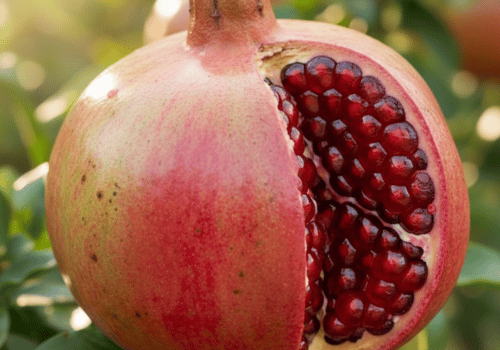
- Seed texture: Semi-soft seeds, easier than hard-seed types.
- Taste profile: Mildly sweet with soft flavor notes.
- Juice color: Light red juice with smooth consistency.
- Fruit size: Medium fruits that ripen evenly.
- Typical use: Home juicing and fresh bowls.
Kandhari Pomegranates
Kandhari pomegranate traces its roots to older cultivation traditions in dry regions. Historically, it was valued more for processing than fresh eating. Its strong rind and sharp flavor helped it survive long storage periods. This variety reflects early agricultural priorities.
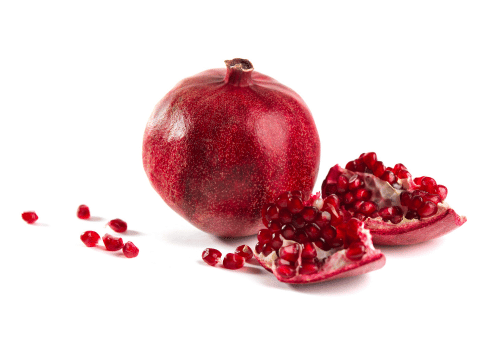
- Seed texture: Hard seeds requiring firm chewing.
- Taste profile: Strong sourness that dominates the palate.
- Rind thickness: Thick peel that protects inner arils.
- Juice strength: Highly concentrated and intense.
- Common use: Cooking, sauces, and traditional preparations.
Ruby Red Pomegranate
Ruby Red pomegranate became known for visual intensity and sweetness. Growers focused on color depth and softer eating quality. Its name reflects the gem-like appearance of the arils. This variety often attracts first-time buyers.
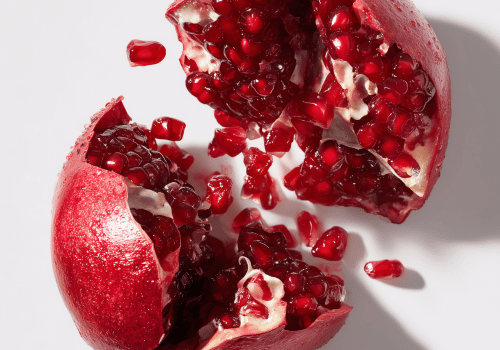
- Seed texture: Soft to medium seeds, comfortable to chew.
- Taste profile: Sweet with gentle tart balance.
- Aril color: Vivid red arils with jewel-like shine.
- Juice yield: High juice content per fruit.
- Learner note: Often confused with Wonderful in pictures.
Angel Red Pomegranate
Angel Red pomegranate was bred to combine softness with visual appeal. It gained recognition for early ripening and smooth taste. This variety fits modern eating habits focused on fresh consumption. Its arils look clean and uniform.
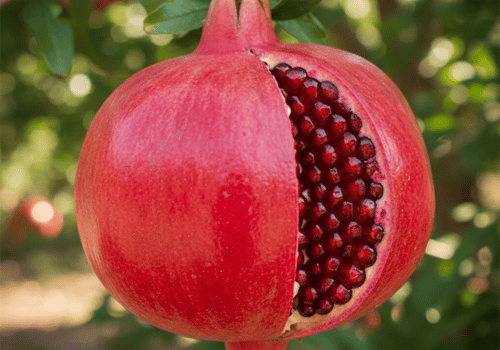
- Seed texture: Soft seeds suitable for all ages.
- Taste profile: Sweet without sharp aftertaste.
- Juice color: Bright red but lighter than Wonderful.
- Ripening time: Earlier harvest compared to many varieties.
- Common use: Fresh snacking and light juicing.
Eversweet Pomegranate
Eversweet stands out due to its very mild acidity. It was developed for people who prefer sweetness over tang. Unlike darker varieties, it has pale arils. This makes it visually distinct in pictures.
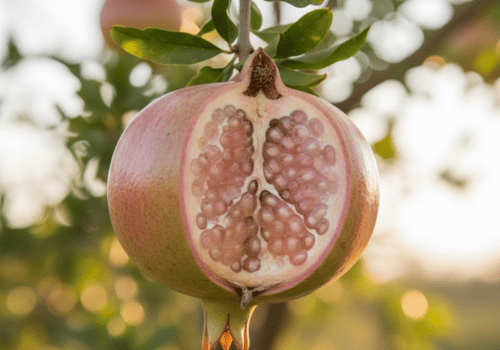
- Seed texture: Soft seeds that break easily.
- Taste profile: Very sweet with almost no sourness.
- Aril color: Pale pink to light red.
- Juice stain: Low staining compared to darker types.
- Ideal use: Fresh eating and kid-friendly dishes.
Asian Pomegranate Fruit Types
Asian regions host some of the oldest cultivated pomegranate varieties. These types reflect centuries of selective farming influenced by soil and climate diversity.
Indian Types of Pomegranate
Indian pomegranate varieties were shaped by hot summers, limited rainfall, and long harvesting traditions. Farmers focused on seed softness, steady yields, and market acceptance. Over time, these fruits became important for both domestic consumption and export. Their visual traits and eating comfort make them easy to recognize in pictures.
- Bhagwa: Export focused variety with long shelf life
- Ganesh: Reliable growth and mild flavor
- Mridula: Light colored arils with soft seeds
Iranian Type of Pomegranate
Iranian pomegranate varieties are among the oldest cultivated in the world. These fruits developed in dry climates with cold nights, shaping strong flavors and firm structures. Historically, they were valued for medicinal use, cooking, and long storage. Their taste range often leans toward sour or complex sweet-tart profiles.
- Saveh: Dark arils with sour notes
- Yazdi: Medium sweetness with firm seeds
- Shirvan: Balanced taste used traditionally in cooking
Sweet Pomegranate Varieties and their Benefits
Sweet pomegranates are easy to eat directly due to their tender seeds and high sugar content. They are rich in antioxidants, vitamin C, and natural sugars, providing a quick energy boost.
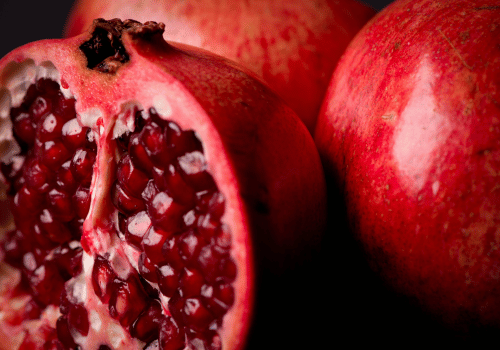
- Bhagwa: Soft seeds, very sweet, high juice content, good for immunity.
- Wonderful: Large soft arils, sweet taste, rich in antioxidants, ideal for daily consumption.
- Ruby Red: Soft arils, slightly sweet, beneficial for digestion and heart health.
Sour Pomegranate and their Benefits
Sour pomegranates have tangy arils and are often used in cooking, marinades, or traditional drinks. They are excellent for digestion, weight management, and contain high antioxidant levels.
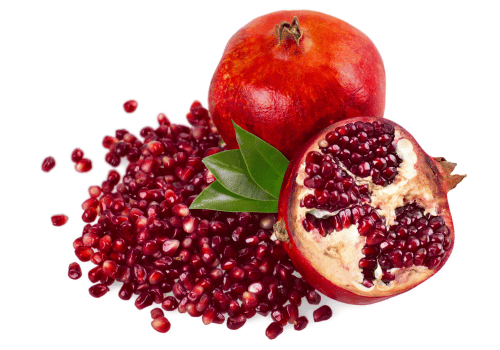
- Kandhari: Firm seeds, mildly tangy, promotes digestion, long shelf life.
- Ganesh: Balanced sweet-tart flavor, aids in metabolism, used in culinary preparations.
- Yazdi: Tangy taste, soft arils, improves appetite and digestive health.
FAQs about Pomegranate
Common pomegranate types include Wonderful, Kandhari, Bhagwa, Ruby, and Mollar de Elche, each known for seed color, sweetness, and juice quality.
Yes, humans can eat pomegranate seeds. They are safe, nutritious, and rich in fiber, vitamins, and antioxidants, perfect for salads or juices.
Yes, dogs can eat pomegranate in small amounts. Seeds are safe and nutritious, but too much may cause digestive upset or discomfort.
Pomegranate season usually comes from September to February, depending on the region, with fruits ripening fully for harvest and consumption.
Read more