
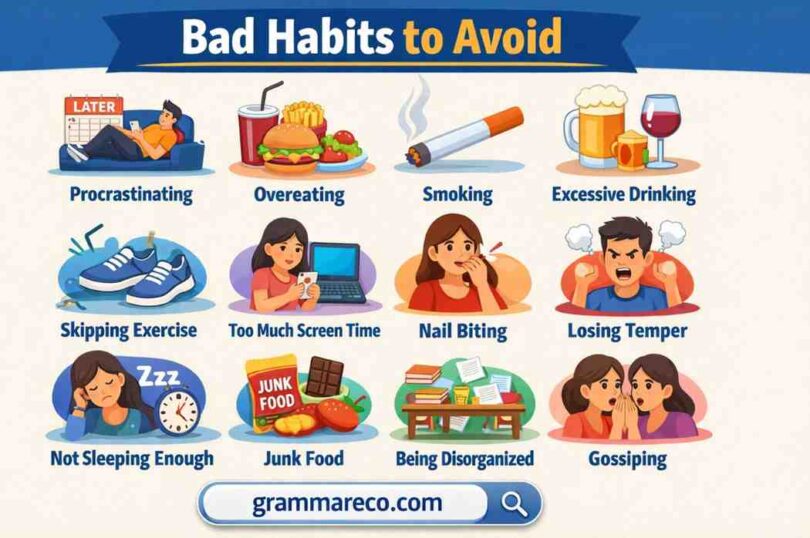

Bad habits can silently affect your health, productivity, and relationships. Many of us develop bad habit examples without realizing their long-term consequences. Recognizing these habits early and learning how to avoid them can improve focus, discipline, and personal growth. This article helps students, adults, and kids identify and overcome common bad habits.
What Are Bad Habits?
Bad habits are repetitive behaviors that negatively impact your life, health, or relationships. They are often automatic and hard to notice but can lead to long-term problems. Identifying them is the first step toward self-improvement and positive change.
How to Avoid Bad Habits
Avoiding bad habits requires awareness, planning, and consistent action. Here’s a simple guide:
- Identify triggers – Notice situations or emotions that lead to the habit.
- Set small goals – Replace one habit at a time with a positive alternative.
- Use reminders and rewards – Track progress and celebrate small victories.
- Practice self-discipline – Stay consistent and patient; breaking habits takes time.
- Seek support – Friends, family, or mentors can help maintain accountability.
By adopting these steps, you can gradually replace negative behaviors with positive routines.
100 Examples of Bad Habit and how to Overcome
Here’s a comprehensive list of 100 negative habits that everyone should recognize and avoid.
| Procrastination | Nail biting | Overeating | Oversleeping |
| Smoking | Drinking alcohol excessively | Lying | Gossiping |
| Being late | Complaining | Interrupting | Overthinking |
| Skipping meals | Poor posture | Using phone in bed | Mindless spending |
| Avoiding exercise | Eating junk food | Ignoring hygiene | Swearing |
| Comparing yourself | Multitasking excessively | Laziness | Neglecting tasks |
| Overreacting | Being judgmental | Perfectionism | Over-dependence |
| Holding grudges | Cheating | Skipping work | Ignoring responsibilities |
| Impulsive shopping | Ignoring sleep schedule | Eating too fast | Watching too much TV |
| Texting while driving | Oversharing on social media | Criticizing others | Being rude |
| Interrupting conversations | Excessive gaming | Emotional eating | Avoiding challenges |
| Being disorganized | Overcommitting | Blaming others | Avoiding social interactions |
| Overthinking problems | Spending without budget | Procrastinating on studies | Ignoring mental health |
| Yelling at others | Avoiding responsibilities | Gossiping about friends | Lying in exams |
| Ignoring deadlines | Staying up late | Not listening | Eating too much sugar |
| Overusing gadgets | Negative self-talk | Skipping classes | Not drinking enough water |
| Impatience | Avoiding reading | Selfishness | Complaining constantly |
| Overspending on wants | Not exercising regularly | Being pessimistic | Ignoring family time |
| Holding back emotions | Staying in comfort zone | Nail picking | Excessive caffeine |
| Being passive | Overthinking relationships | Being indecisive | Watching violent content |
| Ignoring feedback | Using foul language | Oversleeping on weekends | Unhealthy snacking |
| Not planning ahead | Poor time management | Being distracted easily | Avoiding help |
| Ignoring health checkups | Being envious | Overreacting on social media | Interrupting teachers |
| Not asking questions | Overcommitting socially | Hitting or hurting | Avoiding responsibilities at home |
| Forgetting gratitude | Eating late at night | Being judgmental | Arguing unnecessarily |
| Being careless | Ignoring safety rules | Skipping exercise | Not prioritizing tasks |
| Not reading instructions | Overindulging in desserts | Negative body language | Complaining without action |
| Avoiding difficult tasks | Ignoring deadlines | Overusing apps | Talking too much |
| Being stubborn | Overanalyzing texts | Ignoring hygiene | Skipping breakfast |
| Smoking indoors | Overthinking mistakes | Not respecting privacy | Spending excessive time online |
| Ignoring family advice | Being arrogant | Excessive worrying | Avoiding chores |
| Blaming external factors | Overindulging in snacks | Being impatient | Not following rules |
| Being judgmental | Overusing social media | Gossiping about coworkers | Avoiding responsibilities |
| Criticizing self constantly | Avoiding reading books | Not saving money | Not exercising daily |
| Interrupting friends | Not listening actively | Watching TV excessively | Ignoring self-care |
| Skipping meals | Overcommitting work | Complaining repeatedly | Ignoring personal hygiene |
| Being envious | Lying frequently | Avoiding study tasks | Overthinking small problems |
| Ignoring emotions | Overindulging in shopping | Being late constantly | Using phone during meals |
| Ignoring diet plan | Not planning future | Neglecting health | Overreacting emotionally |
| Overusing coffee | Being disorganized | Skipping family time | Avoiding responsibilities |
| Being negative | Avoiding tasks | Overeating sugar | Overreacting to criticism |
| Excessive gaming | Avoiding exercise | Not drinking water | Talking during movies |
| Impatience | Overthinking exams | Sleeping in class | Procrastinating homework |
| Negative self-talk | Avoiding new skills | Yelling at siblings | Excessive internet use |
| Being stubborn | Ignoring deadlines | Arguing with teachers | Forgetting commitments |
| Complaining daily | Overindulging in desserts | Being rude to strangers | Ignoring friends |
| Overreacting online | Ignoring mental health | Not studying properly | Avoiding exercise |
| Being careless with money | Using phone during study | Skipping tasks | Overcommitting socially |
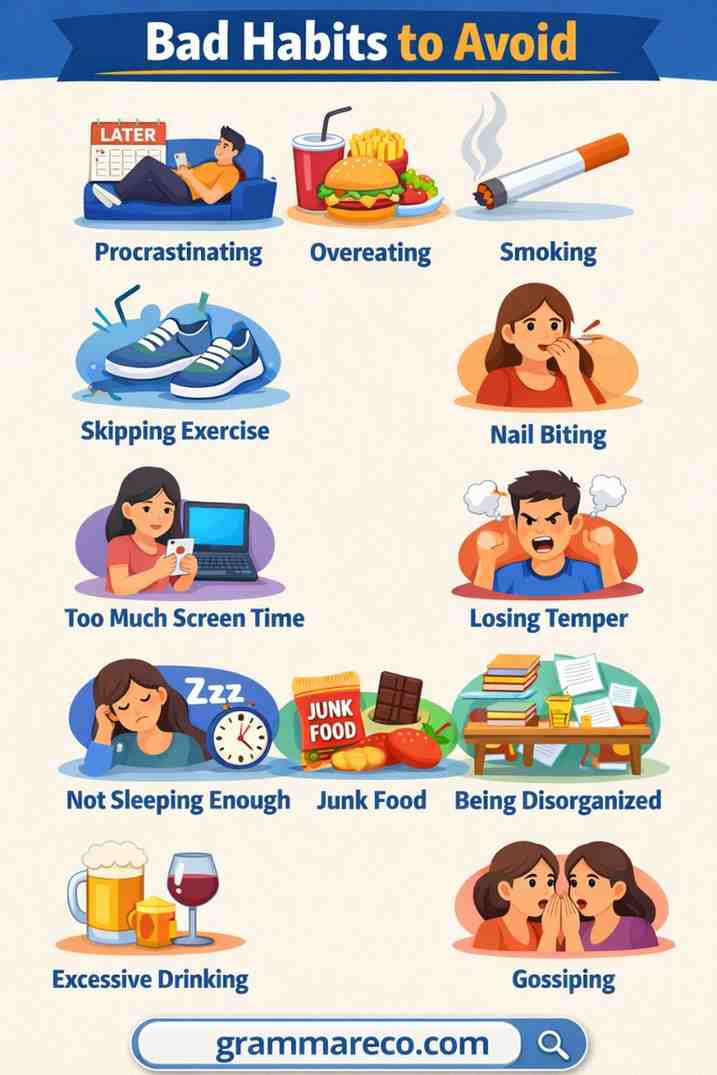
Examples of Bad Habits for Students
Students often struggle with habits that affect learning and focus. Common examples:
- Procrastinating on homework or assignments
- Skipping classes or lectures
- Not paying attention in class
- Overusing smartphones or social media
- Cramming instead of planning study schedule
- Lying about attendance or grades
- Copying homework or cheating in exams
- Overeating junk food during study hours
- Ignoring sleep schedule for gaming or TV
- Not organizing study materials
Negative Habit Examples for Adults
Adults face habits that impact health, career, and relationships:
- Overspending on unnecessary items
- Skipping exercise or healthy meals
- Drinking alcohol excessively
- Smoking or using substances
- Overworking and neglecting family
- Complaining or negative self-talk
- Procrastinating on bills or taxes
- Overusing gadgets and social media
- Being disorganized at home or work
- Avoiding responsibilities
Bad Habits Examples in Relationships
Relationships can suffer from habits that create misunderstandings and conflicts:
- Interrupting partner while talking
- Criticizing frequently
- Holding grudges or not forgiving
- Being dishonest or hiding information
- Overreacting emotionally
- Comparing partner to others
- Ignoring partner’s feelings
- Avoiding meaningful conversations
- Not spending quality time together
- Excessive jealousy
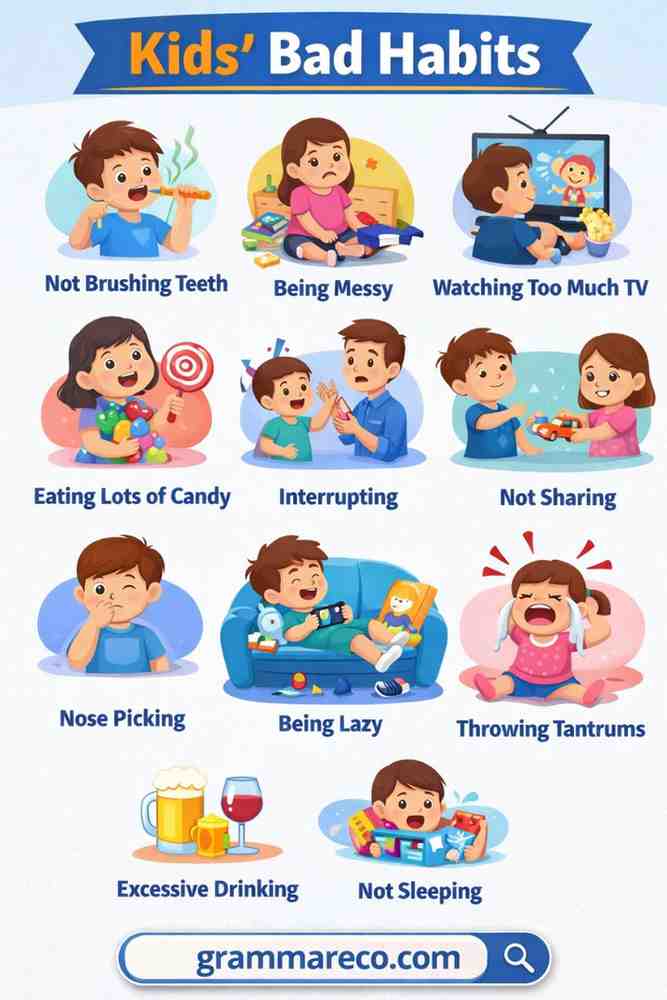
Bad Habit Examples for Kids
Kids may develop habits that affect learning, health, and social skills:
- Nail biting or hair pulling
- Skipping meals or unhealthy eating
- Not brushing teeth regularly
- Excessive screen time
- Interrupting teachers or peers
- Talking back or being disrespectful
- Avoiding homework or chores
- Lying or hiding things from parents
- Oversleeping or irregular sleep
- Being impatient or rude to friends
FAQs About Bad Habits
Common bad habits include procrastination, overeating, nail-biting, smoking, excessive phone use, interrupting, overspending, and skipping exercise, which can affect health and productivity.
Identify triggers, replace the habit with a positive action, and practice consistently every day until it becomes a routine.
They form through repetition, emotional triggers, stress, or lack of awareness, making them automatic over time.
Yes, even small habits like procrastination or poor posture can impact productivity, health, and relationships over time.
Plan study schedules, limit phone use, take breaks, and replace distractions with productive routines.
Read more