
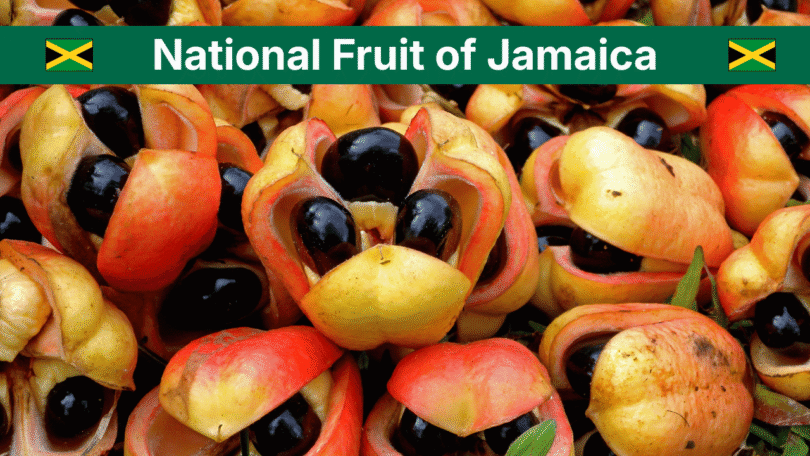
Jamaica national fruit is Ackee, a unique tropical fruit known for its rich cultural value and strict ripening requirements. Unlike most fruits, ackee can be dangerous if eaten unripe, which makes it both fascinating and risky. From traditional breakfast dishes to national identity, this fruit plays a central role in Jamaican life.
What is the national fruit of Jamaica
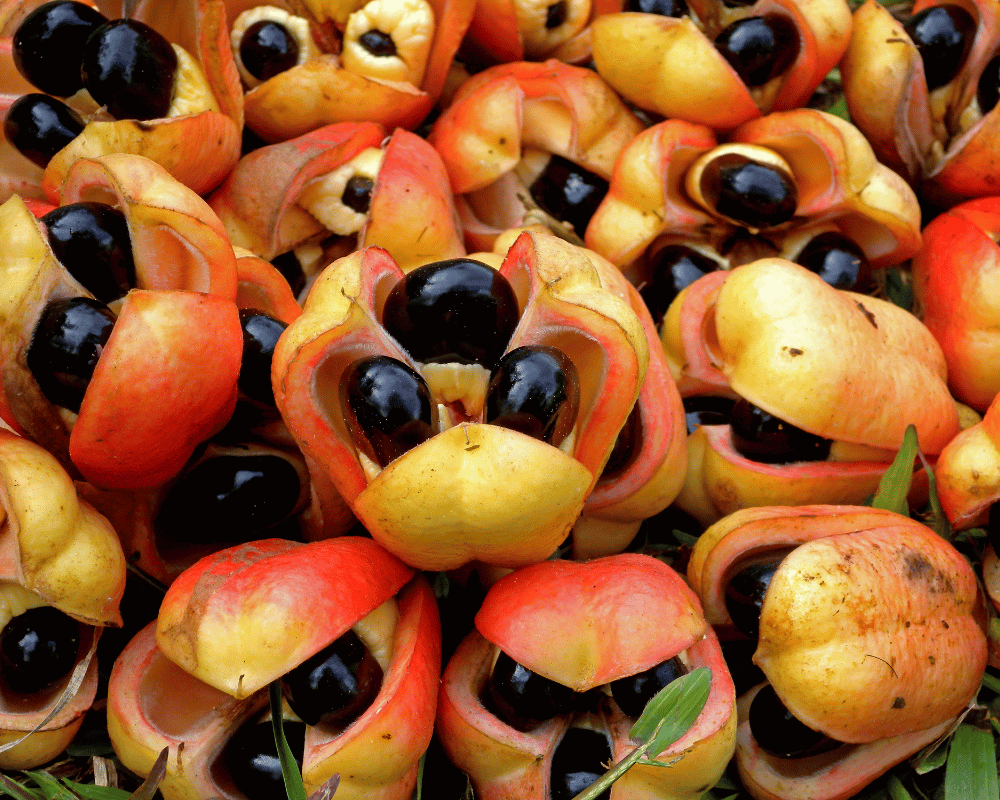
The Jamaica national fruit, ackee, is a tropical fruit known for its cultural value, culinary use, and unique ripening process in Caribbean cuisine. Curious how it shapes identity?
Ackee is officially recognized as Jamaica’s national fruit. It is widely used in local cooking and holds deep cultural meaning. The fruit grows on evergreen trees and becomes edible only when fully ripe and naturally opened. Its creamy texture and mild taste make it a staple in traditional meals.
Meaning of Ackee in Jamaican Culture
Ackee represents more than just food. It reflects heritage, resilience, and shared identity.
- Cultural continuity through recipes passed down generations
- Daily presence in Jamaican households
- Strong link to national pride and traditional cuisine
Its role in both everyday meals and cultural traditions makes it a powerful symbol.
Ackee fruit origin and background
Ackee originated in West Africa and later spread to the Caribbean, becoming central to Jamaican agriculture and food traditions. How did it travel so far?
This fruit was brought to Jamaica during the 18th century. It adapted well to the tropical climate. Over time, it became a key part of farming and daily diets. Its journey from Africa to the Caribbean makes it historically significant.
How ackee became a national symbol of Jamaica
Ackee gained national status through its cultural importance, widespread use, and symbolic role in Jamaican cuisine and identity. What made it stand out?
Its strong link with local dishes helped it gain recognition. The fruit became a daily food source and a cultural icon. Government acknowledgment and popular use in national meals elevated its status as a symbol of the country.
Ackee fruit characteristics
Ackee fruit features include texture, color, seeds, and ripening behavior that define its identity in tropical fruit categories. Let’s break them down clearly.
- Grows on tall evergreen trees
- Bright red or yellow outer skin
- Splits open naturally when ripe
- Creamy yellow flesh called arils
- Contains large black seeds
- Mild, buttery taste
- Must be fully ripe before eating
- Popular in Caribbean cooking
- Sensitive to improper preparation
Why ackee can be dangerous if eaten wrong
Ackee contains a natural toxin called hypoglycin A, which is present in unripe fruit. Consuming unripe ackee can lead to a condition known as Jamaican vomiting sickness, causing severe vomiting, low blood sugar, and in extreme cases, death.
The fruit becomes safe only when it naturally opens on the tree, signaling that toxin levels have dropped. Proper cleaning, removing seeds, and thorough cooking are essential steps before consumption.
Read more: Is Jamaica Ackee Fruit Poisonous
How to Eat Ackee?
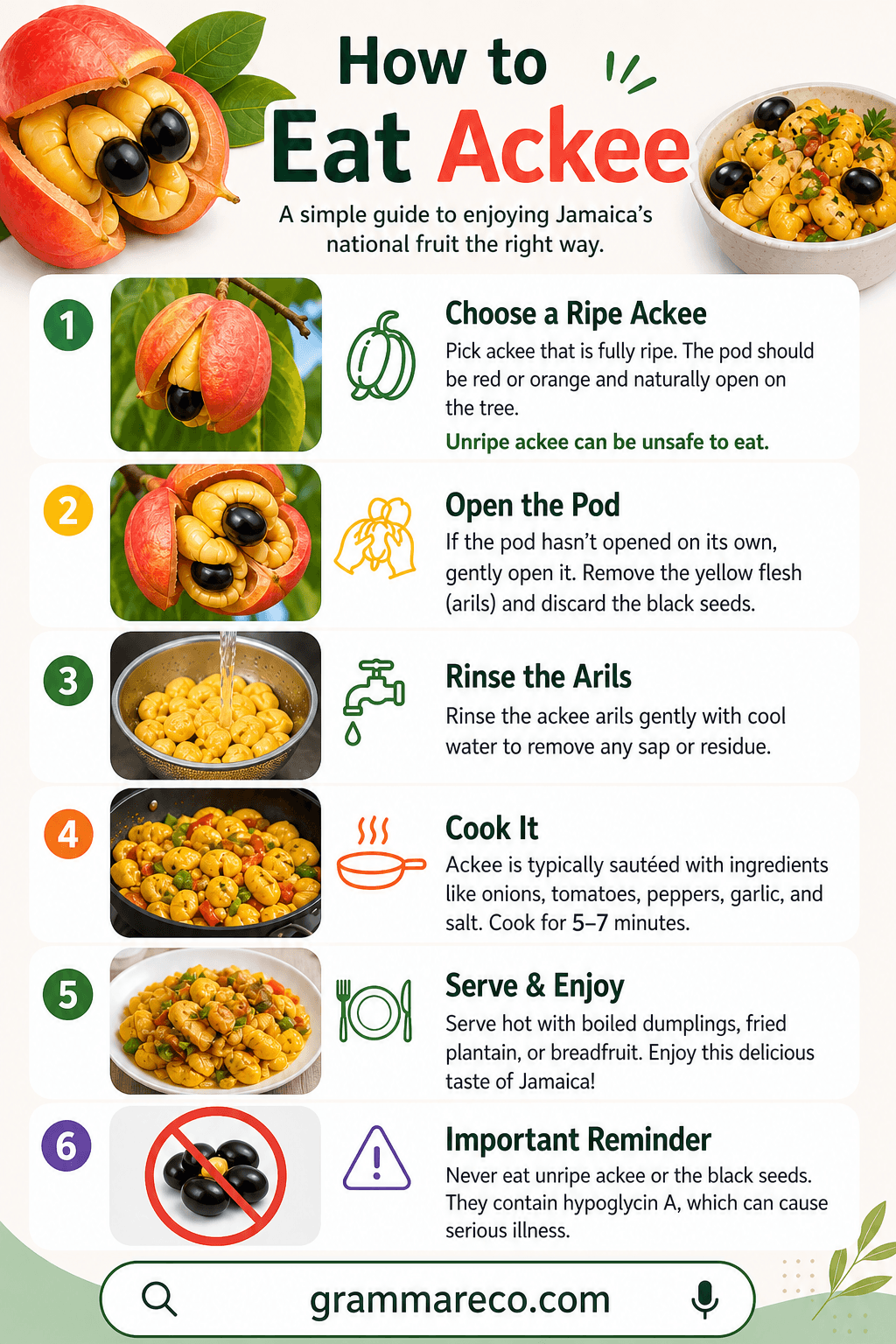
To safely eat Ackee:
- Use only fruit that has naturally opened on the tree
- Remove black seeds and inner membrane
- Wash the yellow arils thoroughly
- Boil first, then cook with other ingredients
- Never eat it raw or unripe
When prepared correctly, ackee is safe and commonly enjoyed in traditional meals in Jamaica.
Shape and Appearance of National Fruit of Jamaica Ackee
Ackee has a pear-shaped structure with vibrant outer skin and striking inner contrast, making it visually unique among exotic fruits. Notice its transformation?
The fruit looks like a small pouch when closed. As it ripens, it opens into three sections. Inside, the soft yellow flesh contrasts with shiny black seeds. This natural opening signals readiness for consumption.
Edible parts of the fruit
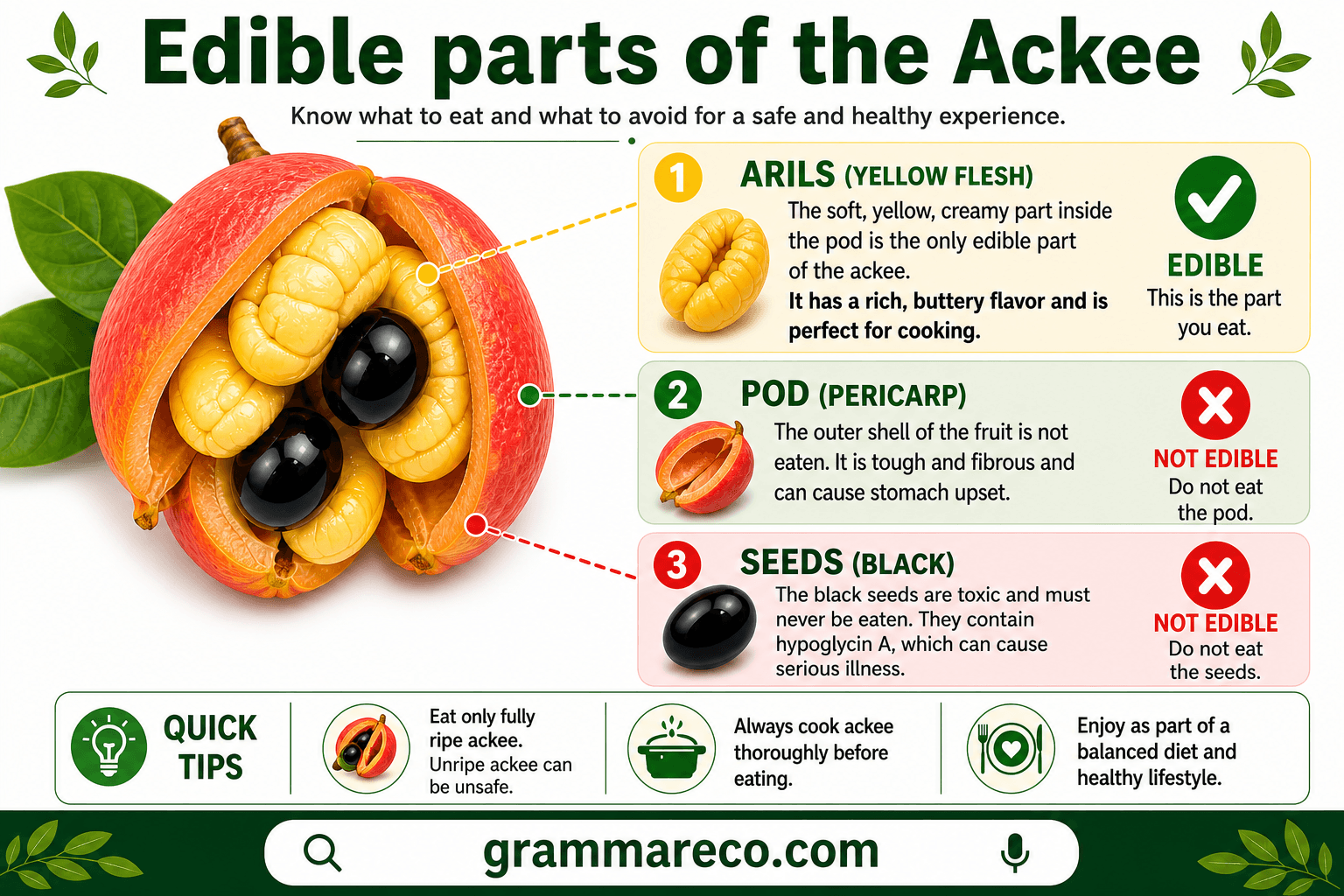
Only the soft yellow arils of ackee are edible, while seeds and unripe portions are unsafe for consumption. Why is this important?
The edible part is the fleshy aril. Seeds must always be removed. The fruit must open on its own before use. Proper cleaning and preparation ensure it is safe to eat.
Types of ackee fruit
Ackee varieties differ in size, shape, and texture, offering slight variations in culinary use and growth patterns. Want to explore these types?
Butter Ackee
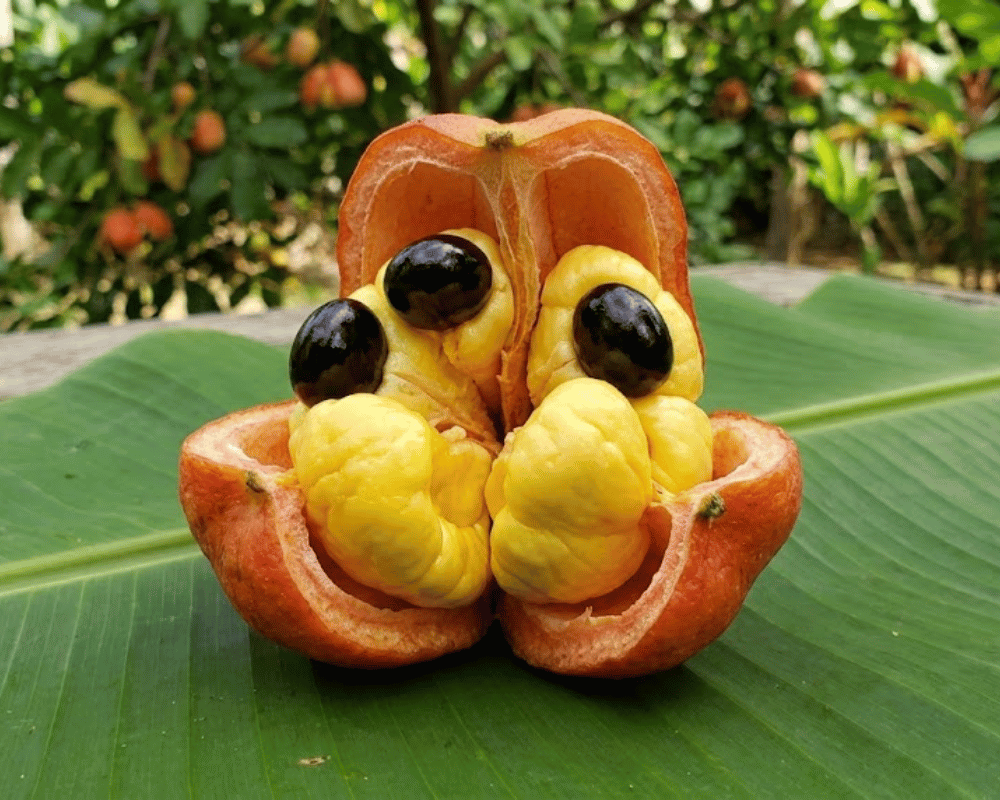
Soft texture and rich flavor make this type ideal for cooking. It is widely preferred for traditional meals due to its smooth consistency.
Cheese Ackee
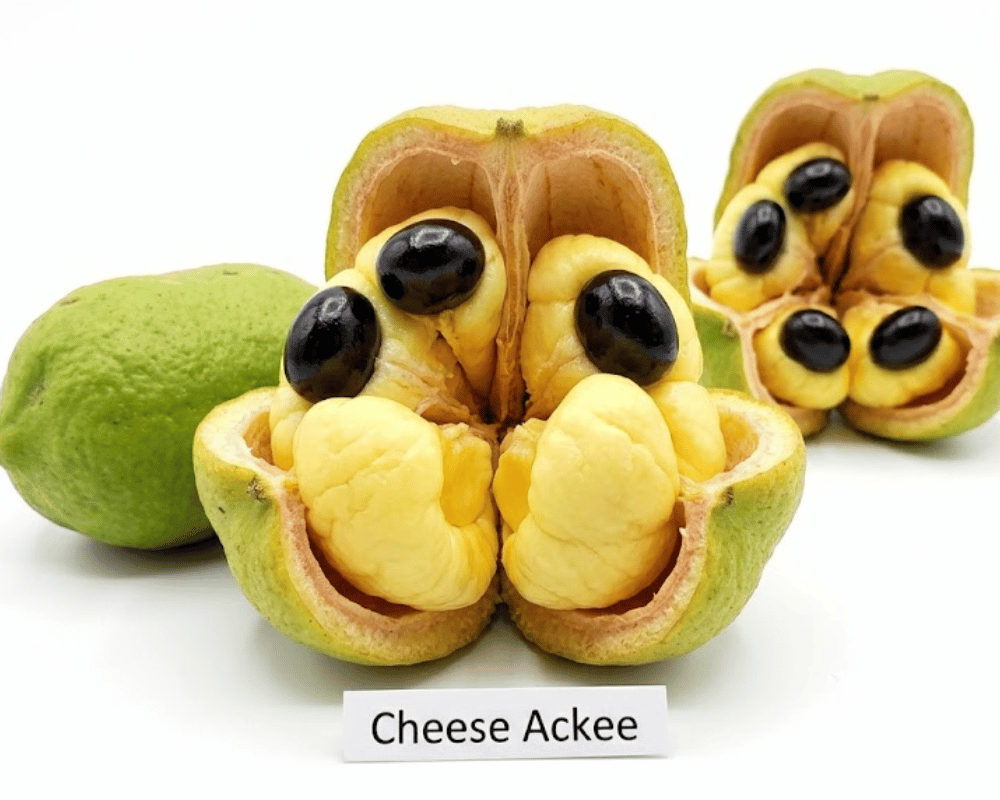
This variety is firmer and slightly rubbery. It holds shape better during cooking, making it useful in mixed dishes.
How ackee fruit is used in food
Ackee is widely used in Caribbean dishes, especially in traditional and everyday meals due to its mild flavor and creamy texture. Ready to taste its role?
Traditional Jamaican dishes
Definition: Ackee is a key ingredient in iconic Jamaican recipes, often paired with salted fish and spices for authentic flavor. What makes it unforgettable?
The most famous dish combines ackee with salted fish, onions, and peppers. It is served as a national breakfast. The fruit absorbs flavors well, creating a rich taste experience.
Everyday cooking uses
Ackee is used in daily cooking for simple meals, offering versatility in both savory and light dishes. How do locals enjoy it daily?
People add it to rice, vegetables, and side dishes. It can also be sautéed or lightly seasoned. Its adaptability makes it useful for quick home cooking.
Jamaican national fruit benefits
Ackee provides essential nutrients that support overall health when properly prepared and consumed in safe amounts. Want to see its value?
| Benefit | Explanation |
|---|---|
| Energy support | Contains healthy fats that help maintain energy levels throughout the day. |
| Heart health | Nutrients may support balanced cholesterol levels when eaten moderately. |
| Muscle function | Provides amino acids that assist in body repair and growth. |
| Skin nourishment | Natural compounds support healthy skin appearance. |
| Brain support | Contains nutrients linked to cognitive function. |
| Digestive balance | Light texture makes it easy to digest when cooked properly. |
Ackee offers nutritional value but must always be handled carefully. Proper ripening and cooking are essential for safe consumption.
FAQs about Jamaica National Fruit
Ackee is the official national fruit of Jamaica, widely used in traditional dishes and known for its cultural importance.
Yes, but only when fully ripe and naturally opened. Unripe ackee can be harmful if consumed.
It has a mild, buttery flavor with a soft texture, often compared to scrambled eggs in dishes.
It originated in West Africa before being introduced to the Caribbean.
Ackee with salted fish is the most well-known traditional Jamaican meal.
It represents culture, history, and daily life, making it a national symbol beyond food.
No, it must be properly cooked after ripening to ensure safety.
Read more