
Many fruits are called berries, yet plant science classifies them in different ways. The types of berries include fruits with seeds inside, though only some are true botanical berries. Blueberries, strawberries, and grapes belong to separate scientific groups.
This post helps you learn the names of kinds of berries with pictures and key facts. These terms support school lessons, cooking topics, gardening talks, and daily English use.
What Are Berries?
Berries are small, soft, and juicy fruits that usually have seeds inside. Examples include strawberries, blueberries, and raspberries. They are often eaten fresh, in desserts, or as juices. Berries are rich in vitamins, antioxidants, and fiber, making them healthy and easy to include in daily meals.
List of All Types of Berries with Names
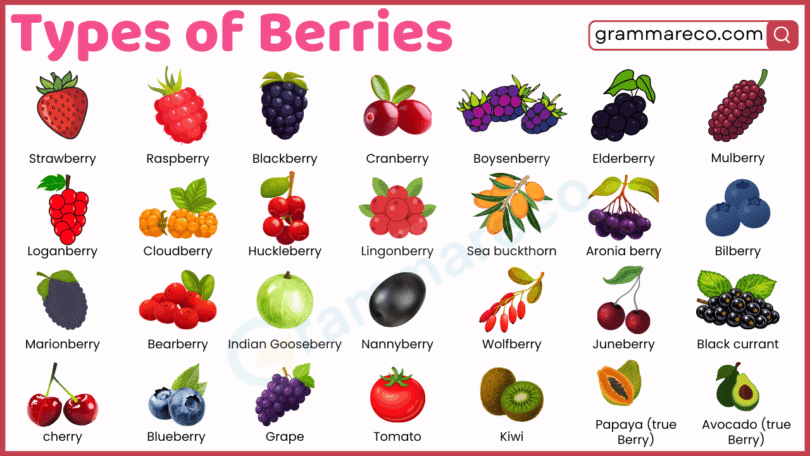
Types of berry list includes the most popular and healthy berries you can include in your diet. From strawberries to blackberries, this section helps you identify edible fruits safely while understanding their nutritional benefits.
- Strawberry
- Raspberry
- Blackberry
- Cranberry
- Boysenberry
- Elderberry
- Mulberry
- Loganberry
- Cloudberry
- Huckleberry
- Lingonberry
- Sea buckthorn
- Aronia berry (Chokeberry)
- Bilberry
- Marionberry
- Salmonberry
- Tayberry
- Wineberry
- Jostaberry
- Thimbleberry
- Dewberry
- Crowberry
- Chokecherry
- Honeyberry (Haskap)
- Indian Gooseberry (Amla)
- Nannyberry
- Olallieberry
- Saskatoon berry
- Wolfberry (Goji)
- Juneberry
- Red currant
- Black currant
- White currant
- Pin cherry
- Snowberry
- Oregon grape berry
- Creeping raspberry
- Coralberry
- Mahonia berry
- Bearberry
- Buffaloberry
- Wintergreen berry
- Pink currant
- White mulberry
- Red mulberry
- Black mulberry
- Red huckleberry
- Black huckleberry
- Vaccinium berry
Types of Berries and Pictures
Learn about berry types with their photos and information to gain detailed knowledge of each variety.
- Strawberry
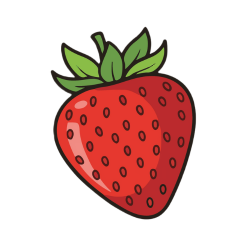
One of the popular kinds or berries, juicy, sweet red berries widely used in desserts, jams, and smoothies; rich in vitamin C and antioxidants.
- Raspberry
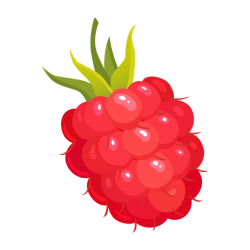
Soft, red or black berries with tart flavor; high in fiber and ideal for jams and smoothies.
- Blackberry
Deep purple-black berries, sweet and tart, commonly eaten fresh or in desserts and preserves.
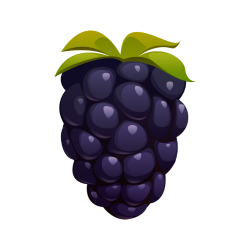
- Boysenberry
Large, dark purple berries, cross of raspberry and blackberry; sweet-tart flavor, excellent in pies.

- Elderberry
Tiny dark berries known for immune support; often cooked in syrups, jams, or teas.
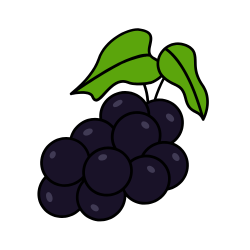
- Mulberry
Sweet, elongated berries ranging from white to dark purple; eaten fresh or in desserts.
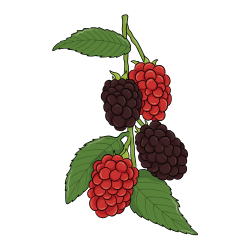
- Loganberry
Hybrid of raspberry and blackberry; dark red, tangy berries ideal for jams and pies.
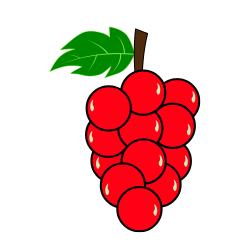
- Cloudberry
Golden-orange berries found in cooler climates; soft, tart taste; used in jams and preserves.
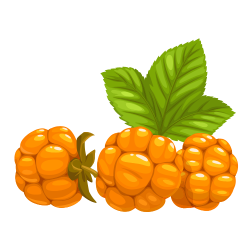
- Huckleberry
One of the popular kinds of berries, small and round, ranging from blue to black; sweet and flavorful, rich in antioxidants, and commonly eaten fresh or used in pies and desserts.
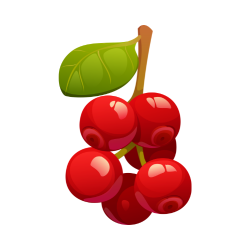
- Lingonberry
Red, tart berries native to northern regions; commonly used in sauces, jams, and Nordic dishes.
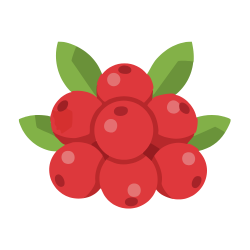
- Sea buckthorn
Bright orange berries rich in vitamin C; used in juices, oils, and dietary supplements.
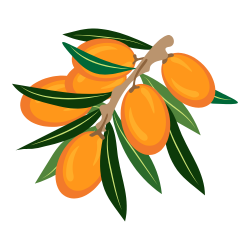
- Aronia berry (Chokeberry)
Dark purple berries with tart taste; packed with antioxidants, ideal for juices and health products.
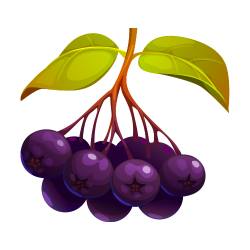
- Bilberry
Small dark berries similar to blueberries; supports vision health and used in jams or desserts.

- Marionberry
Sweet-tart blackberry variety from Oregon; excellent in pies, jams, and fresh consumption.
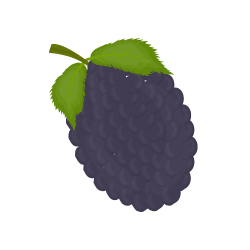
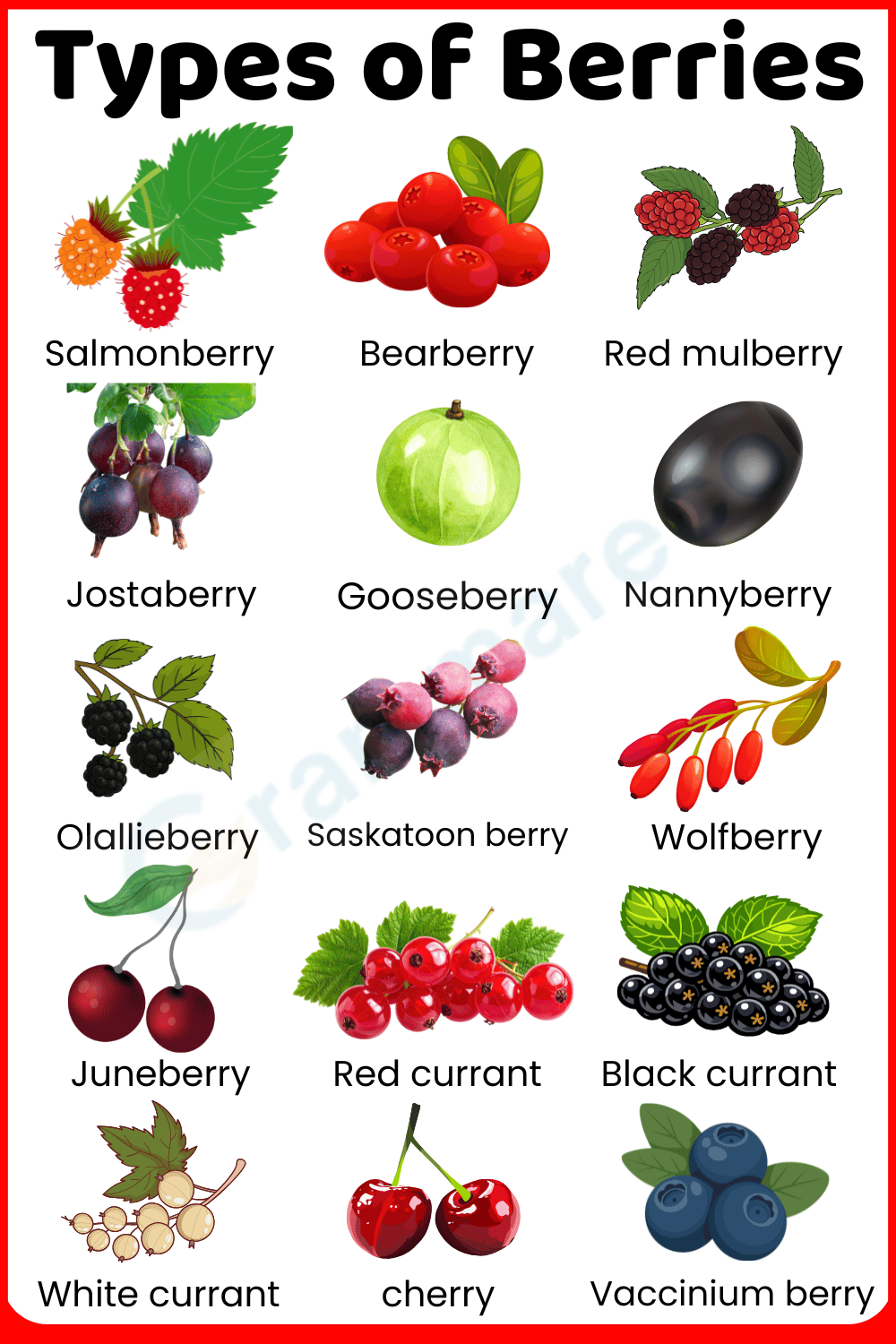
- Salmonberry
Orange-red berries native to Pacific Northwest; mild sweetness, eaten fresh or in preserves.
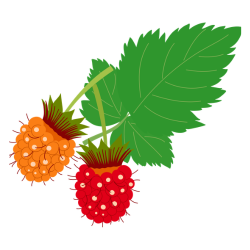
- Tayberry
Hybrid of raspberry and blackberry; elongated, dark red, juicy berries, great for jams and desserts.
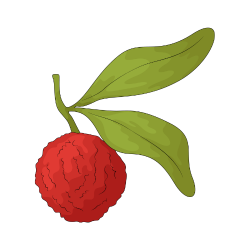
- Jostaberry
Hybrid of blackcurrant and gooseberry; dark, tart-sweet berries for jams and baking.
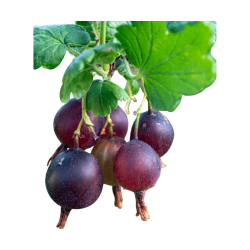
- Dewberry
Trailing blackberry species; dark, sweet berries used in pies, jams, and fresh eating.
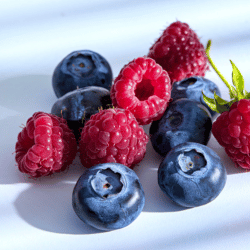
- Crowberry
Small black berries found in arctic regions; mildly sweet, used traditionally in preserves.
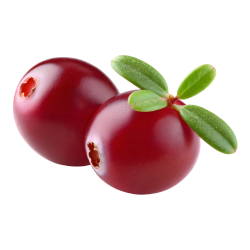
- Honeyberry (Haskap)
Blue-purple berries with sweet-tart taste; rich in antioxidants, ideal for fresh eating and baking.
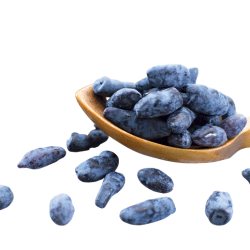
Berry Types with their Photos and Information
Below are types of berries list with photos and their information are given:
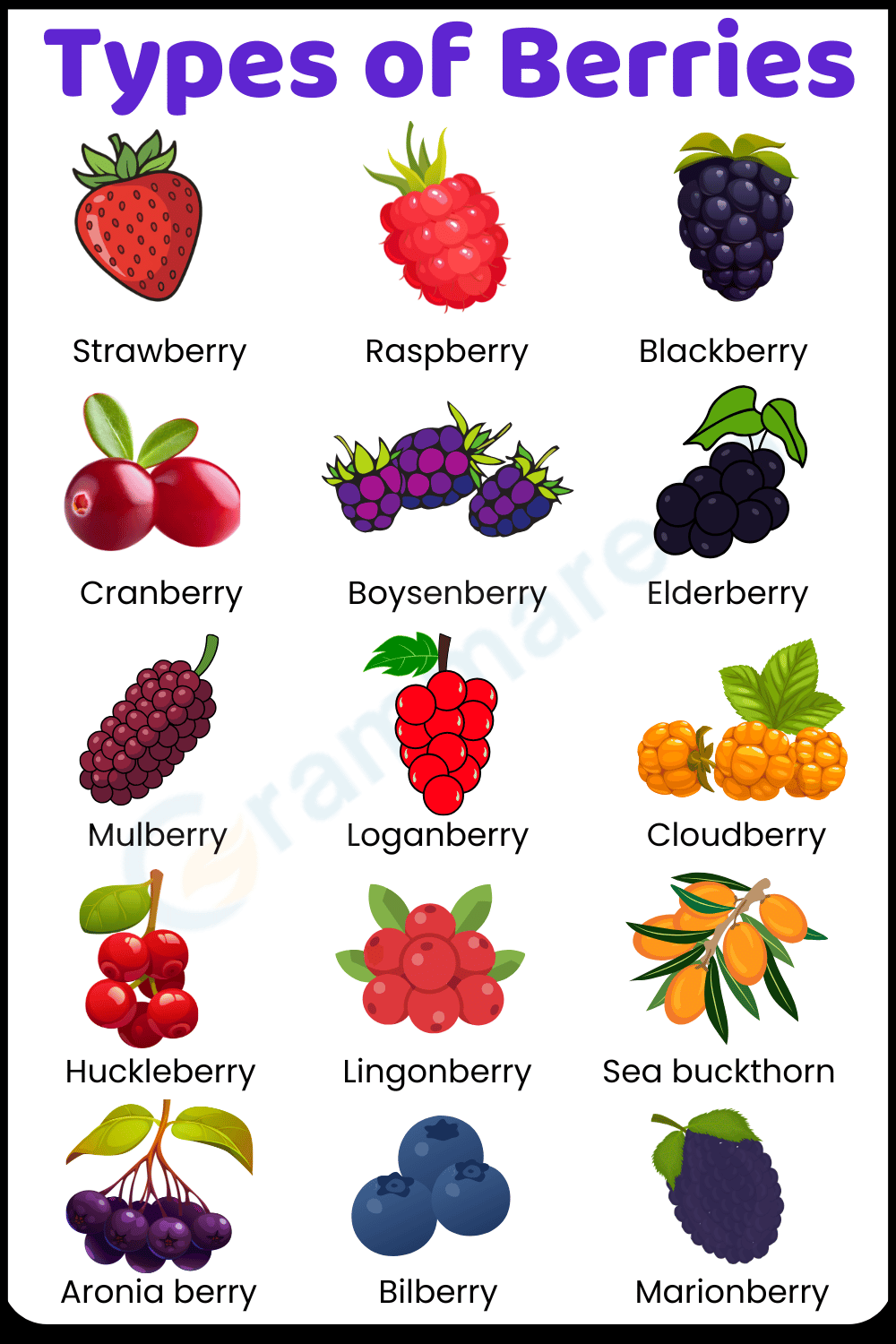
- Indian Gooseberry (Amla)
One of the types of berries, green, tangy berries rich in vitamin C; used in juices, pickles, and traditional Ayurvedic remedies.
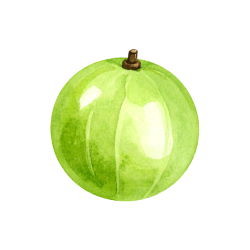
- Nannyberry
Dark purple berries from North American shrubs; mildly sweet, used in jams and preserves.

- Olallieberry
Hybrid of blackberry and loganberry; large, juicy berries, excellent in pies, jams, and desserts.
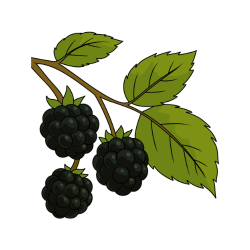
- Saskatoon berry
Sweet, dark purple berries native to Canada; eaten fresh or in pies, muffins, and preserves.
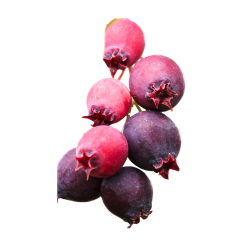
- Wolfberry (Goji)
Bright red berries known for antioxidant properties; consumed dried, in teas, and health foods.
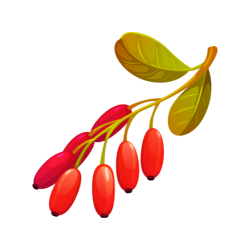
- Juneberry
Small, purple-red berries; sweet flavor, eaten fresh or baked in pies and jams.
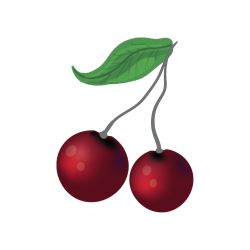
- Red Currant (Ribes rubrum)
Translucent red berries with tart flavor; ideal for jellies, sauces, and garnishes.
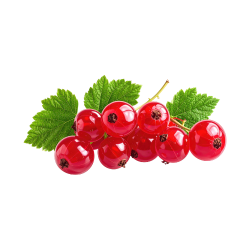
- Black Currant (Ribes nigrum)
Dark, nutrient-rich berries; tart taste, used in jams, juices, and health supplements.
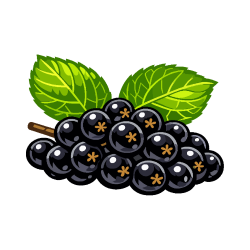
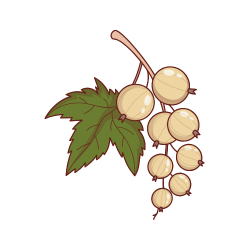
- White currant
Pale, sweet berries from currant shrubs; eaten fresh or in desserts and jams.
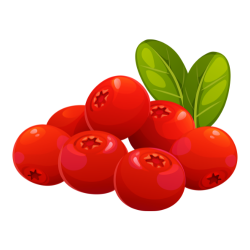
- Bearberry
Red berries from arctic shrubs; edible but bland, traditionally used in teas and preserves.
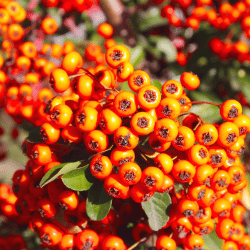
- Buffaloberry
Small red or yellow berries; tart taste, consumed fresh or processed into jams.
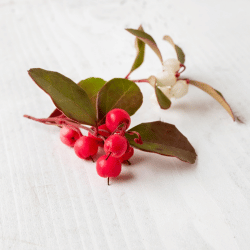
- Wintergreen berry
Bright red berries with minty flavor; eaten fresh, in teas, and flavor extracts.
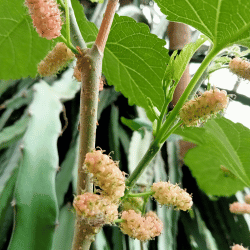
- White mulberry
Sweet, white to pale berries; eaten fresh or dried, used in desserts and teas.
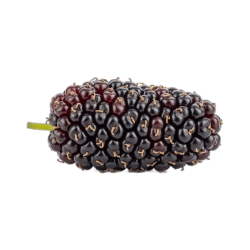
- Red mulberry
One of the popular types of berries, Reddish-purple berries; sweet flavor, consumed fresh or in jams and baked goods.
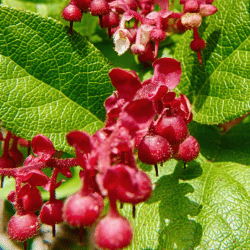
- Red huckleberry
Small red berries; tart-sweet flavor, eaten fresh or used in preserves and baking.
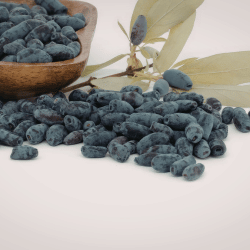
- Black huckleberry
Dark berries with rich flavor; high in antioxidants, ideal for jams, pies, and desserts.
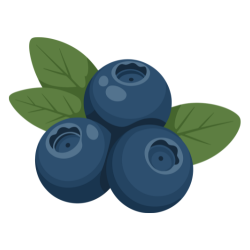
- Vaccinium berry
Berries from Vaccinium genus, including blueberries and cranberries; nutrient-rich and versatile in cooking.
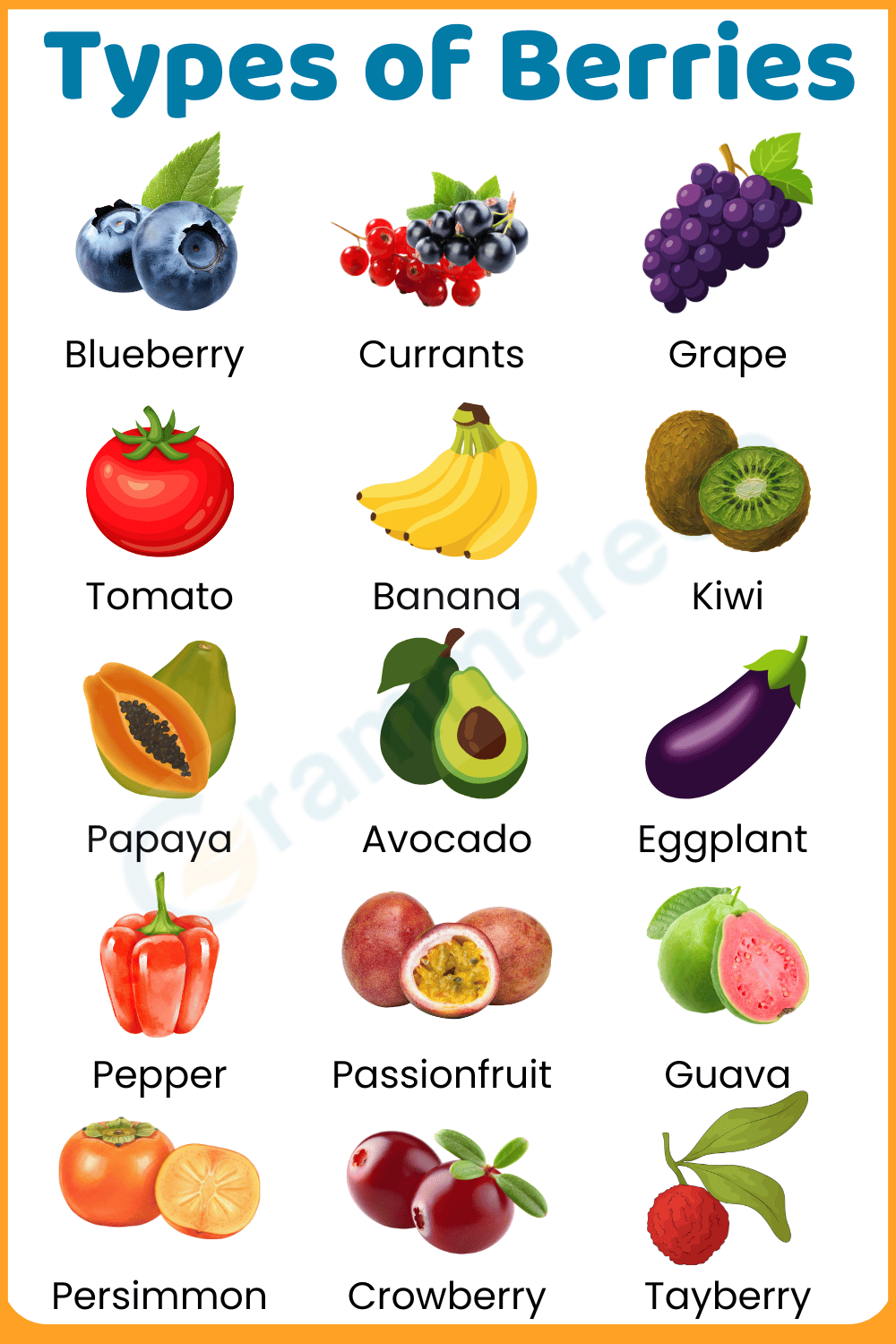
List of Botanical True Berries
Discover the list of botanical true berries and understand scientific classification. Identify fruits like grapes, tomatoes, and bananas while learning their unique botanical traits.
- Blueberry (Vaccinium spp.)
- Cranberry (Vaccinium macrocarpon)
- Currants (Red, Black, White – Ribes spp.)
- Gooseberry (Ribes uva-crispa)
- Grape (Vitis vinifera)
- Tomato (Solanum lycopersicum)
- Banana (Musa spp.)
- Kiwi (Actinidia deliciosa)
- Papaya (Carica papaya)
- Avocado (Persea americana)
- Eggplant / Aubergine (Solanum melongena)
- Pepper (Bell pepper, Chili – Capsicum spp.)
- Passionfruit (Passiflora edulis)
- Guava (Psidium guajava)
- Persimmon (Diospyros spp.)
True Berry Names and their Pictures
Learn to identify currants, guava, and kiwifruit for healthful and informed food choices. Below is a list of true berries with their pictures:
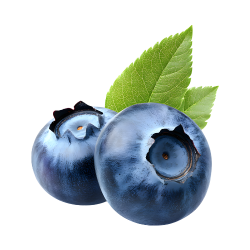
- Blueberry (Vaccinium spp.)
Small, round, edible fruits classified as true berries; sweet, nutrient-rich, often eaten fresh or in desserts.
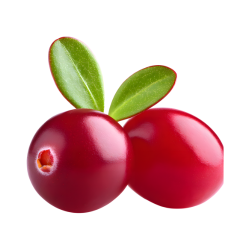
- Cranberry (Vaccinium macrocarpon)
Tart, red fruits; botanically true berries, used in juices, sauces, and dried snacks.
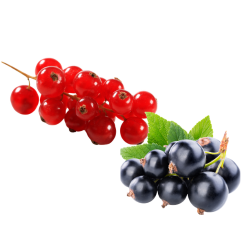
- Currants (Red, Black, White – Ribes spp.)
Tiny, clustered fruits; true berries botanically, eaten fresh, in jams, or baked goods.
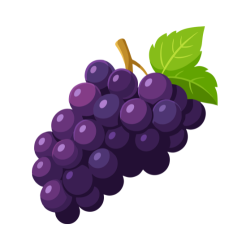
- Grape (Vitis vinifera)
Juicy, round fruits; true berries by botanical definition, consumed fresh, in wine, or dried as raisins.
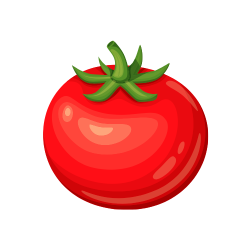
- Tomato (Solanum lycopersicum)
Red or yellow fleshy fruits; true berries botanically, widely used in cooking and salads.
- Banana (Musa spp.)
Elongated, seedless or tiny-seeded fruits; true berries botanically, eaten fresh or in smoothies.

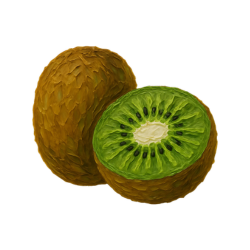
- Kiwi (Actinidia deliciosa)
Fuzzy-skinned fruits with green pulp; true berries botanically, sweet-tart and nutrient-dense.
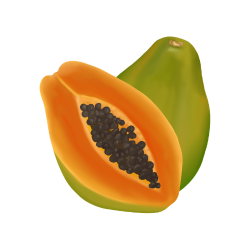
- Papaya (Carica papaya)
Large, tropical fruits with orange flesh; true berries botanically, rich in enzymes and vitamins.
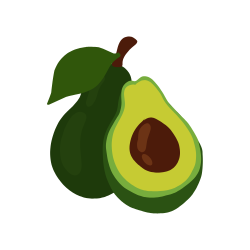
- Avocado (Persea americana)
Creamy, single-seeded fruits; classified as botanical berries, used in salads, spreads, and dips.
- Eggplant / Aubergine (Solanum melongena)
Oblong or round fruits; true berries botanically, commonly cooked in savory dishes.

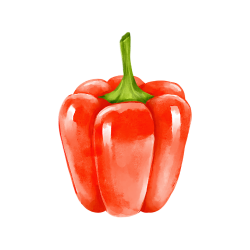
- Pepper (Bell pepper, Chili – Capsicum spp.)
Fleshy fruits with seeds; botanically true berries, used fresh, cooked, or dried as spices.
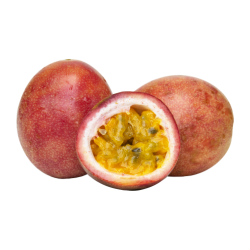
- Passionfruit (Passiflora edulis)
Round, tough-skinned fruits with juicy pulp; true berries botanically, eaten fresh or in juices.
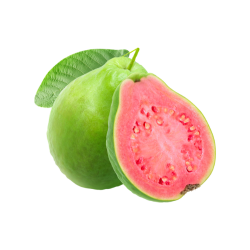
- Guava (Psidium guajava)
Sweet, tropical fruits; true berries botanically, eaten fresh, juiced, or in desserts.
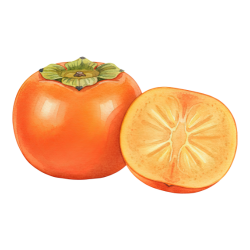
- Persimmon (Diospyros spp.)
Smooth, orange fruits; botanical true berries, sweet when ripe, eaten fresh or dried.
FAQs About Berries with Answers
Berries are fruits because they develop from flowers and contain seeds. Examples include strawberries, blueberries, and raspberries. They are naturally sweet and eaten fresh, in desserts, or as juice.
Common types of berries include strawberry, blueberry, raspberry, blackberry, cranberry, and gooseberry. Other examples are boysenberry, elderberry, and mulberry. These berries can be eaten fresh, in jams, desserts, or juices.
Some berries that grow on trees include mulberries, elderberries, and gooseberries. These fruits develop on branches rather than low shrubs and can be harvested when ripe. They are often used fresh, in jams, or for juice.
What are the names of 7 red berries?
Seven red berries include strawberry, raspberry, cranberry, red currant, goji berry, lingonberry, and chokeberry. These berries are commonly used in juices, jams, desserts, and healthy snacks because they are rich in vitamins and antioxidants.
A list of berries with pictures usually includes strawberry, blueberry, raspberry, blackberry, cranberry, gooseberry, mulberry, and elderberry. Each berry is shown with its image to help learners recognize shape, color, and size. Picture lists are useful for kids and beginners to identify berries easily.
Read more