

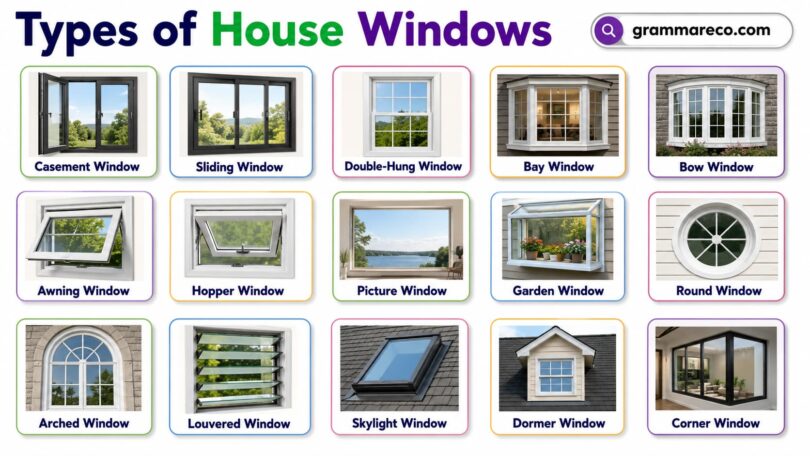
Choosing the right types of house windows can feel confusing because many designs look similar but open and work differently. Each window type has its own frame, sash, opening method, and purpose. Some provide better airflow, while others allow more daylight or wider outdoor views. Learning their names and features makes home design terms much easier to understand.
In this article, you’ll learn the different types of house windows with pictures, their uses, common window styles, important parts, and practical examples that help when discussing homes, construction, remodeling, or interior design.
What Are Types of House Windows?
House windows are different window designs made to suit specific home layouts, ventilation needs, lighting, and appearance. Each type opens in its own way or may remain fixed, making it suitable for different rooms and architectural styles.
Most Popular Types of House Windows and Pictures
Many homes use a mix of window styles instead of only one design. The window type often depends on airflow, outdoor views, available wall space, and the room’s purpose. Below are the most common types of house windows that you’ll often notice in modern and traditional homes.
Single-Hung Window
A single-hung window has two sashes, but only the bottom sash moves upward while the top sash stays fixed. It is one of the oldest and most common residential window designs. Its straightforward structure makes cleaning and maintenance relatively easy.
Commonly Uses at:
Single-hung windows are commonly installed in bedrooms, living rooms, hallways, and entry-level homes. They work well where space outside the home is limited and provide dependable ventilation through the lower opening.
Double-Hung Window
A double-hung window has two movable sashes that slide vertically within the frame. Both the upper and lower sashes can open, giving better control over fresh air circulation. Many models also tilt inward for easier cleaning.
Commonly Uses at:
Double-hung windows are widely used in bedrooms, kitchens, bathrooms, family rooms, and traditional houses. They suit homes that need flexible airflow and convenient maintenance from inside the room.
Sliding Window
A sliding window opens by moving one or more sashes horizontally along built-in tracks. It has a wide, low profile and operates smoothly without swinging inward or outward. The design creates broad outdoor views with minimal effort.
Commonly Uses at:
Sliding windows are often installed in living rooms, kitchens, patios, and modern homes. They fit areas with limited exterior space and provide excellent side-to-side ventilation.
Casement Window
A casement window is hinged along one side and swings outward like a door using a crank or handle. It seals tightly when closed, helping improve energy efficiency. Its full opening allows plenty of fresh air inside.
Commonly Uses at:
Casement windows are commonly used in kitchens, bathrooms, bedrooms, and hard-to-reach places above sinks. They are ideal where maximum ventilation and easy operation are important.
Awning Window
An awning window is hinged at the top and opens outward from the bottom. The raised glass creates a small cover that helps keep light rain outside while allowing fresh air to enter. Its compact design suits many home styles.
Commonly Uses at:
Awning windows are frequently placed in bathrooms, basements, kitchens, and above larger windows. They provide ventilation even during mild rainy weather.
Hopper Window
A hopper window is hinged at the bottom and opens inward from the top. Its inward-opening design provides controlled airflow while fitting smaller wall spaces. The tight seal also helps reduce drafts when closed.
Commonly Uses at:
Hopper windows are commonly found in basements, laundry rooms, utility rooms, and small bathrooms. They work well in lower-level spaces where outward-opening windows are not practical.
Fixed Window
A fixed window does not open because its glass remains permanently secured inside the frame. It is designed to maximize daylight, outdoor views, and energy efficiency without ventilation. The simple construction also reduces moving parts.
Commonly Uses at:
Fixed types of house windows are commonly installed in stairwells, living rooms, entryways, and high walls. They brighten indoor spaces while framing attractive outdoor scenery.
Picture Window
A picture window is a large fixed window designed to provide an uninterrupted outdoor view. It usually has a single pane or multiple panes without opening sections. Its broad glass area allows abundant natural light into the home.
Commonly Uses at:
Picture windows are popular in living rooms, dining rooms, and homes overlooking gardens, lakes, mountains, or landscaped yards. They highlight scenery while making interior spaces feel more open.
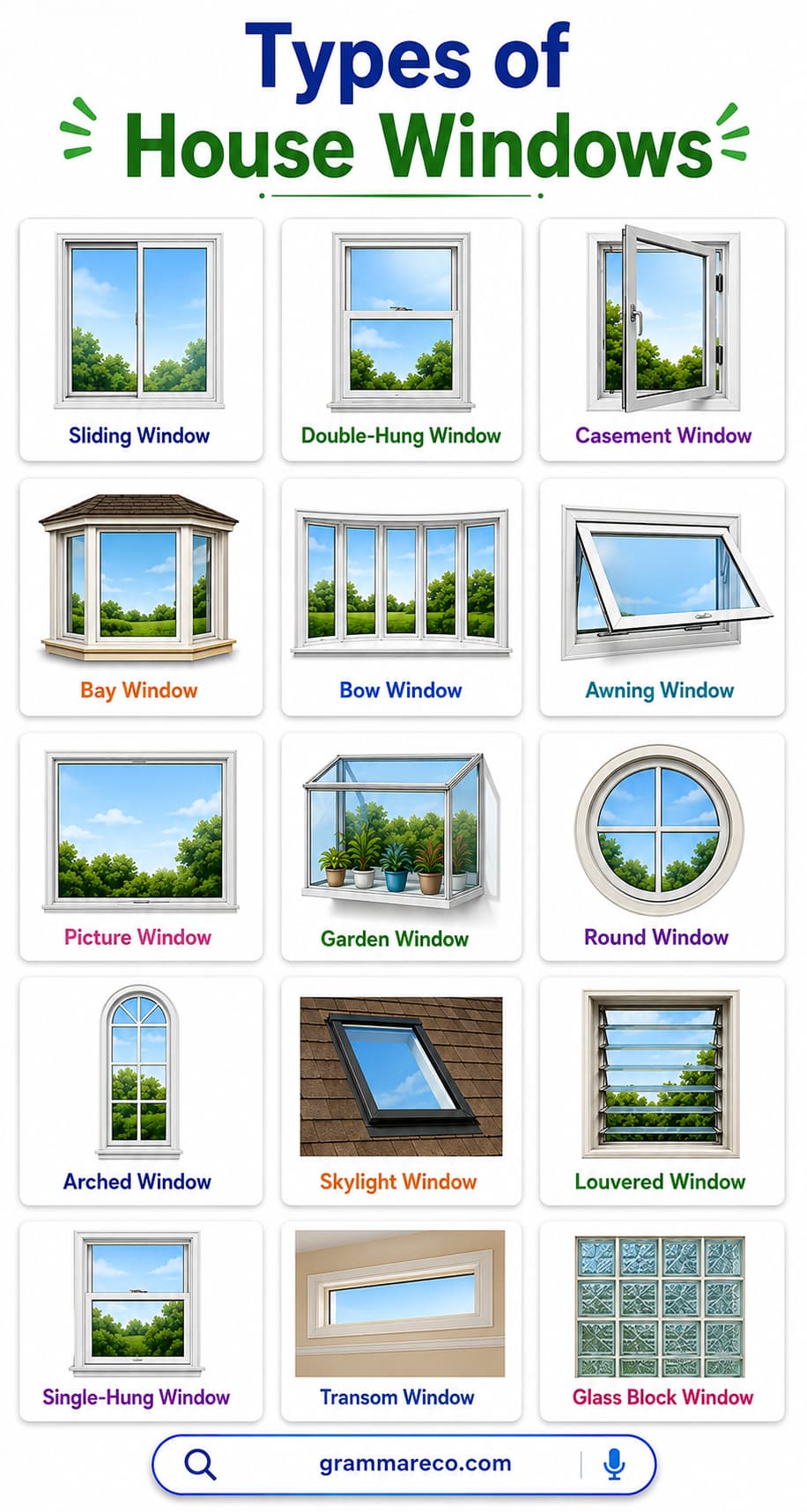
Modern Window Styles for Homes
Modern window styles for homes combine appearance with practical function. Some extend outward for extra space, while others bring more daylight into upper areas of a home. Below are modern types of house windows commonly used in contemporary and custom home designs.
Bay Window
A bay window projects outward from the exterior wall using three window panels. The center section is usually fixed, while the side windows often open for ventilation. Its angled design creates additional interior space and wider outdoor views.
Commonly Uses at:
Bay windows are commonly installed in living rooms, dining rooms, and reading areas. They create a cozy seating nook, allow more natural light, and make rooms feel larger.
Bow Window
A bow window extends outward using four or more connected window panels that form a gentle curve. Unlike a bay window, its rounded shape creates a softer architectural appearance. The design allows light to enter from several directions.
Commonly Uses at:
Bow windows are popular in large living rooms, front-facing rooms, and elegant home exteriors. They add character while providing broad panoramic views and increased daylight.
Garden Window
A garden window projects outward from the wall with glass on the front, sides, and top. It forms a small shelf-like space that receives sunlight throughout the day. Many models include side vents for fresh air.
Commonly Uses at:
Garden windows are most often installed above kitchen sinks. Homeowners use them for herbs, small flowers, decorative plants, and indoor gardening while enjoying extra sunlight.
Corner Window
A corner window wraps around the outside corner of a building where two walls meet. It may use one continuous glass panel or separate panes joined with minimal framing. This design opens views in two directions.
Commonly Uses at:
Corner windows are commonly used in modern homes, living rooms, home offices, and bedrooms. They create a bright interior while giving a wider view of the surrounding landscape.
Clerestory Window
A clerestory window is placed high on a wall, usually near the roofline. It allows sunlight to enter without reducing wall space for furniture or decorations. Many clerestory windows remain fixed, although some can open.
Commonly Uses at:
Clerestory windows are often installed in living rooms, hallways, churches, gyms, and homes with high ceilings. They brighten interior spaces while maintaining privacy.
Skylight Window
A skylight window is installed directly into the roof to bring daylight from above. It may be fixed or operable depending on the home’s ventilation needs. The overhead placement creates a bright and open feeling indoors.
Commonly Uses at:
Skylight windows are commonly found in bathrooms, kitchens, hallways, lofts, and rooms with limited wall windows. They increase natural light throughout the day.
Roof Window
A roof window is mounted within a sloped roof and is designed to open for ventilation. Unlike many skylights, it is usually within reach and can be operated manually or electronically. It also provides emergency escape in some attic rooms.
Commonly Uses at:
Roof windows are widely used in attics, loft conversions, upper-floor bedrooms, and bonus rooms. They improve airflow while allowing occupants to enjoy sky views and fresh outdoor air.
Types of Home Windows by Opening Style
The way a window opens affects airflow, convenience, and available space. Some designs rotate, tilt, or fold instead of sliding or swinging. Below are common opening styles used in many modern homes.
Pivot Window
A pivot window rotates around a central hinge instead of opening from one side or the top. The sash turns on a vertical or horizontal pivot, creating a distinctive appearance and balanced movement. Its design allows large glass panels to open smoothly.
Commonly Uses at:
Pivot windows are commonly used in modern homes, offices, and contemporary living spaces. They provide excellent ventilation while adding a unique architectural feature to large window openings.
Tilt and Turn Window
A tilt and turn window uses special hardware that allows two opening positions. It tilts inward from the top for gentle ventilation or swings inward from the side for full access. This dual-function design offers flexibility and a tight weather seal.
Commonly Uses at:
Tilt and turn windows are popular in bedrooms, kitchens, apartments, and energy-efficient homes. They make cleaning easier and provide safe ventilation without fully opening the window.
Folding Window
A folding window consists of multiple panels connected by hinges that fold neatly to one side. The panels slide along a track while stacking together when opened. This creates a wide opening with minimal obstruction.
Commonly Uses at:
Folding windows are often installed between kitchens and patios, outdoor dining areas, entertainment spaces, and serving counters. They connect indoor and outdoor areas while allowing maximum airflow.
Decorative Types of House Windows Designs
Decorative windows add architectural style while still providing daylight. Many of these windows become focal points because of their unique shapes or classic designs. Below are popular decorative window styles used in homes.
Arched Window
An arched window has a curved top instead of a straight horizontal edge. The graceful arch creates a traditional or elegant appearance while allowing natural light inside. It may be fixed or combined with other operable windows.
Commonly Uses at:
Arched windows are commonly installed above entry doors, living rooms, hallways, and large front-facing windows. They add character while complementing classic and Mediterranean-style homes.
Round Window
A round window is circular in shape and often called a porthole-style window. It usually remains fixed, although some versions can open for ventilation. Its compact design creates a decorative architectural feature.
Commonly Uses at:
Round windows are commonly used in bathrooms, stairwells, hallways, coastal homes, and attic spaces. They introduce daylight while creating a distinctive exterior appearance.
Palladian Window
A Palladian window features a large arched center window with two smaller rectangular windows on each side. Inspired by classical architecture, it creates a balanced and elegant appearance. The center section is often fixed while the side sections may open.
Commonly Uses at:
Palladian windows are frequently installed in entryways, living rooms, and luxury homes with tall ceilings. They allow abundant daylight while creating a formal architectural statement.
Transom Window
A transom window is a narrow window placed above a door or another larger window. It may be fixed or operable depending on the design. Its elevated position allows additional daylight and, in some cases, extra ventilation.
Commonly Uses at:
Transom windows are commonly found above front doors, interior doorways, patios, and large windows. They brighten interior spaces without reducing privacy.
Types of Windows for Home Used for Large Openings
Large window openings create brighter interiors and stronger connections between indoor and outdoor spaces. These window styles are designed to span wide areas while remaining functional and attractive.
French Window
A French window has two glass panels that open outward or inward from the center like double doors. Large glass sections provide wide views and generous natural light. Many designs extend from floor to ceiling.
Commonly Uses at:
French windows are commonly installed in living rooms, patios, balconies, and garden-facing spaces. They provide easy outdoor access while making rooms feel more open and spacious.
Multi-Slide Window
A multi-slide window contains several glass panels that slide smoothly along parallel tracks. The panels stack or disappear into a wall pocket, creating a very wide opening. Its sleek design suits modern architecture.
Commonly Uses at:
Multi-slide windows are often used in luxury homes, patios, family rooms, and outdoor entertainment areas. They create seamless transitions between indoor and outdoor living spaces.
Pass-Through Window
A pass-through window is designed to create an opening between an indoor room and an outdoor space. Many models slide or fold open completely for convenient serving. The design improves accessibility across the opening.
Commonly Uses at:
Pass-through windows are commonly installed between kitchens and patios, decks, outdoor bars, and backyard dining areas. They make serving food and drinks faster while increasing ventilation.
Energy-Efficient Window Options
Energy-efficient windows reduce unwanted heat transfer while helping maintain a comfortable indoor temperature. Special glazing and insulated glass improve performance in different climates. Below are two common energy-saving window options used in homes.
Double-Glazed Window
A double-glazed window contains two panes of glass separated by a sealed layer of air or insulating gas. The gap reduces heat transfer, outside noise, and condensation. This design improves comfort without changing the window’s appearance.
Commonly Uses at:
Double-glazed windows are commonly installed in bedrooms, living rooms, offices, and energy-efficient homes. They help lower heating and cooling costs while providing better indoor comfort throughout the year.
Triple-Glazed Window
A triple-glazed window uses three panes of glass with insulated spaces between them. The additional glass layer offers greater thermal performance and improved sound reduction. It is designed for homes requiring higher energy efficiency.
Commonly Uses at:
Triple-glazed windows are often used in cold climates, passive homes, luxury residences, and quiet indoor spaces. They improve insulation while reducing outside noise and increasing year-round comfort.
Window Parts You Should Know
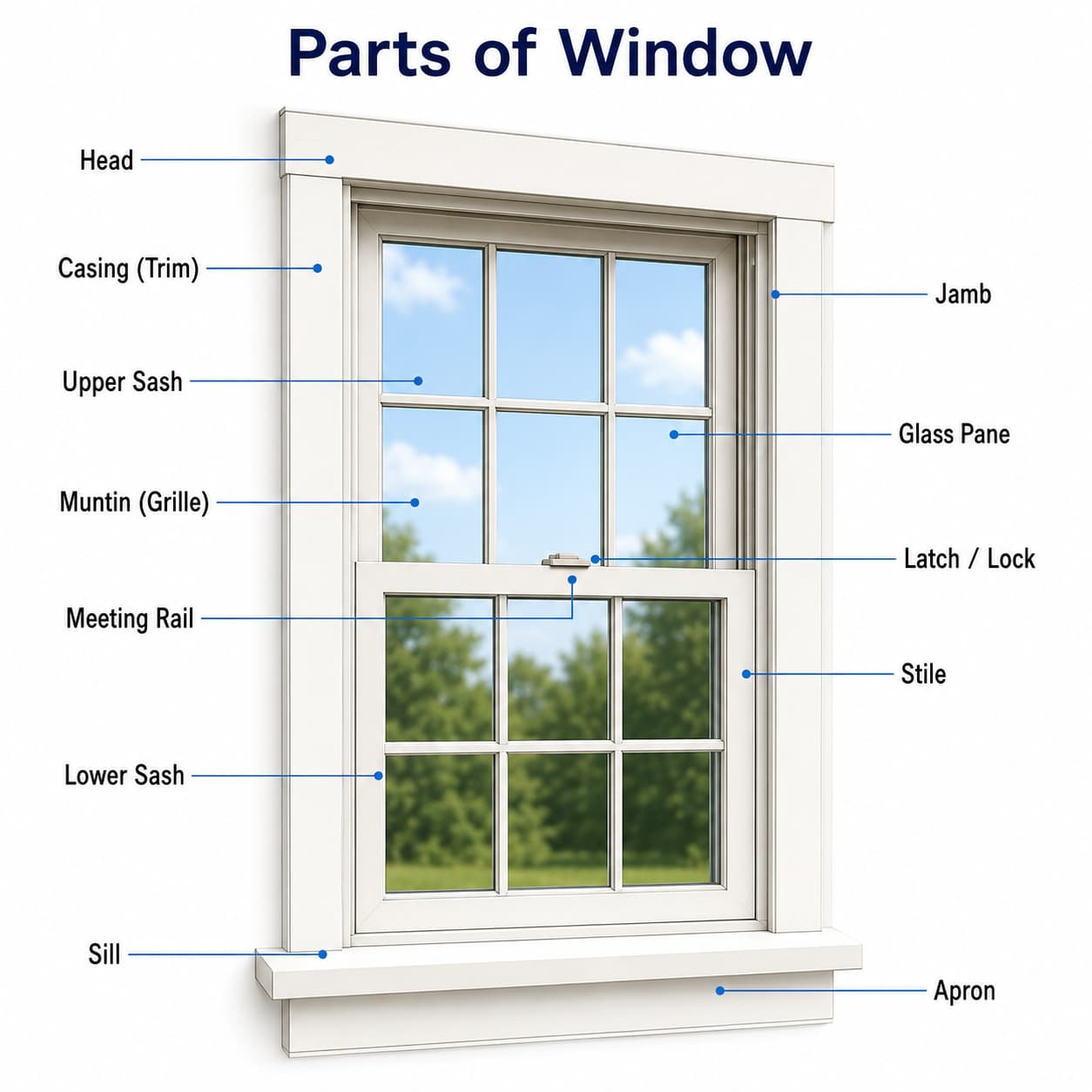
Knowing the basic parts of a window makes it easier to understand window designs, repairs, and installation terms. Below are the main window components used in most residential windows.
- Frame: The outer structure that holds the entire window assembly securely within the wall opening.
- Sash: The movable or fixed section that supports and holds the glass pane inside the window.
- Glass Pane: The transparent sheet of glass that allows daylight and outdoor views through the window.
- Muntins: Narrow strips that divide glass into smaller decorative sections or separate individual panes.
- Mullion: A vertical or horizontal support that joins two or more window units together.
- Head: The top horizontal section of the window frame that supports the overall structure.
- Sill: The bottom horizontal part of the frame that supports the window and directs water away.
- Jamb: The vertical sides of the frame that support the sash and other window components.
- Meeting Rail: The horizontal rails where the upper and lower sashes meet when the window is closed.
- Lock: The hardware that secures the window in the closed position for safety and security.
- Handle: The part used to open, close, or operate different window styles comfortably.
- Hinges: Metal fittings that allow windows such as casement or awning styles to swing open.
- Weatherstripping: Flexible sealing material that blocks air leaks, dust, moisture, and drafts around the sash.
- Screen: A fine mesh panel that allows fresh air inside while keeping insects outside.
- Glazing: The glass installation system that seals the pane securely within the window frame.
- Track: The channel that guides sliding windows as they move from side to side.
- Trim: Decorative finishing pieces installed around the window frame to improve appearance and cover gaps.
How to Choose the Right House Window
Selecting the right window depends on your home’s design, lighting needs, ventilation, energy efficiency, and available wall space. Keep these points in mind before making a decision.
- Choose a window style that matches your home’s architecture.
- Consider how much natural light each room needs.
- Select an opening style that fits the available space.
- Compare ventilation options before choosing a design.
- Look for energy-efficient glazing in different climates.
- Pick durable frame materials for long-term performance.
- Think about maintenance requirements before installation.
- Consider privacy for bathrooms and street-facing rooms.
- Match decorative window styles with the home’s exterior.
- Compare warranties and energy performance ratings before buying.
Example Sentences Using Window Names
These examples show how different window names are naturally used when talking about homes and home improvement.
- We replaced the single-hung window in the guest bedroom.
- The double-hung window lets fresh air enter from both sashes.
- Our sliding window opens smoothly toward the patio.
- She opened the casement window to cool the kitchen.
- A hopper window keeps the basement well ventilated.
- The fixed window frames the mountain view beautifully.
- Their picture window fills the living room with daylight.
- The bay window became our favorite reading corner.
- A bow window gives the front room a graceful appearance.
- Fresh herbs grow inside the garden window above the sink.
- The corner window provides views in two directions.
- Sunlight enters through the clerestory window every morning.
- The skylight window brightens the hallway naturally.
- The roof window brings fresh air into the attic.
- A pivot window adds a modern touch to the office.
- The tilt and turn window is easy to clean.
- The folding window opens completely for outdoor parties.
- An arched window makes the entrance look elegant.
- The round window adds character to the staircase.
- The multi-slide window creates one large opening.
- The double-glazed window helps reduce outside noise.
FAQs About Windows in a House
The double-hung window is one of the most common house windows. Both sashes move up and down, making it suitable for bedrooms, living rooms, kitchens, and many traditional homes.
Casement windows usually provide the best ventilation because the entire sash opens outward. Double-hung, awning, and tilt and turn windows also allow good airflow in different situations.
A bay window typically has three panels with angled sides. A bow window uses four or more connected panels to create a smooth curved appearance and a wider outdoor view.
Yes. Double-glazed windows provide better insulation, reduce outside noise, and help lower heating and cooling costs compared with traditional single-pane windows.
Triple-glazed windows, double-glazed windows, and well-sealed casement windows are among the most energy-efficient choices because they reduce heat transfer and improve indoor comfort.
Read more