
Ever wondered how quickly kids can learn counting from 1 to 100 with the right method? Understanding numbers, number names, and basic counting skills builds strong math confidence early. This simple guide explains everything step by step using easy words and clear patterns.
Ready to explore fun counting techniques and master numbers smoothly? Let’s begin the journey together.
What are Numbers and How to Count them?
Numbers are symbols used in mathematics to represent quantity, order, and measurement. Learning counting helps children understand sequences, basic math skills, and number recognition. Clear examples make this concept easier and more engaging, so let’s explore simple meanings below.
- Number:
- Represents quantity
- Used in counting objects
- Counting:
- Telling numbers in order
- Helps track amounts
- Digit:
- Single symbol (0–9)
- Forms larger values
- Sequence:
- Numbers arranged in order
- Follows a pattern
- Total:
- Final counted amount
- Shows complete quantity
Want to learn how to say these numbers correctly? Let’s move to spelling and pronunciation.
Counting Numbers 1 to 100 with Spelling and Pronunciation
Understanding spelling and pronunciation improves reading skills and number fluency. This section breaks numbers into groups for easy learning and better retention. Explore each range carefully to master number names with confidence.
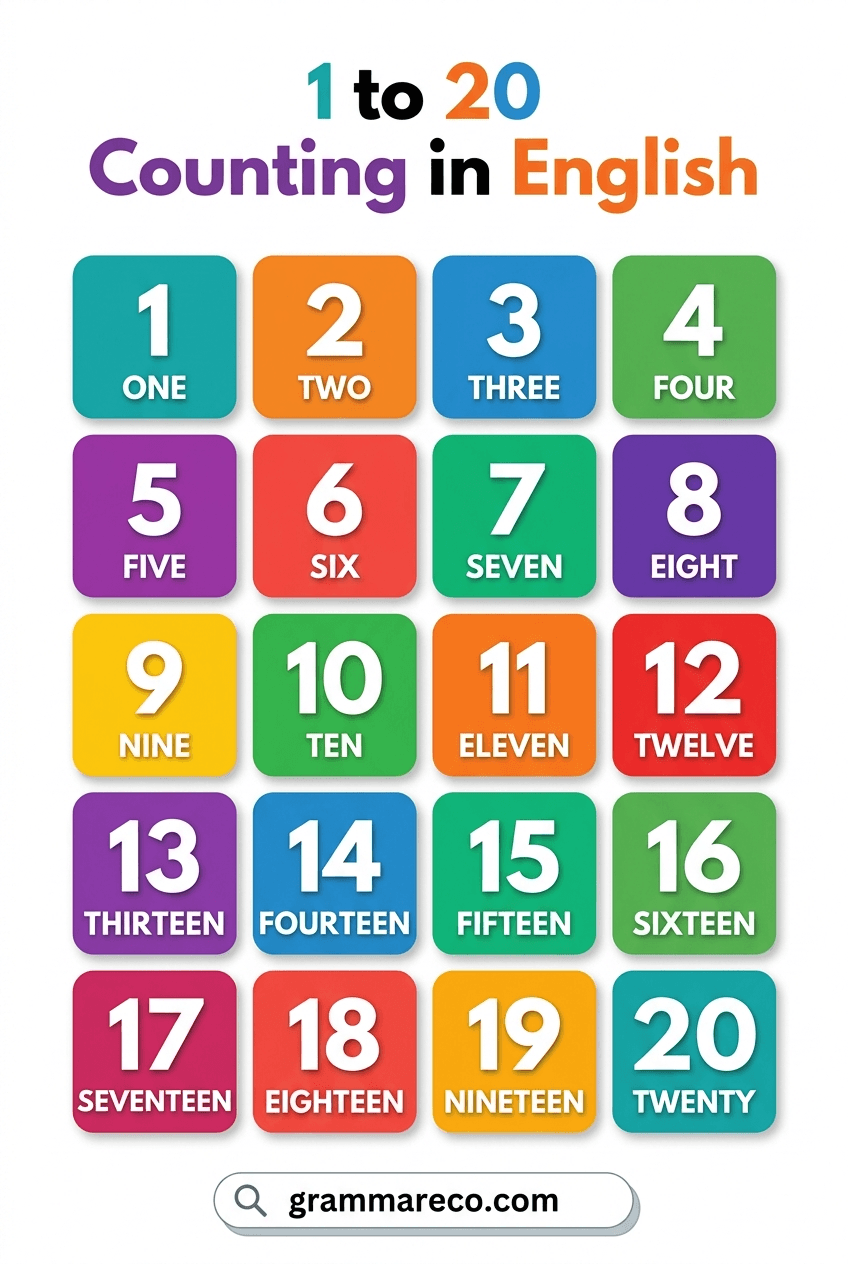
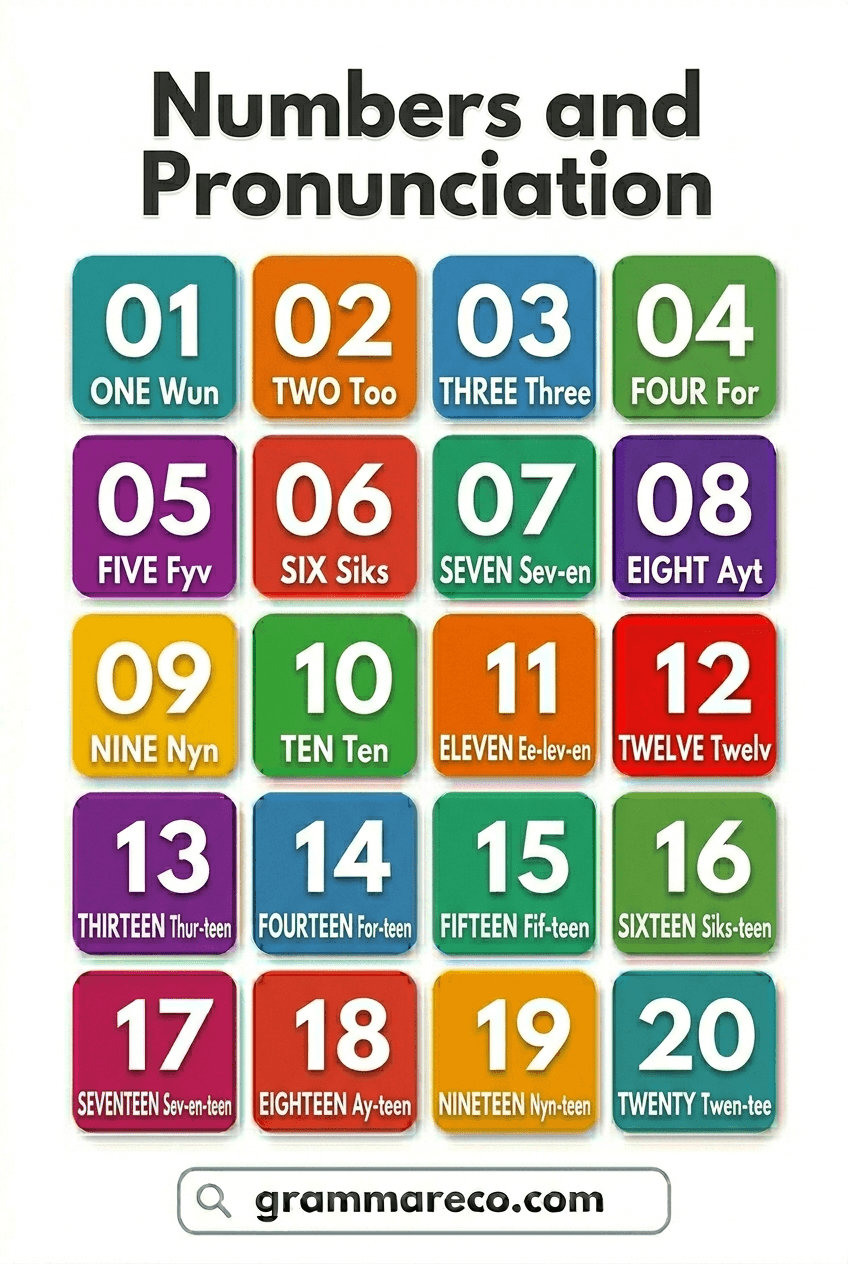
1 to 20 Counting Numbers for Kids with Pictures
This basic set builds the foundation for all counting skills and helps kids recognize patterns quickly.
| Number | Spelling | Pronunciation |
|---|---|---|
| 1 | One | Wun |
| 2 | Two | Too |
| 3 | Three | Three |
| 4 | Four | For |
| 5 | Five | Fyv |
| 6 | Six | Siks |
| 7 | Seven | Sev-en |
| 8 | Eight | Ayt |
| 9 | Nine | Nyn |
| 10 | Ten | Ten |
| 11 | Eleven | Ee-lev-en |
| 12 | Twelve | Twelv |
| 13 | Thirteen | Thur-teen |
| 14 | Fourteen | For-teen |
| 15 | Fifteen | Fif-teen |
| 16 | Sixteen | Siks-teen |
| 17 | Seventeen | Sev-en-teen |
| 18 | Eighteen | Ay-teen |
| 19 | Nineteen | Nyn-teen |
| 20 | Twenty | Twen-tee |
Names of Numbers from 21 to 40
This range introduces patterns using tens and ones, making counting more structured.
| Number | Spelling | Pronunciation |
|---|---|---|
| 21 | Twenty-one | Twen-tee wun |
| 22 | Twenty-two | Twen-tee too |
| 23 | Twenty-three | Twen-tee three |
| 24 | Twenty-four | Twen-tee for |
| 25 | Twenty-five | Twen-tee fyv |
| 26 | Twenty-six | Twen-tee siks |
| 27 | Twenty-seven | Twen-tee sev-en |
| 28 | Twenty-eight | Twen-tee ayt |
| 29 | Twenty-nine | Twen-tee nyn |
| 30 | Thirty | Thur-tee |
| 31 | Thirty-one | Thur-tee wun |
| 32 | Thirty-two | Thur-tee too |
| 33 | Thirty-three | Thur-tee three |
| 34 | Thirty-four | Thur-tee for |
| 35 | Thirty-five | Thur-tee fyv |
| 36 | Thirty-six | Thur-tee siks |
| 37 | Thirty-seven | Thur-tee sev-en |
| 38 | Thirty-eight | Thur-tee ayt |
| 39 | Thirty-nine | Thur-tee nyn |
| 40 | Forty | For-tee |
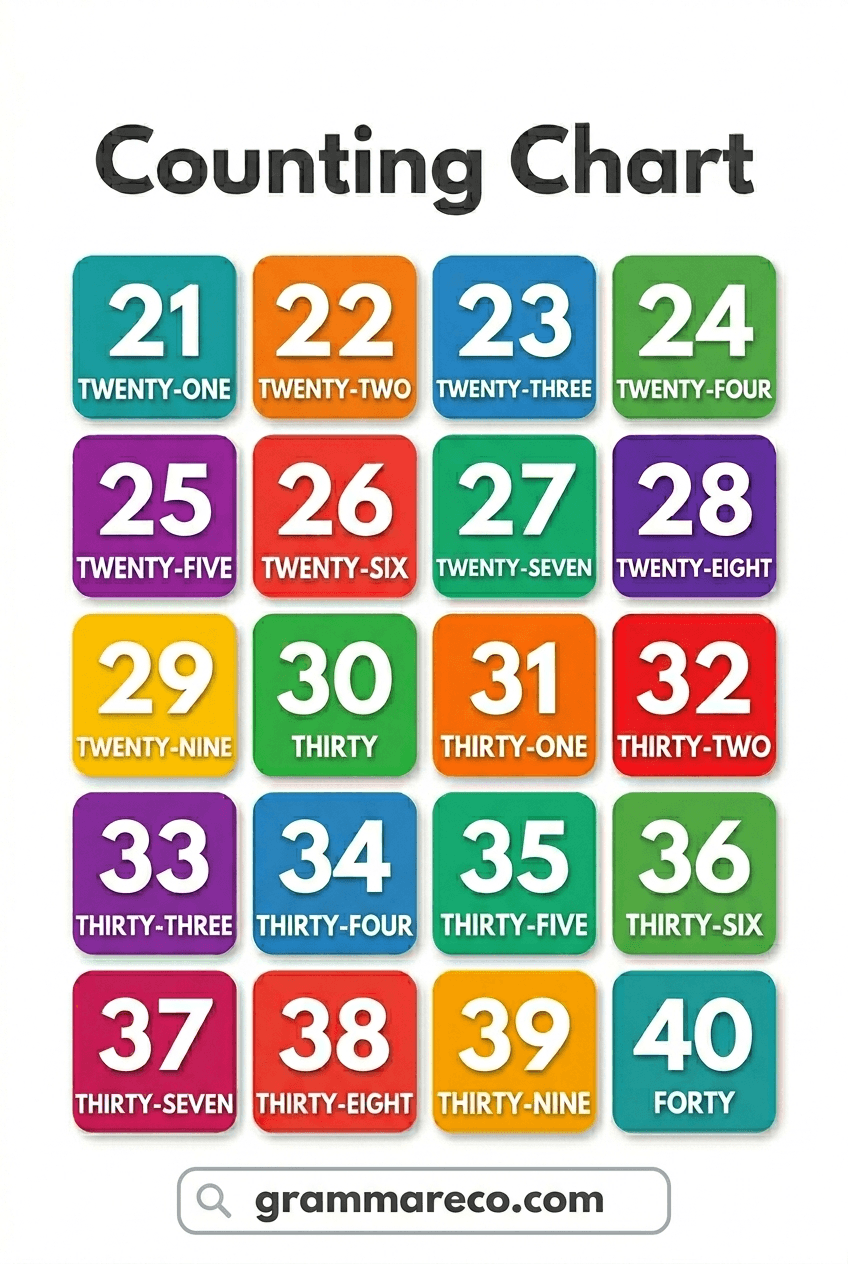
Count the Number from 41 to 60
This section strengthens number patterns and helps with faster counting skills.
| Number | Spelling | Pronunciation |
|---|---|---|
| 41 | Forty-one | For-tee wun |
| 42 | Forty-two | For-tee too |
| 43 | Forty-three | For-tee three |
| 44 | Forty-four | For-tee for |
| 45 | Forty-five | For-tee fyv |
| 46 | Forty-six | For-tee siks |
| 47 | Forty-seven | For-tee sev-en |
| 48 | Forty-eight | For-tee ayt |
| 49 | Forty-nine | For-tee nyn |
| 50 | Fifty | Fif-tee |
| 51 | Fifty-one | Fif-tee wun |
| 52 | Fifty-two | Fif-tee too |
| 53 | Fifty-three | Fif-tee three |
| 54 | Fifty-four | Fif-tee for |
| 55 | Fifty-five | Fif-tee fyv |
| 56 | Fifty-six | Fif-tee siks |
| 57 | Fifty-seven | Fif-tee sev-en |
| 58 | Fifty-eight | Fif-tee ayt |
| 59 | Fifty-nine | Fif-tee nyn |
| 60 | Sixty | Siks-tee |
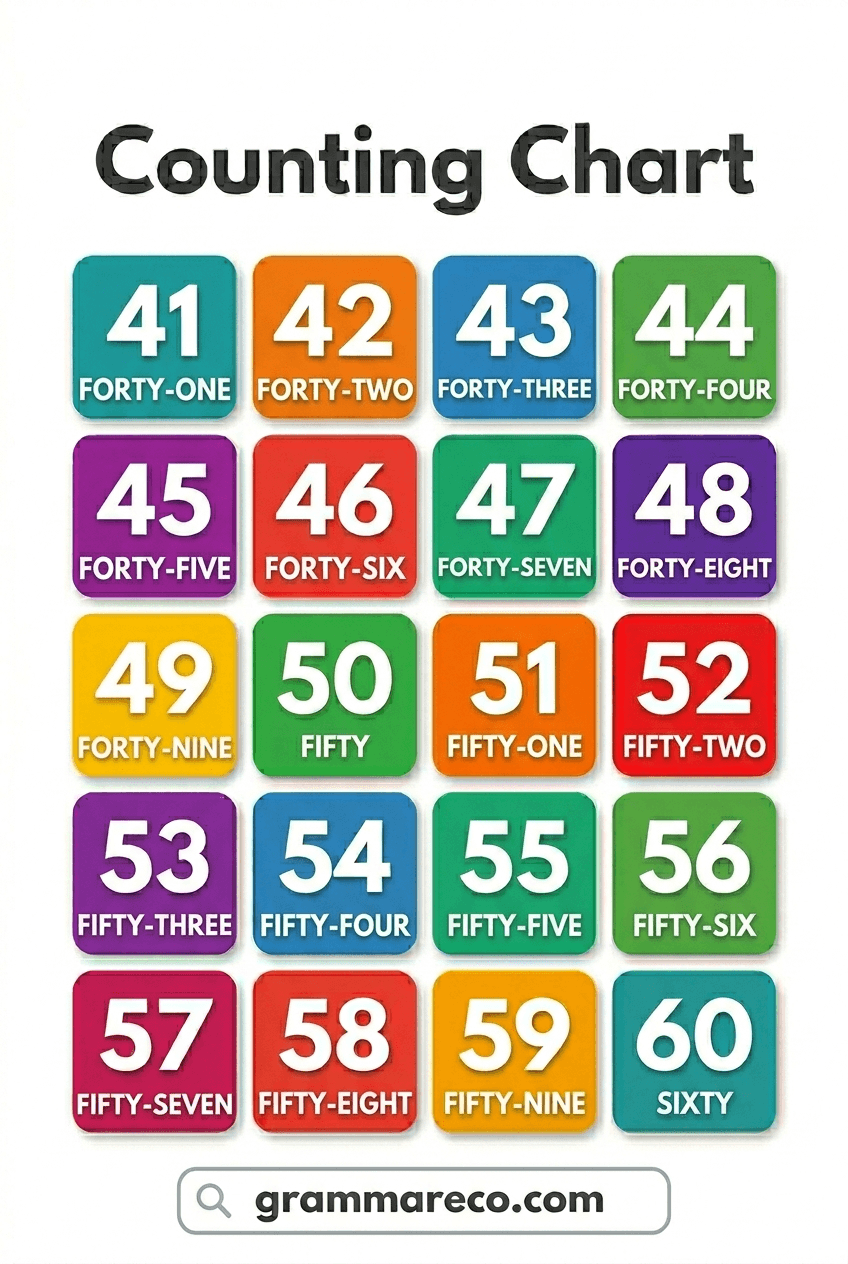
Counting 61 to 80 from 1 to 100 Numbers with Spelling
Learning this range improves speed and accuracy in counting sequences.
| Number | Spelling | Pronunciation |
|---|---|---|
| 61 | Sixty-one | Siks-tee wun |
| 62 | Sixty-two | Siks-tee too |
| 63 | Sixty-three | Siks-tee three |
| 64 | Sixty-four | Siks-tee for |
| 65 | Sixty-five | Siks-tee fyv |
| 66 | Sixty-six | Siks-tee siks |
| 67 | Sixty-seven | Siks-tee sev-en |
| 68 | Sixty-eight | Siks-tee ayt |
| 69 | Sixty-nine | Siks-tee nyn |
| 70 | Seventy | Sev-en-tee |
| 71 | Seventy-one | Sev-en-tee wun |
| 72 | Seventy-two | Sev-en-tee too |
| 73 | Seventy-three | Sev-en-tee three |
| 74 | Seventy-four | Sev-en-tee for |
| 75 | Seventy-five | Sev-en-tee fyv |
| 76 | Seventy-six | Sev-en-tee siks |
| 77 | Seventy-seven | Sev-en-tee sev-en |
| 78 | Seventy-eight | Sev-en-tee ayt |
| 79 | Seventy-nine | Sev-en-tee nyn |
| 80 | Eighty | Ay-tee |
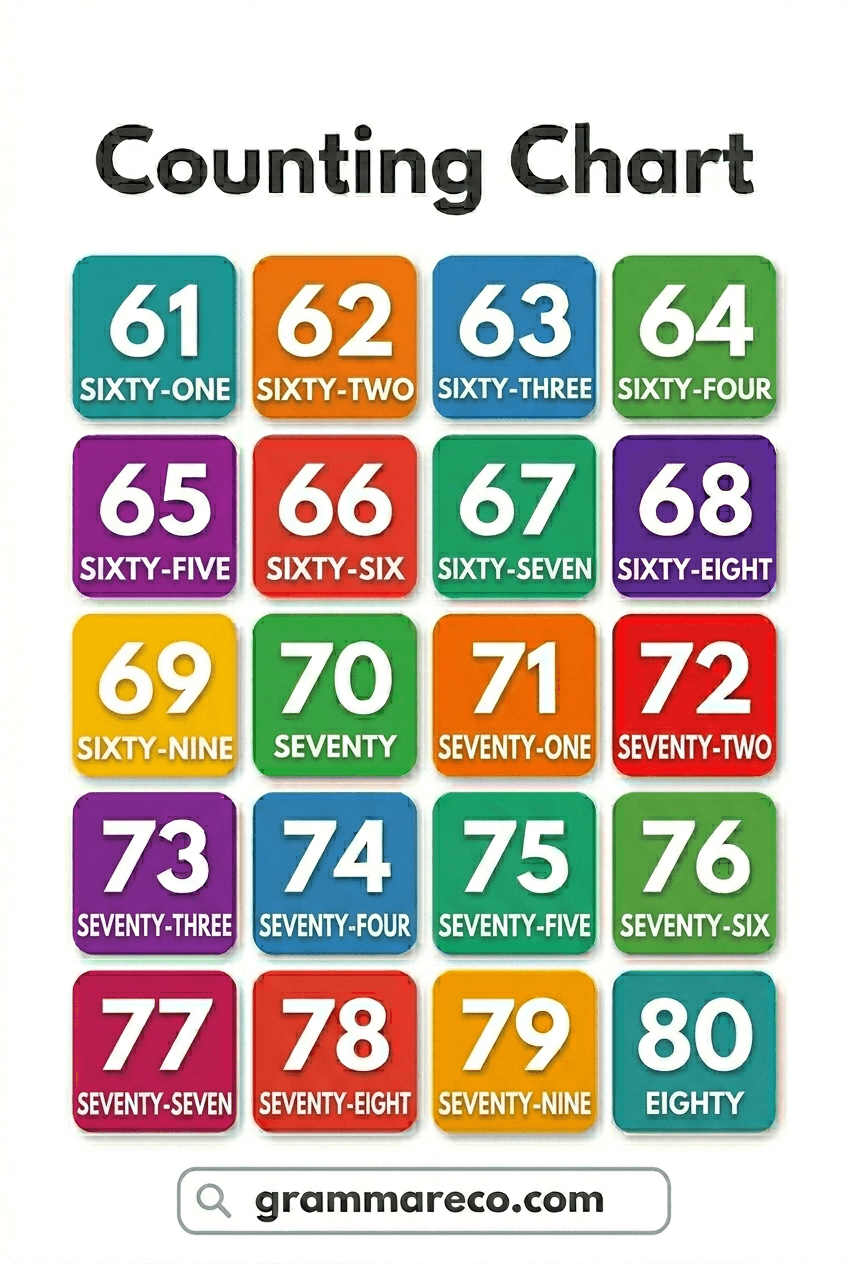
Counting from 81 to 100 with Images for Kids
This final range completes the full counting cycle and builds strong number mastery.
| Number | Spelling | Pronunciation |
|---|---|---|
| 81 | Eighty-one | Ay-tee wun |
| 82 | Eighty-two | Ay-tee too |
| 83 | Eighty-three | Ay-tee three |
| 84 | Eighty-four | Ay-tee for |
| 85 | Eighty-five | Ay-tee fyv |
| 86 | Eighty-six | Ay-tee siks |
| 87 | Eighty-seven | Ay-tee sev-en |
| 88 | Eighty-eight | Ay-tee ayt |
| 89 | Eighty-nine | Ay-tee nyn |
| 90 | Ninety | Nyn-tee |
| 91 | Ninety-one | Nyn-tee wun |
| 92 | Ninety-two | Nyn-tee too |
| 93 | Ninety-three | Nyn-tee three |
| 94 | Ninety-four | Nyn-tee for |
| 95 | Ninety-five | Nyn-tee fyv |
| 96 | Ninety-six | Nyn-tee siks |
| 97 | Ninety-seven | Nyn-tee sev-en |
| 98 | Ninety-eight | Nyn-tee ayt |
| 99 | Ninety-nine | Nyn-tee nyn |
| 100 | One hundred | Wun hun-dred |
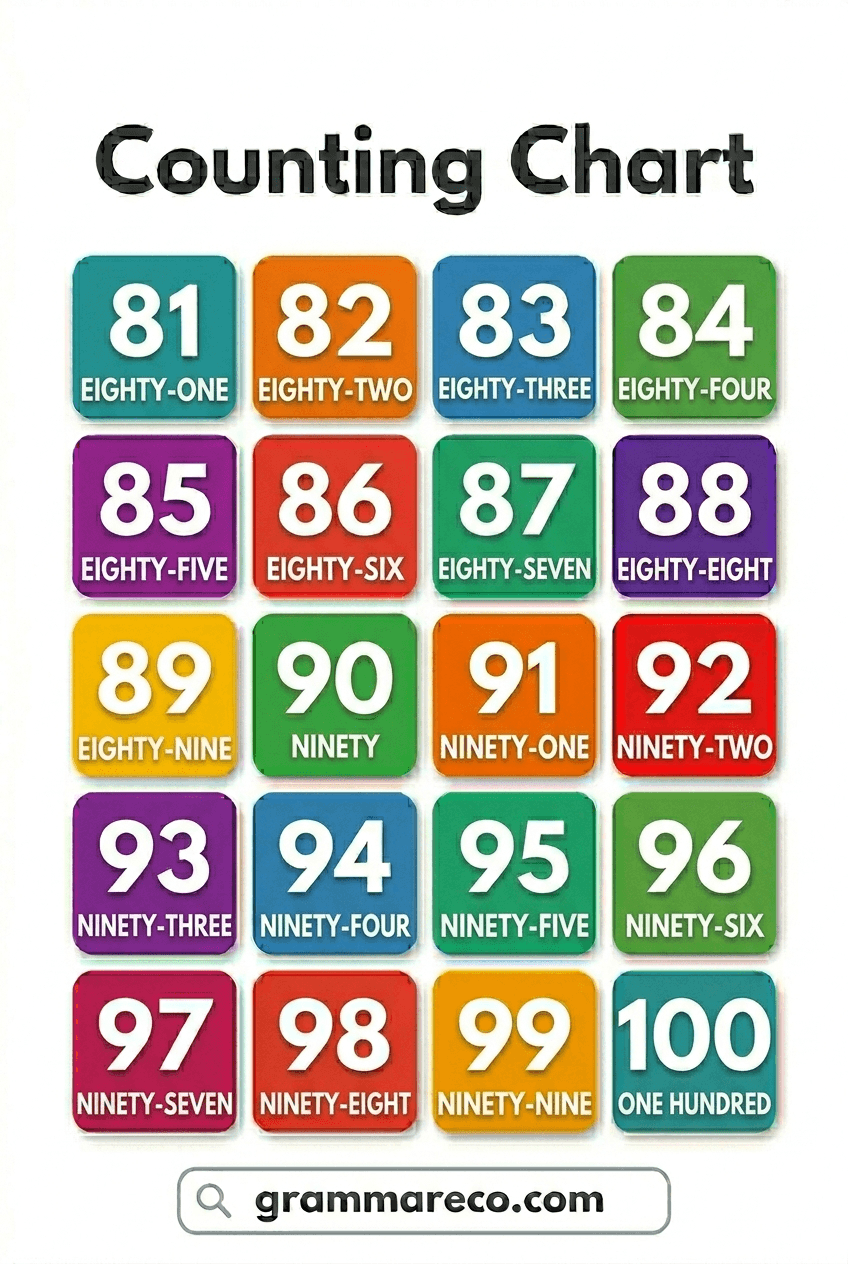
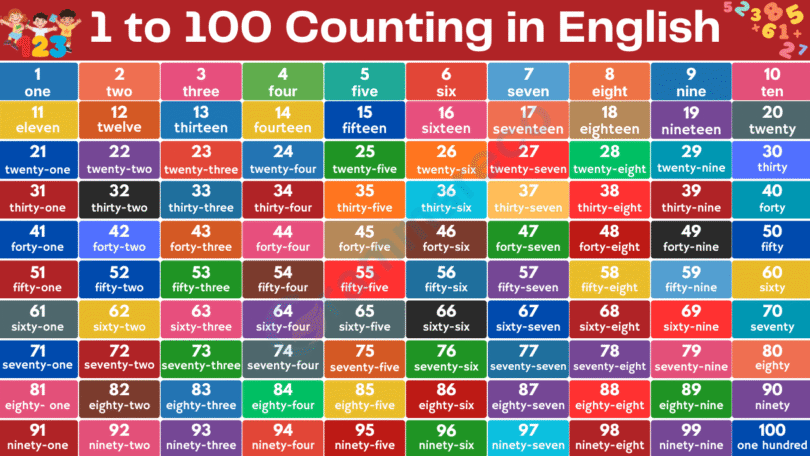
Counting Chart from One to Hundred for Kids
A counting chart is a visual learning tool that helps children recognize number patterns, improve memory, and practice sequencing.
FAQs about Counting from 1 to 100
Start with small groups like 1–10, then move step by step. Use repetition, charts, and speaking aloud for better memory.
It builds basic math skills, improves number recognition, and helps in daily activities like measuring and telling time.
Use grouping methods like tens and ones. Practice reading and writing number names regularly.
Patterns repeat after every ten numbers, such as twenty-one, thirty-one, and forty-one, making learning easier.
Most children start understanding full counting between ages 4 and 6 with proper guidance.
Practice daily, use flashcards, and count objects around you to build quick recall.
Read more