

Many students lose marks in exams because they choose the wrong word while completing a sentence. The confusion usually comes from weak grammar rules, tense errors, or unclear meaning. Understanding completing sentence rules helps you select accurate words, improve sentence clarity, and write grammatically correct English with confidence.
What Is a Completing Sentence?
A completing sentence is a sentence that is finished by choosing the most suitable word or phrase from given options. The correct choice must follow grammar rules, match the sentence meaning, and fit the context. This skill is commonly tested in grammar exercises, school exams, and competitive tests.
Why Completing Sentences Are Important
Completing sentences is important because it strengthens grammar accuracy, improves reading comprehension, and builds logical thinking. It helps learners understand how words function together, avoid common mistakes, and write clear sentences in both academic and real-life communication.
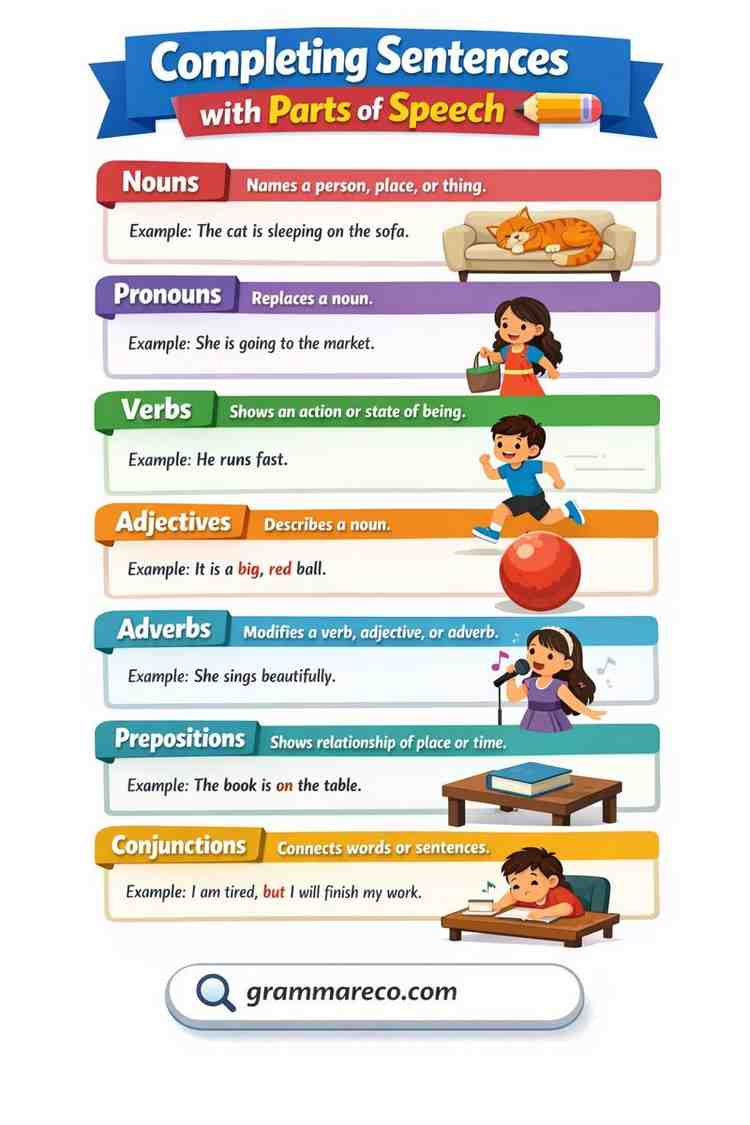
Basic Rules for Completing Sentences
Subject–Verb Agreement
The verb must agree with the subject in number and person.
- She plays cricket every evening.
- The students are ready for the test.
Logical Meaning and Context
The chosen word must make sense within the sentence’s idea.
- Ali missed the bus, so he arrived late.
- Sara studied hard; therefore, she passed easily.
Correct Tense Selection
The verb tense should match the time mentioned or implied.
- Yesterday, Ahmed visited his uncle.
- They are watching a movie now.
Proper Use of Articles (a, an, the)
Articles must be used correctly with nouns.
- She bought a book from the store.
- The cat sat on the chair.
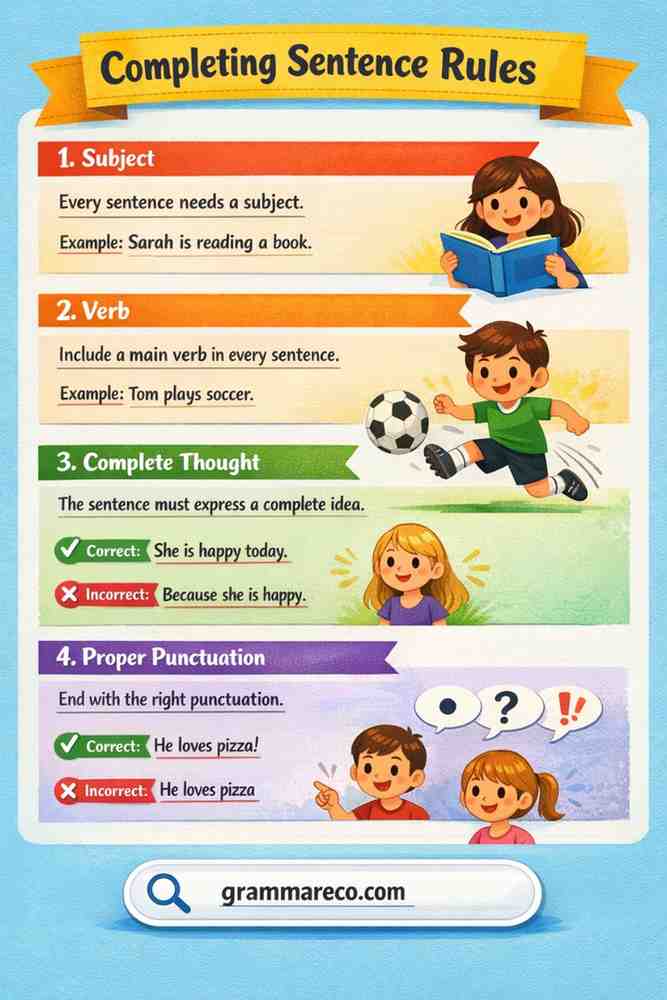
Complete Sentences Rules with Parts of Speech
Completing Sentences Using Nouns
Choose a noun that fits the meaning and structure of the sentence.
- Ayesha won a prize for honesty.
- The teacher explained the lesson clearly.
- He opened the door quietly.
- Children love playing in the park.
Pronouns Used for Completing Sentences
Pronouns must clearly replace the correct noun.
- Ahmed forgot his notebook.
- This pen is mine.
- Fatima helped herself.
- They invited us to the event.
Completing Sentences with Verbs
The verb must show correct action and tense.
- Hassan writes neatly.
- We completed the task early.
- She is cooking dinner.
- They will attend the meeting.
Adjectives with Completing Sentences
Adjectives describe nouns and must suit the context.
- It was a beautiful morning.
- He wore a clean shirt.
- The test was difficult.
- She gave a kind reply.
Complete Sentences Using Adverbs
Adverbs modify verbs, adjectives, or other adverbs.
- He spoke politely.
- The train arrived late.
- She answered quickly.
- The baby slept peacefully.
Prepositions for Completing Sentences
Prepositions show relation between words.
- The book is on the table.
- He walked into the room.
- They waited for the teacher.
- The keys are under the sofa.
Conjunctions Used in Sentence Completion
Conjunctions join words or clauses logically.
- I wanted to go, but it rained.
- She stayed home because she was ill.
- You can choose tea or coffee.
- He worked hard, so he succeeded.
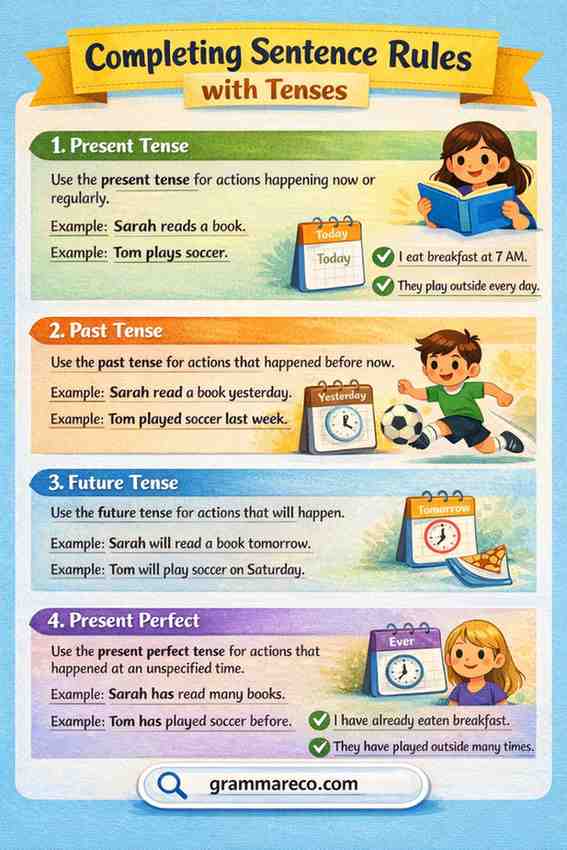
Completing Sentence Rules Based on Tenses
Present Tense Sentences
Use present tense for habits and general facts.
- She teaches English daily.
- Birds fly in the sky.
- He likes reading books.
- We study grammar regularly.
Past Tense Sentences
Use past tense for completed actions.
- Ali finished his homework.
- They watched a movie yesterday.
- She called her friend.
- We visited Lahore last year.
Future Tense Sentences
Use future tense for upcoming actions.
- I will start my course soon.
- They will travel tomorrow.
- She shall complete the task.
- We will meet again.
FAQs about Completing Sentence Rules
Completing sentence rules are grammar guidelines used to choose the correct word that completes a sentence logically and grammatically.
Students struggle due to weak grammar basics, tense confusion, and lack of understanding of sentence meaning.
Practice grammar rules, read sentences carefully, and identify tense, subject, and context before choosing an answer.
The most common mistake is ignoring subject–verb agreement and tense consistency.
Yes, they improve sentence formation and help you speak clearly and correctly.
Read more