
Simple sentences are short groups of words that express a complete idea in easy language. Sentences for Nursery Class use common words and short patterns that young children can understand and repeat. They often talk about everyday actions, family, animals, colors, and objects.
Ssentences for nursery students help build a strong foundation in English from an early age. These short and easy sentences are designed for young learners to understand, speak, and remember quickly. This blog post helps you to learn short English sentences, so nursery kids can learn English with confidence and joy.
Simple Sentences for Nursery Students Should Learn
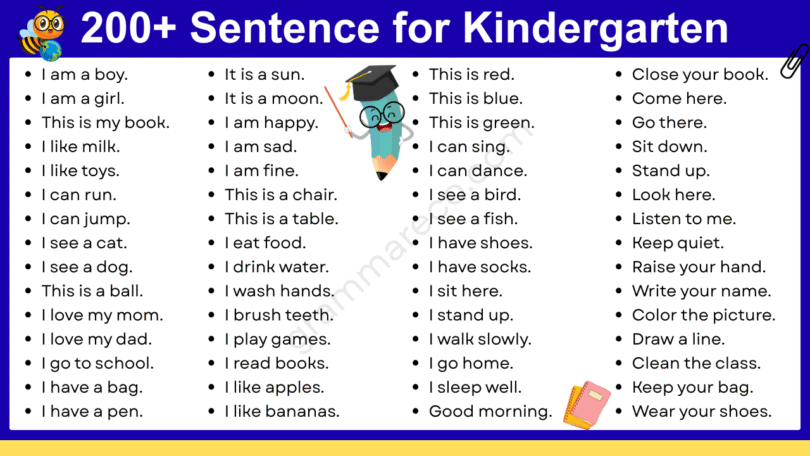
- I am a boy.
- I am a girl.
- This is my book.
- I like milk.
- I like toys.
- I can run.
- I can jump.
- I see a cat.
- I see a dog.
- This is a ball.
- I love my mom.
- I love my dad.
- I go to school.
- I have a bag.
- I have a pen.
- It is a sun.
- It is a moon.
- I am happy.
- I am sad.
- I am fine.
- This is a chair.
- This is a table.
- I eat food.
- I drink water.
- I wash hands.
- I brush teeth.
- I play games.
- I read books.
- I like apples.
- I like bananas.
- This is red.
- This is blue.
- This is green.
- I can sing.
- I can dance.
- I see a bird.
- I see a fish.
- I have shoes.
- I have socks.
- I sit here.
- I stand up.
- I walk slowly.
- I go home.
- I sleep well.
- Good morning.
- Good night.
- Thank you.
- Please help me.
- Sorry teacher.
- Yes, teacher.
Small Sentences for Nursery Class in English
- Open your book.
- Close your book.
- Come here.
- Go there.
- Sit down.
- Stand up.
- Look here.
- Listen to me.
- Keep quiet.
- Raise your hand.
- Write your name.
- Color the picture.
- Draw a line.
- Clean the class.
- Keep your bag.
- Wear your shoes.
- Drink water.
- Eat your lunch.
- Wash your hands.
- Say sorry.
- Say thank you.
- Follow me.
- Walk in line.
- Do not run.
- Do not shout.
- Be kind.
- Share toys.
- Help friends.
- Smile please.
- Wait here.
- Come inside.
- Go outside.
- Take your seat.
- Read with me.
- Sing a song.
- Clap your hands.
- Jump high.
- Turn around.
- Pack your bag.
- See you tomorrow.
Easy Daily Used Sentences for Preschool for Kids
- Good morning, teacher.
- Good morning, friends.
- How are you?
- I am fine.
- What is this?
- This is a pen.
- May I come in?
- May I drink water?
- May I go out?
- Please help me.
- I need a pencil.
- I like this.
- I do not like that.
- I am hungry.
- I am thirsty.
- I want to play.
- I want to sleep.
- I feel happy.
- I feel tired.
- It is my turn.
- Let us play.
- Let us read.
- Come and sit.
- Go and wash.
- Bring your book.
- Take your bag.
- Keep it here.
- Put it there.
- It is my toy.
- This is yours.
- That is mine.
- I can do it.
- I did it.
- Well done.
- Very good.
- Try again.
- Be careful.
- Do it slowly.
- See you soon.
- Bye bye.
FAQs about Small Sentences for Nursery
Small sentences for nursery students are short, simple English sentences that help young children learn speaking and understanding easily.
They improve vocabulary, confidence, and basic communication skills at an early learning stage.
A nursery sentence should have 2 to 5 easy words for quick understanding.
I am Ali, This is a ball, I like milk, My name is Ayesha, and I see a cat.
Read more